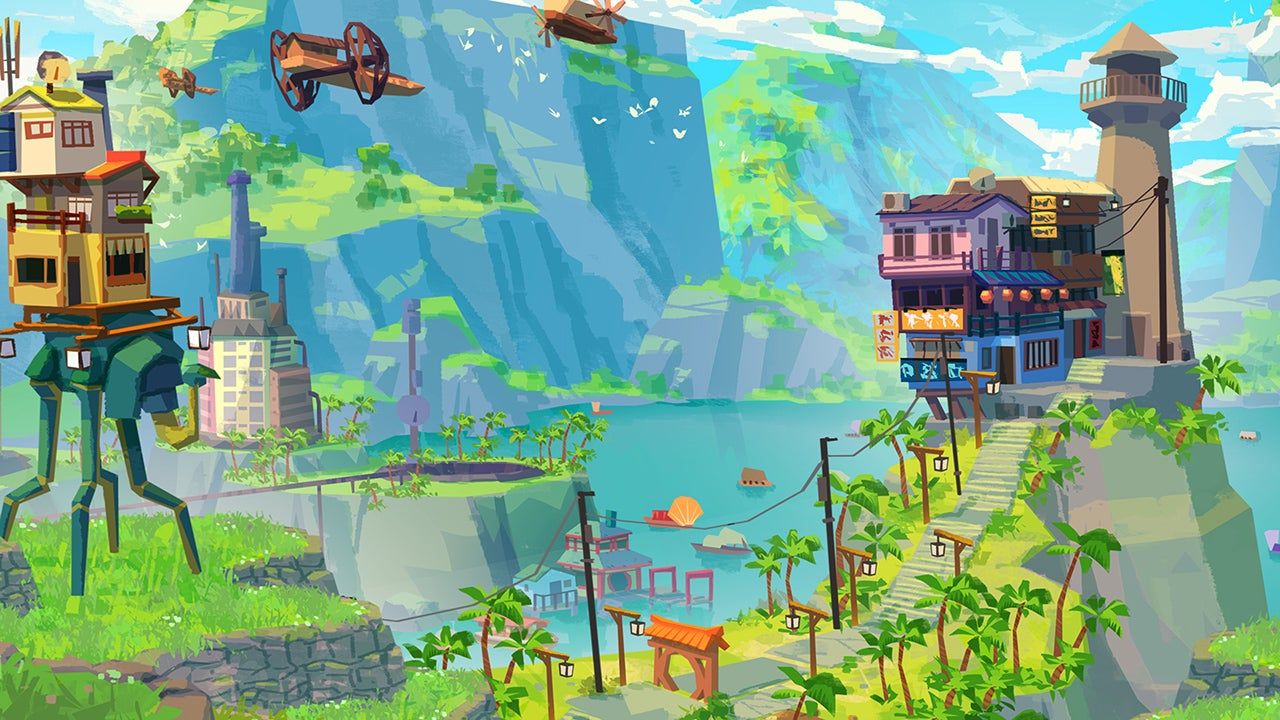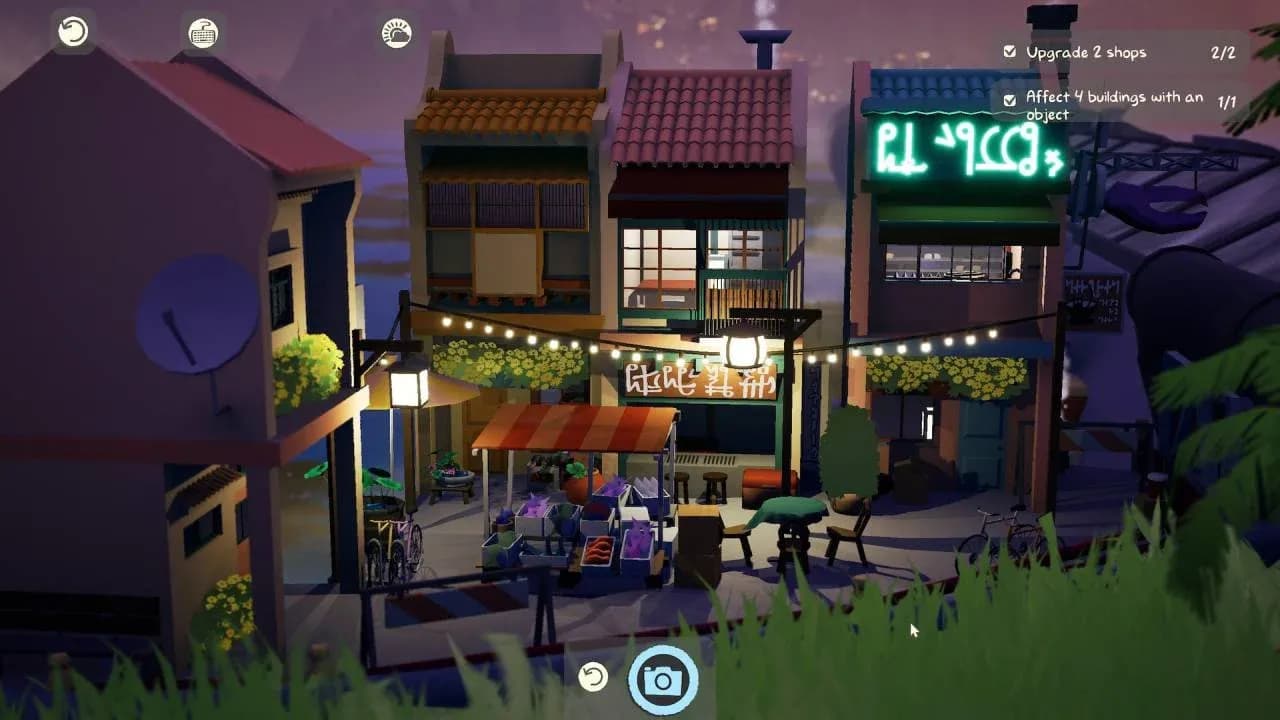

ShantyTown launched on April 16, 2026, and it already has 151 Steam reviews sitting at 99% positive. That number is not a fluke. Developer Erik Rempen under publisher Kinephantom Games built something that feels genuinely different from the city-builder crowd: a compact, diorama-style sandbox where the goal is atmosphere over efficiency. No budgets, no disasters, no power grids. Just stacking buildings on cliff edges until something looks right.
What is ShantyTown and how does it play?
ShantyTown puts you in the role of a surveyor working through 20 distinct locations. Each one has its own mood, a fixed pool of objects to place, and a limited footprint to build within. The Hotpot Casino, the Marshlands Pipe, and the Lighthouse are three of those named locations, and every space is designed to give you a fresh perspective on how density and decoration interact.
The core loop is straightforward: place objects, earn upgrades by hitting small design goals, photograph your finished settlement, and add it to your dossier before moving to the next blank canvas. That photograph mechanic is worth noting because ShantyTown includes in-depth camera settings specifically for framing your creations, which gives the whole thing a scrapbook quality that most city-builders skip entirely.
How does the deck-based building system work?
This is the mechanic that separates ShantyTown from every other city-builder you have played. Instead of opening a menu and picking whatever you want, you draw from a rotating deck of construction cards. The objects available at any moment are determined by what the deck gives you, not by your preference.
The practical effect is that your layouts end up more organic than planned. You adapt to what you have rather than executing a predetermined vision, which produces unexpected arrangements that feel more handcrafted than optimized. Players who fight the system and wait for specific cards will have a worse time than players who treat each draw as a creative prompt.
Buildings are not static once placed. Larger structures like apartment blocks, shops, and gates can evolve through an upgrade system. The trigger for upgrades is providing the structure with what it needs: light sources, utilities, and decorations placed nearby. Once those conditions are met, the building transforms into a more detailed version of itself, and completing that upgrade unlocks additional objects and decorations for future placements.
What gets removed compared to traditional city-builders?
The absence of systems is as deliberate as the presence of them. ShantyTown strips out three categories of mechanics that define most games in the genre:
| Removed mechanic | What replaces it |
|---|---|
| Taxes and budget management | Aesthetic placement choices |
| Power grids and infrastructure | Decoration and lighting goals |
| Disaster and resource collapse | Optional design goals |
The result is that every decision you make is visual rather than logistical. Lights and signage serve both decorative and functional roles in the upgrade system, so there is still a reason to think about placement, but the stakes are never higher than "this corner looks empty."
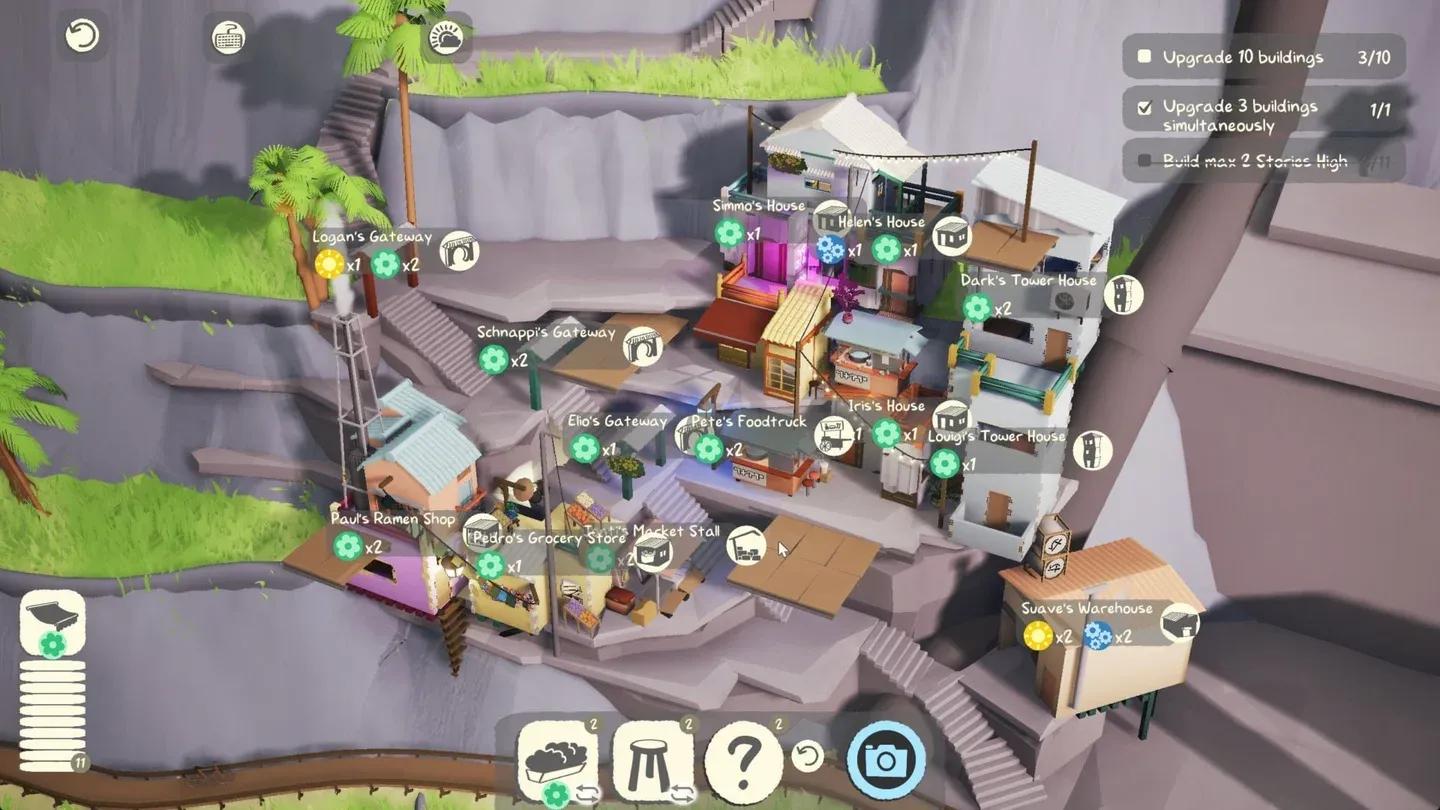
Decoration placement options
What locations and environments does the game include?
The 20 locations span a range of unusual settings. Environments include cliff edges, floating islands, and structures built on moving creatures. The named examples are the Hotpot Casino, the Marshlands Pipe, and the Lighthouse, each with its own distinct mood and identity.
Each location comes with a unique set of objects, so the deck you draw from shifts between maps. Food trucks, neon signs, and industrial smokestacks are among the confirmed object types. The visual style leans into whimsy: crab-shaped shops are one example of the kind of structures you will encounter.
The soundtrack was composed by vaporwave artist Macroblank, which fits the dreamlike tone of the environments.
How do Creative Mode and Blankspace work?
Once you progress through the main 20 locations, Creative Mode opens up. This mode gives you access to every location and item you have unlocked, with no restrictions on how you stack or arrange them. You can build high, wide, and in any direction.
Separate from that is Blankspace, which is an enormous sandbox environment with no preset structure at all. No location theme, no object pool constraints. It is the pure sandbox option for players who want to design entirely custom towns and shops from scratch.
Early reviews have been strong. One outlet gave the game an 8/10, noting it "managed to get me invested in a way I never really thought I could be." Another called it "the perfect game to pick up and mellow out to" for players who experience decision fatigue with traditional builders.
Are there any known issues to watch for?
ShantyTown is not without rough edges. Multiple players have reported occasional performance drops and crashes. The game launched on April 16, 2026, so patches are likely as the review count grows, but as of the current review snapshot these issues exist.
There is also a noted disconnect between the game's name and its cheerful aesthetic. "Shantytown" carries real-world associations with poverty and informal settlements, and some players have flagged that the branding feels mismatched with the game's toy-like, cozy tone. It does not affect gameplay, but it is worth knowing before you recommend the game to others.
The minimum system requirements are modest: a dual-core Intel i5 or better, 8 GB RAM, 512MB VRAM with OpenGL 3.0 support, DirectX 12, and 2 GB of storage. Most mid-range PCs from the last several years will handle it without issue.
For more cozy game picks and city-builder comparisons, browse more guides across the GAMES.GG library.