
Enchantments are one of the most exciting additions in Slay the Spire 2, and understanding them early can be the difference between a run that falls apart and one that snowballs into something unstoppable. These card-level modifiers introduce real trade-offs that push you to think differently about your deck, your HP, and your energy economy. Here's everything you need to know.
What Are Enchantments in Slay the Spire 2?
Enchantments are special modifiers that attach directly to individual cards in your deck. Think of them as a step beyond standard card upgrades: they alter how a card behaves in a more dramatic, often double-edged way. Once applied, an Enchantment stays on that card for the rest of your run, making every decision about which card to enchant a meaningful long-term commitment.
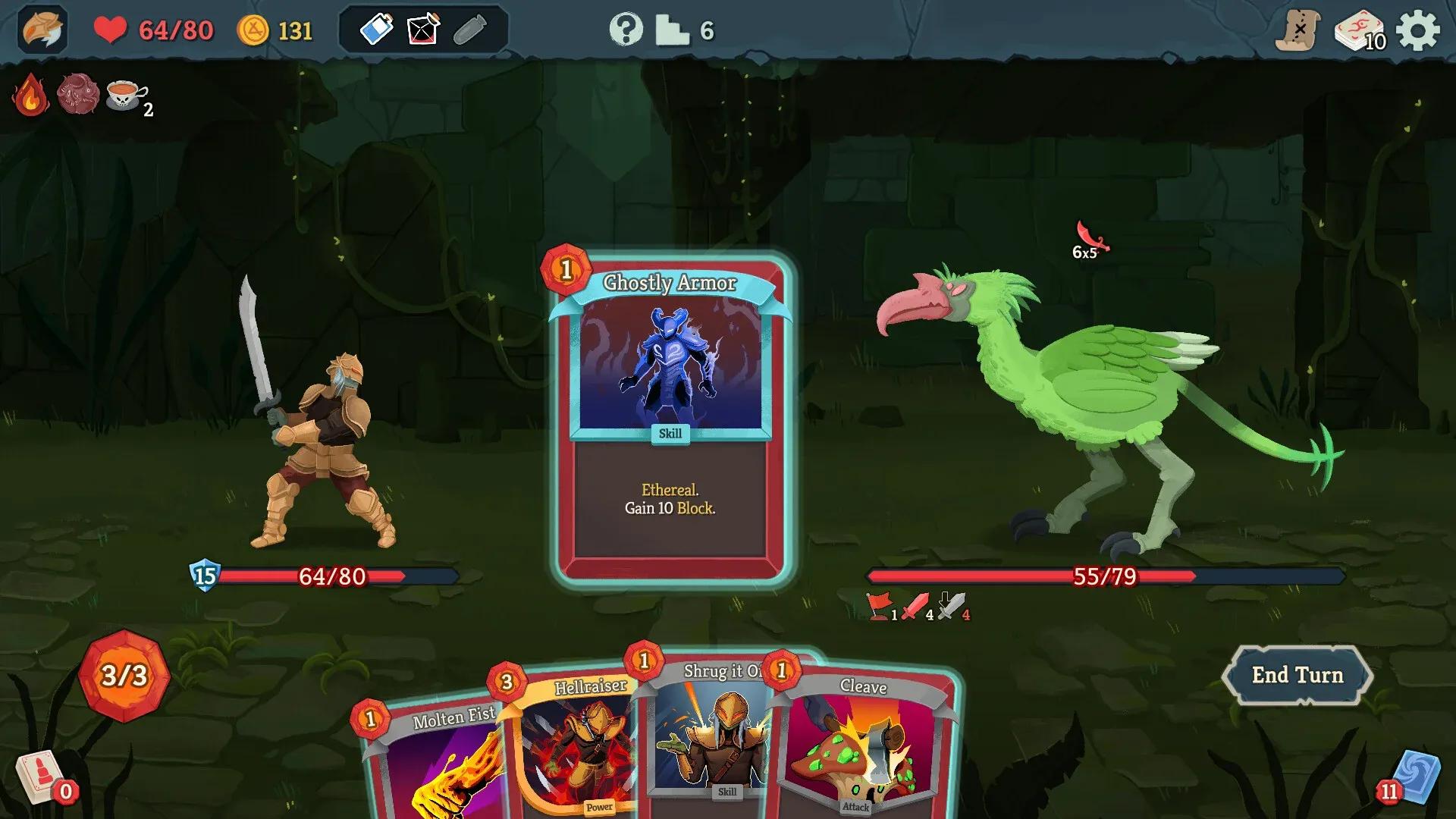
You can identify an enchanted card by its unique symbol displayed on the card face. Some Enchantments also add text in a distinctive purple font, making it easy to spot the modifier at a glance during combat.
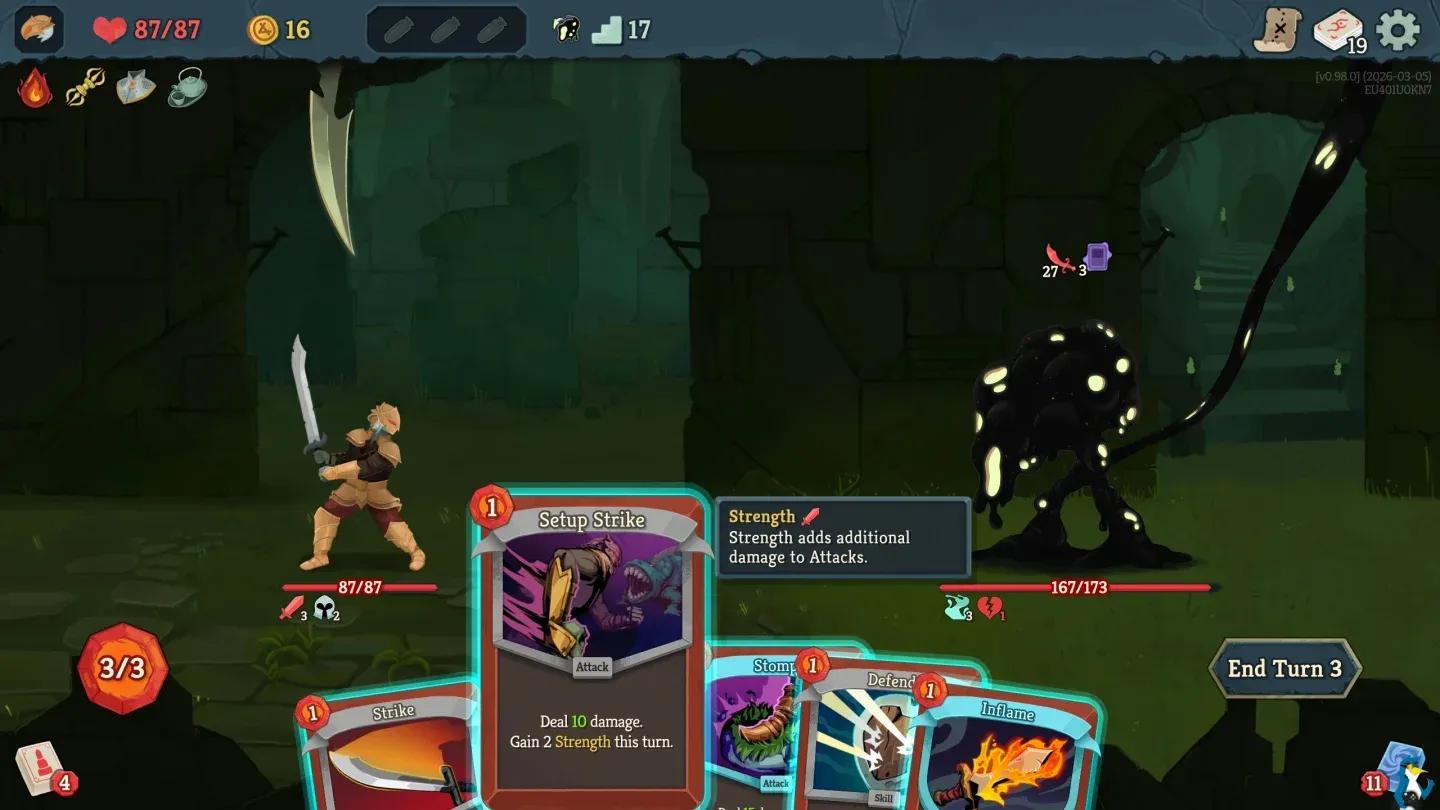
Enchantment symbol on a card

How Do Enchantments Differ from Upgrades?
Standard upgrades in Slay the Spire 2 improve a card's baseline stats in straightforward ways, such as adding damage or reducing cost. Enchantments go further by introducing conditional effects and trade-offs. You gain something meaningful, but you pay a price every time that card is played. This makes Enchantments a build-around mechanic rather than a simple power boost.
What Trade-Offs Do Enchantments Introduce?
Every Enchantment comes with a cost attached to its benefit. Based on what has been discovered so far in early access, here are the types of trade-offs players have encountered:
| Enchantment Effect | Benefit | Cost |
|---|---|---|
| Corrupted | +50% damage on the card | Lose 3 HP each time it's played |
| Damage Boost Variant | Increased damage output | Reduced Max HP |
| Vulnerability Applier | Applies Vulnerable to enemies | Costs additional Energy to play |
The Corrupted Enchantment is the clearest example of this design philosophy: a 50% damage increase is a massive gain on an attack card, but losing 3 HP per play means a card you cycle through three or four times per combat could cost you 9 to 12 HP before a boss fight even begins.
Where Are Enchantments Found in Slay the Spire 2?
The confirmed source for Enchantments is rare Events scattered across the map. These are not guaranteed encounters, so you may go several runs without seeing one depending on your path choices. The developers at Mega Crit have explicitly confirmed that additional methods to obtain Enchantments exist beyond Events, though the full list of sources has not been detailed yet.
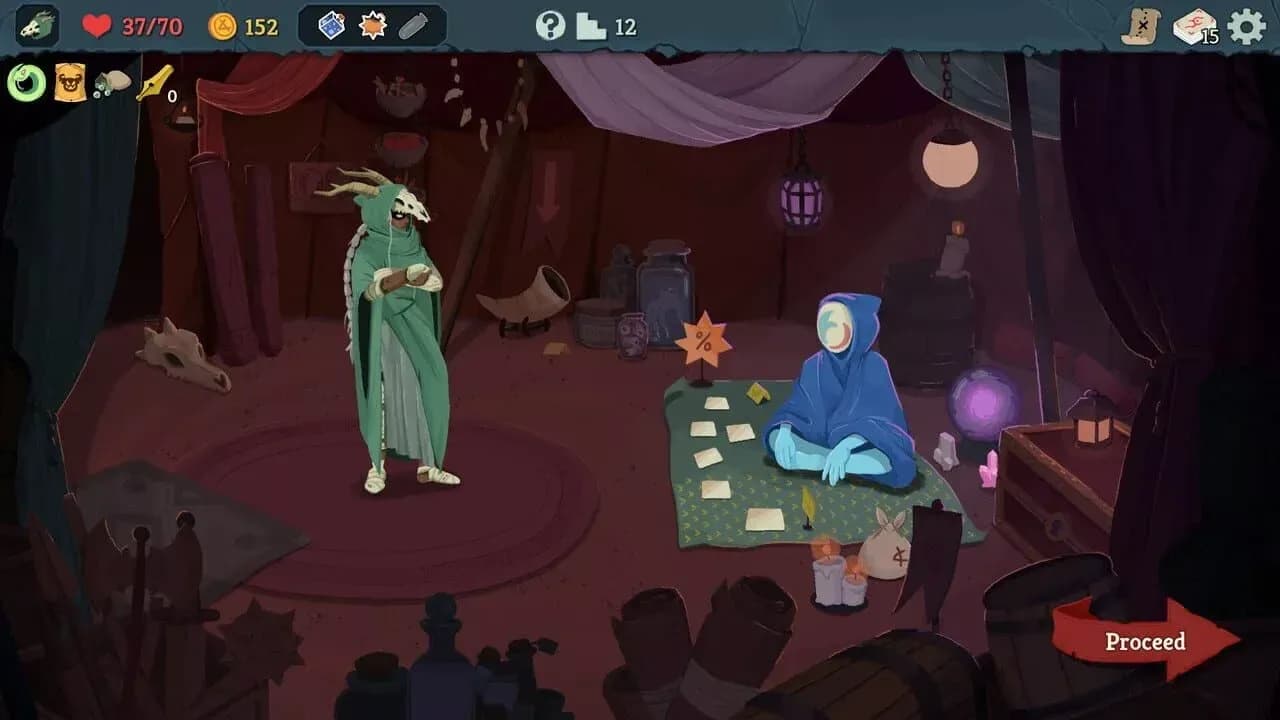
Event node enchantment reward
How Do Ancients Connect to Enchantments?
While Ancients are a separate mechanic, they work alongside Enchantments to shape your run's direction from the very beginning. Ancients are special NPCs you meet at the start of each act, and they offer a selection of blessings to choose from, functioning similarly to Neow's Blessings from the original Slay the Spire.
- Act 1 reintroduces Meow, whose blessing roster will feel familiar to veterans of the first game.
- Act 2 and beyond introduces new Ancients with fresh blessing pools, including access to shortened map paths, bonus relics, and direct damage boosts.
These blessings effectively set the template for your build, and understanding which blessings pair well with Enchantment-heavy strategies gives you a significant advantage in planning your run from turn one.
How Should You Build Around Enchantments?
Because Enchantments carry persistent costs, the most effective approach is to build your deck with the trade-off in mind rather than treating the Enchantment as a free upgrade.
Tips for HP-Cost Enchantments
- Prioritize healing relics and events to offset the per-play HP drain.
- Apply HP-cost Enchantments to cards with higher Energy costs that you play less frequently, reducing total HP lost per combat.
- Avoid stacking multiple HP-draining Enchantments unless your deck includes reliable healing.
Tips for Energy-Cost Enchantments
- Pair Energy-cost Enchantments with Energy-generating relics or cards to maintain your turn economy.
- Apply these Enchantments to cards that produce enough value to justify the extra Energy investment.
- Consider your deck's average Energy per turn before committing to an Energy-expensive modifier.
Tips for Max HP Reduction Enchantments
- These are the most punishing on high-Ascension runs where enemies deal more damage.
- Consider them only when the damage or effect boost is large enough to end fights faster, reducing the number of hits you take.
What's the Best Strategy for Using Enchantments?
The short answer: match the Enchantment's cost to your deck's strengths. A deck built around high block and healing can absorb HP-cost Enchantments with minimal downside. An Energy-rich deck with multiple Energy-generating cards can afford to pay extra Energy on key attacks. The worst outcome is applying an Enchantment that punishes a weakness your deck already has.
Given that Slay the Spire 2 is still in early access as of this writing, the full list of Enchantments and their sources is expected to expand. The current confirmed modifiers represent only a portion of what Mega Crit has planned, so check back as the game receives updates and new content drops.
Enchantments reward players who think ahead and build deliberately. Treat every Enchantment offer as a question: can your deck handle this cost for the rest of the run? If the answer is yes, the payoff can be extraordinary.