


Copper is the resource that unlocks the good stuff in Solarpunk. Electric tools, research upgrades, and most mid-game crafting recipes all run through it. The problem is that the game drops you on a sky island with almost no guidance, and Copper isn't sitting on your starting platform waiting to be picked up. You have to earn it.
Where is Copper Ore in Solarpunk?
Copper Ore is not on your starting island. You need to fly to the small island to the northeast of your base, and to do that you need an Airship. The Airship requires a Dock (Airship Station), which unlocks at tier 3 of the research table. Before you even think about Copper, make sure your research progression is there.
The good news is that you don't need the map unlocked to find this island. Walk to the edge of your starting island and look northeast. The small island is visible from there, so you can fly straight to it once your Airship is ready.
How to mine Copper Ore efficiently
When you land on the northeast island, you'll find a handful of large Copper Ore chunks scattered around. These give you a quick initial batch of ore, but they're a one-time source. Once you've cleared them, they're gone.
The real farming happens at the Copper Ore vein in the ground. This vein never depletes. Each swing of your Pickaxe has a chance to yield Copper Ore, but it also eats through Pickaxe durability faster than the surface chunks do. Expect to burn through multiple Pickaxes per farming run.
The island also has Watermelon spawns (three of them), plus loose Stones, Sticks, and trees nearby. As long as you manage your resources carefully and don't break your last Pickaxe while standing on bare rock, you can restock tools on the spot and keep mining without flying back to base.
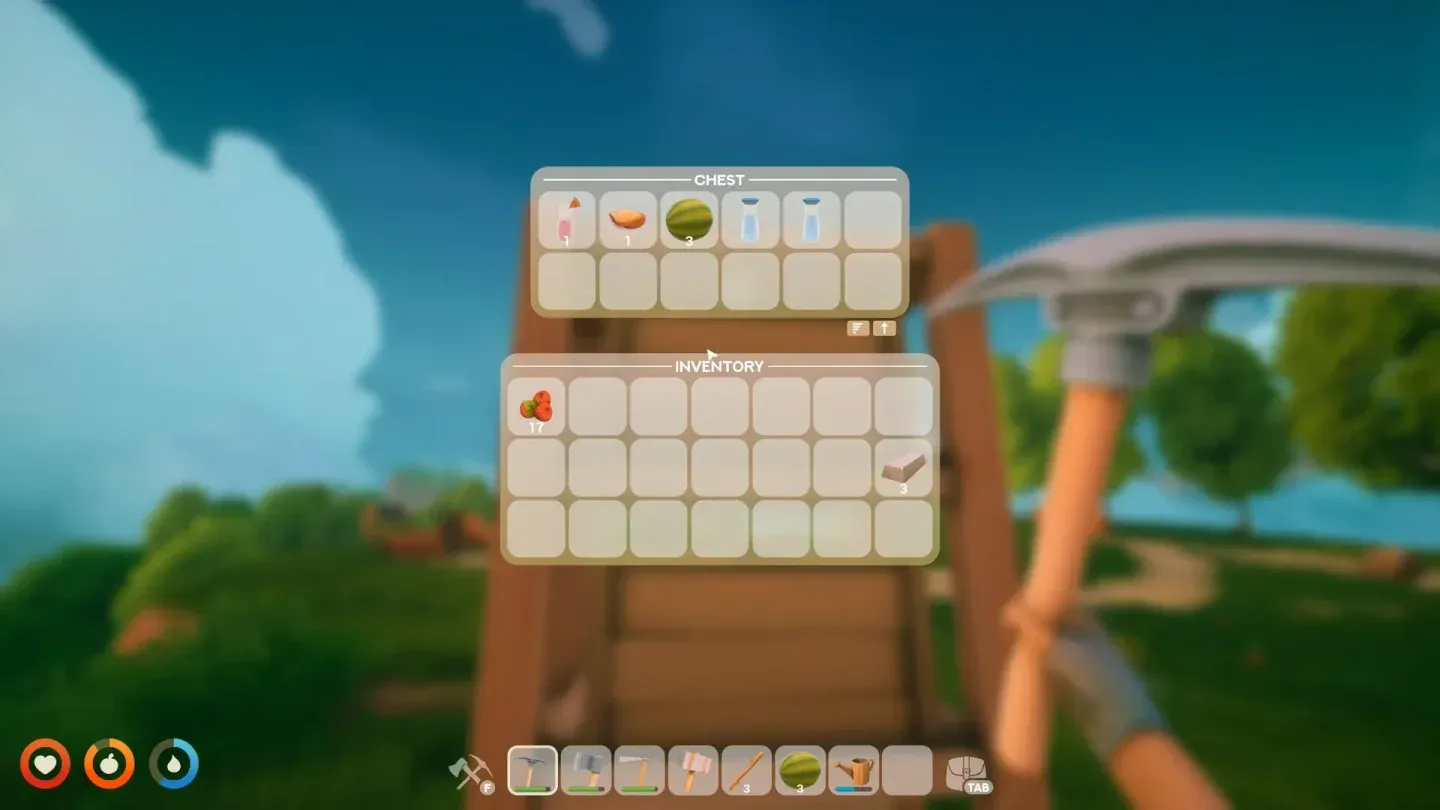
Mining the copper ground vein
What else is on the Copper island?
Beyond ore, the northeast island gives you three Watermelon spawns, which are worth grabbing while you're there. The trees and loose Sticks mean you can top up on Wood for fuel too, which feeds directly into the smelting step back at base.
How to smelt Copper Bars in the Furnace
Back at base, the Furnace handles the conversion from raw Copper Ore to usable Copper Bars (listed simply as "Copper" in the game's crafting menus). The Furnace unlocks at tier 2 of the research table, which you'll already have by the time you're building Airships at tier 3. If you've been smelting Iron Bars already, your Furnace is ready to go.
Load Copper Ore into the top slot of the Furnace and add Wood as fuel in the bottom slot. Wax Briquettes are more fuel-efficient if you have them, but they require Bricks to craft, and Bricks are harder to stockpile than Wood at this stage. Wood is the practical choice for most early-game runs.
One Furnace holds a maximum of 16 Copper Ores per smelting batch. If you've been farming the vein aggressively and come back with a large stack, build multiple Furnaces and run them in parallel. The process is passive once you load them up, so there's no reason to wait on a single unit.
Iron vs. Copper: early-game resource comparison
Both resources follow the same pattern: grab the surface chunks first for a quick batch, then farm the ground vein for ongoing supply. The main difference is that Copper requires you to have your Airship running, which means it's gated behind more research progress than Iron.
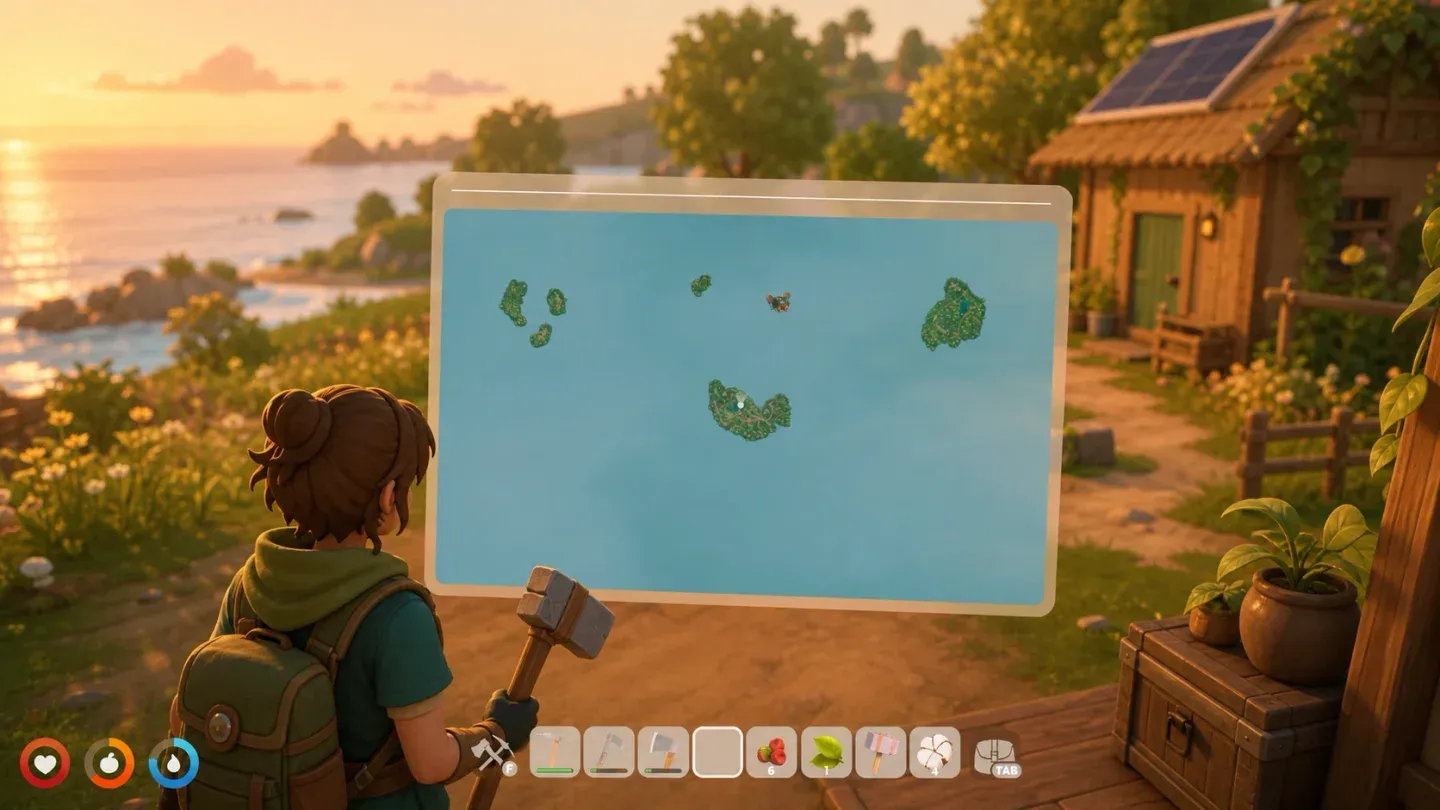
Furnace unlock in research table
What comes after Copper farming?
Once you have a reliable Copper Bar supply, the next milestone to aim for is the Drill. The Drill automates ore mining entirely, as long as you have power running to it. That removes the manual Pickaxe grind from the equation and lets you focus on the parts of adventure games like Solarpunk that actually require your attention.
Until then, the manual vein-farming loop is the way to go. Stock up on Pickaxe materials before each run, mine until your inventory is full, and run multiple Furnaces back at base to process everything in one go.
For more strategies on resources, crafting, and progression, the full Solarpunk guides collection has everything you need to stay ahead of the research curve.