
Building the Perfect Party in Solasta 2
Solasta 2 is one of the most faithful translations of D&D 5e rules into a video game, and that fidelity cuts both ways. The tactical grid combat rewards smart planning, but it punishes careless party building with swift, merciless total party kills. Before you even draw a sword, the decisions you make in the character creator will define whether your campaign feels like a triumphant adventure or a frustrating slog through constant reloads. This guide breaks down every class, explains the four essential combat roles, and shows you exactly how to put together a squad that can handle anything Tactical Adventures throws at you.

Choosing your four-member roster


What Is the Best Solasta 2 Party Composition?
After extensive testing of the Patch 1.0 launch build, the strongest four-member party pairs a Paladin, a Cleric, a Wizard, and a Ranger. This combination covers every mandatory combat role, handles both swarms of weak enemies and armored single targets, and provides enough out-of-combat utility to navigate trap-heavy dungeons without a party wipe.
Here is why each slot matters:
- Paladin (Tank/Burst): Heavy armor keeps the Paladin alive on the frontline, while Divine Smite dumps spell slots into critical hits for massive boss damage. The level 6 Aura of Protection is arguably the single best defensive feature in the game, adding your Charisma modifier to every party member's Saving Throws.
- Cleric (Healer/Sustain): Far more than a dedicated heal-bot. A Cleric running Spirit Guardians and using Healing Word as a Bonus Action can both grind down enemies and rescue downed allies without burning a full Action.
- Wizard (AoE/Control): Spells like Fireball, Hypnotic Pattern, Wall of Fire, and Counterspell give you answers to nearly every encounter type. Ritual casting preserves spell slots for the fights that actually matter.
- Ranger (Scout/Single-Target):Hunter's Mark combined with the Archery fighting style delivers consistent backline damage. Rangers also bring Pass Without Trace for stealth-heavy sections and solid survival skills for overland travel.
Solasta 2 Class Tier List (Patch 1.0)
Not all classes perform equally in Solasta 2's strict 5e environment. Here is how every class ranks based on the mechanical realities of the launch build.
S-Tier: The Campaign Carries
- Paladin: The top martial class. Divine Smite on a critical hit can delete a boss's health pool in a single turn, and Aura of Protection is a passive that benefits every party member simultaneously.
- Wizard: Squishy early but unmatched in adaptability. Access to the full spell list means you always have the right tool. Counterspell alone trivializes a large number of difficult encounters.
- Cleric: A well-built Cleric dealing Spirit Guardians damage while dodging on the frontline will out-damage most martial classes over a long fight, all while keeping the party alive.
A-Tier: Highly Reliable
- Ranger: Consistent, safe damage from the backline with excellent exploration utility. A strong second-slot martial choice.
- Fighter:Action Surge creates incredible burst turns. Lacks the Paladin's defensive aura and utility spells, but a Greatsword Fighter shreds enemy health pools reliably.
- Sorcerer:Metamagic is powerful, especially Twinned Spell Haste, but the limited spells-known list makes Sorcerers less adaptable than Wizards in varied encounters.
B-Tier: Niche but Viable
- Rogue:Sneak Attack burst is satisfying, but Solasta 2's combat frequently demands multi-target crowd control where Rogues struggle to contribute. Best used as a trap-disarming specialist.
- Barbarian:Rage makes Barbarians exceptional meat shields, but they lack the Saving Throw defenses, utility, and tactical depth of the Paladin or Fighter.
Class Tier Summary Table
| Class | Tier | Primary Role | Key Feature |
|---|---|---|---|
| Paladin | S | Tank / Burst | Aura of Protection, Divine Smite |
| Wizard | S | AoE / Control | Full spell list, Counterspell, Ritual Casting |
| Cleric | S | Healer / Sustain | Spirit Guardians, Healing Word (Bonus Action) |
| Ranger | A | Scout / DPS | Hunter's Mark, Archery style, Pass Without Trace |
| Fighter | A | Martial DPS | Action Surge burst turns |
| Sorcerer | A | Blaster | Twinned Spell Metamagic |
| Rogue | B | Striker / Utility | Sneak Attack, Thieves' Tools |
| Barbarian | B | Frontline | Rage damage reduction |
How Should You Allocate Starting Stats?
This is where many first-time players lose their campaign before it begins. The two methods available are Point Buy and Standard Roll, and they are not equal.
Point Buy caps any single stat at 15 before racial bonuses, but it guarantees a consistent spread. Community consensus strongly recommends Point Buy for a first playthrough because rolling can just as easily produce a 12 in your primary offensive stat as an 18, leaving your main damage dealer mathematically crippled.
The critical rule: Get your primary offensive stat to 16 before anything else. A 16 grants a +3 modifier, which directly raises your attack rolls and spell save DC. Anything below a 15 in your main stat produces frustratingly frequent misses. Spreading points too evenly creates a jack-of-all-trades scenario that collapses in tactical combat.
Planning Feats and ASIs Early
Before locking in your characters, map out your Ability Score Improvements (ASIs) at levels 4 and 8. If you plan to take a concentration-protecting feat like War Caster or Resilient (Constitution), you may need to invest more in Constitution during creation. Planning ahead prevents dead levels where a character gains no meaningful power spike.
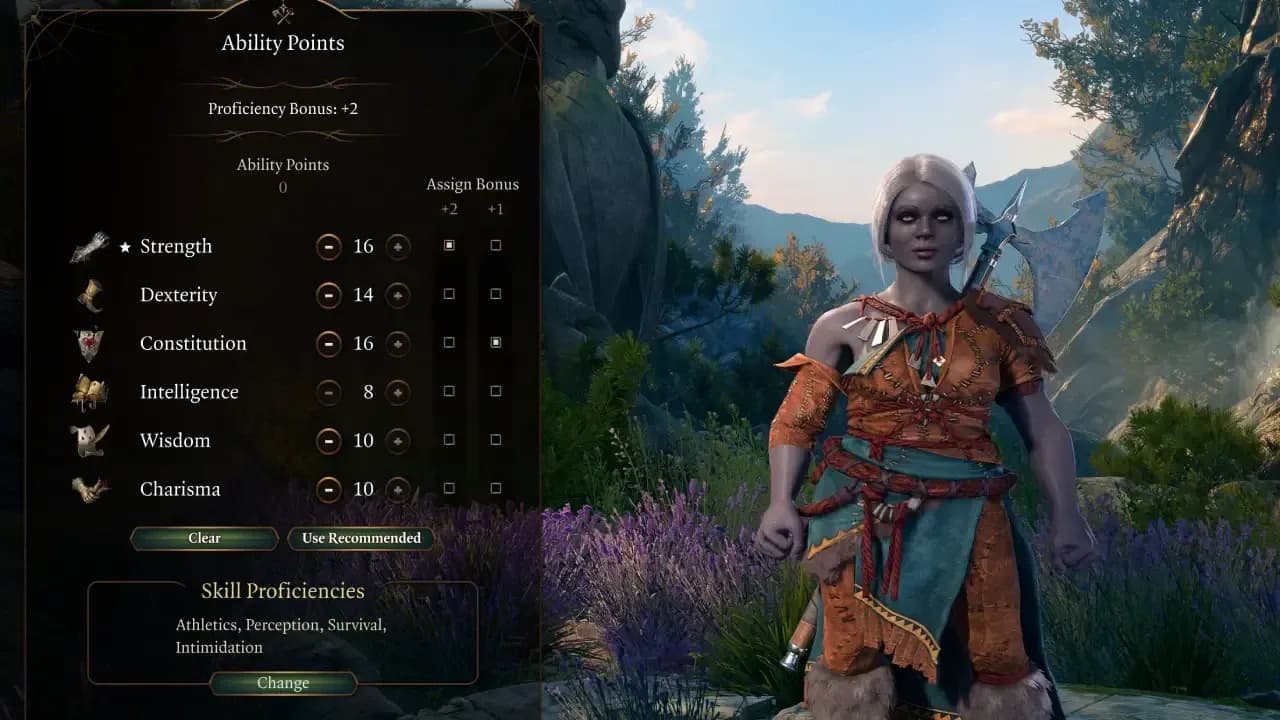
Point buy stat allocation screen
What Roles Does Every Party Need to Cover?
Think of your party as a system, not four separate heroes. Four mandatory roles must be filled to avoid catastrophic failures:
- Tank: Holds chokepoints on the tactical grid and forces enemies to engage them instead of your spellcasters. Paladin and Fighter both excel here.
- Healer: Provides party sustain, revival, and defensive buffs. A Cleric with Healing Word can pick up a downed ally as a Bonus Action without sacrificing their main Action.
- Striker: Delivers high single-target burst damage against priority targets and bosses. Paladin with Divine Smite or a Rogue with Sneak Attack fills this role.
- Utility Caster: Handles crowd control, area denial, magical identification, and skill checks. Wizard is the gold standard, with Sorcerer as a capable alternative.
How Do Backgrounds Affect Your Party?
Backgrounds are not flavor text. They directly unlock dialogue options, grant skill proficiencies, and set your starting reputation with key factions. In testing, giving each party member a distinct background provided the widest net for faction diplomacy and quest access.
Doubling up on the same background, such as taking two 'Sellsword' characters, locks you out of academic or aristocratic dialogue branches that frequently lead to superior loot and easier quest resolutions. The 'Acolyte' and 'Spy' backgrounds are particularly powerful early on because they can bypass entire combat encounters through unique dialogue checks.
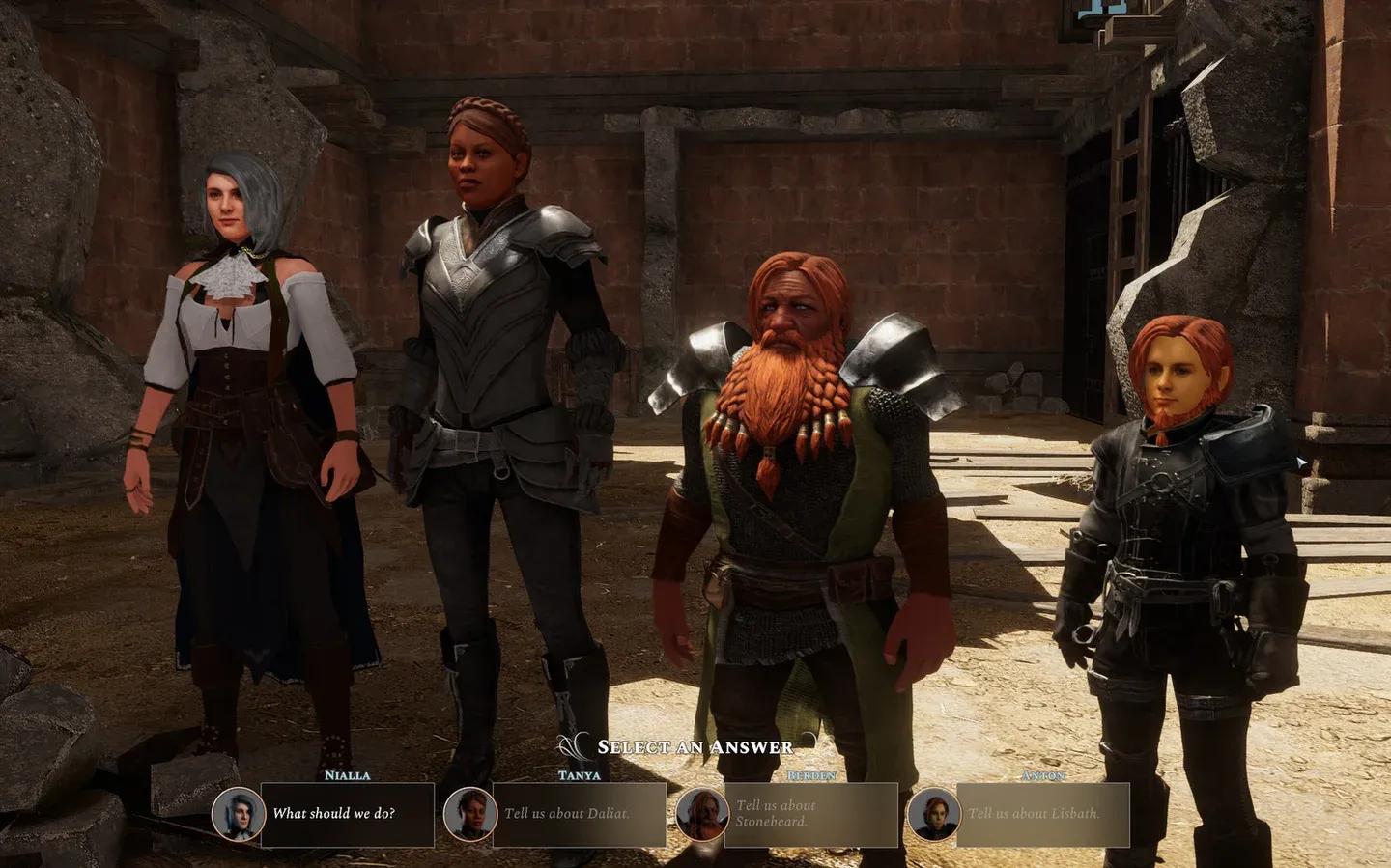
Background choices affect faction standing
Recommended Party Roles at a Glance
| Role | Best Class | Primary Stat | Core Function |
|---|---|---|---|
| Tank | Paladin / Fighter | Strength / Constitution | Frontline control and damage mitigation |
| Healer | Cleric / Druid | Wisdom | Sustain, revival, and defensive buffs |
| Striker | Ranger / Rogue | Dexterity | Burst damage and trap disarming |
| Utility | Wizard / Sorcerer | Intelligence / Charisma | Crowd control, AoE, and identification |
Common Party-Building Mistakes to Avoid
Even experienced CRPG players stumble on a few recurring pitfalls in Solasta 2.
Ignoring Perception and Investigation
At least one character needs proficiency in Perception and Investigation, backed by a solid Wisdom score. A Ranger or Rogue with high Wisdom is the natural choice. Without this, your party triggers traps before combat begins, which can wipe you faster than any boss fight. Pair that with Thieves' Tools proficiency so the same character can disarm whatever they detect.
Missing Weapon Proficiencies
Weapon proficiencies chosen during creation determine what early-game loot your characters can actually equip. A two-handed melee Fighter who skipped Martial Weapons proficiency cannot use the greatswords that drop in the first dungeon. Always review your starting gear loadout on the final creation screen.
Overlapping Backgrounds
As noted above, duplicate backgrounds narrow your dialogue and faction options. Four distinct backgrounds give you the broadest access to quests, vendor discounts, and narrative shortcuts.
What's the Best Strategy for Casual vs. Tactical Players?
Not every player wants to squeeze maximum efficiency out of every level-up. Here is how to approach party building based on your playstyle.
Tactical min-maxers should focus on stacking features that compound. The Rogue's Sneak Attack pairs well with a Fighter's knockdown abilities to guarantee advantage. Twinned Haste from a Sorcerer applied to both your Paladin and Ranger doubles their action economy for a full minute.
Casual roleplayers can clear standard difficulty comfortably as long as the four core roles are covered. Pick the classes and backgrounds that appeal to you narratively, keep a dedicated healer in the party, and you will have enough flexibility to push through the campaign without obsessing over optimal feat paths.
The game is designed to be challenging but fair. A thematic party built around interesting character concepts will succeed as long as the fundamentals (tank, healer, control, damage) are represented.