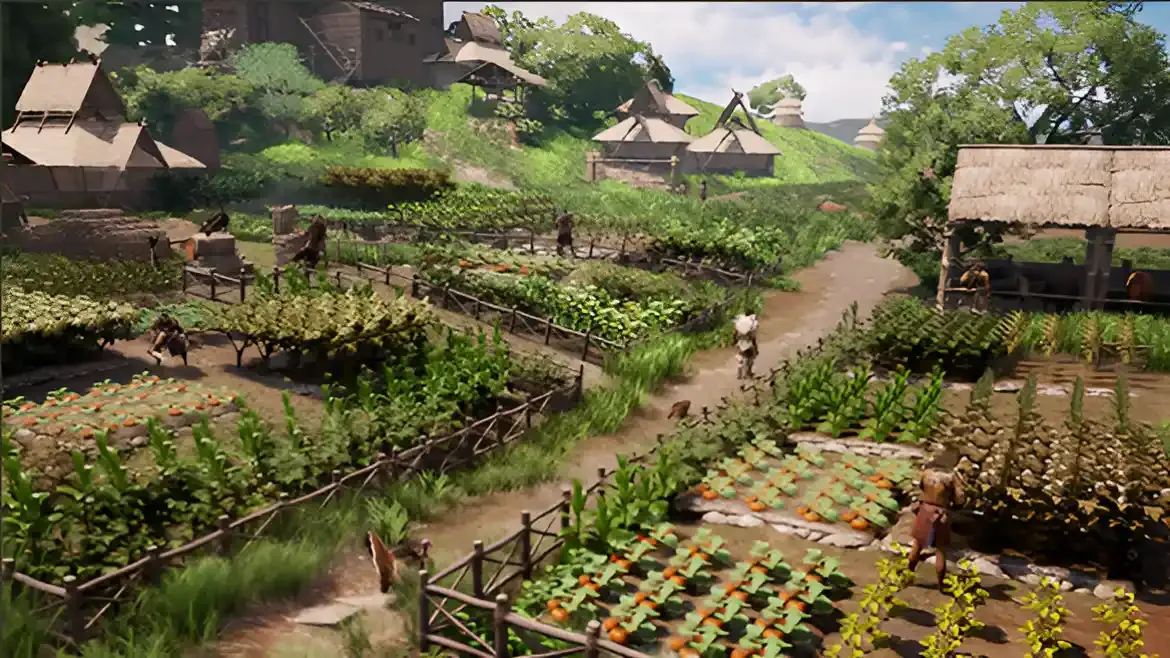


Stop Scrambling for Food and Start Actually Farming
Foraging berries and hunting wild animals gets you through the opening hours of Soulmask, but once your tribe expands, that strategy collapses. Farming solves the food problem permanently — if you understand how it works. Soulmask's crop system isn't like other survival games. Growth rates depend on temperature zones, matched fertilizers, and which tribesmen you assign to the work. Miss any of those details and your fields either stall or fail outright.
This guide walks through the full farming loop: planting your first seeds before Bronze Age, matching fertilizers to specific crops, and building a fully automated Granary operation where tribesmen handle every step.
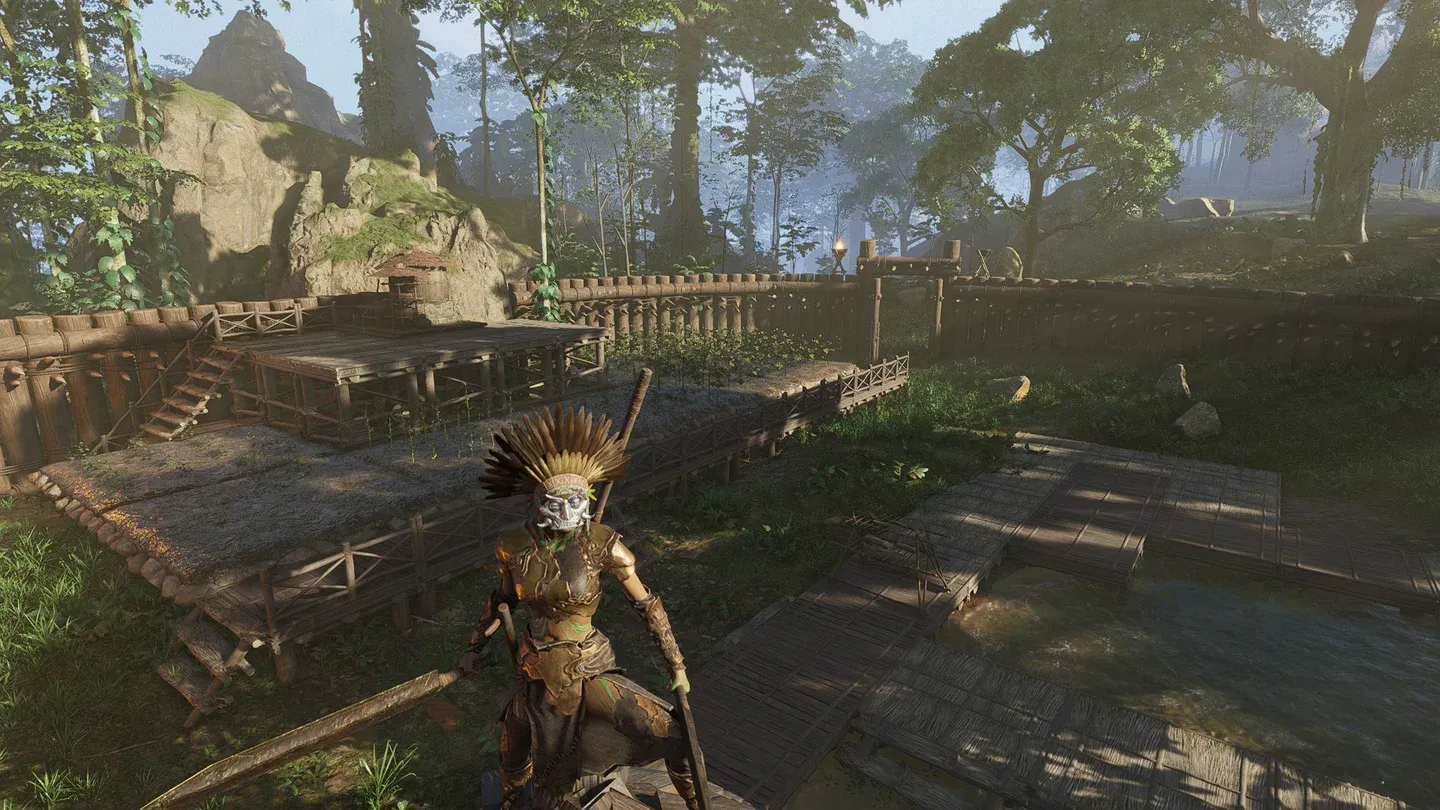
Granary placement matters most
What do you need to unlock before farming?
You can't place farmland until you unlock Crop Planting in the Dawn of the New Tribe technology tree. That single unlock gives you everything: Farmland plots, Fertilizer Buckets, Fertilizers, and Seeds. No separate recipe hunting required.
Two structures deserve immediate attention. The Grinder unlocks early and converts surplus fruits and vegetables into seeds. Any extra produce from Flint Tribe raids or Ancient Ruins loot goes straight into the Grinder to build your seed stockpile before you even have a working farm. The second priority is completing the Medium Buildings tech block before Bronze Age, which unlocks breeding technology and gives you a passive supply of animal feces for fertilizer production.
For water, you need one of three options: a Well, a Rainwater Collector, or a natural river nearby. Any of those works. The Well is most reliable if your base isn't near open water.
How do you set up your first farm before the Bronze Age?
Once Crop Planting is unlocked and your Grinder is producing seeds, place your first 2x2 Farmland plot and start growing manually. Without a Granary, you handle every step: planting seeds, applying fertilizer, keeping crops watered.
Keep it small at this stage. One farmland plot growing only what you need. Spreading across multiple plots before you have automation creates micromanagement without meaningful return.
If you've recruited tribesmen, build an outhouse. Beyond improving morale, it generates steady feces supply that feeds directly into fertilizer production. Tamed animals like alpacas and turkeys also contribute.
How does farming change in the Bronze Age?
Bronze Age transforms Soulmask farming from manual labor into an actual system. You unlock the Granary, Water Buckets, Fertilizer Buckets, a Rainwater Collector, and a proper Well. Herbicides and pesticides become available, which matter once your farm scales up.
The setup sequence is straightforward:
- Build a Granary near your farmland
- Construct a Water Well if you aren't near a natural source
- Craft Water Buckets and Fertilizer Buckets
- Fill the Fertilizer Bucket with the correct fertilizers for your crops
- Assign at least 2 tribesmen to the Granary to automate planting, fertilizing, and harvesting
Once those tribesmen are assigned, the farm runs itself. The Granary handles the full loop as long as you keep it stocked with seeds, fertilizer, and water resources. One catch: tribesmen will plant their own seed choices unless you manually configure the Seed Plantation settings for each individual farmland plot.
For animal management, the Breeding Farm structure requires 20 Clay, 60 Bronze Ingots, 100 Planks, and 20 Leather Rope to craft at a Building Workshop. Tribesmen assigned to a Breeding Farm automatically handle feeding, watering, collecting, and slaughtering at nearby animal pens, keeping your meat and feces supply running passively alongside crop production.
What fertilizer does each crop need?
Most players waste efficiency here. Compound Fertilizer works universally and boosts crop growth speed by 10% across all plants, but crop-specific fertilizers outperform it for their intended plants. Using the wrong fertilizer doesn't just miss the bonus — it actively underperforms compared to the matched type.
Here's the full breakdown:
Compost is crafted by combining Fiber, Thatch, and Vine with Tree Bark. That makes it one of the more accessible fertilizers early on, which is convenient since Cotton and Aloe are common early-game crops.
Papaya appears in two rows above, meaning it responds to both Bone Powder and Stone Powder Fertilizer. If you're growing Papaya, either works.
Why does location matter so much for your farm?
A poorly positioned farm creates constant micromanagement. A well-positioned one runs itself. The checklist for an ideal farm location covers five factors:
- Close to a water source (river, Well, or Rainwater Collector)
- Granary within easy reach of the plot
- Fertilizer Bucket placed nearby
- All plots within a bonfire's radius
- Flat, uniform terrain under the crops
If your base sits on uneven ground, build 2x2 foundations under your Farmland plots to level them out. Crops planted on sloped terrain cause problems with growth and tribesman pathing.
Expanding your farm means expanding your bonfire coverage. Build additional fires at the edges of your intended farm area before placing new plots, not after.
How does temperature affect crop growth?
Different crops require different temperature ranges to grow. You can't plant everything in the same field and expect uniform results. The Dawn of the New Tribe tech tree unlocks blueprints for Air Heaters and Cooling Tables to regulate temperature around specific plots.
Corn requires a temperate environment, so an Air Heater near the farmland is necessary in cooler biomes. Potatoes prefer a cooler range of 15-25 degrees and need a Cooling Table in forest environments.
Hovering over any seed in your inventory shows its required temperature range. Build the appropriate temperature structure near that plot before planting.
How do you pick the right tribesmen for farming?
Automation only works as well as the people running it. Tribesmen have individual likes, dislikes, proficiencies, and origins that affect how efficiently they work at specific stations. Check these attributes before assigning anyone to your Granary.
Some tribesmen are better at harvesting while others are stronger at soil maintenance. Matching each tribesman to their preferred station gives you bonuses and accelerates their leveling. Once they've leveled up through farming work, you can take direct control of your NPC farmers to upgrade their skills further and push those bonuses higher.
A useful secondary tip: if pests are eating your crops, place a Turkey near the affected field. Turkeys naturally hunt pests and protect your plants without any additional setup.
For broader Soulmask content and other game guides, you can browse more guides on GAMES.GG.
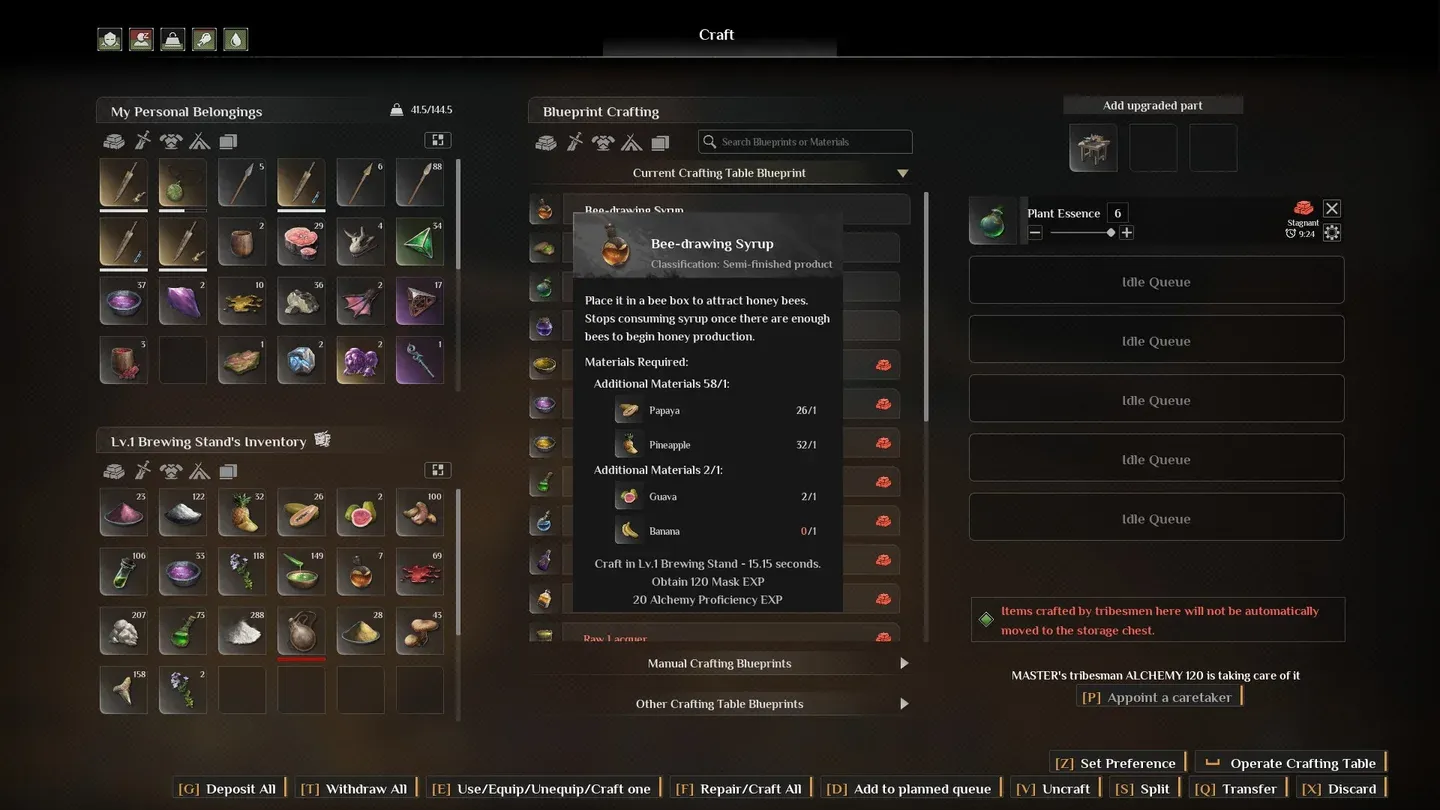
Fertilizer Bucket crafting options
Farming tips that actually save time
A few practical points worth keeping in mind as your operation scales:
- Grow one crop type per farmland plot. Mixed plots are harder to manage and complicate fertilizer assignments for your tribesmen.
- Arrange crops in rows along the borders of each Farmland plot to maximize available space.
- Aloe Seeds take roughly 45 minutes to sprout, so plan your harvesting schedule around that if you're relying on Aloe for medicine or other recipes.
- Stock the Granary fully before leaving your base for extended dungeon runs. Tribesmen stop working when resources run out, and a half-empty Granary means half-grown crops when you return.
- Build your outhouse early. The feces supply it generates is a direct input into your fertilizer chain, and it also keeps tribe morale up, which affects worker efficiency.
Getting all of this right means food stops being a concern entirely, which frees you to focus on the parts of Soulmask that actually push progression: dungeon runs, tribe expansion, and gear upgrades. The farming system has more moving parts than it first appears, but once the Granary is stocked and the right tribesmen are assigned, it runs without you.