Search games, articles, guides...CtrlK
Sign InGet Started
Master Starfield ship customization, stats, and the 5 strongest character builds for ground and space combat.

Written by Nuwel
Content Writer
See more GAMES.GG guides on Google
Add us as a preferred source and our guides show up first in your results.

Starfield Best Builds Guide: 6 Meta Setups That Actually Work
From shotgun brawler to stealth sniper, these 6 Starfield builds cover every playstyle with exact skills, weapons, and traits.
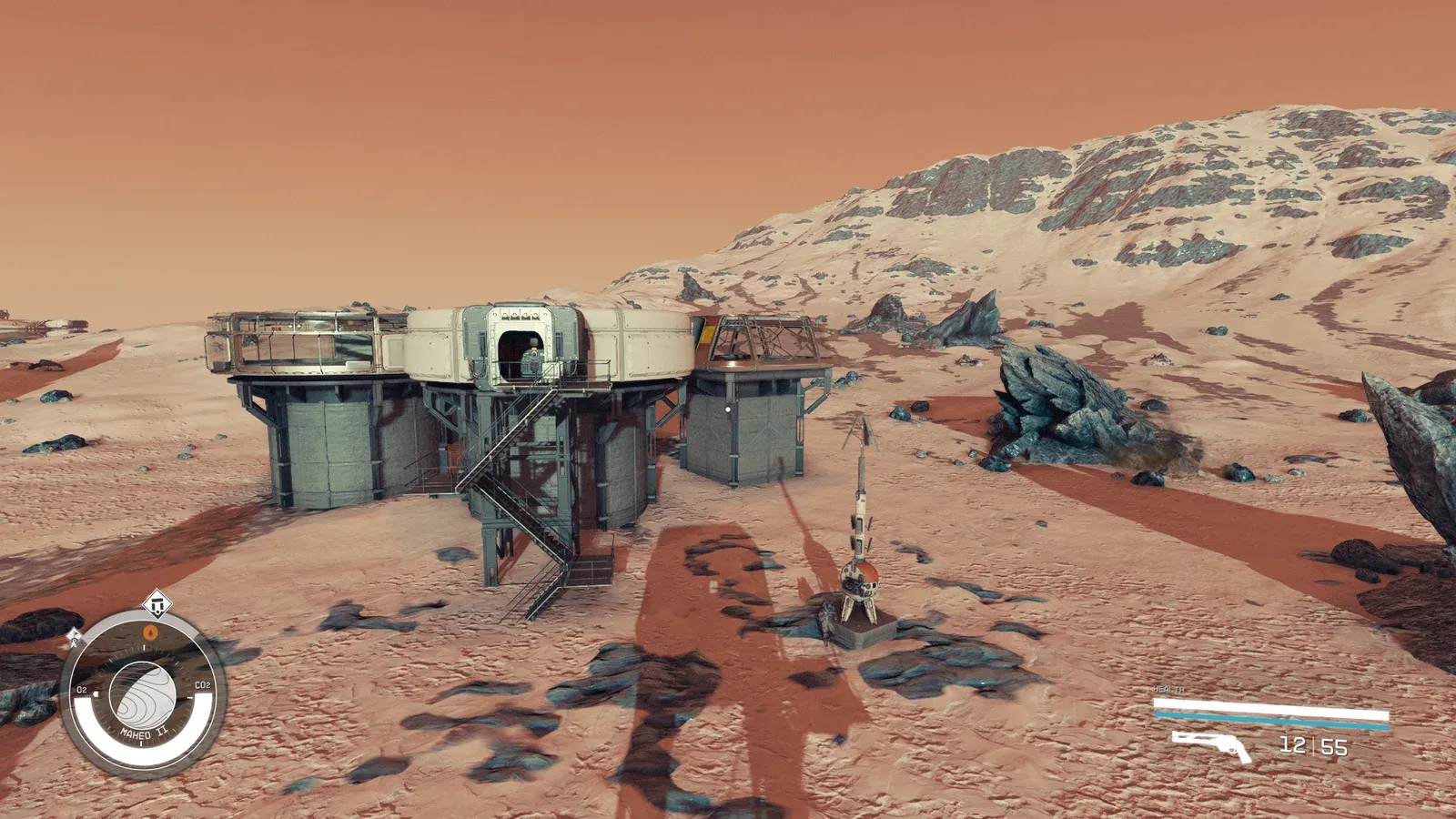
Starfield Outpost Guide: Build and Manage Your Base Efficiently
Learn how to place, power, and expand Starfield outposts with crew assignments, cargo links, and the best skill investments.

Starfield Achievements & Trophy Guide: How to Earn Every Award
Complete Starfield achievements and trophies in 75 hours with this step-by-step roadmap covering story, factions, crafting, and the Level 100 grind.
Starfield gives you two distinct ways to define how you play: how you build your character on the ground, and how you build the ship that carries you between the stars. Both systems are deep enough to swallow hours, and both reward players who understand what each stat actually does. This guide covers ship construction from first principles, then breaks down the 5 strongest character build archetypes, including how to slot legendary weapon traits into each one for maximum output.
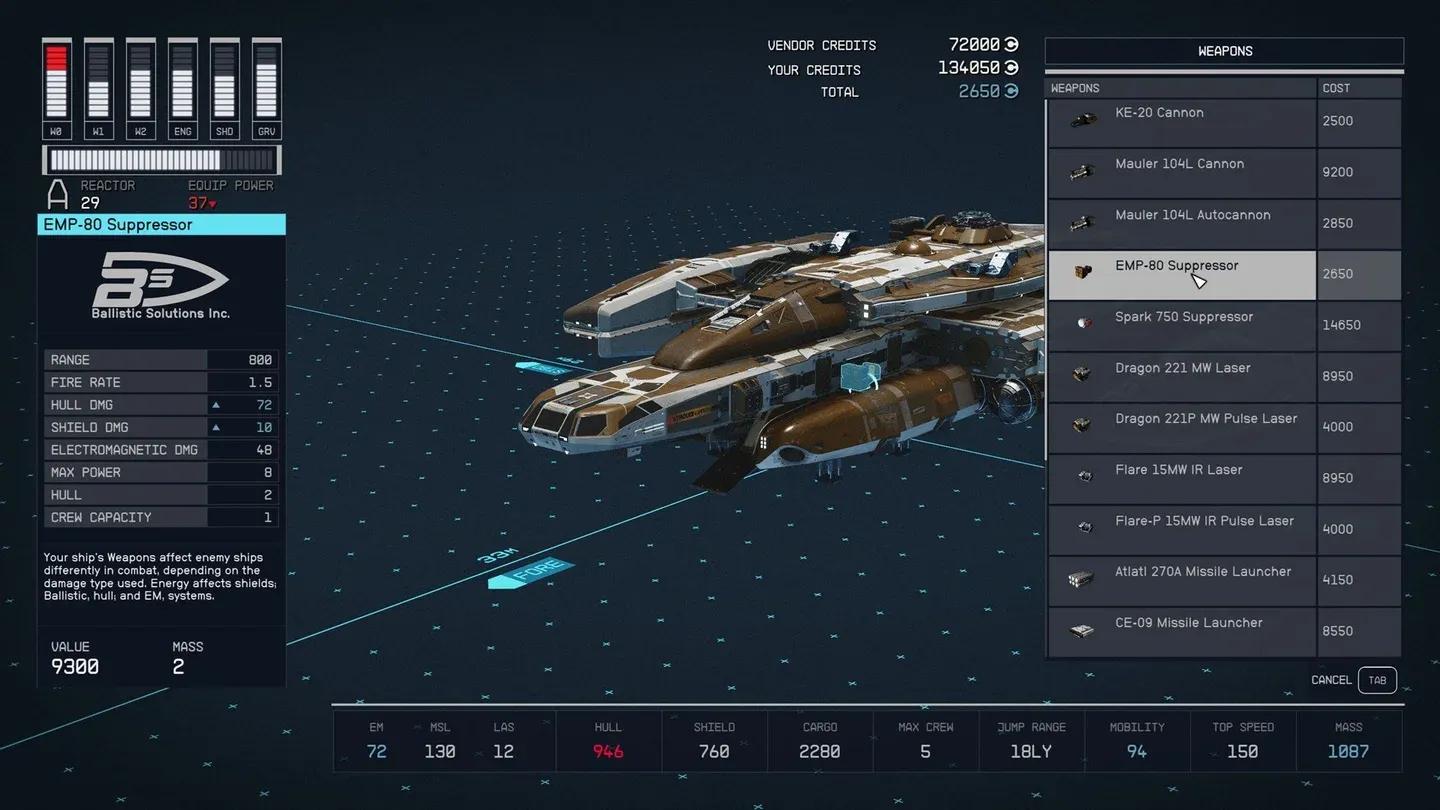
Ship builder module selection
You cannot build a ship from scratch in Starfield. Every build starts from a ship you already own, which you then modify at a ship technician found near landing pads in populated areas across the Settled Systems. The technician sells parts directly, and parts never sit in your inventory or cargo hold; they exist only as purchasable options in the builder interface.
A few hard rules govern what you can and cannot do:
For a much deeper look at parts compatibility and manufacturer-specific modules, the Steam community ship crafting guide covers level restrictions and which shipyards stock which manufacturers.
Every number in the ship builder affects something tangible. Here is what each stat does:
| Stat | What it controls |
|---|---|
| LAS | Damage from laser weapons |
| BAL | Damage from ballistic weapons |
| MSL | Damage from missile weapons |
| Hull | Ship health (total durability) |
| Shield | Damage absorbed before hull takes hits |
| Reactor | Total power available to distribute |
| Cargo | Storage capacity for items and resources |
| Shielded Cargo | Capacity for contraband, hidden from scanners |
| Crew Capacity | Maximum crew members on board |
| Fuel | Helium-3 reserve; more fuel means more consecutive grav jumps |
| Jump Range | Maximum light-year distance per single grav jump |
| Mobility | Maneuverability and turn rate in combat |
| Top Speed | Maximum velocity |
| Mass | Total ship weight; higher mass reduces speed, agility, and jump range |
Mass is the stat that bites most builders. Every module has weight, so the more you stack on, the slower and less agile the result. The flip side is that heavier ships carry more Hull, so there is a genuine trade-off between a nimble fighter and a durable fortress.
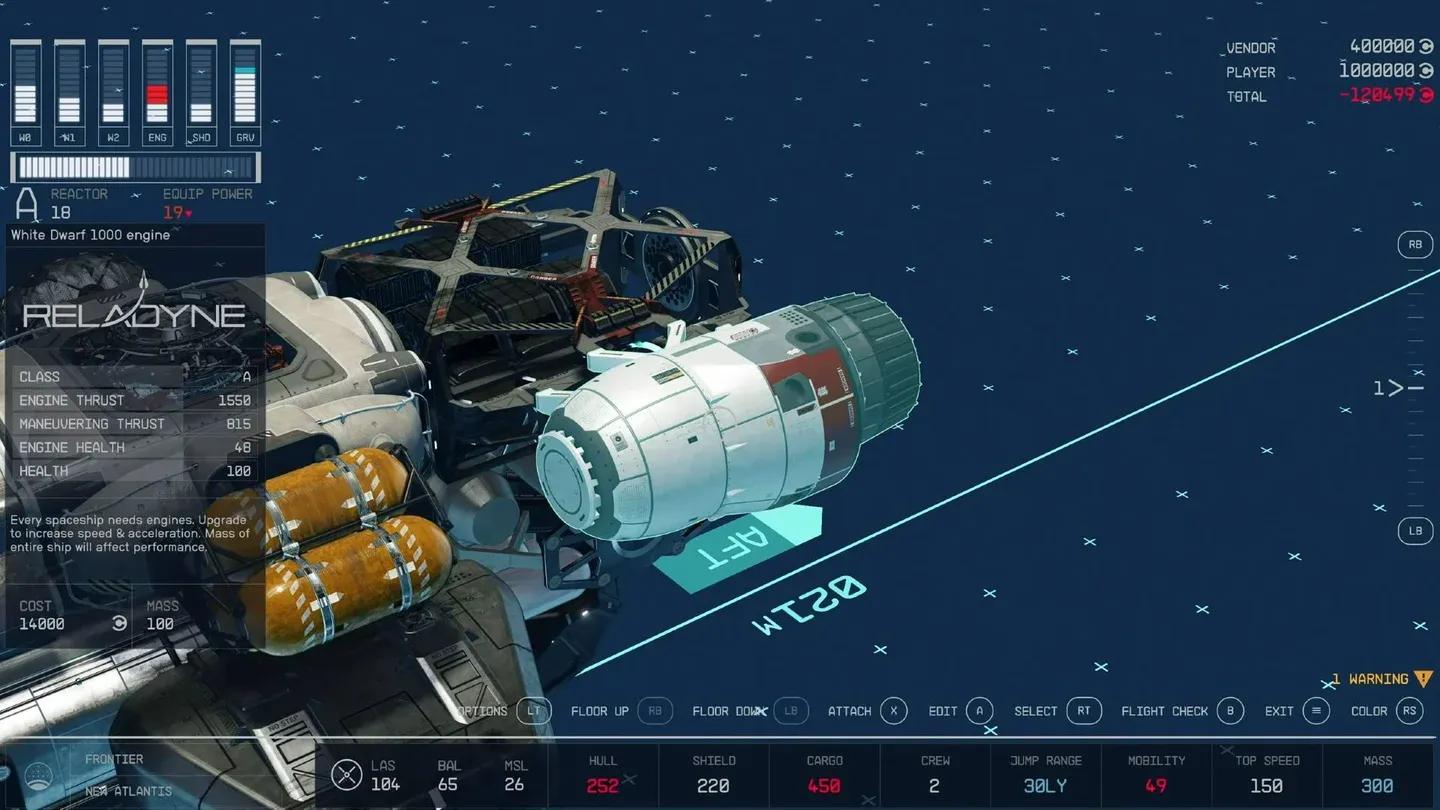
Full ship stats breakdown
Ship components are broken down into essential and optional categories. Here is a fast reference:
Essential (ship cannot fly without these):
Optional but significant:
Your reactor sets a total power budget. Using the D-pad, you can redistribute that power across six systems on the fly during combat:
The practical implication is that if you are in a fight with no intention of jumping away, pulling all power from GRV and redirecting it to weapons or engines is free damage. Shields recharge faster with more SHD allocation, so toggling power mid-fight based on what is happening is a real skill that separates average pilots from effective ones.
Ships are purpose-built and you can store multiple vessels to swap between them. Three archetypes cover most playstyles:
Piracy and bounty hunting: Prioritize high shields, engines, laser weapons, and missiles. Lasers strip shields, missiles target engines to disable ships for boarding. Keep mass low for speed and agility. De-emphasize jump range and large hab modules.
Exploration and surveying: Stack fuel tanks, a high-quality grav drive, large cargo holds, and diverse hab modules with workstations. Agility and weapons are secondary; you want range and storage. Keep some weapons for emergencies.
Cargo and smuggling: Maximum cargo holds including shielded bays, strong shields, and a powerful reactor. Attack power matters less than survivability; if things go wrong, the goal is escape, not a firefight.
The following builds represent the most effective character archetypes as of 2026. Each one is designed to stay functional across balance changes and works whether or not you have access to legendary rerolling systems.
The Ronin build lives and dies on stealth approach and one- or two-hit kills. Early game, shorter fast-swinging blades work well for their wide arcs. Late game and in NG+, heavier blades like a Va'Ruun Painblade-style weapon provide better armor penetration and damage scaling.
Priority skills:
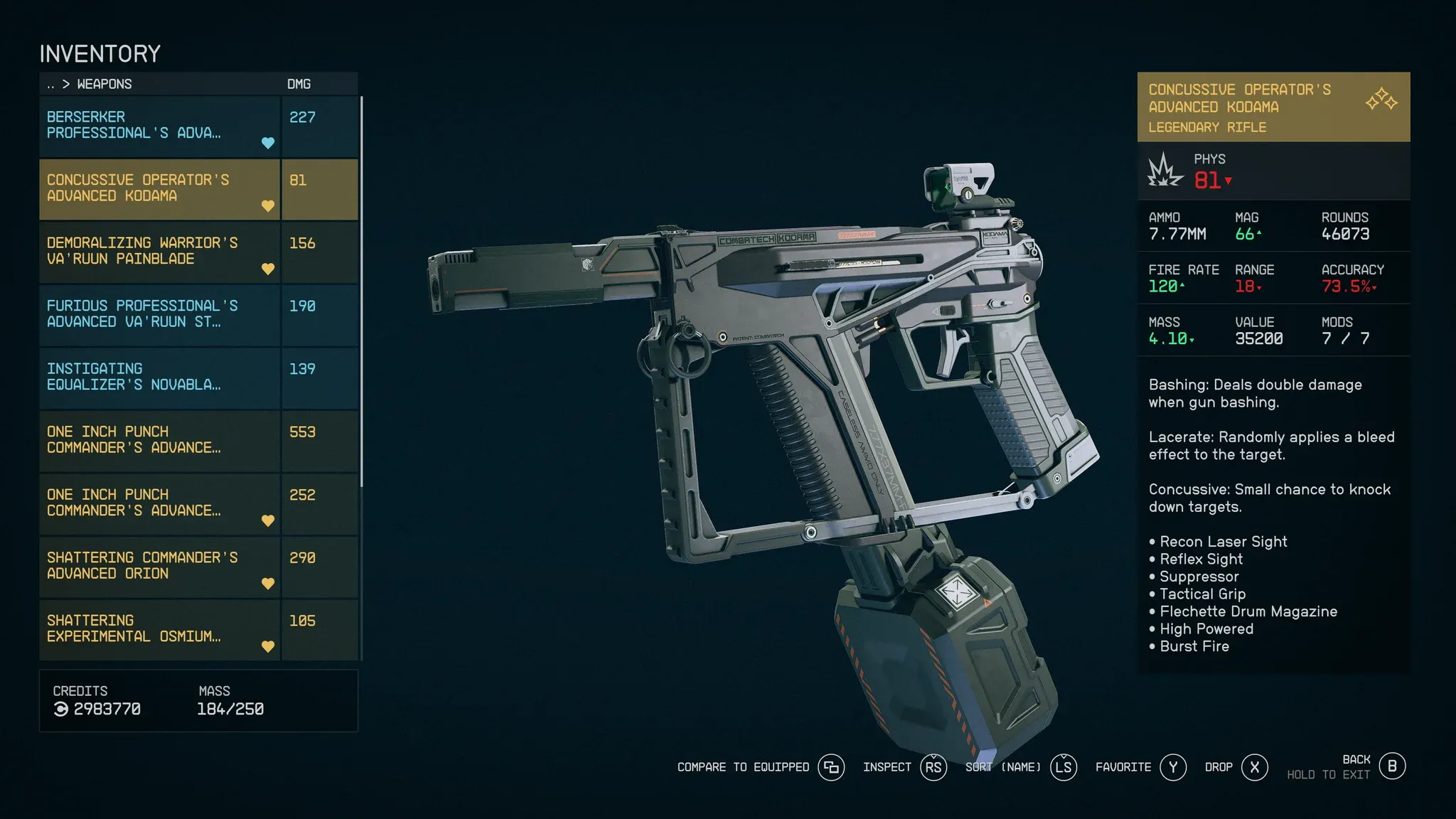
Weapon traits to target: Rapid (attack speed), Instigating (bonus against full-health targets), and a damage-over-time modifier like Lacerate or Radioactive for enemies that survive the first hit. Avoid defensive traits on your primary blade; every budget point should go toward killing faster.
This build clears outposts before anyone knows you are present. The weakness is cramped ships and zero-g environments, so carry a suppressed pistol as backup for close-quarters situations.
Priority skills:
The Reckless modifier is particularly strong here. Reckless trades increased incoming damage for a multiplicative damage boost. If you are never getting hit from long range, the downside is negligible while every engagement ends faster. Pair it with an Instigating-type trait for bonus damage against unaware targets, then add a crit-boosting modifier third. Prioritize two offensive traits before worrying about utility options like reload speed.
The most flexible build on this list. A mid-range assault rifle paired with a high-damage pistol covers boarding actions, base assaults, and urban contracts without needing to respec. This is the right choice if you want to move between ground and ship content without constantly adjusting your loadout.
Priority skills:
Weapon traits: For rifles, target recoil reduction, stability, and bonus damage while aiming. For pistols, raw damage, stagger, and armor penetration matter more than handling. This build works perfectly well on high-quality non-Exotic weapons, so do not chase rare drops at the expense of maxing your core skills first.
Energy weapons hit hard at mid-to-long range, penetrate armor effectively, and produce clear visual feedback in chaotic fights. The trade-off is that you often need line of sight, which means standing in the open longer than a sniper would.
Priority skills:
Reroll priorities for this build: Heat-management traits (more shots before overheat, effectively raising sustained DPS), armor-ignoring traits, and crowd-control effects like disorient or stagger. A Reckless-style boost can work here, but only if your positioning is disciplined. Beam users stay in sight longer than snipers, so incoming damage is a real risk.
This build treats space as the primary game loop. The majority of skill points go into Tech and Pilot-related perks. Ground combat is handled with a single reliable rifle or shotgun, not a specialized loadout.
Priority skills:
Ship weapon strategy: Run at least two weapon types. Lasers strip shields first, then ballistics or missiles shred the hull once shields are down. Keep some laser power active even after shields drop to prevent regen while you work on the hull. Distributing power so lasers come online first, then reassigning to ballistics or missiles once shields are stripped, is the standard sequence for tougher encounters.
For ship module selection and which parts work best at each class level, the Steam community ship crafting guide is worth bookmarking before you start a serious ship build.
| Build | Primary role | Key skill | Weak point |
|---|---|---|---|
| Ronin Melee Assassin | Planetary stealth kills | Concealment | Ranged enemies |
| Stealth Sniper | Outpost clearing | Marksmanship | Cramped ships, zero-g |
| Ballistic Bounty Hunter | All-purpose ground combat | Ballistics | No specialization peak |
| Laser Specialist | Mid-range DPS | Lasers | Requires line of sight |
| Ship Combat Ace | Space dogfights | Piloting | Weak ground loadout |
A few mechanics apply regardless of which build you run:
For more Starfield strategies and guides across every genre, browse the latest guides at GAMES.GG to keep your builds current as Bethesda continues updating the game through the Free Lanes update and Terran Armada expansion this April.