
Setting up production for Electronics and Chemicals represents your first major leap into advanced automation in StarRupture. These two blueprints unlock critical crafting recipes that transform your survival operation into a genuine industrial powerhouse. You'll need both to progress toward endgame content, and the journey to acquire them tests your combat readiness and navigation skills across some of the planet's most dangerous territory.
This guide walks you through finding both blueprints, surviving the hostile outposts that guard them, and designing efficient factory layouts that maximize production without wasting precious resources.
Why Electronics and Chemicals Matter for Progression
Electronics and Chemicals form the foundation of nearly every advanced recipe you'll encounter. Without them, you're stuck in the early game loop of basic tools and simple structures. With them, you unlock automation components, defensive systems, and the infrastructure needed to tackle StarRupture's endgame challenges.
Electronics feed into circuits, control systems, and power distribution networks. Chemicals enable explosive production, advanced fuel synthesis, and industrial-grade materials. Together, they create a production web that supports everything from automated turrets to complex manufacturing chains.
Finding the Electronics Blueprint at Starry Night
The Electronics Blueprint sits in an abandoned outpost called Starry Night, located in the far northern region of the map. This position makes it one of the more accessible advanced blueprints, though "accessible" is relative when Vermin patrols stand between you and your goal.
Navigation to Starry Night Outpost
Head directly north from your starting shuttle, then angle northwest once you've covered significant ground. The outpost hides in a small canyon formation pressed against the mountain range. Many players walk right past it because the canyon entrance blends into the rocky terrain.
Look for these landmarks as you approach:
- A distinctive satellite dish visible on the mountain ridge above
- Canyon walls with darker rock formations
- Scattered debris from previous failed expeditions

Starry Night canyon location
Securing the Electronics Blueprint
The main building sits at the canyon floor, partially collapsed but still structurally sound enough to hold valuable loot. You'll find the Electronics Blueprint inside a standard storage container on the ground floor.
The Vermin presence here is moderate. Clear the immediate area before entering the building to avoid getting trapped inside during looting. A Shotgun works exceptionally well in the tight quarters of this outpost.
Locating the Chemicals Blueprint at Spored Rock
The Chemicals Blueprint requires a much longer trek to the eastern edge of the map at Spored Rock outpost. This location tests both your combat capabilities and your resistance to environmental hazards.
Journey to the Eastern Frontier
From your shuttle, travel directly east as far as the terrain allows. You'll know you're approaching Spored Rock when the ground transitions to distinctive turquoise-colored rocks scattered across hills and valleys.
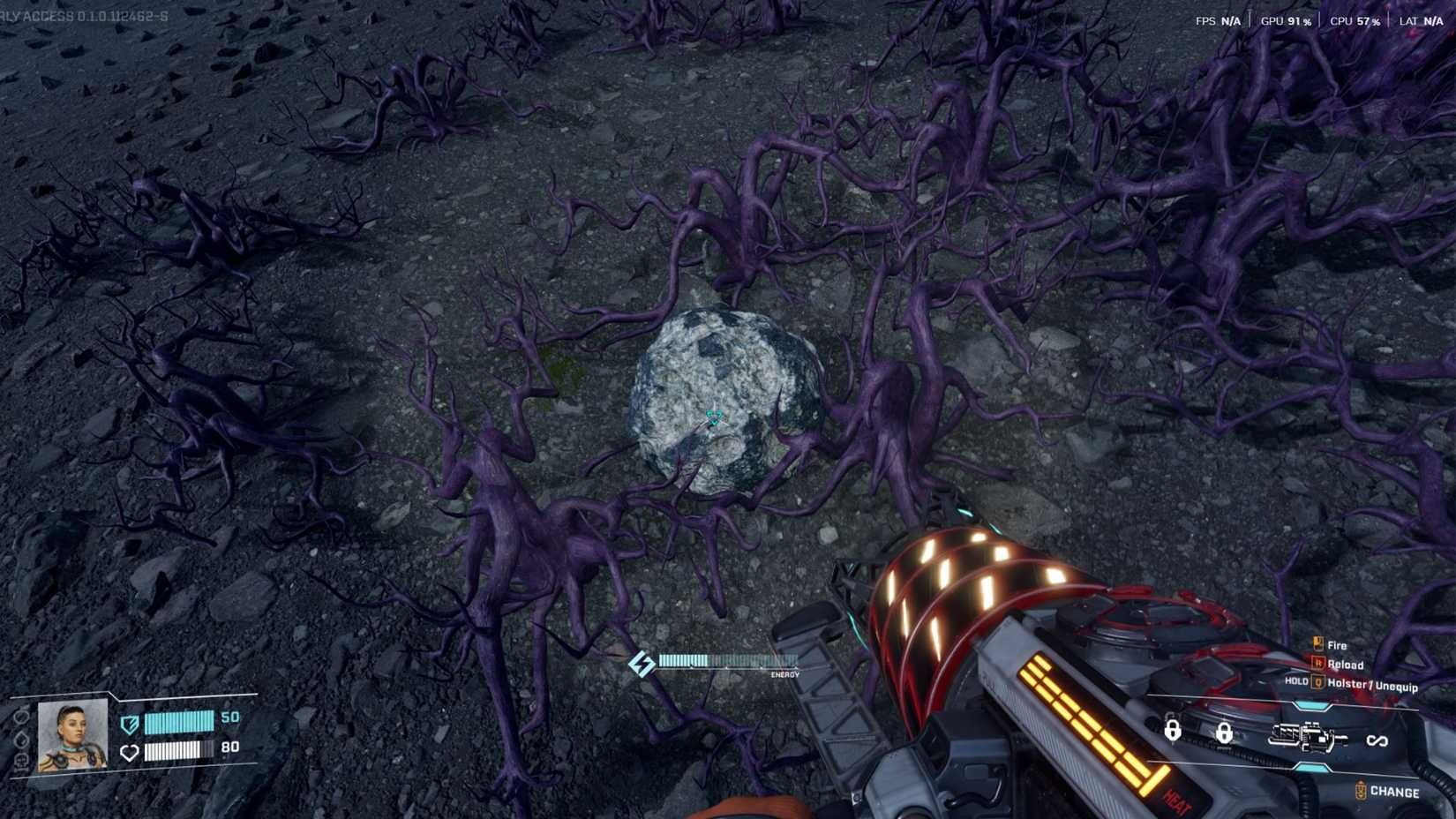
The outpost itself sits atop a prominent hill covered in massive blue spore growths. These spores aren't just decoration (they inflict the Infection status effect, which disables your shield regeneration while you're near them).

Spored Rock infection zone
Combat Preparation for Spored Rock
This outpost hosts one of the heaviest Vermin concentrations you'll encounter during blueprint hunting. The combination of large enemy groups and the Infection debuff creates serious danger.
Recommended loadout:
- Assault Rifle for medium-range engagements
- Shotgun as backup for close encounters
- Full ammunition reserves (minimum 200 rounds total)
- Health restoration items
The blue spores make defensive play nearly impossible since your shields won't regenerate. Adopt an aggressive clearing strategy, pushing through sections methodically rather than trying to hold ground.
Retrieving the Chemicals Blueprint
Fight your way to the abandoned base structure on the hill's peak. The Chemicals Blueprint waits inside a container similar to the Electronics location. The real challenge is surviving long enough to loot it and extract safely.
Building Your Electronics Production Chain
With the Electronics Blueprint secured, you can establish automated production. Electronics require several intermediate components, making factory layout crucial for efficiency.
Core Electronics Recipe Requirements
| Component | Quantity Needed | Production Source |
|---|---|---|
| Copper Wire | 4 | Smelter → Wire Machine |
| Synthetic Silicon | 2 | Chemical Processor |
| Circuit Board | 1 | Electronics Assembler |
Your production chain flows: Raw Ore → Smelted Copper → Copper Wire → Combined with Silicon → Electronics output.
Optimal Factory Layout for Electronics
Position your Electronics Assembler centrally with direct conveyor feeds from both Wire Machines and Chemical Processors. This minimizes belt distance and reduces bottlenecks.
Space your buildings with these clearances:
- 2 tiles between assemblers for maintenance access
- 3 tiles for main conveyor highways
- 4 tiles for power line distribution
Connect everything to your main power grid before activating production. Electronics manufacturing draws significant power, and brownouts will halt your entire chain.
Establishing Chemicals Manufacturing
Chemicals production follows a different resource path, focusing on organic materials and refined compounds rather than metal processing.
Chemicals Recipe Breakdown
The Chemicals Blueprint unlocks production requiring:
- Calcium (obtainable through specialized gathering methods)
- Sulfur deposits from mining nodes
- Water from extraction points
Unlike Electronics which benefit from centralized layouts, Chemicals production works best near resource nodes. Position your Chemical Processor close to Sulfur deposits and Water sources to minimize hauling distances.
Create dedicated storage for Calcium near your processor. This organic material degrades if left exposed to environmental conditions for extended periods, so covered storage prevents waste.
Scaling Chemicals Production
Each Chemical Processor handles a fixed throughput rate. Calculate your consumption needs across all recipes using Chemicals, then build enough processors to meet peak demand plus 20% overhead.
Common Chemicals consumption rates:
- Explosives crafting: 8 Chemicals per batch
- Advanced fuel synthesis: 12 Chemicals per unit
- Industrial materials: 6 Chemicals per component
Integrated Mega-Factory Design
Combining Electronics and Chemicals production into a unified facility creates powerful synergies. Many advanced recipes require both materials, and integrated layouts reduce the logistical overhead of managing separate production sites.
Dual-Production Hub Layout
Divide your factory floor into distinct zones:
Electronics Wing (North side):
- Smelting banks for copper processing
- Wire production clusters
- Electronics assembly lines
- Component storage silos
Chemicals Wing (South side):
- Chemical Processors arranged in rows
- Calcium storage and handling
- Sulfur input conveyors
- Water pipeline distribution
Central Hub (Middle):
- Power generation and distribution
- Main storage warehouse
- Quality control stations
- Shipping/receiving for finished goods
Power Grid Optimization
Your mega-factory demands substantial power infrastructure. Run separate circuits for each wing to prevent total facility shutdown if one circuit fails.
Install backup generators near critical production nodes. Electronics and Chemicals both use temperature-sensitive processes that can spoil if power cuts occur mid-production.
Resource Flow and Bottleneck Management
The biggest efficiency killer in dual-production facilities is resource starvation. One starved assembler can cascade into facility-wide slowdowns.
Identifying Production Bottlenecks
Monitor these key indicators:
- Assembler idle time (should stay below 15%)
- Conveyor belt saturation (aim for 60-70% capacity)
- Storage buffer levels (maintain 30-minute reserves minimum)
Use color-coded conveyor belts to track resource types visually. This makes bottleneck identification instant during facility walkthroughs.
Advanced Automation Techniques
Once your basic mega-factory operates reliably, implement these advanced optimizations to maximize output.
Smart Splitter Configuration
Smart Splitters route materials based on priority rules. Configure them to:
- Send overflow production to storage
- Prioritize critical recipes during shortages
- Balance loads across multiple assembler banks
Circuit Network Integration
Connect your Electronics and Chemicals production to circuit networks for automated control:
- Shutdown non-essential production during power shortages
- Ramp up output when storage falls below thresholds
- Alert systems for component depletion
Defending Your Mega-Factory
A facility this valuable attracts Vermin attention during Rupture events. Proper defensive infrastructure protects your investment.
Perimeter Defense Setup
Install automated turrets at 45-degree angles covering all approach vectors. Space them close enough for overlapping fire zones but far enough to avoid chain destruction from explosive Vermin.
| Defense Layer | Recommended Structure | Spacing |
|---|---|---|
| Outer Perimeter | Gun Turrets | 15 tiles |
| Mid Layer | Laser Turrets | 12 tiles |
| Inner Ring | Flamethrower Turrets | 8 tiles |

Defensive turret coverage
Emergency Protocols
Program emergency shutdown sequences that activate when Vermin breach outer defenses. This prevents facility damage from spreading and limits repair costs. Keep repair materials stockpiled near critical production nodes. You need the ability to restore function quickly after attacks.
Scaling Beyond the Mega-Factory
Your initial Electronics and Chemicals mega-factory serves as a template for expansion. As you unlock additional blueprints and recipes, replicate this integrated design philosophy. Build satellite facilities that specialize in single product lines but maintain logistical connections to your central hub. This distributed approach provides redundancy while maintaining efficiency. The blueprints you've gathered represent just the beginning of industrial automation in StarRupture. Master these fundamentals, and you'll handle whatever advanced production challenges the planet throws at you next.