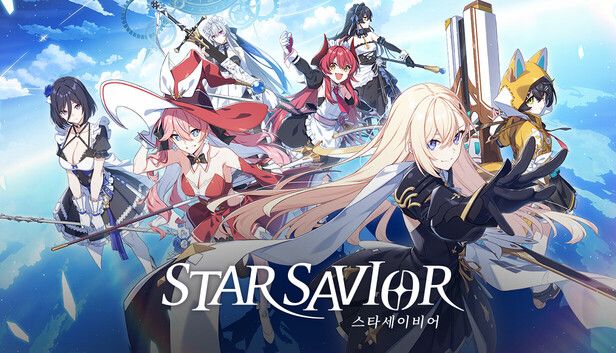

Star Savior looks like a lot at first glance: anime characters, elemental systems, gacha banners, gear slots, a roguelike training mode, and a progression tree that branches in every direction. The good news is that the game is genuinely forgiving if you understand two things early: concentrate your resources on a small core team, and let the Starlink system do the heavy lifting for everyone else. Get those two things right and the rest of the systems fall into place.
What kind of game is Star Savior?
Star Savior is a turn-based gacha RPG where you command a squad of four Saviors through story operations, boss fights, Journey training runs, and PvP matches. The game launched globally on March 19, 2026, and has already pulled over 100,000 downloads on Google Play with a 3.9 rating.
The core loop is straightforward: push Mainstream Operations to unlock systems and raise your idle income, build a compact core roster, and invest your materials into that roster rather than spreading them across every character you pull.
Core team setup screen
The four character roles work like this:
| Role | Position | Primary Function |
|---|---|---|
| Tank / Defender | Front row | Absorbs damage and draws pressure |
| Healer / Support | Front or back row | Provides healing, buffs, and utility |
| DPS (Striker, Ranger, Caster) | Back row | Deals the majority of damage |
| Assassin | Back row | High burst, often element-specific |
Front-row units naturally draw more incoming hits, so tanks and healers belong there while your damage dealers stay protected in the back.
How does the Starlink system work?
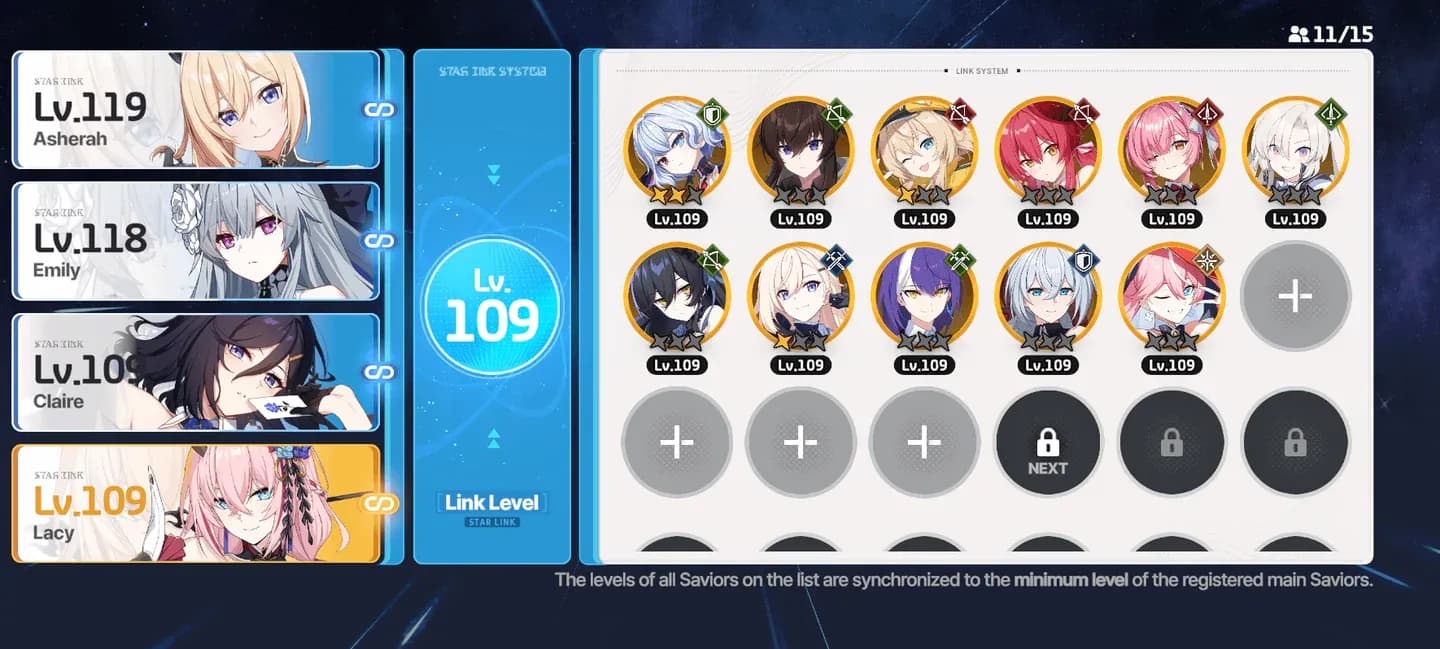
Starlink is the single most beginner-friendly system in the game, and understanding it early saves you from the most common resource mistake.
Here is how it works: instead of leveling every character on your roster individually, you pick four to five core units and invest in them. Every other character on your account is automatically synchronized to match the lowest level among those core units. That means your bench stays relevant without consuming any EXP materials.
The practical result is faster combat growth on your main squad, better resource efficiency across the account, and no reason to panic when you pull a new character you are not ready to build yet.
How should you build your first team?
The cleanest starter shell is one tank, one healer or support, and two damage dealers. That covers every role without overcomplicating your upgrade path.
For early reroll targets, Bunnygirl Charlotte, Emilly, Lacy, and Bell Rhys are the top-tier picks based on current meta rankings. Among supports, Asherah: Waltz of Starlight is consistently highlighted for her team stability and long-fight control.
Rerolling itself is optional. The game provides a large number of free pulls early and most early story content can be cleared with free units. The gacha system runs a 4% base SSR rate on both character and Arcana banners, with a mileage exchange that guarantees your target after 200 pulls. That mileage does not expire, so saving it for a specific roster gap is always valid.
Gacha banner pull interface
What are the gear and progression priorities?
Gear in Star Savior uses a two-tier structure. T1 gear covers early progression, while T2 is the long-term investment target. The real progression curve starts after Mainstream Stage 14, which is where the practical path toward T2 gear unlocks.
The most important rule before you hit that threshold: do not over-invest in T1 Weapon, Armor, or Gloves. Here is which slots to upgrade first:
| Slot | Main Stat | Priority |
|---|---|---|
| Shoes | Speed | Upgrade first |
| Necklace | Speed | Upgrade first |
| Ring | ATK% for DPS / HP% for tank-support | Upgrade early |
| Weapon | Fixed slot stat | Hold unless T2 |
| Armor | Fixed slot stat | Hold unless T2 |
| Gloves | Fixed slot stat | Hold unless T2 |
Speed is the priority because it directly controls turn order. Getting your carries and supports to act before enemies do is more impactful than raw stat increases on secondary slots.
For DPS units, prioritize Attack rate, Critical chance, and Speed. Tanks want HP, Defense scaling, Resistance or Damage reduction, and Speed. Supports can blend elements of both depending on their kit.
Gear upgrade priority slots
How does Journey training work?
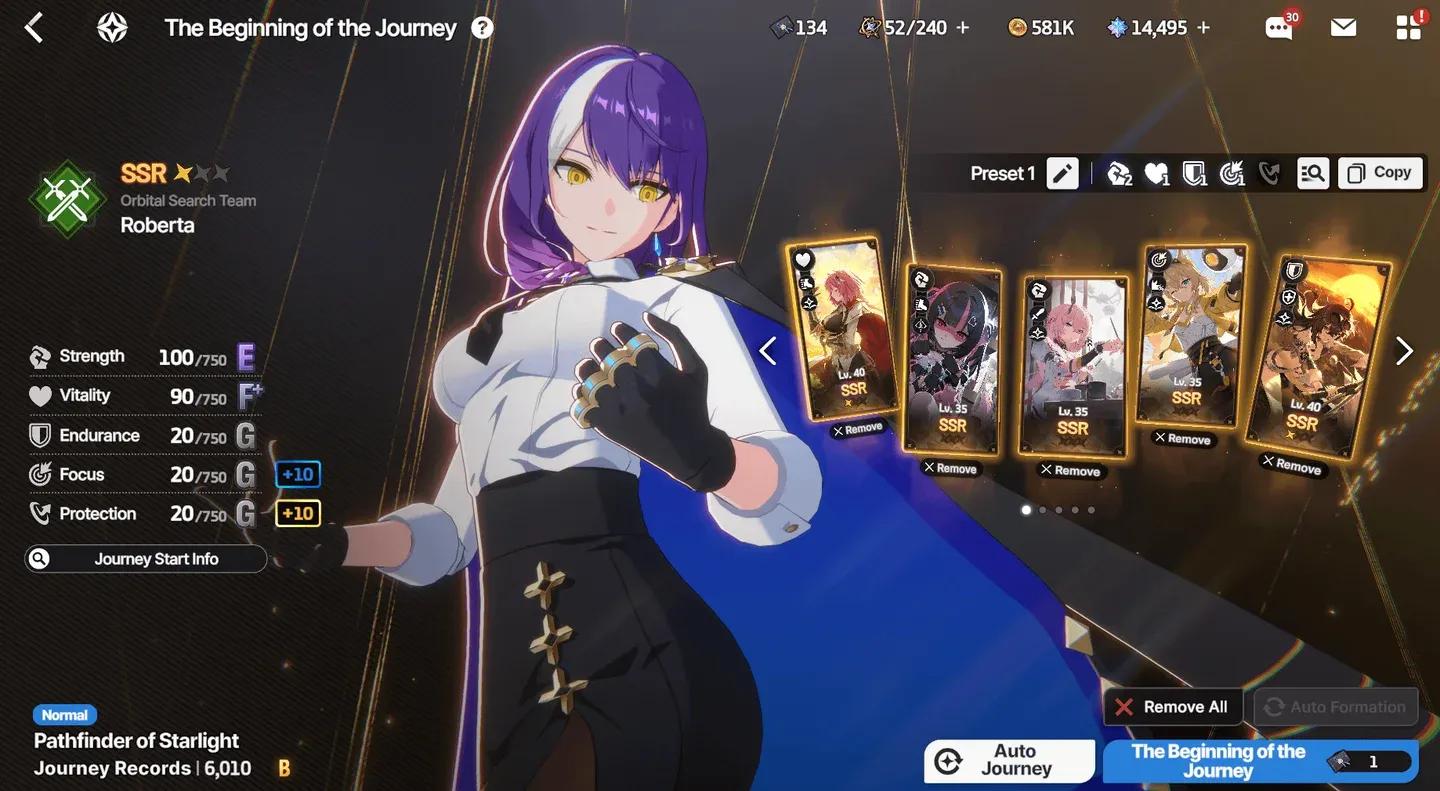
Journey is the dedicated character-raising mode in Star Savior. Each run is a structured roguelike session where you pick a Savior, work through training days, make stat-shaping decisions, and fight bosses. At the end, you receive a Stella Archive, which functions like a permanent gear-like boost for that character.
The key to a strong run is going in with a clear stat target rather than making random choices:
- DPS characters should aim toward STR 1250 in serious runs
- Tanks and supports should aim toward HP 1250
- Three or more matching Arcana help stack your intended stat line efficiently
- Keeping Condition at BEST throughout the run preserves its value
DPS Journey runs should focus on Attack, Crit, and Speed, while tank runs prioritize HP and Defense. Pairing an Arcana that reinforces those same stats is a key component of the build outcome.
For Journey Hard mode, reach at least Resonance Stage 8 before entering, with Stage 9 as the more comfortable entry point. Going in earlier turns the mode into a resource drain rather than a growth tool.
What are the top Arcana picks?
Arcana are support modifiers that enhance a Savior's performance both in Journey runs and in regular combat. Four SSR Arcana sit in the top band across community rankings:
- Elastic Acceleration
- Solid Destruction
- Sharp Assault
- Construct Bomb
For DPS builds specifically, the priority order is Power, then Health, then Focus. Sharp Assault and Elastic Acceleration are strong fits for damage-first carry plans. SR Arcana mainly fill temporary stat slots early on and should not receive the same long-term upgrade investment as SSR pieces.
For the Lacy build specifically, a strong Arcana package includes Elastic Acceleration, Solid Destruction, Shadow Erosion, Sharp Assault, and Construct Bomb, with skill targets of 3/6/6 early and 7/8/8 at endgame.

Arcana card selection menu
How should you manage resources day by day?
The first week breaks down cleanly:
Days 1-3: Finish the tutorial, claim launch rewards, push story as far as your power allows, and start refining gear and skills on your best units only.
Days 4-5: Check whether your team has a tank, a healer or support, and two damage dealers. Patch the weakest role before raising any bench projects. Keep daily and weekly missions active.
Days 6-7: Alternate farming sessions with story pushes. Tune gear and Arcana around the team that actually clears content. Plan banner spending before the next rate-up arrives.
The resource spend priority table is worth keeping in mind:
| Resource | Priority | Rule |
|---|---|---|
| Stamina | Spend first | Push story first, then farm event currency |
| AFK and Journey | Track daily | Do not let AFK rewards cap |
| Core Materials | Guard tightly | Align with your real bottleneck, not side projects |
| Main Squad | Upgrade first | Best resources go to your 4-6 core Saviors |
| Premium Currency | Targeted use | Spend on high-impact banners only |
What about PvP?
For beginners, PvP is not a priority. Early strategic options are limited and the current meta functions largely as a speed check. The rewards are decent but not account-breaking, so you can safely deprioritize it while your core team is still developing.
When you do engage with PvP, the mode is tempo-driven: speed, action-gauge control, break timing, and Nova Burst windows decide most matches. A stable PvP shell still follows the same 2 DPS, 1 tank, 1 support structure. Sayla, Smile, Lou, Ede, Vesta, and Serpent are frequently highlighted as tempo anchors in current offense and defense lineups.
How do you handle boss fights?
Early raid and world boss clears follow a repeatable loop: survive the heavy hit, strip defense, break the gauge, then detonate Nova Burst during the break window.
Bosses enter a broken state for about two turns after the break gauge reaches zero. Saving ultimates and Nova Burst for that window rather than spending them on shielded phases is the difference between clean clears and wipes. The most common failure point is spending ultimates before break and triggering Nova Burst too early.
The recommended early team shell is one tank, one healer or support, one AoE DPS, and one single-target DPS. Specific early picks include Ede for tanking and Serpent, Frey, or Elisa for sustain.
For more guides covering Star Savior builds, team compositions, and progression systems, browse the latest guides on GAMES.GG.