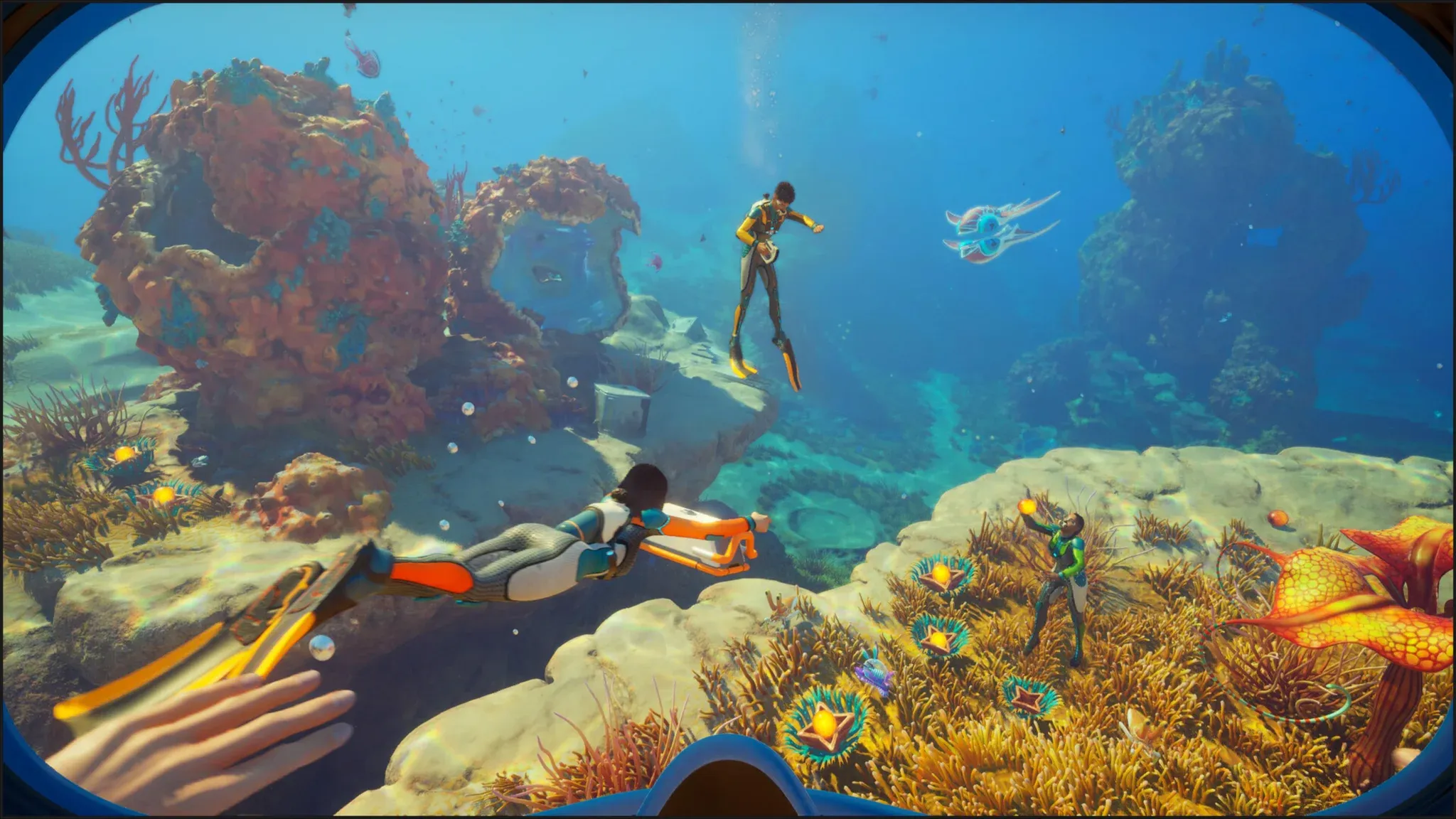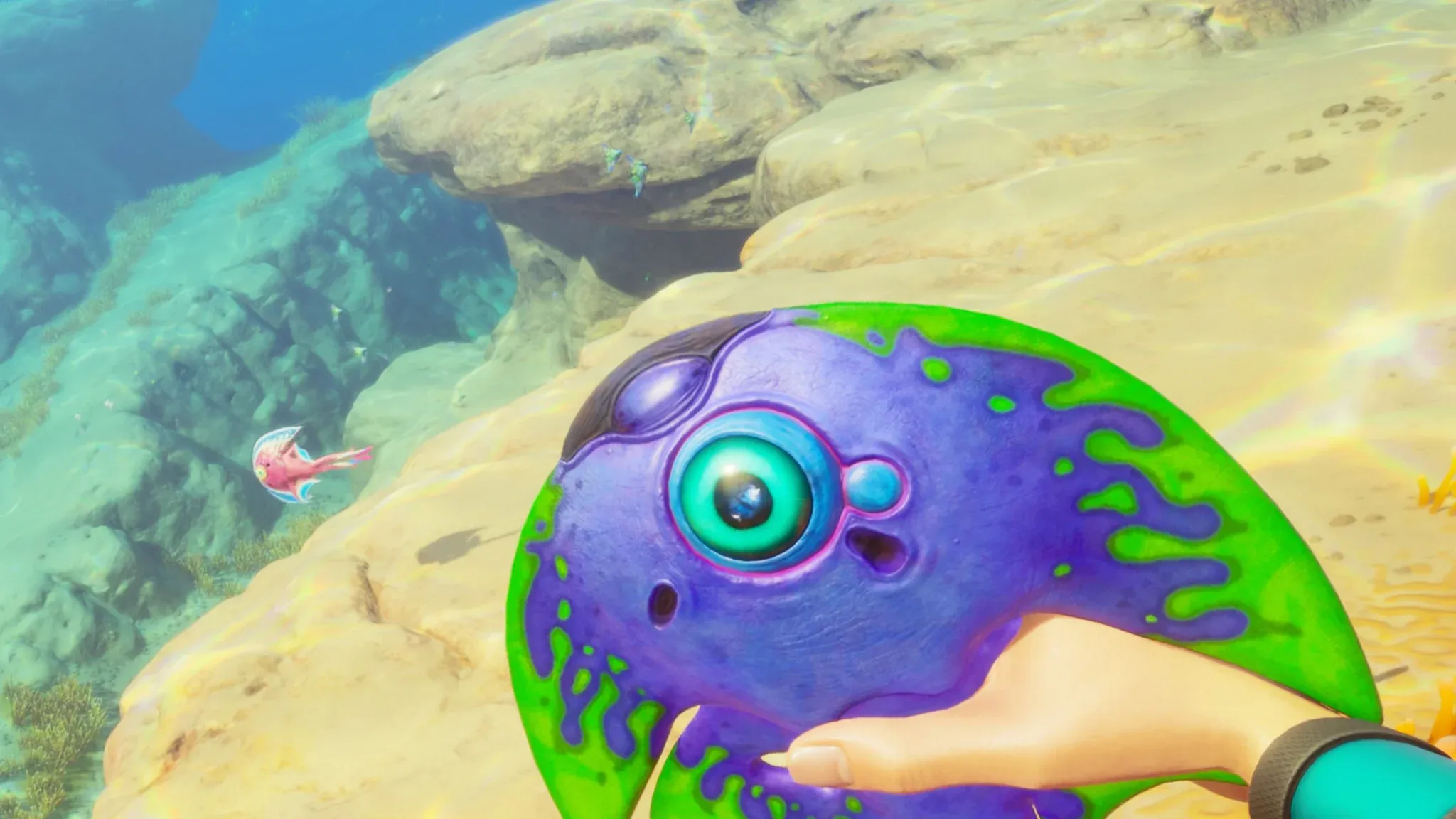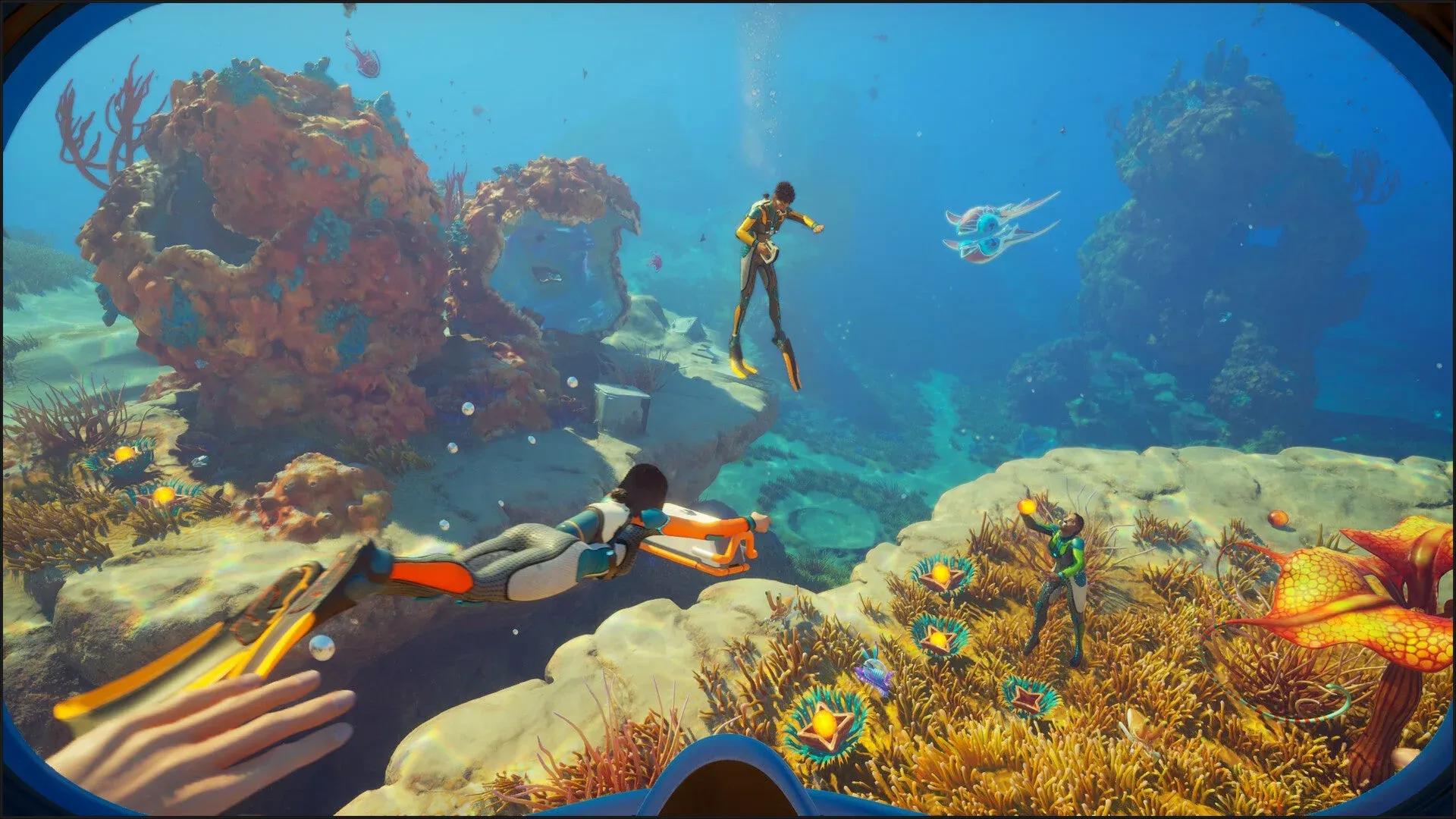

Subnautica 2 drops you onto Proteus, a water planet with no map, no hand-holding, and plenty of things that want to eat you. As a Pioneer stranded after a colony disaster, your job is to piece together what happened while managing oxygen, hunger, thirst, and a growing list of hostile fauna. The learning curve is real, but the systems reward players who take time to understand them. These 15 tips cover everything from your first five minutes to building the Tadpole submersible.
How do you get your bearings without a map?
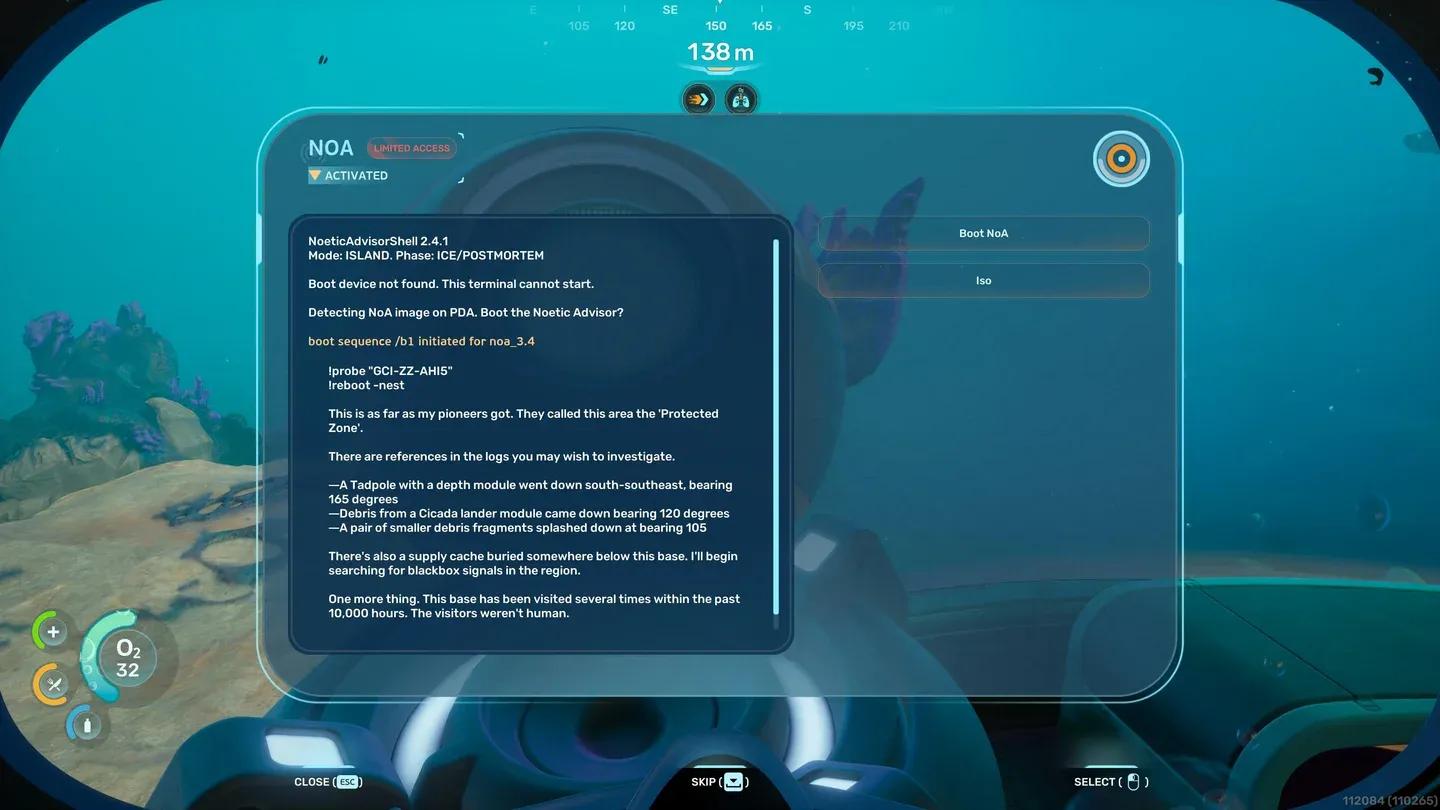
Compass and coordinate HUD
Proteus has no traditional map, so navigation relies on two things: the compass at the top of your HUD and the coordinate readout in the pause menu. Press Escape to pause, and your character's exact coordinates appear in the bottom-right corner of the screen. Write them down or screenshot them.
Your Lifepod is the most important landmark early on. It contains four key devices:
- NoA Terminal: Displays objective messages and points-of-interest.
- Biobed: Your respawn point if you die.
- Fabricator: Crafts tools and resources.
- Pod Locker: Stores up to 35 items.
Never stray so far that you lose track of the Lifepod's coordinates. Getting lost in open water with low oxygen is a fast way to end a run.

What objectives should you prioritize first?
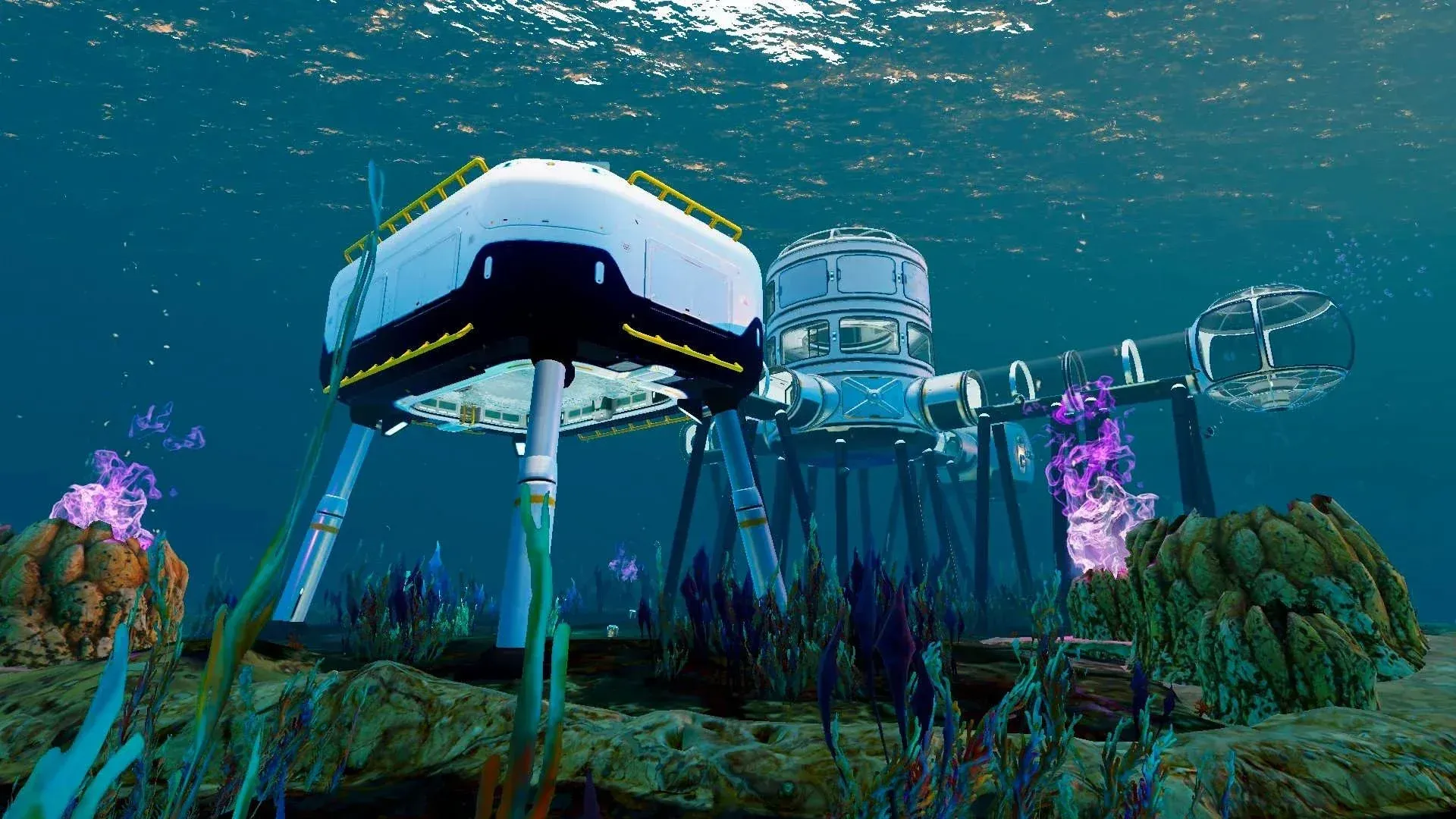
The NoA Terminal inside the Lifepod functions as your mission board. It flags blackboxes left behind by dead colonists, sunken habs, and notable alien lifeforms as signals or map icons. These aren't mandatory in a strict sense, since Subnautica 2 is an open-world survival game, but following them moves the story forward and consistently leads you to better gear.
Check the NoA regularly. New signals appear as you progress, and ignoring them means missing some of the best early loot locations on Proteus.
How do you manage oxygen, hunger, and thirst?
Survival Mode tracks four stats: oxygen, health, hunger, and thirst. Creative Mode removes all of them, so if you just want to explore, that's an option. For everyone else, here's the breakdown.
Oxygen
Default oxygen capacity is 45 units. Craft the Standard Air Tank to raise the cap to 75, or the High Capacity Air Tank for 120. The Rebreather slows oxygen depletion at depth, and the Air Bladder gives a small oxygen boost when activated. Surfacing, entering a base hatch, or boarding a vehicle all restore oxygen instantly. When the meter hits zero, you have a few seconds to find air before your character dies.
Health
First Aid Kits restore 50 health each. The pink Acid Raion plants found in the environment contain a Medical Gel Sac that restores 10 health, making them useful emergency pickups during dives.
Food and water
Nutrient Blocks provide 40 food each and are your default early food source. To eat alien flora and fauna, you need the Digestion Adaptation upgrade. The Fabricator's Sustenance tab unlocks recipes for cooked fish, jerky, and mash once you have the right blueprints.
For water, catch Water Slugs and process them at the Fabricator. One Water Slug produces a drinkable item worth 40 water.
| Stat | Default Cap | Early Solution | Better Solution |
|---|---|---|---|
| Oxygen | 45 | Air Bladder | High Capacity Air Tank (120) |
| Health | 100 | Medical Gel Sac (+10) | First Aid Kit (+50) |
| Food | — | Nutrient Block (+40) | Cooked fish/mash |
| Water | — | Water Slug (+40) | Fabricated drinks |
How do you unlock crafting blueprints?
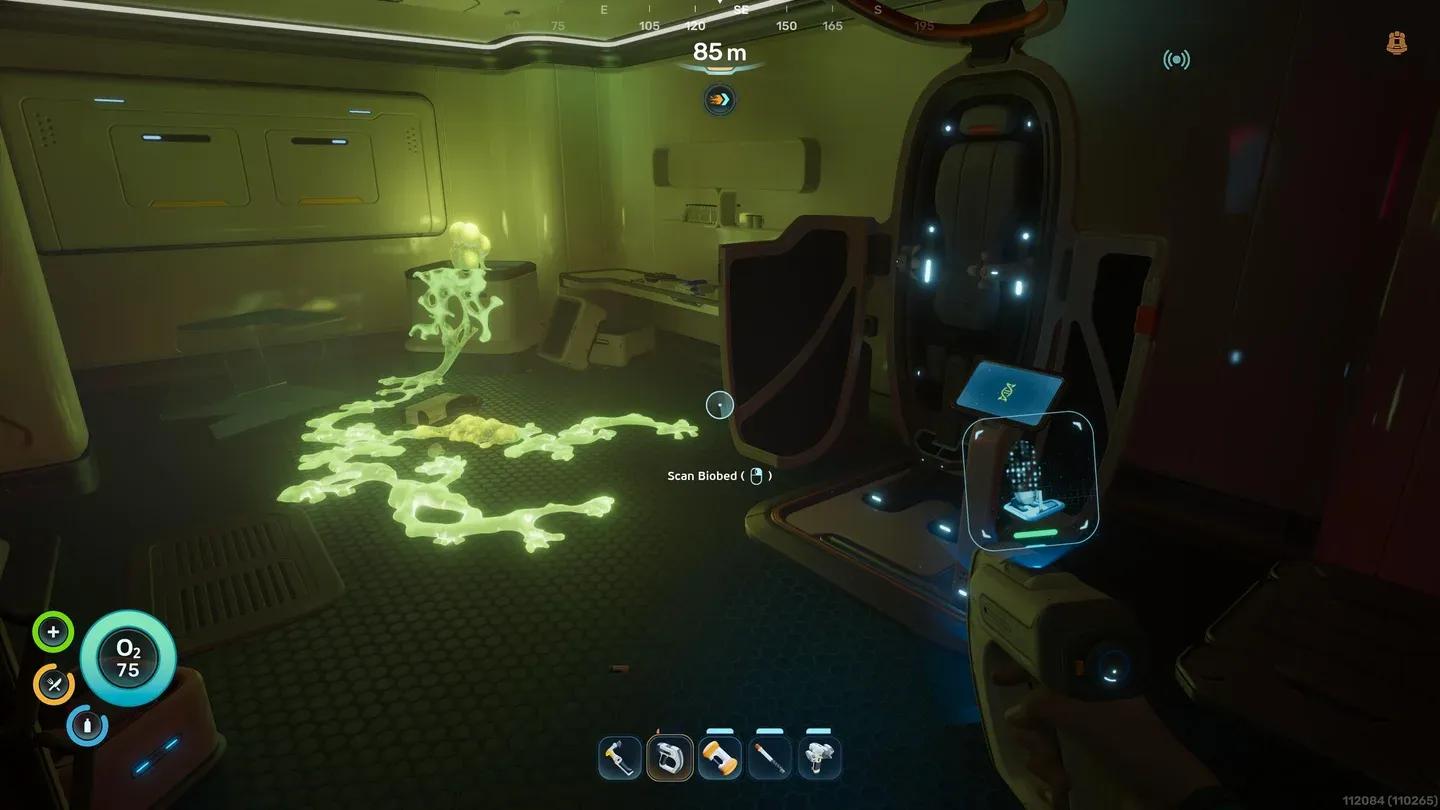
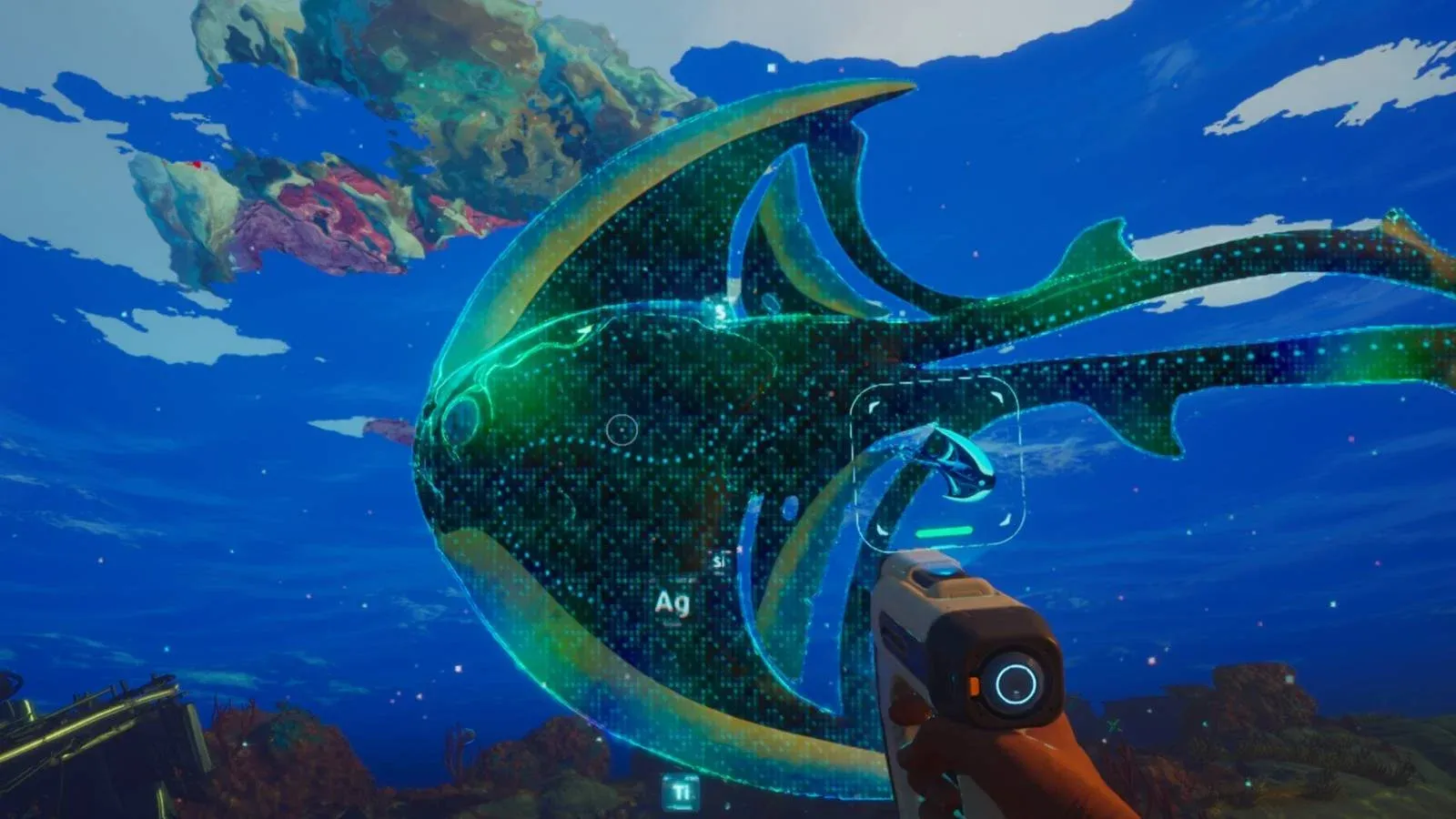
Scanner highlighting a target
Almost nothing is craftable by default. You need the Scanner to unlock blueprints, and it costs 2x Titanium, 2x Quartz, and 1x Battery to build at the Fabricator. Once crafted, the Scanner's screen highlights scannable objects as yellow pips. Point it at anything new and scan it.
For a full walkthrough on crafting the Scanner and what to scan first, the Subnautica 2 Scanner guide on how to scan items and unlock recipes covers the process in detail.
What tools do you need for mining resources?
Bare hands work for small pickups early on. The Survival Multitool (3x Titanium) handles medium-sized mineral nodes. For large deposits and bloom cankers, you need the Sonic Resonator, which requires 1x Basic Battery, 2x Titanium Ingot, 2x Lead, and 1x Wiring Kit. The Sonic Resonator destroys large nodes in one go, often dropping several resources at once.
How do you keep your tools charged?
The Scanner, Sonic Resonator, and most other tools drain battery power over time. Basic Batteries are the solution, each requiring 2x Copper and 1x Acidic Raion Pouch to craft. With a tool equipped, press R to swap batteries from your inventory.
Once you have a base established, build a Battery Terminal (2x Titanium, 2x Quartz, 1x Copper Wire) to recharge depleted batteries in seconds. Dead tools at a critical moment are avoidable with a little planning.
How do you manage inventory space?
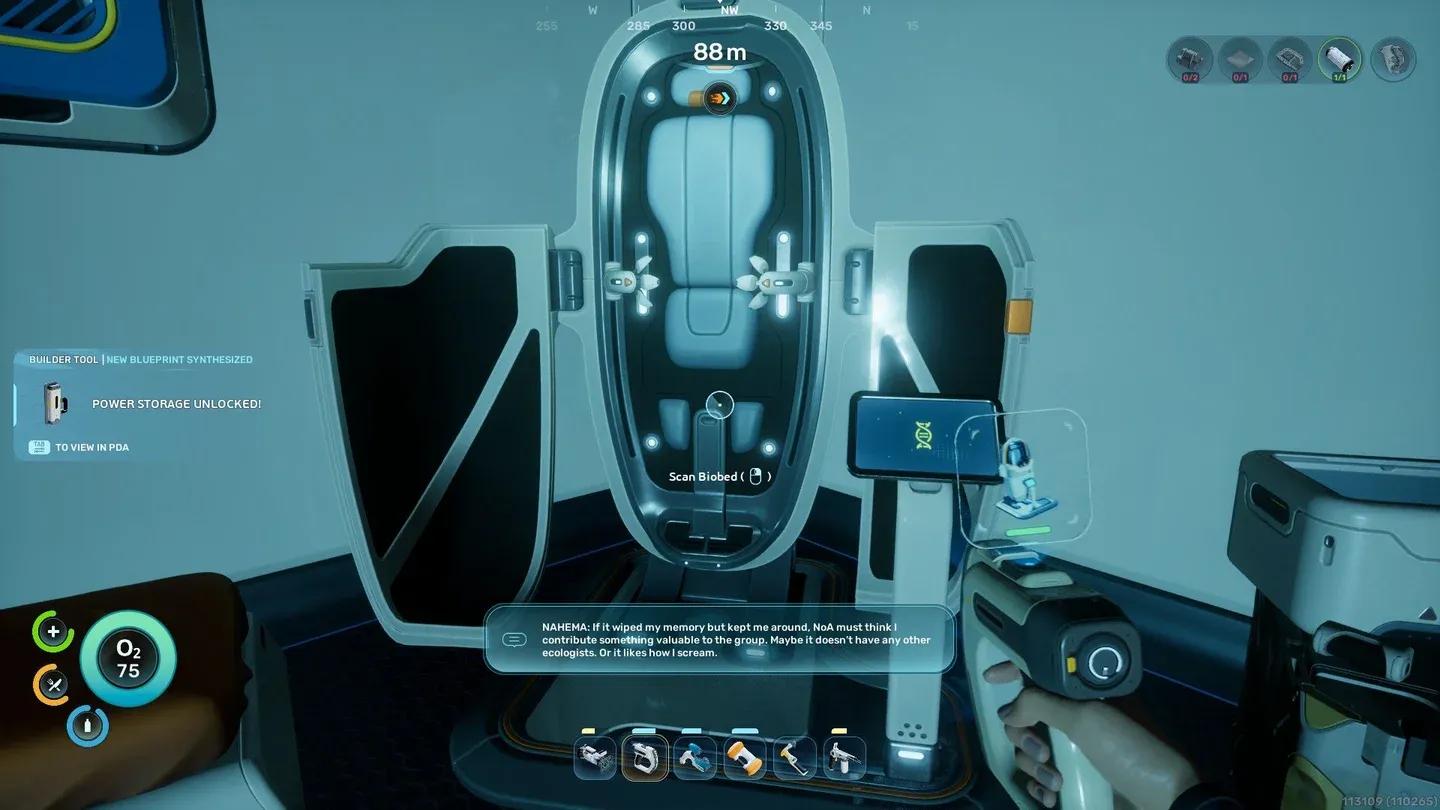
Inventory expansion via Biobed
Your starting inventory holds 20 items. That fills up fast. The Pod Locker in your Lifepod holds 35 items, and once you build a base you can add Wall Lockers (20 slots each) and Floor Lockers (30 slots each). Portable Lockers hold 15 items and can be carried with you.
For permanent inventory expansion, find Biobed units hidden in colonist bunkers and abandoned habs across Proteus. These grant additional tool slots and inventory space. The guide to increasing inventory size in Subnautica 2 maps out every Biobed location if you want to max out your capacity fast.
How do you mark resource farming spots?
The Beacon solves the navigation problem for valuable locations. Craft one at the Habitat Builder for 1x Titanium and 1x Copper, then place it anywhere and give it a custom label. Drop a Beacon at every rich mineral node, alien plant cluster, or point-of-interest worth revisiting. Without them, you'll spend more time retracing routes than actually playing.
How do you handle hostile creatures?
Most fauna on Proteus ignores you. The exceptions are Marrowbreachers and Needler Mangoes, which are aggressive and will pursue you. Distraction Flares (1x Titanium, 1x Quartz each) send them in the opposite direction when ignited. Carry several at all times.
How do you build a base?
The Habitat Builder unlocks base construction. You need Titanium, Copper, and Quartz to get started. Build corridors, rooms, and essential machinery like the Battery Terminal and additional Fabricators as your resource supply grows. A well-placed base cuts travel time significantly and gives you a safe oxygen refuge during long dives.
How do you unlock the Tadpole vehicle?
The Tadpole is a personal submersible that transforms exploration on Proteus. Getting one requires several steps:
- Scan 3x Tadpole Fragments to unlock the blueprint.
- Build a Moonpool (5x Titanium).
- Build a Tadpole Dock (2x Titanium Ingot, 1x Silver Ingot, 2x Copper Wire).
- Build a Vehicle Fabricator (2x Titanium Ingot, 1x Copper Ingot, 2x Glass).
- Craft the Tadpole core module (2x Titanium Ingot, 1x Glass, 1x System Chip, 1x Power Cell).
Once you find Tadpole upgrade modules, build the Modification Station (2x Titanium, 2x Celestine, 2x Copper) to install them. The Tadpole also acts as a buffer against Leviathans since it takes damage instead of your character.
What are Adaptations and how do they work?
Adaptations are DNA modifications found on large pink growths called Angel Combs throughout Proteus. They permanently change what your character can do, such as enabling alien food consumption or improving heat resistance. These aren't optional power-ups; some are required to access certain biomes or food sources. Prioritize scanning Angel Combs whenever you find them.
What are Biomods and Biobed upgrades?
The Bio Lab in the Welcome Center contains Biomods, which function as active and passive abilities. One example is an underwater dash, which becomes essential for escaping predators quickly. Separate from Biomods, the Biobed units scattered across colonist bunkers and abandoned habs grant permanent stat upgrades including inventory expansion and extra tool slots. Both systems stack, so finding as many as possible is always worth the detour.
How do you survive encounters with Leviathans?
Leviathans are the apex predators of Proteus. Flares do nothing against them, and swimming away rarely works. The Tadpole is your best defense since damage goes to the vehicle rather than your character. Until you have the Tadpole, the safest strategy is to learn where Leviathans patrol and avoid those zones entirely.
What should you explore beyond the basics?
Proteus rewards curiosity. Biomes with luminescent corals, ancient alien glyphs, and hidden colonist structures are waiting across the map. The NoA Terminal points you toward key story beats, but the best discoveries come from swimming in directions the game never explicitly tells you to go.
For everything still coming to the game, the Subnautica 2 Early Access roadmap covering all planned content breaks down confirmed biomes, creatures, and story chapters on the way. Check the full Subnautica 2 guides collection for more in-depth coverage of every system covered here.