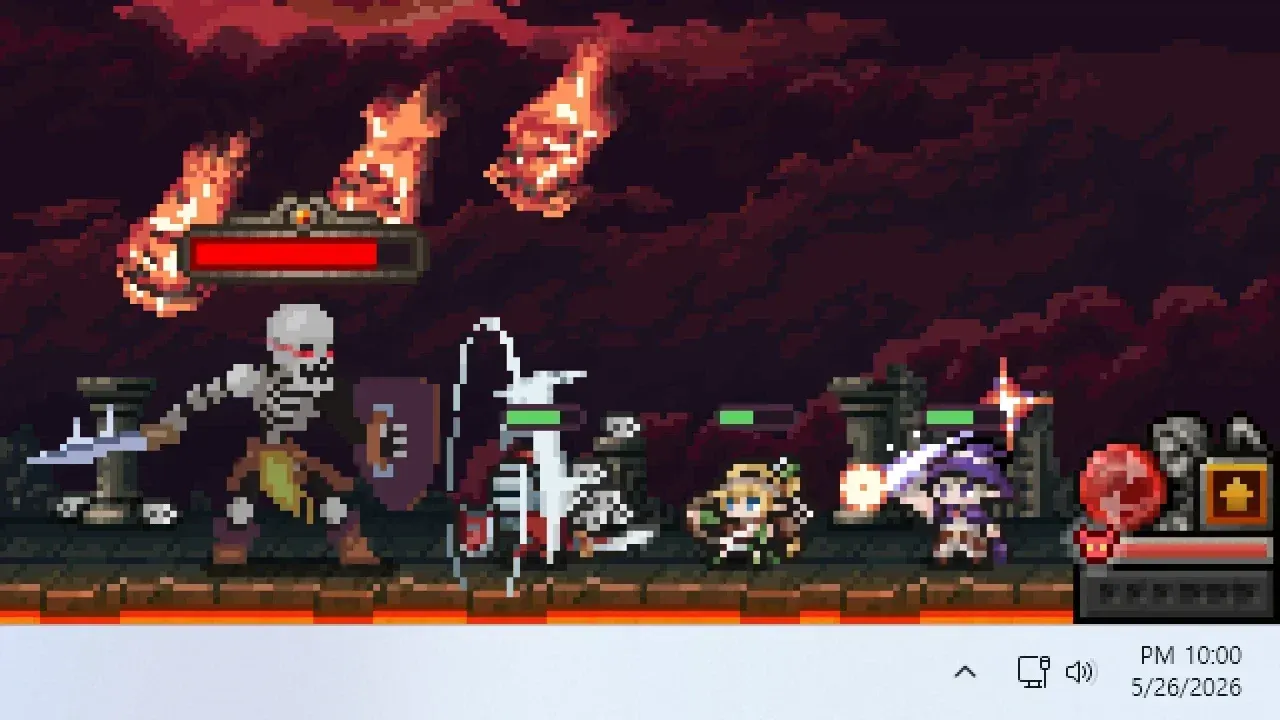

TBH: Task Bar Hero looks deceptively simple at first glance. A tiny window at the bottom of your screen, pixel heroes shuffling through stages, chests popping up every few seconds. Spend a couple of hours with it, though, and the depth becomes obvious: a proper idle RPG with meaningful progression systems, a multi-layered item economy, and enough ways to build badly that a beginner guide is genuinely useful. This guide covers everything you need to get moving efficiently, from picking your first class to understanding the Cube.
What class should you pick first?
You start by choosing one hero from three free options:
- Knight — a frontline tank with high HP and strong damage absorption
- Ranger — a fast, high attack speed DPS that clears waves quickly
- Sorcerer — a magic damage dealer with strong AoE output but low survivability
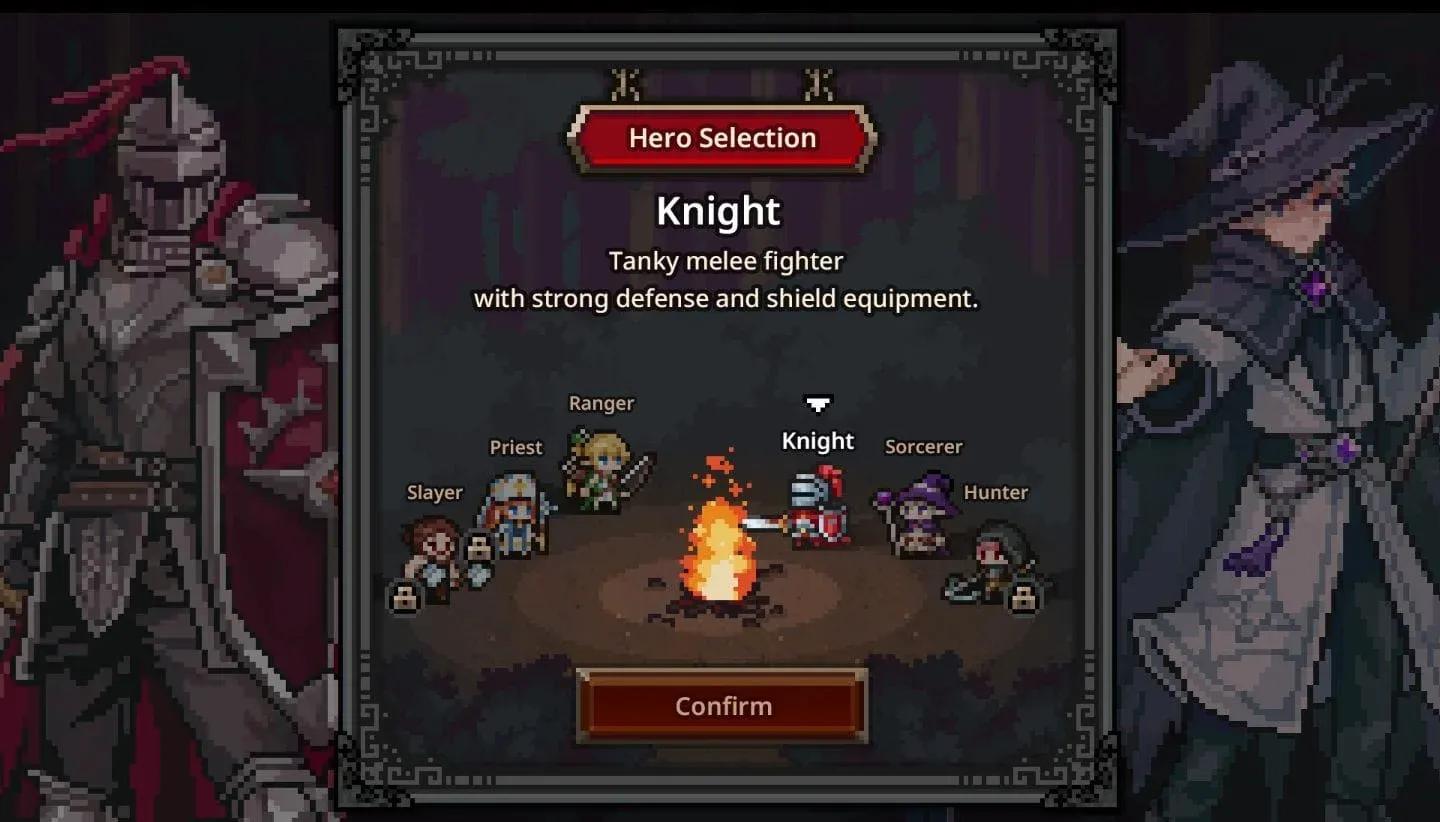
Choose your starting hero class
The Priest is also free, available as a DLC claim from the store page. Grab it immediately. The Priest is arguably the most valuable class in the game and you want it in your party as soon as a second slot opens up.
Two paid classes exist as well: the Hunter (a stronger ranged DPS with chain attacks) and the Slayer (a melee DPS that trades HP for damage). Neither is necessary to start.
For raw beginners, Knight is the safest pick. It absorbs punishment and keeps your party alive long enough for you to get your bearings. Ranger is the faster choice if you want stages to clear quickly. Both work fine because you will be expanding your party soon enough.

What you should do first
Once you are in, your hero moves through stages automatically, fighting enemies and generating chests. A few things need your attention right away.
Enable Auto-retry. Find this in the settings and turn it on before anything else. If your hero fails a stage, the game will keep trying without you having to intervene.
Open your chests. Early on, chests require manual opening. They are your primary source of gear and materials in the first few hours, so do not let them stack up. Automation for this comes later through the Rune system.
Use the Portal when you hit a wall. The blue portal icon in the bottom right lets you travel back to earlier stages. If a stage is stopping you cold, go back, farm gear and levels, and return stronger. The entire game is built around this loop, so there is no penalty for retreating.
What is the best early party composition?
Once you unlock a second and third hero slot, the formation that holds up best through the early and mid-game is Knight + Priest + Ranger.
The Knight tanks at the front and absorbs incoming damage. The Priest keeps the Knight alive with heals and buffs the entire party's damage output. The Ranger sits behind them dealing fast, consistent DPS. Each class covers a gap the others have.
The Priest's Blessing of Strength skill is worth particular attention. It gives the whole party a significant damage boost when unlocked, but it requires a second skill slot to run alongside the Heal skill. Unlocking that second slot is therefore a high priority.
Manage your party through the Formation screen, which lets you swap heroes in and out, reorder positions (no cooldown for reordering, only a 60-second cooldown for deploying a new hero), equip pets, and carry under-levelled heroes to power-level them faster.
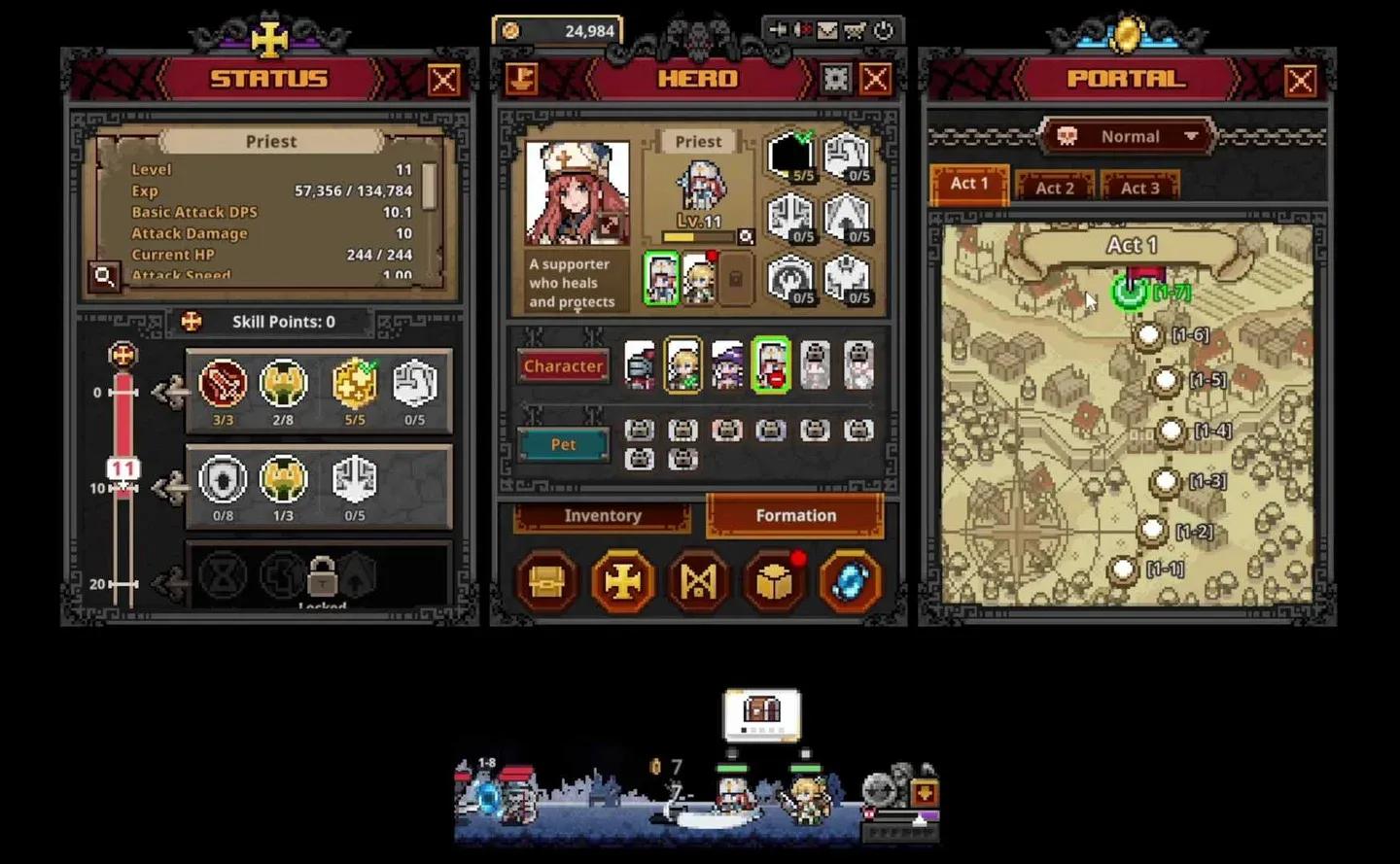
Formation screen party management
How does the Rune system work?
Runes are your permanent upgrade tree, purchased with gold. They improve nearly every aspect of your account: party size, combat stats, chest drop rates, inventory space, gold income, and XP gain.
The south path of the tree is your first destination because that is where the second and third formation slots live. The second slot costs a manageable amount. The third costs 150,000 gold, which feels steep early on but pays back immediately.
Once your party is full, a sensible broader priority order looks like this:
- Second active skill slot via Rune of Awakening (big power spike for every hero, essential for Priest)
- Auto-open for common and boss chests (eliminates manual chest management)
- Gold and XP bonuses from Cube Alchemy
- Chest drop chance (north-east branch)
- Gold from enemy kills
- Hero XP gain
- Combat stats (south-east branch)
- Inventory and stash upgrades
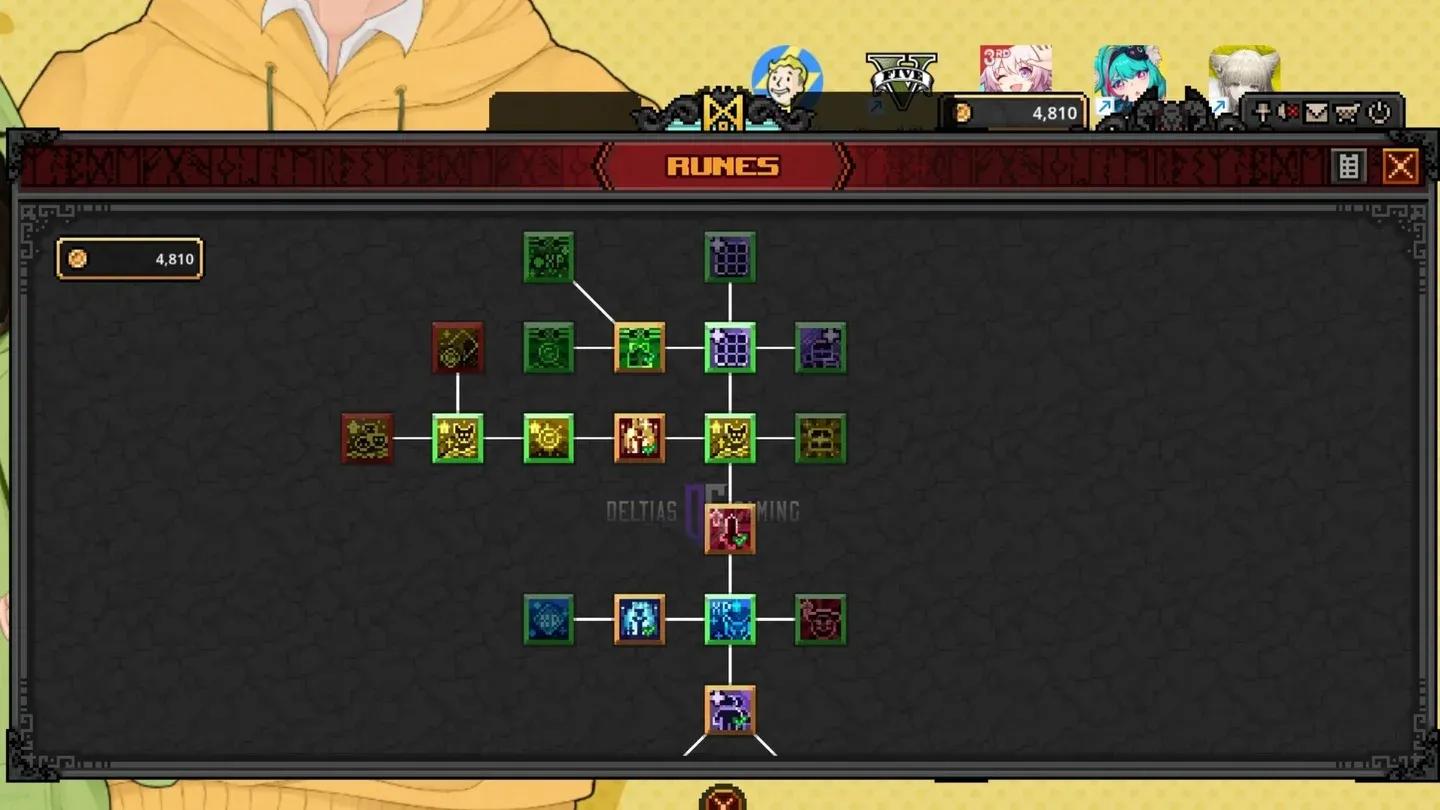
Rune tree south path priority
To unlock the second party slot, upgrade Rune of War and Rune of Growth to reveal the Rune of Command. For offline income, unlock Rune of Wealth and Rune of Expansion to reveal Rune of Repose, which keeps gold and XP ticking while you are away.
| Rune Priority | Unlock Target | Effect |
|---|---|---|
| 1st | Rune of Command | Adds second party slot |
| 2nd | Rune of Command (again) | Adds third party slot (150,000 gold) |
| 3rd | Rune of Awakening | Second skill slot per hero |
| 4th | Rune of Repose | Offline gold and XP income |
| 5th | Chest drop upgrades | More loot from active play |
How does the Cube work?
The Cube handles most of your item progression and it has four distinct functions. It looks complicated at first but each tab does something specific.
Synthesis combines 9 items of the same rarity into one item of a higher rarity. This is your main path to better gear once drops start flowing. You can occasionally skip rarity tiers if you are lucky. Do not rush Synthesis in the very early game since you need gold first, but once you are comfortable, stop selling everything and start saving gear for combining.
Alchemy converts unwanted items into gold and becomes one of your biggest income sources over time. Use Alt + Left Click to lock items you want to keep before using Auto-fill, otherwise it will grab things you did not intend to sell.
Crafting lets you build gear from materials collected during play. Main and secondary weapons give random results, so expect to craft more than once to land the stat combination you want.
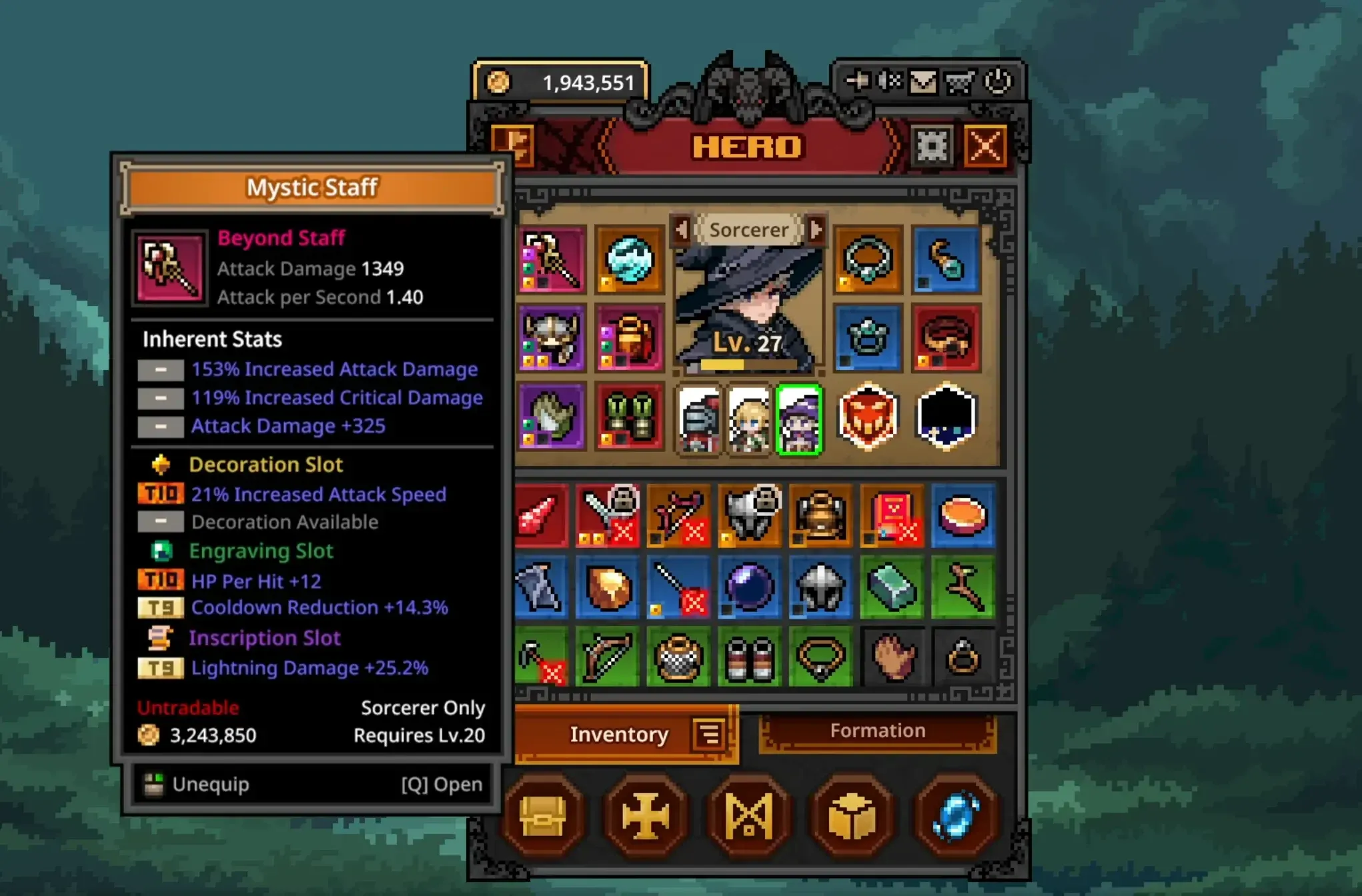
Decoration, Engraving, and Inscription are three socket slots unlocked at Rare, Immortal, and Arcana rarity respectively. They let you slot materials into gear for stat bonuses. Check what a material actually adds before committing. Fire damage bonuses on a hero who does not deal fire damage are a waste of a socket.
The Removal option extracts socketed materials but destroys them in the process. The gear must be unequipped first. Save your best gems for gear you plan to stick with.
Managing inventory, stash, and act progression
Each class can only equip certain item types, so hover over any item before assuming it is an upgrade. The tooltip shows stats, class requirements, level requirement, and sell value.
The Stash is your long-term storage. Good candidates for keeping there include Decoration, Engraving, and Crafting materials, Soul Stones, and high-level gear you cannot equip yet. Feel free to sell or Alchemize gear for classes you do not run.
To reach the boss at the end of each act, you need a Soul Stone for that act. A Soul Stone is only consumed when you actually defeat the boss and clear the act. Failed attempts cost nothing, so throw yourself at the boss as many times as needed. If the boss is stopping you completely, use the Portal to go back and farm better gear on earlier stages.
Ranger and Priest as a gold farming duo
Gold is the resource that drives everything in TBH: Task Bar Hero, and the fastest way to generate it early is the Ranger + Priest pairing. The Ranger clears waves at high speed, especially with the Priest's damage buff active. Running this duo on stages you can clear reliably produces a steady stream of chests, gold drops, and XP. Pair this with Runes that increase gold from enemy kills and you will hit the 150,000 gold threshold for the third party slot faster than you might expect.
Once you have a solid handle on the systems here, the TBH: Task Bar Hero strategy guides at GAMES.GG cover more advanced topics including deeper Rune builds and late-game Cube optimisation. TBH sits comfortably in the casual games space but rewards players who treat it more seriously than its taskbar footprint suggests.