

TBH: Task Bar Hero looks harmless sitting at the bottom of your screen. Your little heroes shuffle around killing things while you get on with your day. Spend a few hours with it, though, and a proper idle RPG emerges: a real economy, a permanent upgrade tree, and enough ways to build badly that your first account can stall completely before Act 2. The good news is that the traps are predictable. Avoid them early and the whole game opens up fast.
What class should you start with?
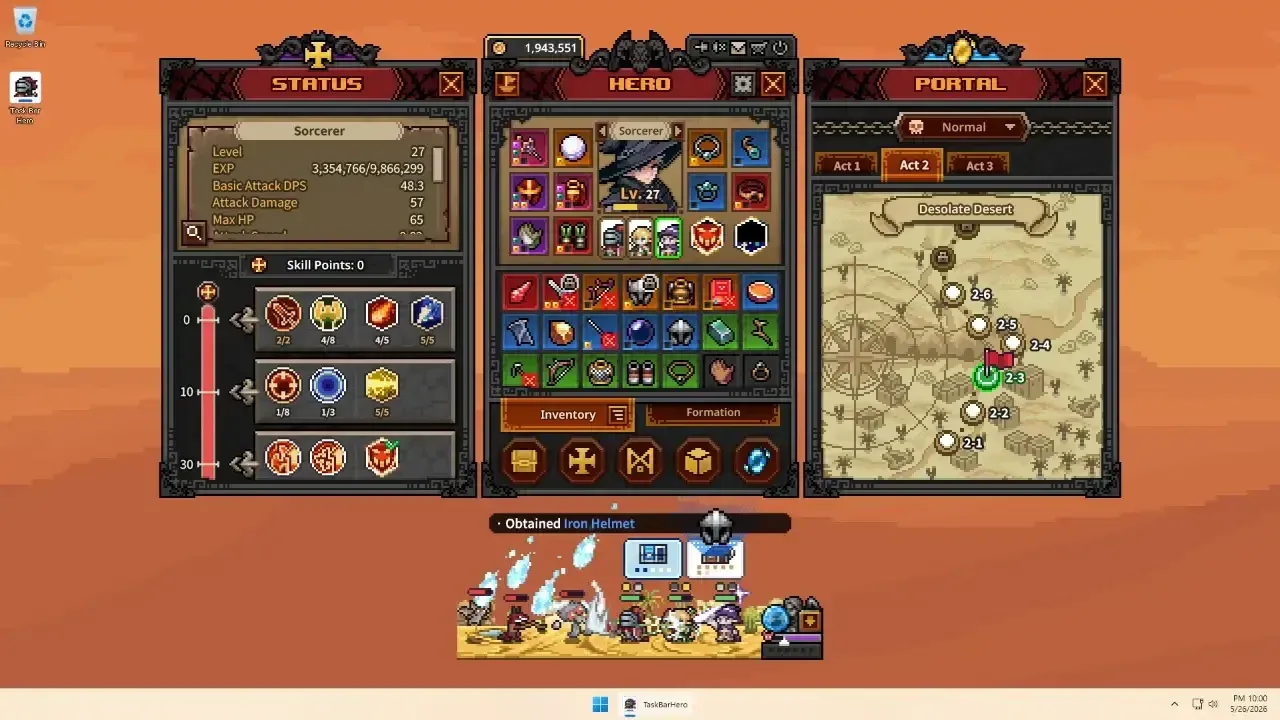
You pick one of three free classes at the start: Knight, Ranger, or Sorcerer. Before you even touch the main screen, open the store page and claim the free Priest DLC. She is the single most valuable class in the game, and every piece of advice in this guide assumes you have her.
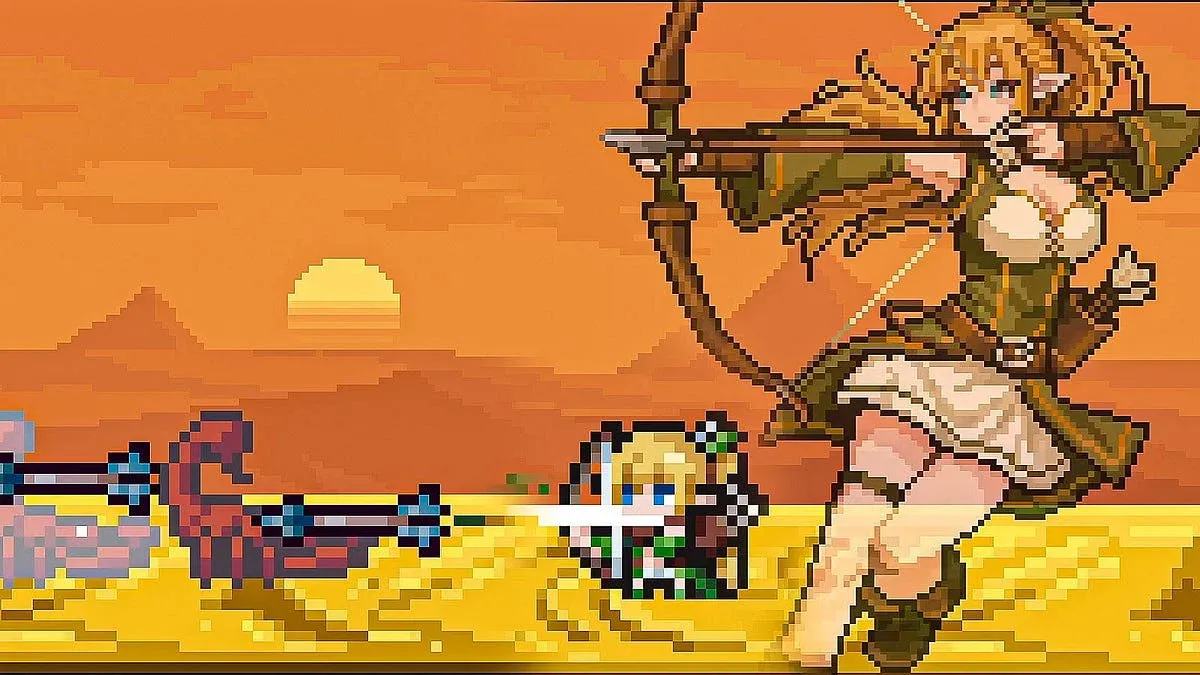
For your actual starting pick, Knight or Ranger are the right calls. The Knight absorbs a huge amount of damage, keeping your run alive through the rough early stages where your gear is basically garbage. The Ranger attacks fast and clears waves quickly, which means more chests per session. The Sorcerer is not a bad class, but the other two give you more room for error when you are still learning the systems.
Two paid DLC classes, Hunter and Slayer, exist as well. They are not necessary to start, and the Priest outperforms both of them in terms of raw value for new players.
Pick your starting hero wisely
How do you build your party?
Your Formation screen starts with a single hero slot. Running one hero is the slowest possible way to play this game. More heroes means more damage, more loot, and more experience earned at the same time. Expanding your party is the first thing you should work toward.
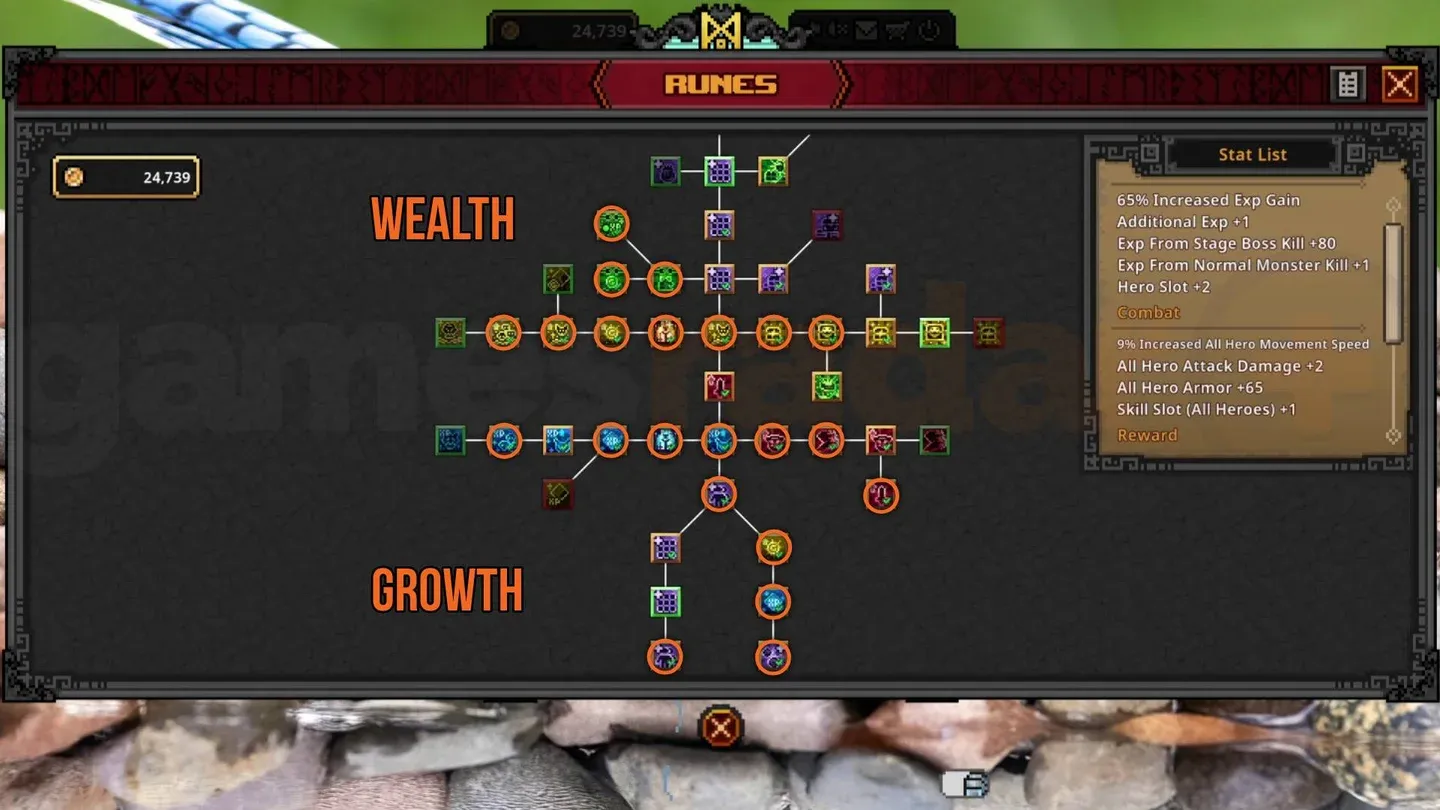
Party slots are unlocked through the Rune tree, the permanent upgrade menu that you access from the south path. The second slot costs a manageable sum of gold. The third slot costs 150,000 gold, which sounds brutal when you are scraping together copper in Act 1. Save for it anyway. Do not spend your gold synthesizing low-rarity gear in the Cube during this stretch. Use the Alchemy tab to convert unwanted items into gold and stockpile until that third slot is yours.
Once you have three heroes, the composition that holds up best through the early and mid-game is Knight + Priest + Ranger.
The Priest's Blessing of Strength skill deserves a mention on its own. Once unlocked, it gives the entire party a significant damage boost. Make sure you have a second skill slot open to equip it. That second skill slot is itself a Rune upgrade, costing 50,000 gold, and it represents a major power spike worth prioritizing after you secure your three-hero formation.
For a deeper look at party setups beyond the early game, the best team combinations guide covers free and premium roster pairings in detail.
What should you prioritize in the Rune tree?
The Rune tree controls almost everything about your account's long-term efficiency. After securing your formation slots, here is a sensible order of priorities:
- Second active skill slot (50,000 gold, massive power spike per hero)
- Auto-open for common chests (5-minute cooldown) and boss chests (10-minute cooldown)
- Gold and XP bonuses from Cube Alchemy
- Chest drop chance (north-east branch)
- Gold from enemy kills
- Hero XP gain
- Combat stats (south-east branch)
- Inventory and stash upgrades
The four directions of the tree each have a clear focus. The north-west branch maximizes gold income. The far north handles inventory space and chest automation. The north-east branch improves chest drop rates and chest capacity. The south-east branch boosts all-hero attack, armor, and speed. The south-west branch accelerates experience gain.
The automation runes, particularly auto-open for chests, are worth reaching early if you plan to leave the game running while you work. They pay for themselves quickly.
For a full walkthrough of unlocking your second and third slots specifically, check out the hero slots unlock guide.
Rune tree south path first
Why does offline farming hurt your gear?
This is the mistake that quietly destroys early accounts. The game does accumulate gold and experience while you are offline, which makes it tempting to close it overnight and expect a mountain of loot by morning. The problem: the game drops exactly zero chests while offline. No chests means no gear, no materials, and no synthesis fodder.
Your heroes will gain levels from offline time but their equipment will fall drastically behind, leaving you too weak to clear the acts you are supposedly leveled for. Even 20 to 30 minutes of active play, where you can collect chests as they drop, is worth more than hours of offline accumulation.
Once you unlock the auto-open Runes for common and boss chests, keeping the game running in the background while you use your computer becomes genuinely lucrative. The automation does the clicking for you.
How does the Cube work?
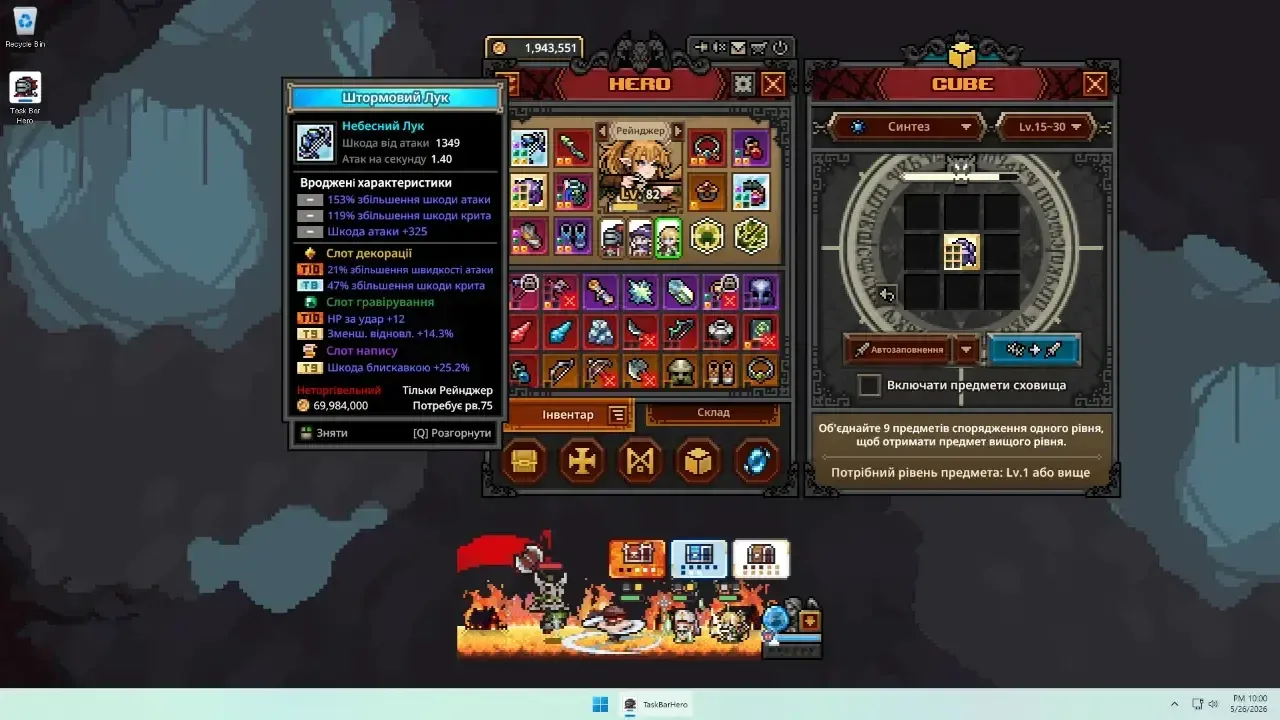
The Cube handles most of your item progression and looks more complicated than it is. Here is what each function does:
Synthesis combines 9 items of the same rarity to create one item of a higher rarity. The level of the resulting item is determined by the level range you set in the top-right dropdown, not the level of the items you put in. You can use gear up to 5 levels below the minimum range. Results can occasionally skip a rarity tier entirely. Avoid rushing this in the very early game since you need gold for Rune upgrades first.
Alchemy converts unwanted items into gold. This becomes one of your biggest income sources as drops accumulate. Use Alt + Left Click to lock items you want to keep before using the auto-fill feature. Without locking, auto-fill will grab anything in your inventory, including things you intended to save.
Crafting produces gear using materials collected during play. The item's rarity and class are random, but it always falls within your selected level range. Accessories appear to come primarily from crafting rather than chest drops in the early acts, so do not ignore this tab.
Decoration, Engraving, and Inscription are the three socketing slots that unlock at Rare, Immortal, and Arcana rarity respectively. Check what stat a material actually adds before slotting it. Fire damage bonuses on a hero who deals no fire damage are wasted slots.
Removal extracts socketed materials from gear, but the gear must be unequipped first and the material is destroyed in the process. Save your best socketing materials for gear you plan to keep for a long time.
Cube handles all gear upgrades
How do you manage inventory and the Stash?
Each class can only equip certain item types, so check requirements before assuming a drop is an upgrade. Hover over any item to see its stats, class restrictions, level requirement, and sell value.
The Stash is your long-term storage. Good candidates for keeping there include decoration, engraving, and crafting materials, Soul Stones, and high-level gear you cannot equip yet. Sell items for classes you do not play by running them through Alchemy rather than selling individually.
White (common) items feel disposable early on but the game leans on them later for synthesis and crafting. Keep a stockpile of strong base whites rather than converting every one you see. You will regret burning them when you are trying to optimize late-game gear.
Pets are equipped from the same Formation screen. Their passive effects apply whether they are deployed or not, so equip them immediately for the bonuses regardless of whether you plan to use them visually.
How do you handle boss fights and progression walls?
Reaching the boss at the end of each act requires a Soul Stone for that act. Do not worry about wasting them. A Soul Stone is only consumed when you actually defeat the boss and clear the act. Failed attempts cost nothing, so throw your party at the boss as many times as needed.
If a boss stops you completely, use the blue portal icon in the bottom right to travel back to an earlier stage. Farm gear and levels, then return. The game is designed around this loop. Staying stuck on a stage you cannot clear is always worse than retreating and coming back stronger.
Turn on auto-retry in the settings as soon as you start. If your party fails a stage, the game keeps attempting without you having to manually reset it. When auto-retry is off, a failed stage drops you back to the previous one automatically, which can compound if your team is struggling.
For difficulty scaling, clear each act fully on Normal before pushing to Hard or Brutal. Brutal difficulty in particular punishes generalist gear setups. Each hero needs items that commit fully to their role: pure damage and crit for DPS heroes, defense and survivability for tanks, sustainability stats for supports.
What are the best early formations for idle and active play?
Two setups have emerged as reliable starting points based on playstyle:
- Idle play: Knight + Priest + Ranger. The Knight holds the front, the Priest sustains, and the Ranger deals consistent damage without requiring attention.
- Active play: Hunter + Ranger + Priest. This setup leans harder into damage and clears stages faster when you are actively watching.
Use these as baselines until you understand how each hero plays. Once your Cube skills and gear are in better shape, you can experiment freely. The formation screen has no cooldown for reordering heroes, only deploying a new hero carries a 60-second cooldown.
You can also carry under-leveled heroes in your party to power-level them faster. Just be aware that heroes gain the most optimal experience within a certain level range relative to their current level, so keep the stage appropriate for whoever you are trying to catch up.
For more guides covering every system in the game, the full TBH: Task Bar Hero strategy guides collection has you covered from pets to the Steam Market.