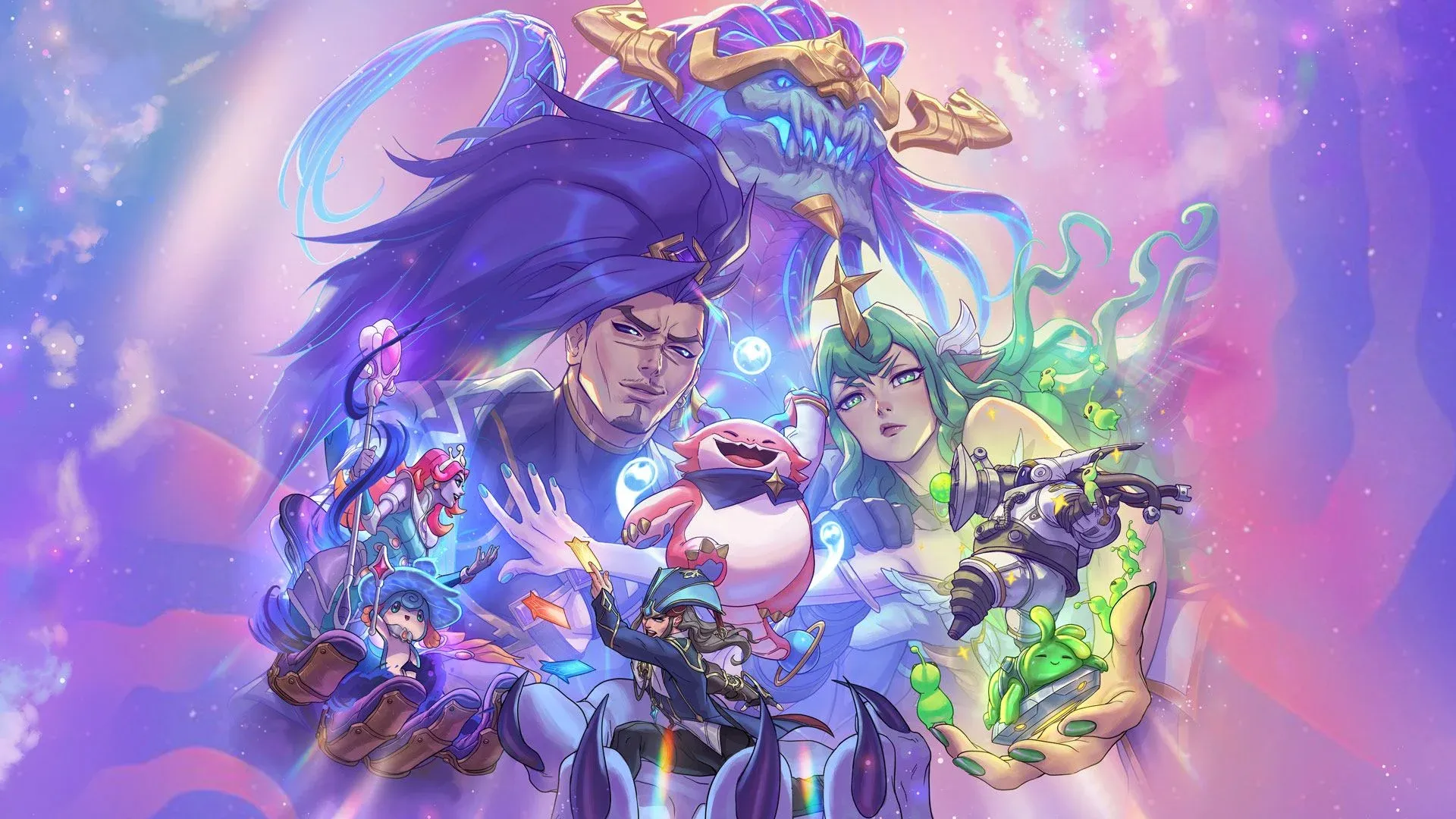


TFT Set 17: Space Gods launched on April 15 with patch 17.1, and it is one of the most mechanically distinct sets Riot has shipped in years. The traditional carousel is gone, replaced by a divine marketplace where 9 celestial beings compete for your loyalty. Add a completely new champion roster, 7 featured traits, and 40 new augments, and you have a set that rewards players who adapt fast and punishes those who play on autopilot.
What is the Realm of the Gods mechanic?
The Realm of the Gods replaces the carousel entirely for Set 17. At the start of every game, two gods are randomly selected and appear in the Realm. In the middle of each stage, you pick between offerings presented by each of those two gods, plus a generic offering from Pengu.
Align with a specific god by choosing their offerings at least twice across stages 2, 3, and 4. Reach that threshold and your favored god will bless you with a special Boon at stage 4-7, structured like an armory similar to the Treasure Dragon from Dragonlands. After that Boon is claimed, your chosen god continues dropping loot periodically for the rest of the game.
One detail worth noting: the comeback mechanic that made carousel valuable for low-HP players is preserved here. Pengu's offering adjusts based on your HP relative to other players, so falling behind still gives you a path back.
Who are the 9 Space Gods?
Each god has a distinct playstyle focus. Knowing what each one offers before you commit to aligning is the difference between a top-4 finish and getting eliminated early.
Every god offering includes a component alongside its primary reward, so you always walk away with something useful no matter which god you pick.
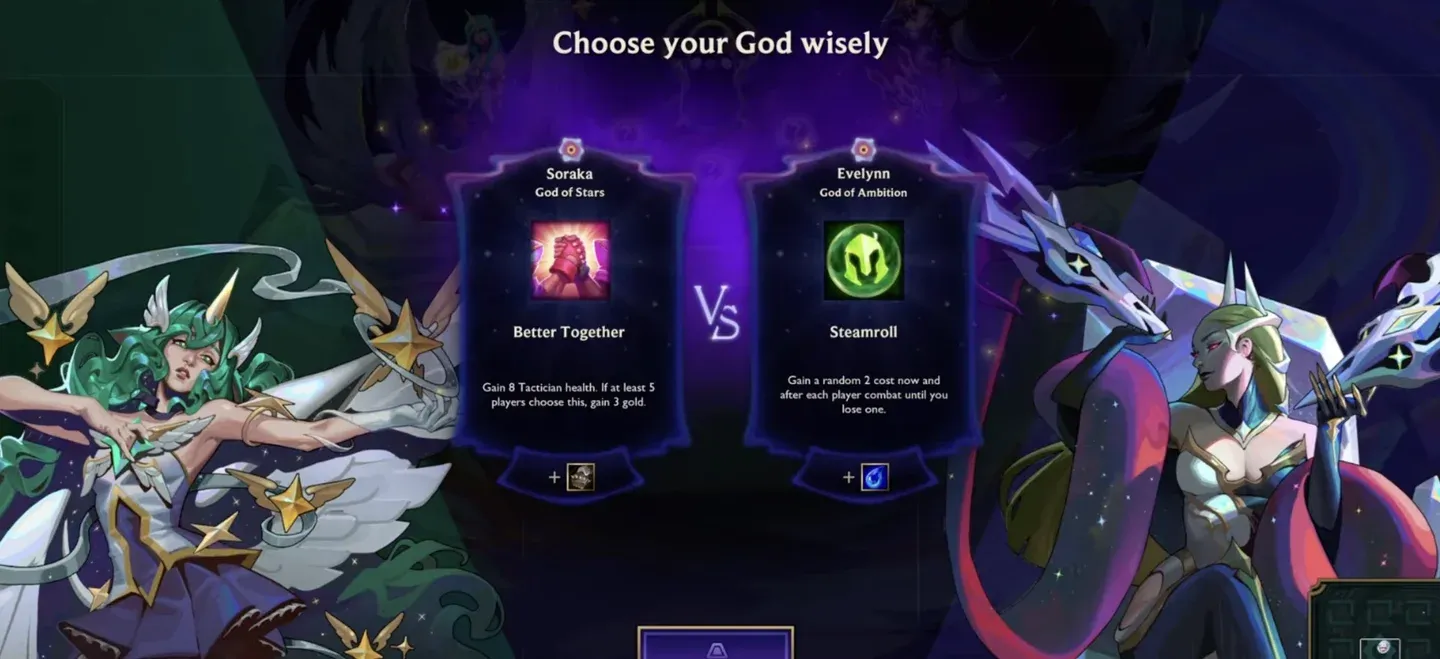
Soraka God of Stars offering
What are the key traits in TFT Set 17?
Set 17 ships with a large trait pool. Here are the ones most likely to shape the meta, based on how they interact with the new god system and champion roster.
Anima (3/5)
Anima is the lose-streak trait of the set. Lose a player combat and gain Tech. The longer your loss streak, the more Tech per loss. Anima units also generate Tech per takedown. Every 100 Tech lets you prototype new Anima Weapons, which work on any champion but have enhanced effects on Anima units specifically. You can take the weapon immediately or save Tech for a stronger version later.
Champions: Briar (1-cost), Jinx (2-cost), Aurora (3-cost), Illaoi (3-cost), Fiora (5-cost).
Dark Star (2/4/6/9)
Dark Star units create black holes that consume enemies sitting at 10% max health. Scale the trait up and your strongest Dark Star unit becomes Supermassive, gaining bonuses from the entire trait. At the prismatic 9-unit breakpoint, the black holes consume all enemies at low health simultaneously.
Champions: Cho'Gath (1-cost), Lissandra (1-cost), Mordekaiser (2-cost), Kai'Sa (3-cost), Karma (4-cost), Jhin (5-cost).
Meeple (3/5/7/10)
Meeple units attract Meeps that empower their abilities. Field more Meeple units and star them up to see more Meeps appear. At the 7-unit breakpoint, Meeps start cloning on your bench. Hit the prismatic 10-unit threshold and you summon the four MeepLords. Meepsie, a TFT-exclusive 2-cost Shepherd and Voyager, was created specifically for this trait.
Champions: Poppy (1-cost), Veigar (1-cost), Gnar (2-cost), Meepsie (2-cost), Fizz (3-cost), Corki (4-cost), Rammus (4-cost), Bard (5-cost).
Stargazer (3/5/7)
Stargazers chart a different constellation each game, creating a hex pattern on your board that empowers allies standing in those hexes. There are 7 distinct constellations, each with unique effects. Lulu, a Stargazer unit, changes her spell based on whichever constellation is active. The Serpent constellation, for example, grants Durability to allies in empowered hexes and causes Stargazers to poison enemies, repeating a portion of damage dealt as magic damage over 3 seconds.
Champions: Talon (1-cost), Twisted Fate (1-cost), Jax (2-cost), Lulu (3-cost), Nunu (4-cost), Xayah (4-cost).
Mecha (3/4/6)
Mecha units transform into their ultimate forms, gaining 60% Health and upgraded abilities. Each transformed Mecha takes up two team slots and counts twice toward the Mecha trait. The three core Mecha units are Urgot (3-cost), Aurelion Sol (4-cost), and The Mighty Mech (4-cost).
Fateweaver
Fateweavers have a built-in crit chance on their abilities. Field more Fateweavers and that chance increases, eventually upgrading abilities into stronger versions. Champions with the Fateweaver trait include Caitlyn (1-cost), Twisted Fate (1-cost), Milio (2-cost), and Corki (4-cost).
Shepherd (3/5/7)
Shepherd is the summoning trait of Set 17. Using the Bond of the Stars, Shepherd units summon Bia and Bayin, a mother-and-daughter duo introduced as key summons in this set. Higher star levels of Shepherd units increase Bia and Bayin's power directly.
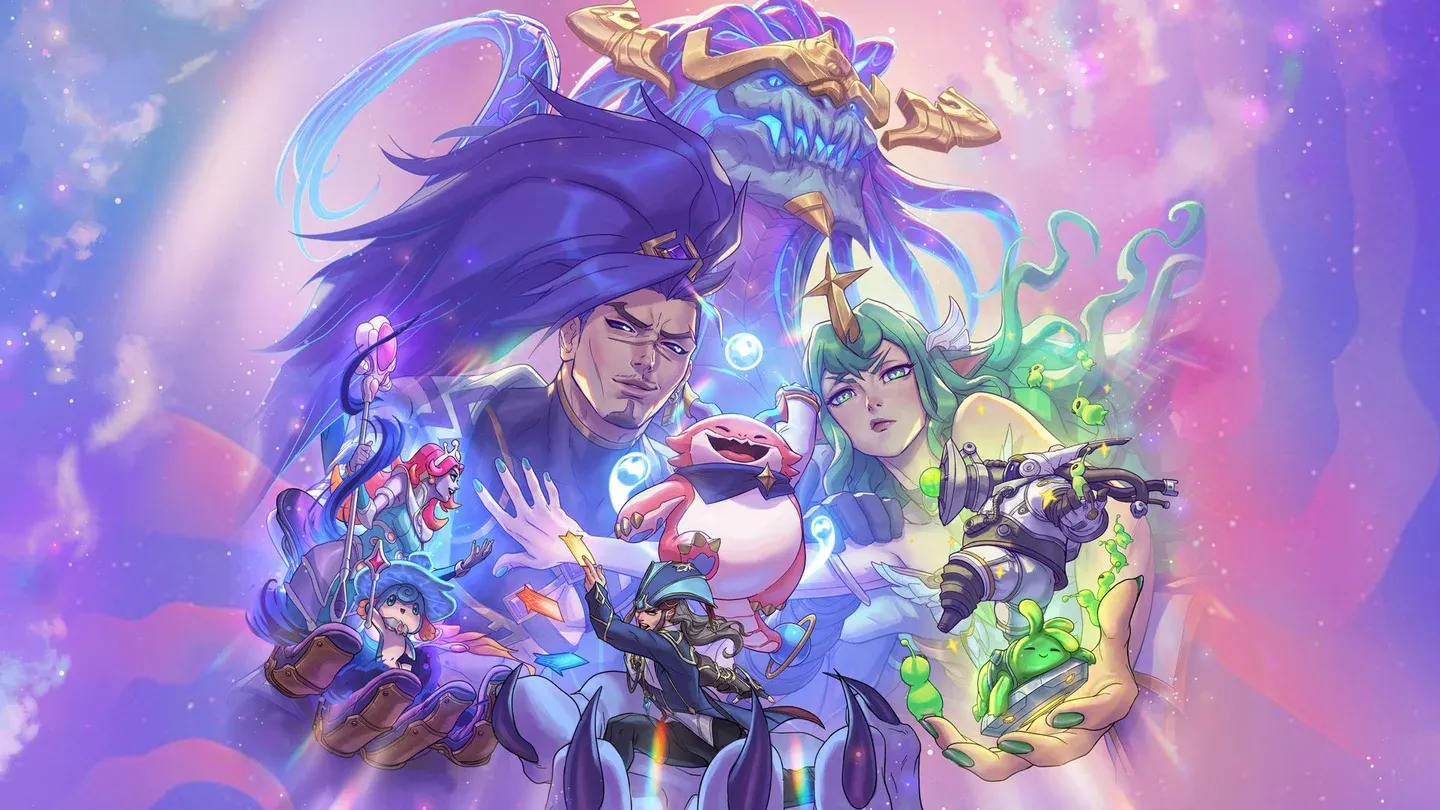
Shepherd summons Bia and Bayin
Full TFT Set 17 champion roster
Set 17 features a large champion pool. Here is the complete list:
Aatrox, Akali, Aurelion Sol, Aurora, Bard, Bel'Veth, Blitzcrank, Briar, Caitlyn, Cho'Gath, Corki, Diana, Ezreal, Fiora, Fizz, Galio, Gnar, Gragas, Graves, Gwen, Illaoi, Jax, Jhin, Jinx, Kai'Sa, Karma, Kindred, LeBlanc, Leona, Lissandra, Lulu, Maokai, Master Yi, Meepsie, Milio, Miss Fortune, Mordekaiser, Morgana, Nami, Nasus, Nunu, Ornn, Pantheon, Poppy, Pyke, Rammus, Rek'Sai, Rhaast, Riven, Samira, Shen, Sona, Tahm Kench, Talon, Teemo, Twisted Fate, Urgot, Veigar, Vex, Viktor, Xayah, Zed, Zoe.
Notable 5-cost champions include Fiora, Shen, Vex, Graves, Blitzcrank, and Jhin. Zed is accessible through a specific hero augment that grants him as a unique infinite-cloning 5-cost champion.
What augments are in TFT Set 17?
Set 17 ships with 40 new augments. Eight of them are hero augments that give specific champions an alternate ability. The Zed hero augment, as mentioned above, is one of the most unique: it grants access to an infinite-cloning version of Zed as a 5-cost champion that is otherwise not available in the shop.
Set 17 cosmetics
The following cosmetics are available for Set 17:
- Chibi Battle Bat Xayah
- Chibi Star Guardian Syndra
- Prestige Chibi Star Nemesis Morgana
- Chosen of the Wolf Katarina Unbound Tactician
- Dark Star Mordekaiser Unbound Tactician
- Star Nemesis Arena
- Sharing Is Caring Portal Skin
Getting started in Space Gods
The most important early decision in Set 17 is not which comp to play. It is which god to align with. Your god alignment shapes your gold, your items, and your unit access for the entire mid-game. Commit to a god whose offerings match your intended comp direction, and avoid the temptation to split your picks between two gods just because both offerings look good in the moment.
For players who prefer consistent, low-variance games, Kayle (items) and Ahri (gold) are reliable starting points. For players willing to accept risk for higher upside, Evelynn and Aurelion Sol offer the biggest swings.
For more TFT guides and the latest on Set 17 meta developments, browse more guides at GAMES.GG.