


The Timebreaker trait in TFT Set 17: Space Gods does something most traits never attempt: it rewards you for losing. Free rerolls on losses combined with stored XP on wins creates a dual-track econ engine that no other Set 17 trait replicates. If you know how to exploit that tension, you can snowball from a weak early board into a fully capped late-game composition faster than most opponents expect.
How does the Timebreaker trait work?
Timebreaker activates at 2, 3, and 4 units, with each breakpoint stacking on top of the last.
- (2) Timebreakers: When you lose a round, gain free rerolls. When you win, store XP inside a Temporal Core (the amount scales with stage).
- (3) Timebreakers: All allies gain 15% Attack Speed on top of the above.
- (4) Timebreakers: Timebreaker units gain an additional 50% Attack Speed.
The 2-piece bonus is the heart of the trait. Losses generate reroll currency while wins bank XP for later leveling. That push-and-pull means you can deliberately play a weak board early to farm rerolls, then flip into a winning machine once you hit your 3-star carry and start cashing out the stored XP.
Who are the Timebreaker champions?
The trait has exactly four units. Two are cheap enough to pick up almost immediately, one sits in the mid-cost slot, and the fourth is your late-game power spike.
Ezreal (1 gold, Sniper)
Ezreal is the reason you play this trait. His ability, Temporal Shot, fires a blast at his current target dealing physical damage scaled from both AD and AP. The key mechanic is his drone system: every set number of takedowns, he gains a drone that also deals physical damage to his target on cast. The more takedowns he racks up, the more drones he accumulates, and the more his damage output compounds over a fight.
Hitting Ezreal 3-star is the explicit goal of the reroll strategy. At 3 stars, the drone scaling becomes a genuine win condition.
Milio (2 gold, Fateweaver)
Milio's ability is Ultra Mega Time Kick, which launches a ball at an enemy dealing AP magic damage. On impact, it has a 100% chance to bounce to a new target for additional AP magic damage. Each subsequent bounce halves the trigger chance, but the Fateweaver trait adds a lucky effect that raises the odds of those extra bounces landing. Milio fills a trait-support role more than a carry role here, but his bounce damage is a nice bonus.
Pantheon (2 gold, Brawler + Replicator)
Pantheon's ability is Advanced Defenses, which grants a shield scaled from AP (factoring in both Health and AP) and provides durability for the duration. While shielded, Pantheon deals true damage per second plus physical damage each second to enemies in a cone. The Brawler trait makes Pantheon one of the more durable 2-cost frontliners available in the early game, and the Replicator secondary opens up additional trait-web possibilities.
Riven (4 gold, Rogue)
Riven brings genuine late-game flexibility through her ability, Time Warp. Her passive adapts to whichever stat is higher between her AD and AP, dealing that damage type on attacks. Her active has her dashing to an adjacent hex, gaining a shield and slashing nearby enemies for damage. On every third cast, she leaps and fires a wave of energy dealing damage in a line. Because she scales off whichever stat is higher, she is not locked into a single item path, which gives you more flexibility when building out your late-game board.
How to play Timebreaker: the reroll strategy explained
What does the early game look like?
The plan is to play a deliberately weak board in the early stages to trigger the loss-streak mechanic and collect free rerolls. Do not level up during this phase. Staying at a lower level keeps your shop odds concentrated on 1 and 2 cost units, which is exactly where Ezreal lives.
After the Stage 2 PvE round, roll down your gold. The standard approach is to roll until you hit either 35 or 25 gold remaining, depending on how many Ezreals you have found and whether another player is contesting the same units. If you land 8 copies of Ezreal, keep rolling until you complete the 3-star.
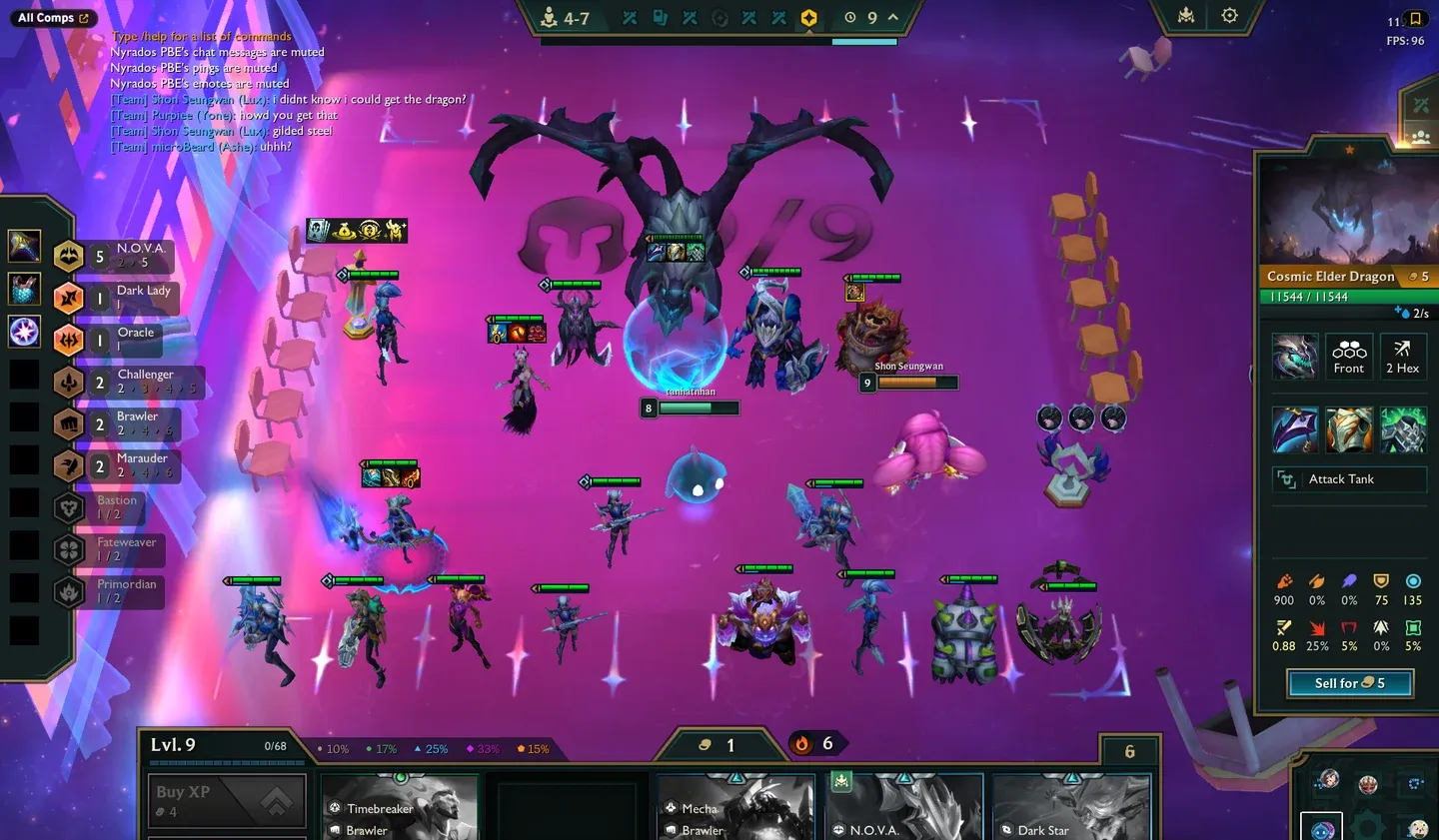
Ezreal reroll phase shop view
What happens after Ezreal hits 3 stars?
Once you complete the Ezreal 3-star, the gameplan flips. Stop taking intentional losses and start winning rounds to feed the Temporal Core with stored XP. Use that banked XP to level up quickly to 8 and then 9, which opens your board to higher-cost units. From there, the goal is to add Riven as a flexible second carry and fill remaining slots with strong units from the Sniper or Rogue trait lines to cap out your composition.
The Temporal Core XP scales with the stage it was earned in, so XP stored in later stages is worth more than early-game XP. Winning a few rounds at Stage 4 before cashing out will accelerate your level-up faster than banking XP from Stage 2 losses.
Is Timebreaker worth playing in Set 17?
The trait works best as an econ-focused Ezreal reroll composition. The loss-streak mechanic is not a punishment, it is the engine. Players who try to win every round early will miss out on the free rerolls that make the strategy function. The payoff, a 3-star Ezreal with stacking drones and a fast level-up from the Temporal Core, is strong enough to compete in the late game.
The trait also has real flexibility. Because Milio and Pantheon are cheap and bring secondary traits (Fateweaver, Brawler, Replicator), you can build a functional early board without sacrificing your gold reserves. Riven's AD/AP adaptability means your 4-gold slot is never wasted regardless of what items you have.
For more TFT Set 17 strategy, browse more guides at GAMES.GG to stay ahead of the meta as the set evolves.