
What is The Abbess Garden, and why should you care?
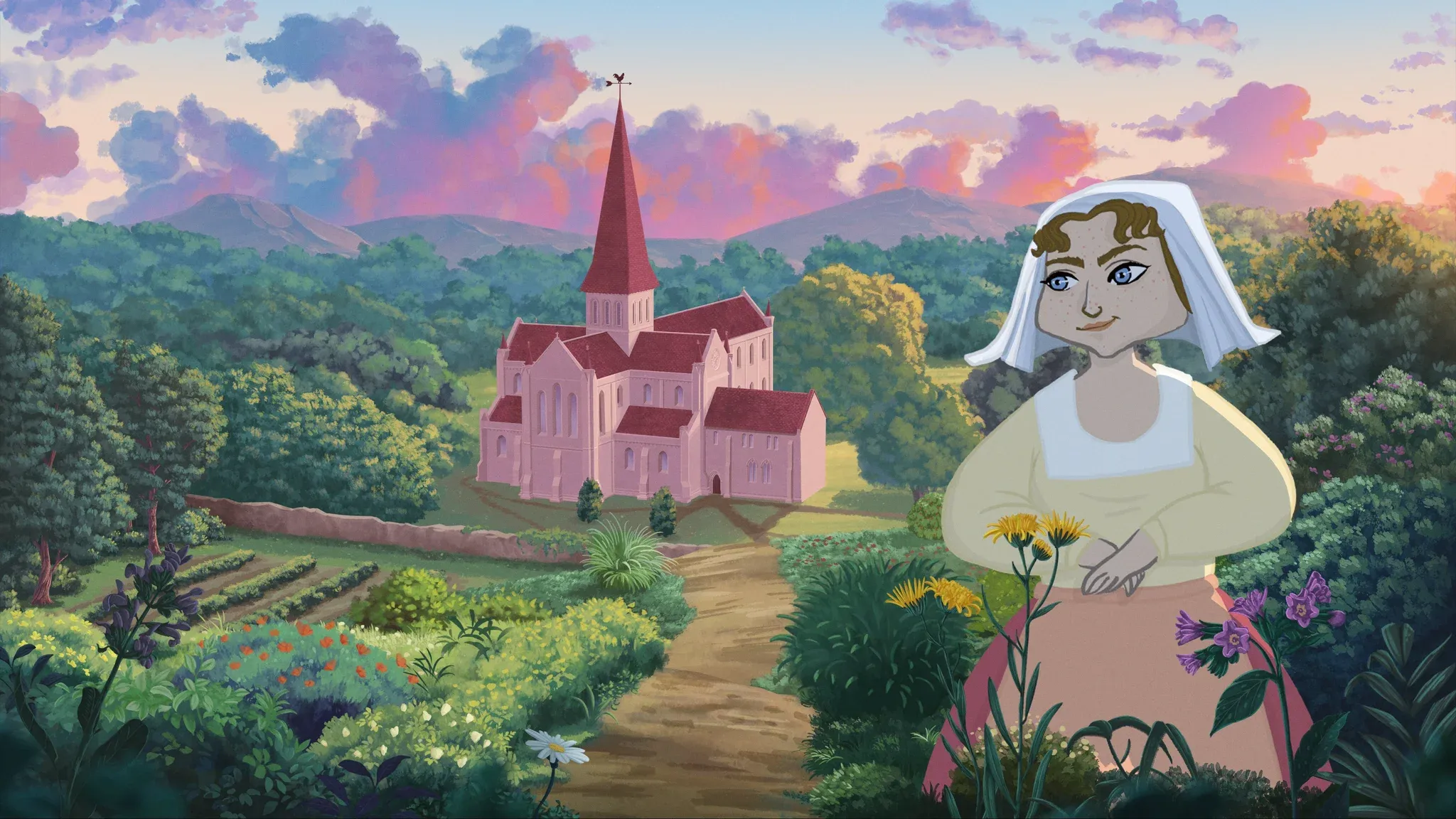
The Abbess Garden is a cozy narrative gardening game developed by MD Studio and published by indie.io, set in 1643 France at the real historical abbey of Port-Royal-des-Champs. You play as Agnès, a young peasant handed the keys to the Abbess's private garden, a place even the mysterious Solitaires living nearby are forbidden to enter. The grounds are buried under weeds and neglect. Your job is to bring them back, and in doing so, uncover a buried spy conspiracy that could interest European royalty. It launched on Steam on March 2, 2026, and is priced at $9.99.
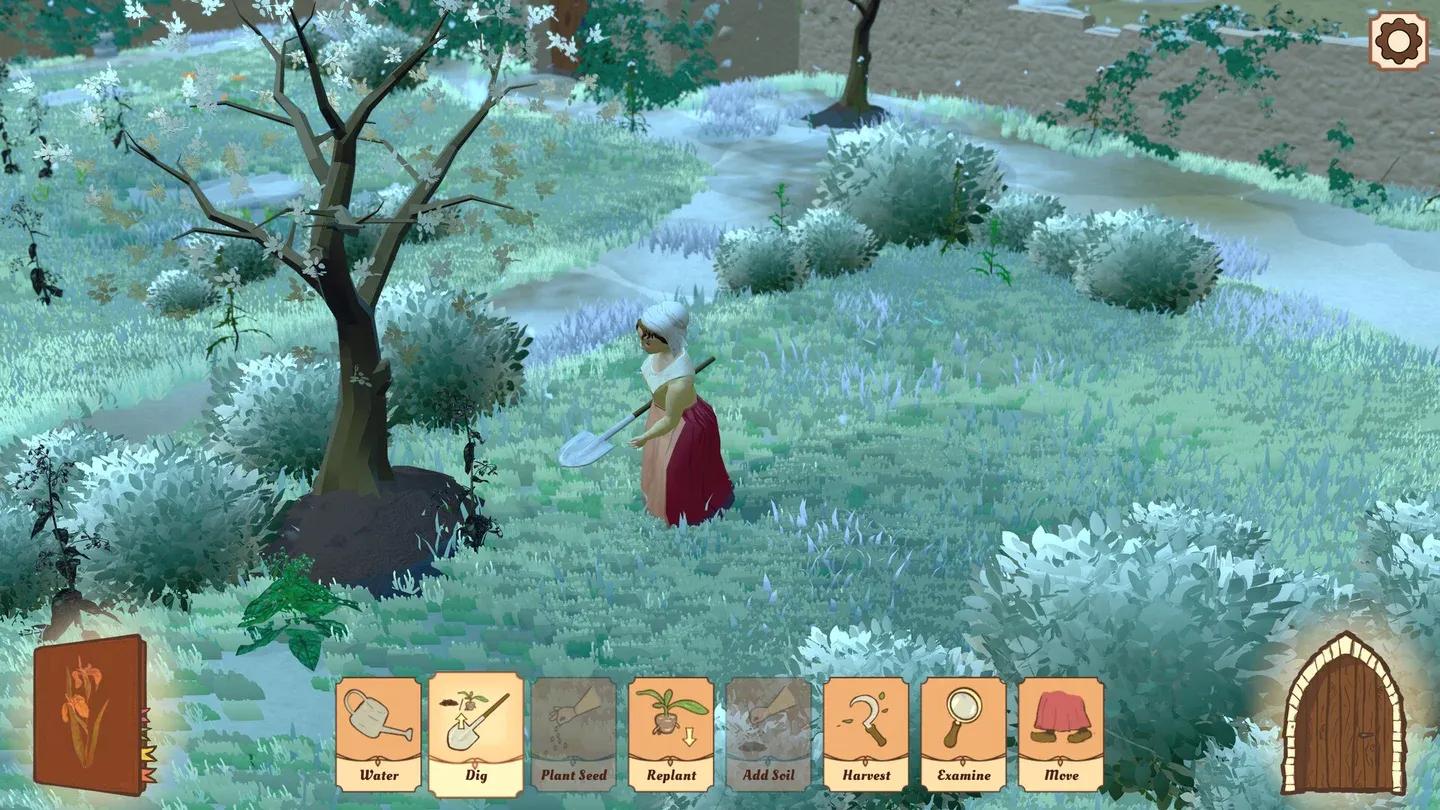
Before the restoration begins
How does the gardening system actually work?
This is not a grid-based farming game. There are no pre-set tile slots waiting for seeds. The Abbess Garden drops you into an open, free-form space where you plant wherever you choose, and the plants respond accordingly.
Three variables drive everything:
- Soil type: Different species need different soil compositions. Sandy, well-draining soil suits some plants; rich, moisture-retaining earth suits others.
- Moisture levels: Overwatering is a real problem. So is neglect. Pay attention to how wet specific patches stay across seasons.
- Plant proximity: Placing incompatible species too close together causes them to struggle. Some plants actually benefit from neighbors; others need breathing room.
The garden behaves like a real ecosystem, not a simplified simulation. That means early playthroughs will involve a lot of quiet observation and course-correcting.
What happens as the seasons change?
Seasons shift the soil moisture baseline and determine which species can survive. A plant thriving in spring may need extra attention heading into summer as the ground dries. Some flora only appear or mature in specific seasons, so knowing when to harvest matters as much as knowing where to plant.
Harvesting has a timing window. Pick flowers, leaves, roots, or seeds too early and they lose value. Wait too long and the plant may die before you collect anything. Watching for visual cues, like petal color shifts or stem changes, is how you learn the rhythm.
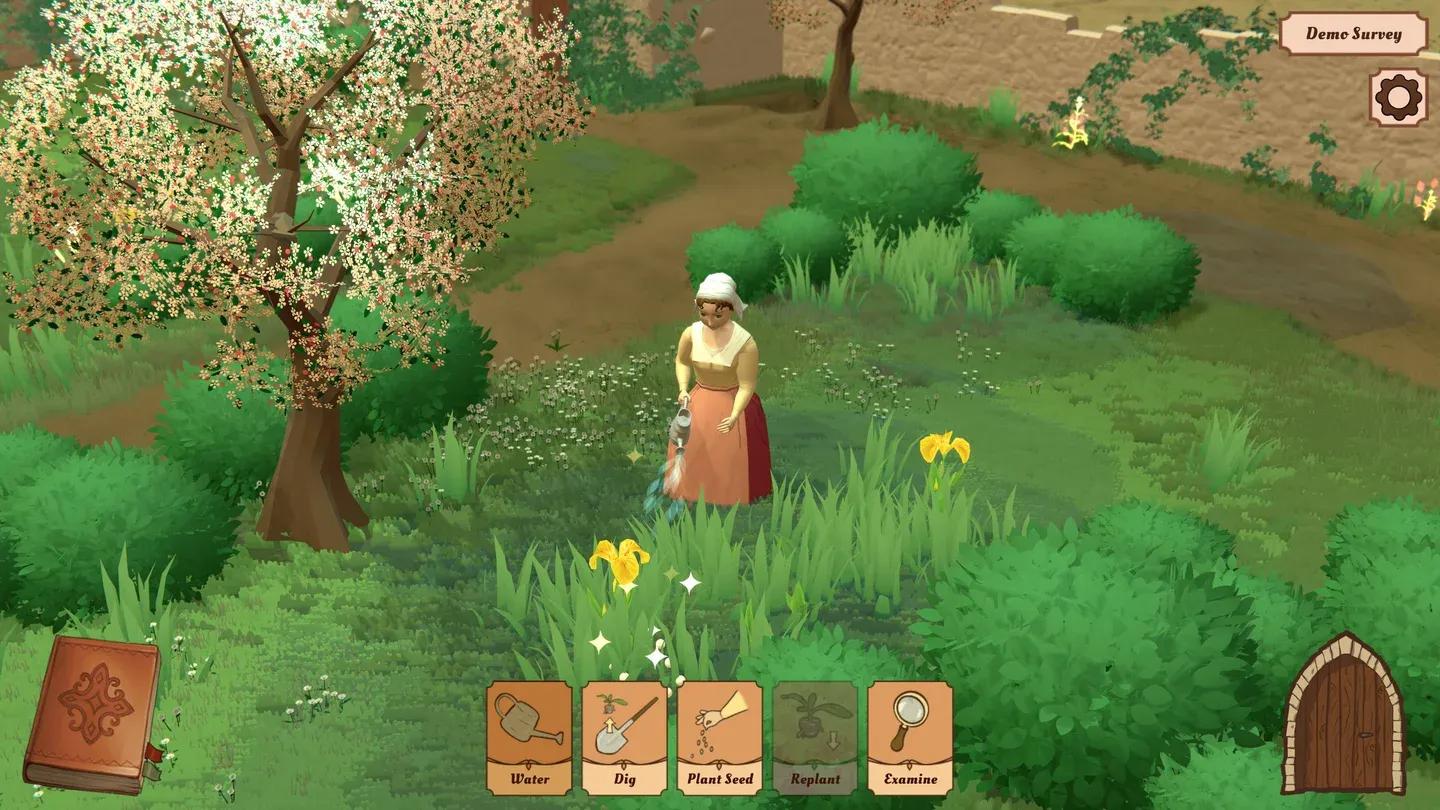
Harvest windows change each season
What is the spy manuscript, and why does it matter?
As you clear overgrowth and explore the abbey grounds, you uncover hidden objects buried in the ruins. These feed your collection book and trigger new quests and conversations with the local community. The most significant find is a book written by a deceased spy.
The manuscript contains information dangerous enough to attract both British and French royalty. Working with your neighbors to decode its meaning is one of the game's central threads. The tension stays low, the game never puts you in direct danger, but the stakes are real within the story.
What makes this work is that the mystery unfolds at the same pace as the garden. You are not chasing a timer. You piece together clues through conversation and exploration, and the community effort feels collaborative rather than transactional.
How does progression work without combat or levels?
There are no experience points, no combat, and no failure states. Progress in The Abbess Garden is knowledge-based. Here is how it breaks down:
| Progression Type | How You Advance |
|---|---|
| Botanical mastery | Learning which plants thrive in which conditions through trial and observation |
| Quest completion | Finishing tasks unlocks new story beats and NPC dialogue options |
| Collection building | Finding hidden objects fills your book and opens new conversations |
| Relationship depth | Helping neighbors and decoding the manuscript together deepens bonds |
| Romance | A softly developed romantic thread grows naturally through shared story moments |
The knowledge-based progression has a direct gameplay effect: a well-maintained garden produces resources faster and makes quest completion easier. You feel the improvement not through numbers, but through how smoothly the garden runs. A March 14, 2026 review gave the game a score of 3.5 out of 5, noting this exact dynamic.
What most players miss in the early game
The lack of explicit guidance is intentional, but it catches new players off guard. A few things worth knowing before you spend an hour replanting the same struggling herb:
- Do not ignore shadows. As seasons change, the angle of light shifts. A spot that gets full sun in spring may be partially shaded by summer. Plan layouts with this in mind.
- Moisture pools in low areas. The terrain is not flat. Some patches stay wetter longer after rain. Plants that need dry soil will suffer there.
- Talk to everyone, often. New story content and quest triggers come from NPC conversations after you complete tasks. Do not hold off on chatting just because you want to keep gardening.
- New areas unlock through story progress. You cannot access everything from the start. Advancing the manuscript mystery opens deeper parts of the abbey grounds.
You can check out The Abbess Garden on Steam for the full feature list and system requirements before diving in.
Is The Abbess Garden worth playing?
The game has received mixed but positive feedback. One review scored it 3.5 out of 5, praising the authentic botany system, the cozy pacing, and the way historical detail adds texture to NPC dialogue. The criticisms are fair: the setting is contained, the narrative is linear with no branching, and the minimal guidance can feel slow early on.
The garden is an open area where you plant what you want where you want, which is the core design philosophy. That freedom is both the appeal and the learning curve.
At $9.99, it does not compete with large farming simulators or sprawling RPGs. It does not try to. The scope is deliberate: a small, carefully crafted story about patience, observation, and what gets buried in the dirt.
Quick reference: plant care checklist
Before placing any new plant, run through these checks:
- Does this species prefer dry or moist soil?
- What season does it thrive in, and what season is it now?
- Are there neighboring plants that could compete or assist?
- Is this spot shaded or exposed, and will that change?
- Have you watered recently, or is the area already saturated?
Once you internalize this loop, the garden stops feeling like a puzzle and starts feeling like a place you actually understand.
For more cozy game guides and new releases, browse the latest guides on GAMES.GG to keep your library growing.