

Cashout is the mode that defines THE FINALS. Every match revolves around one loop: find a vault, crack it open, carry the Cash Box to a station, and hold that station long enough to bank the money. Simple on paper, chaotic in practice. Three or four teams fight over the same objectives simultaneously, and the team that best manages when to push, when to defend, and when to steal ends up on top.
How does Cashout work?
At the start of every round, Vaults appear at random locations across the arena. Interacting with a Vault starts a 20-second countdown, after which it ejects a Cash Box that your team can carry to a Cashout Station. Once the Cash Box is inserted, a deposit timer begins, ranging from 1 minute up to 2 minutes and 10 seconds. Your team owns that station and must defend it. Every other team in the match gets an alert and can attempt to steal it.
Stealing is not instant. It takes 6 to 7 seconds of uninterrupted interaction at the station, depending on the mode and round type. The last team to interact successfully becomes the new owner. Whoever owns the station when the timer hits zero collects the cash.
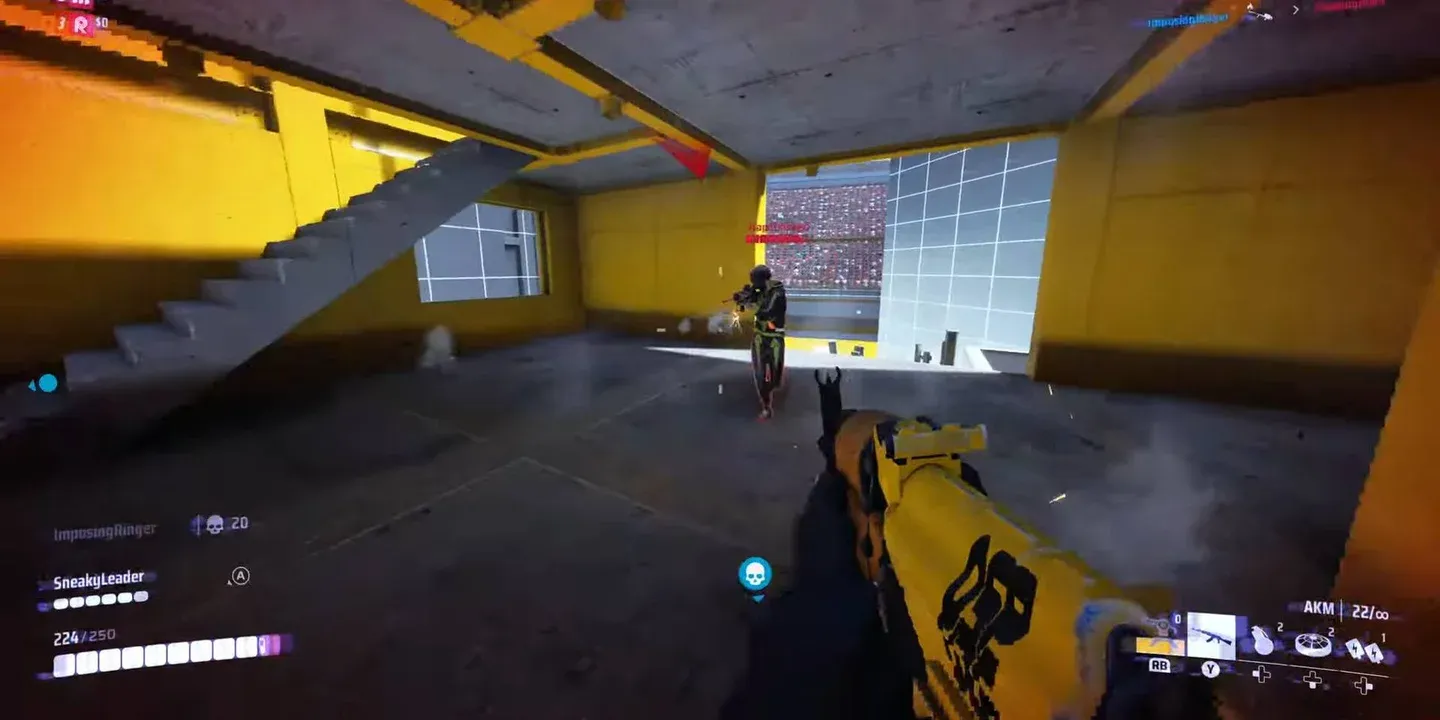
Station ownership and timer
One mechanic worth understanding early is the 20% instant payout. When you insert a Cash Box, 20% of its value lands in your team's account immediately. The remaining 80% only pays out if you successfully defend the station to completion. This means even a failed defense isn't a total loss, but losing the station after insertion still hurts.
What are the different Cashout game modes?
There are four distinct Cashout variants, each with its own rules, stakes, and respawn structure.
Cashout (tournament mode)
The standard Cashout mode runs as an 8-team tournament with 24 players total. Two qualifying rounds of 4 teams each feed into a final round between the last two standing teams. To advance, your team needs to finish in the top 2 by cash total in each qualifying round.
The final round switches to Head2Head rules, where Vaults are worth $25,000 and the first team to reach $50,000 wins. Progress in this mode contributes to World Tour Win Points.
Vault values scale as the round progresses:
The scaling matters. Early vaults are worth less, so teams that fall behind on early deposits can recover if they secure the higher-value vaults later.
Ranked Cashout
Ranked Cashout follows the same 8-team tournament structure as the standard mode, with one major difference: team wipes cost you cash. In qualifying rounds, a full team elimination triggers a 25-second group respawn and a 15% cash penalty on your current total. That penalty can swing a round entirely.
Ranked also hides seedings, Rank Scores, and gameplay stats from the scoreboard during a match. You won't see how other teams are performing until you're eliminated. This is intentional, designed to reduce stat-watching and keep teams focused on the objectives.
Seeds are assigned based on Matchmaking Rating (MMR). The 1st seed is expected to perform best, so if they underperform, their Rank Score loss is steeper. The 8th seed has more room to fail without heavy penalties. Outperforming your seed is how you climb efficiently.
League tiers run from Bronze through Diamond (each with four subdivisions) up to Ruby, which is reserved for the top 500 players on the ranked leaderboard.
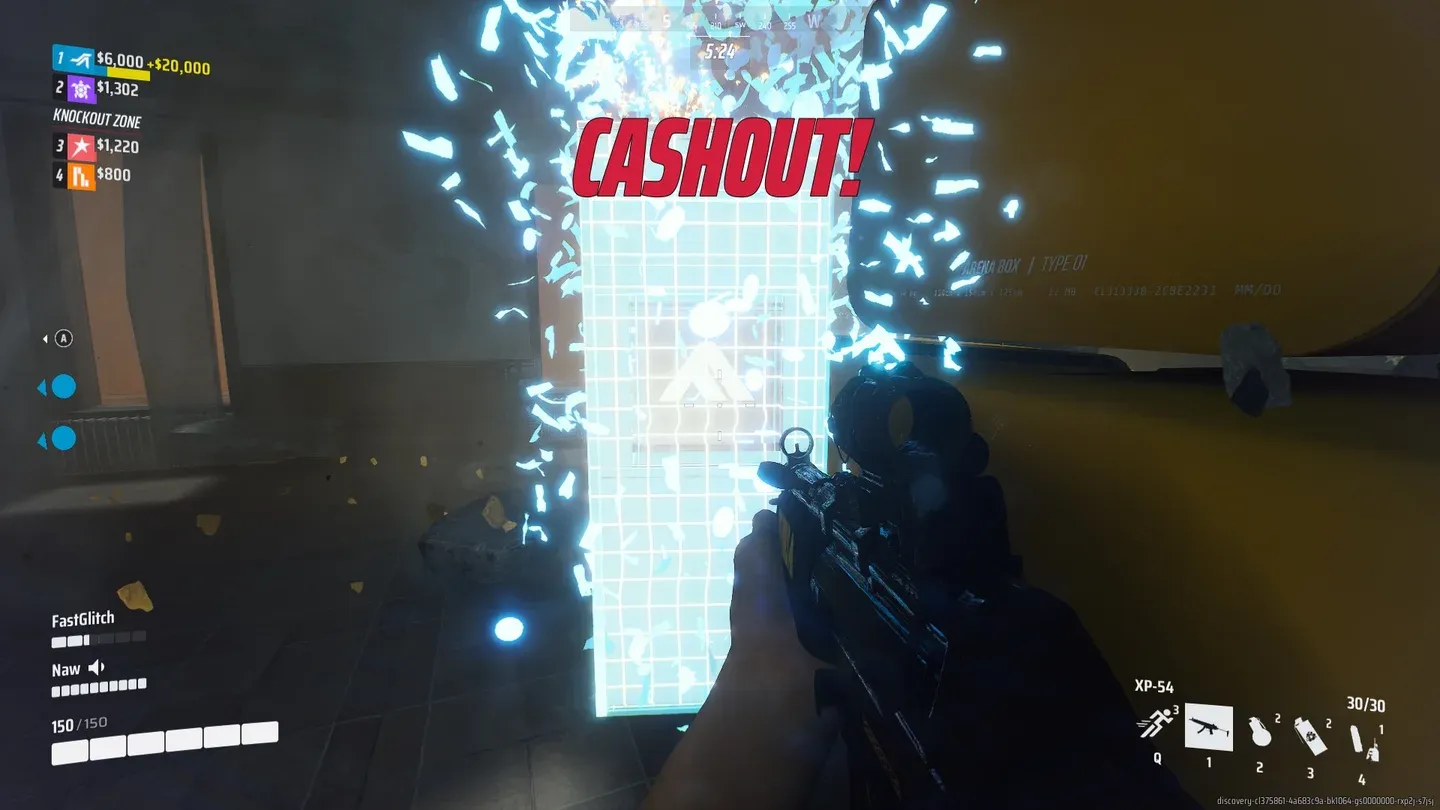
Ranked seeding and league tiers
Quick Cash
Quick Cash is the fastest entry point into Cashout mechanics. Three teams of three compete, and the first team to reach $20,000 wins. Every vault is worth $10,000, only one vault is active at a time, and respawn credits are unlimited.
The respawn system here is wave-based. When the first player on your team goes down, a 30-second team respawn timer starts. Anyone else who dies joins the same wave. If your whole team wipes, you respawn together automatically without needing to spend a coin. During respawn downtime, you can freely swap your entire loadout, including your Build class.
Quick Cash is the right mode for learning how vaults, Cash Boxes, and station defense actually feel without the tournament pressure of Ranked.
Head2Head
Head2Head is a 3v3 format where each vault is worth $25,000 and the win condition is $50,000. As of Season 10, it's been removed from World Tour but remains available in Private Matches. It originally ran as the final round format inside Cashout tournaments, and that structure still applies in the tournament final.
Ways to earn cash beyond deposits
Depositing Cash Boxes is the primary income source, but several secondary actions add up over a match:
- $500 for each contestant eliminated
- $1,000 for opening a Vault
- $1,000 for stealing an active Cashout Station (qualifying rounds only)
- $2,000 to $4,000 deposit bonus depending on which vault pair you're cashing in
- All cash in the station when you complete a deposit
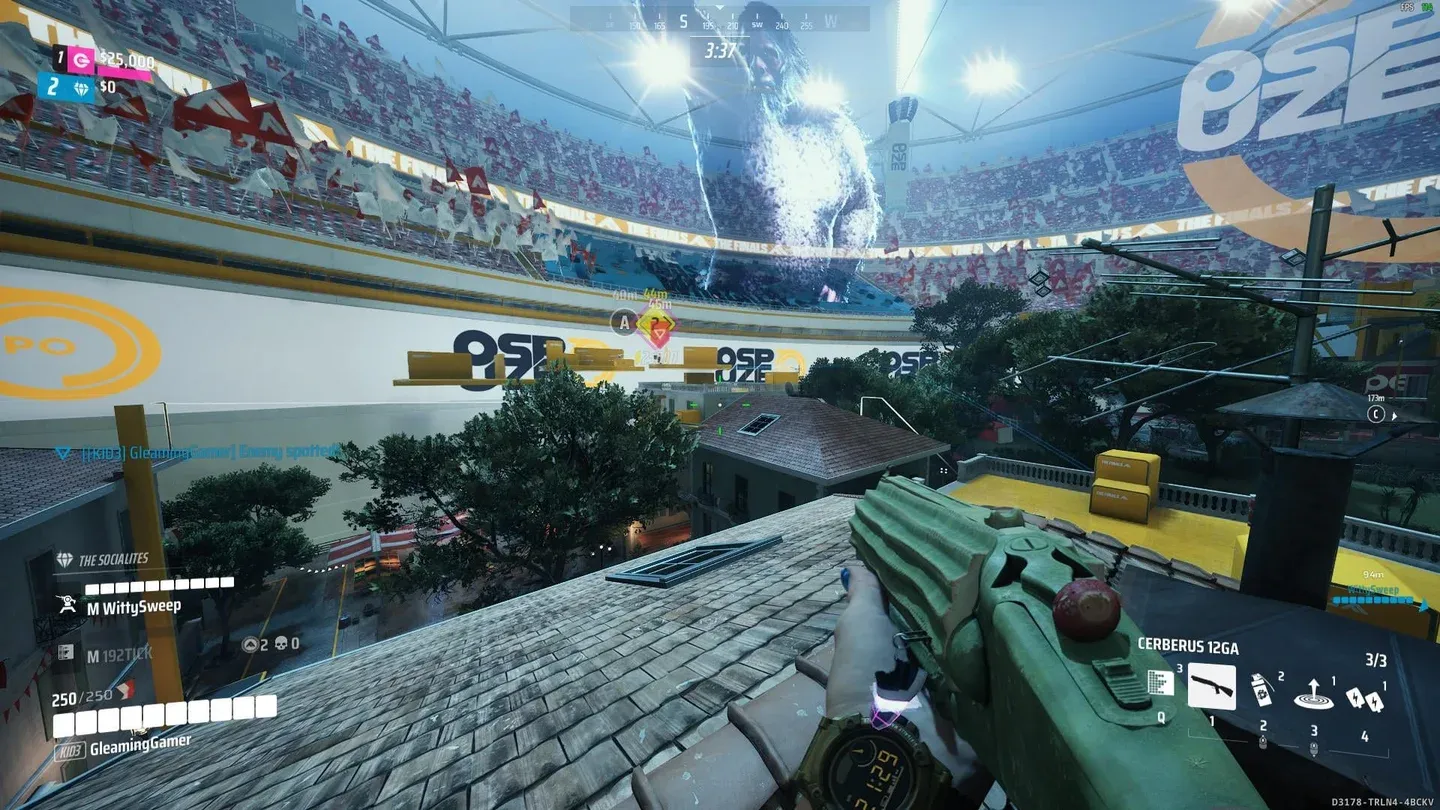
Vault interaction and cash box drop
What is Double Jeopardy and when should you use it?
Double Jeopardy activates when a second Cash Box is inserted into a station that already has an active deposit running. The team that triggers it gets highlighted in red on the scoreboard with a dedicated callout from the game's commentators, Scotty and June. If that team doesn't own the station when the timer completes, they immediately lose 50% of their total cash.
The system exists specifically to punish deliberate griefing, such as stacking Cash Boxes on a station to block a rival team from advancing. Used offensively, Double Jeopardy is a high-risk play that only makes sense when your team is confident it can hold the station to completion. Used accidentally, it's one of the fastest ways to throw a match.
Respawn systems compared
Each mode handles respawns differently, and knowing the rules affects how aggressively you should play:
In Ranked specifically, respawn coins are limited. Each player starts with 2 and earns 1 more at the start of each new round. Running out means you can only return through teammate revives or a full team wipe respawn.
Wave respawn and loadout swap
Loadout swapping rules by mode
One frequently overlooked detail is when you can change your Build class. The rules vary by mode:
- Quick Cash and Head2Head: Full loadout and Build swaps are allowed during respawn downtime. Changes apply when you respawn via coin or team wipe, but not when a teammate revives you in the field.
- Ranked Cashout: Loadout swaps from reserves are only allowed before each round starts. Build changes are locked out entirely once a round begins.
- Casual Cashout: Equipment swaps from reserves are allowed while eliminated, but Build changes are locked. Changes apply on coin or team wipe respawn, not on revive.
This matters most in Ranked. If your Build is getting countered mid-round, you're stuck with it until the round ends. Plan your composition before the round starts, not after you're already dead.
Arena list for Cashout
Cashout matches take place across a rotating pool of arenas, each with their own layout modifiers:
- Monaco (Standard Issue, Duck And Cover, Suspended Structures)
- Seoul (Standard Issue, Moving Platforms, Under Construction)
- Skyway Stadium (Standard Issue, High Rise, Up Down Left Right)
- Las Vegas (Standard Issue, Sandstorm)
- SYS$HORIZON (Standard Issue)
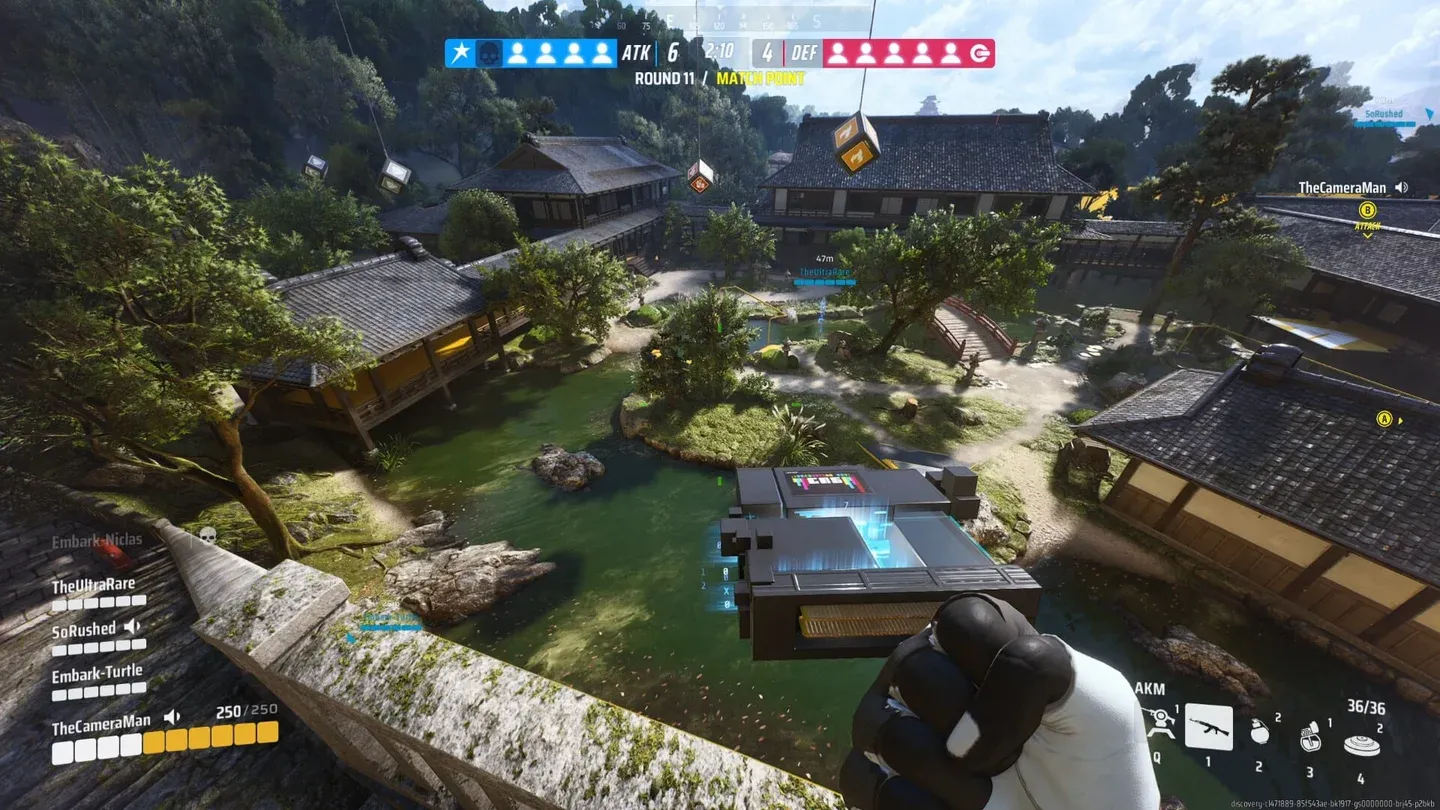
- Kyoto (Standard Issue, Suspended Structures, Moving Platforms)
- Fortune Stadium (Standard Issue)
- Bernal (Standard Issue, Suspended Sponsor Structures)
- Las Vegas Stadium (Standard Issue, Sandstorm)
- NOZOMI/CITADEL (Standard Issue)
- Fangwai City (Standard Issue)
Arena modifiers like Sandstorm and Moving Platforms change sight lines and rotation paths enough that the same defensive setup won't work identically across every map. Adjust your station defense positioning based on what the arena modifier is doing to the environment.
For a deeper look at how class selection feeds into Cashout strategy, the best builds guide for Light, Medium, and Heavy covers which loadouts hold stations most effectively. If you're looking for more ways to improve across every part of the game, the full THE FINALS strategy guides collection has you covered. THE FINALS sits firmly in the action games genre, and Cashout is the mode that best captures why.