

Scrap is the backbone of survival in Tides of Tomorrow. No normal currency exists in the flooded world of Elynd, so every transaction, every ozen tank, every repaired bridge runs through this single resource. The problem is that scrap accumulates slowly, and late-game costs hit hard if you haven't been paying attention. Here's everything you need to know to build a steady supply and spend it without regret.
Where does scrap come from in Tides of Tomorrow?
Scrap appears in more locations than most players initially realize, and developing the habit of checking everything pays off quickly. The sources fall into several distinct categories, each worth understanding.

Rummage every bin you pass


Ground-level exploration
The most dependable supply comes from thoroughness. Scrap metal heaps spawn on the ground near docks, beside containers, and around Ozen merchant shops. Tables, garbage bins, and caches scattered across each island also contain small amounts. Not every bin holds scrap, but the ones that do drop 1 to 10 pieces per find. Those numbers compound faster than you'd think if you check consistently.
Dead ends deserve specific attention. The game's relatively linear exploration still conceals secluded corners that lead nowhere except to a scrap pile or trash can. Players who rush past these spots leave resources behind every single run.
Scrap piles on the water
While sailing between islands, watch for floating scrap piles marked by a yellow glow. Running your boat over them collects the scrap automatically. Some of these piles sit behind narrow waterway passages that are easy to miss at speed, so slow down when navigating tighter channels. This source becomes passive once you know what to look for, making it one of the more efficient methods available.
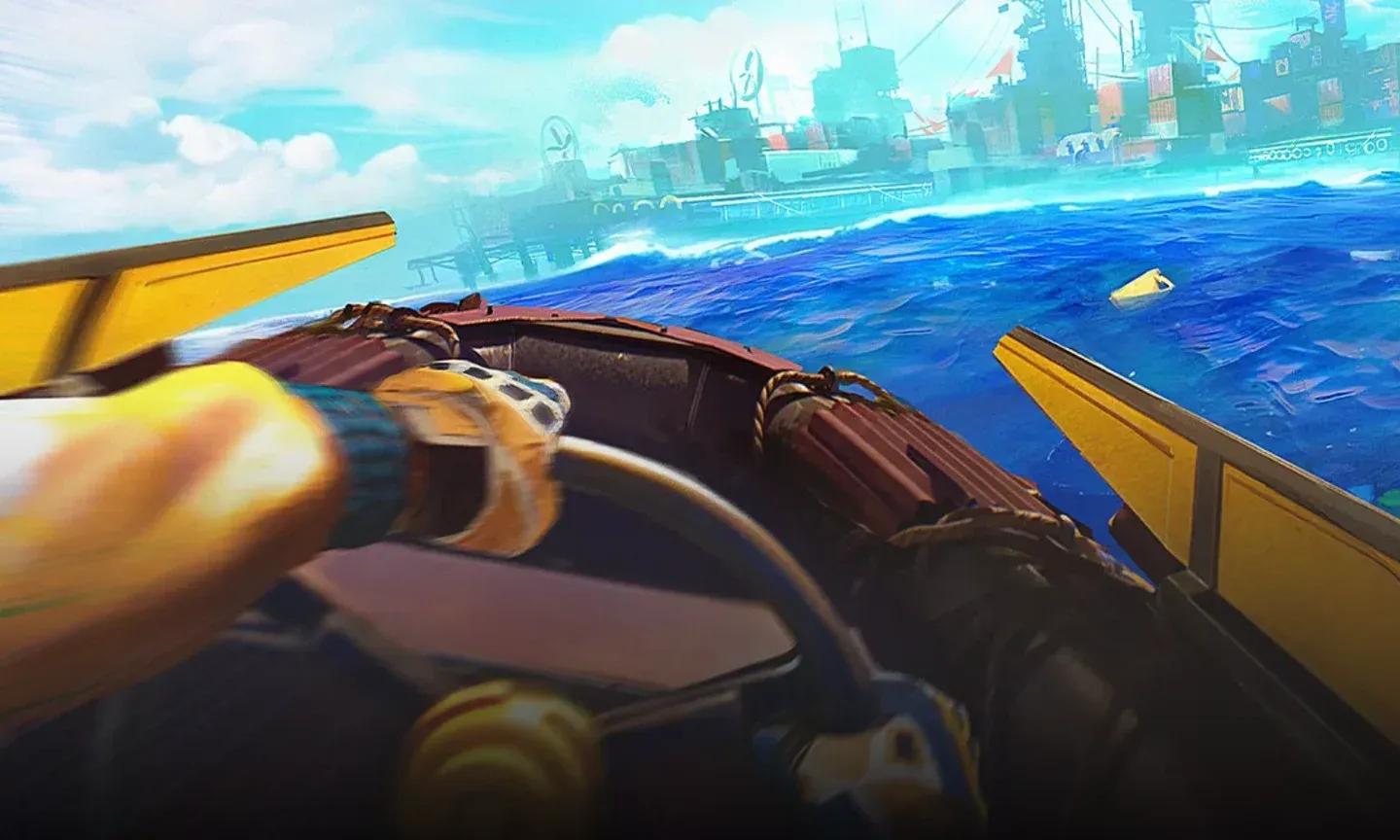
Yellow glow marks water scrap
Chests on later islands
After the first couple of islands, subsequent areas contain chests at specific locations that can hold both scrap and ozen. There's a catch: the player you chose to follow may have already taken the contents. Before committing to a player to follow, check the bottom of your screen during the selection process, as it shows whether that chest still has items. If scrap is running low, prioritizing players whose chests remain untouched is a smart move.
Donation Boxes
Previous Tidewalkers can leave scrap inside Donation Boxes found throughout Elynd. These are gifts from past players, and while the contents aren't guaranteed, checking every one you encounter is worthwhile. Donation Boxes can also contain ozen tanks, making them doubly valuable to inspect.
Ocean Events
Participating in Ocean Events rewards you with resources including scrap. These events are worth doing not just for the immediate payout but because the scrap you collect early gives you a buffer for the expensive late-game ozen purchases. Hoarding scrap during the early game with this in mind is a solid strategy.
How to spend scrap without running out
Having 200 scrap early on and nothing obvious to buy with it can create a false sense of security. The spending picture changes significantly as you progress.
| Use | Cost | Priority |
|---|---|---|
| Buy ozen from merchants | Up to 80-100 scrap per bottle (late game) | High |
| Upgrade boat health | 100 scrap per upgrade | Medium |
| Repair broken ladders/bridges | Varies | Medium |
| Donate to Donation Boxes | Any amount | Low/Cooperative |
| Scrap pot at merchants | Any amount | Optional |
| Give to Reclaimer NPCs | Varies | Situational |
Buying ozen
Ozen is the resource you need most for survival, and scrap is the primary way to get it from vendors. Early in the game, ozen is cheap. By the late game, a single bottle can cost 80 to 100 scrap, and since other players tend to take ozen from chests at that stage, you can't rely on chest loot to cover you. Always keeping enough scrap to buy at least two ozen bottles as a safety buffer is a sound approach.
Upgrading your boat
You can spend 100 scrap per upgrade to increase your boat's health. This matters when you're navigating areas with explosive buoys, where a fragile boat becomes a real liability. It's not the first thing to prioritize, but if you're consistently taking hull damage during travel, the upgrade pays for itself.
Repairing infrastructure
Scrap can be spent to repair broken ladders and bridges, which opens up traversal routes that would otherwise be impassable. This also contributes to the Cooperative Strait, so there's a secondary benefit beyond just getting where you need to go.
Donation Boxes and the scrap pot
If your supply is genuinely overflowing, donating scrap to Donation Boxes benefits future Tidewalkers who access your Online Story Seed. You can also drop scrap into the scrap pot at any merchant, which gives the next player who buys ozen a discount. Neither of these is a priority spend, but both feed into the game's cooperative structure in ways that make the community experience better.
Giving scrap to Reclaimer NPCs
Reclaimers can accept scrap as an alternative to ozen. This is a situational option when giving them ozen directly isn't practical, as the Reclaimer uses the scrap to acquire ozen on their end.
What's the fastest scrap farming strategy?
After spending time with all the available sources, the most efficient approach combines two habits: check every bin and dead end during land exploration, and watch for yellow-glowing piles while sailing. Neither method alone is enough, but together they create a consistent trickle that compounds across a full run.
Ocean Events add a meaningful boost on top of that baseline, so don't skip them when they appear. Chest selection matters too: taking a few extra seconds during the player-follow selection to confirm chest contents can mean the difference between arriving at a new island with spare scrap or arriving empty.
For more survival tips and game guides, browse the latest guides on GAMES.GG.