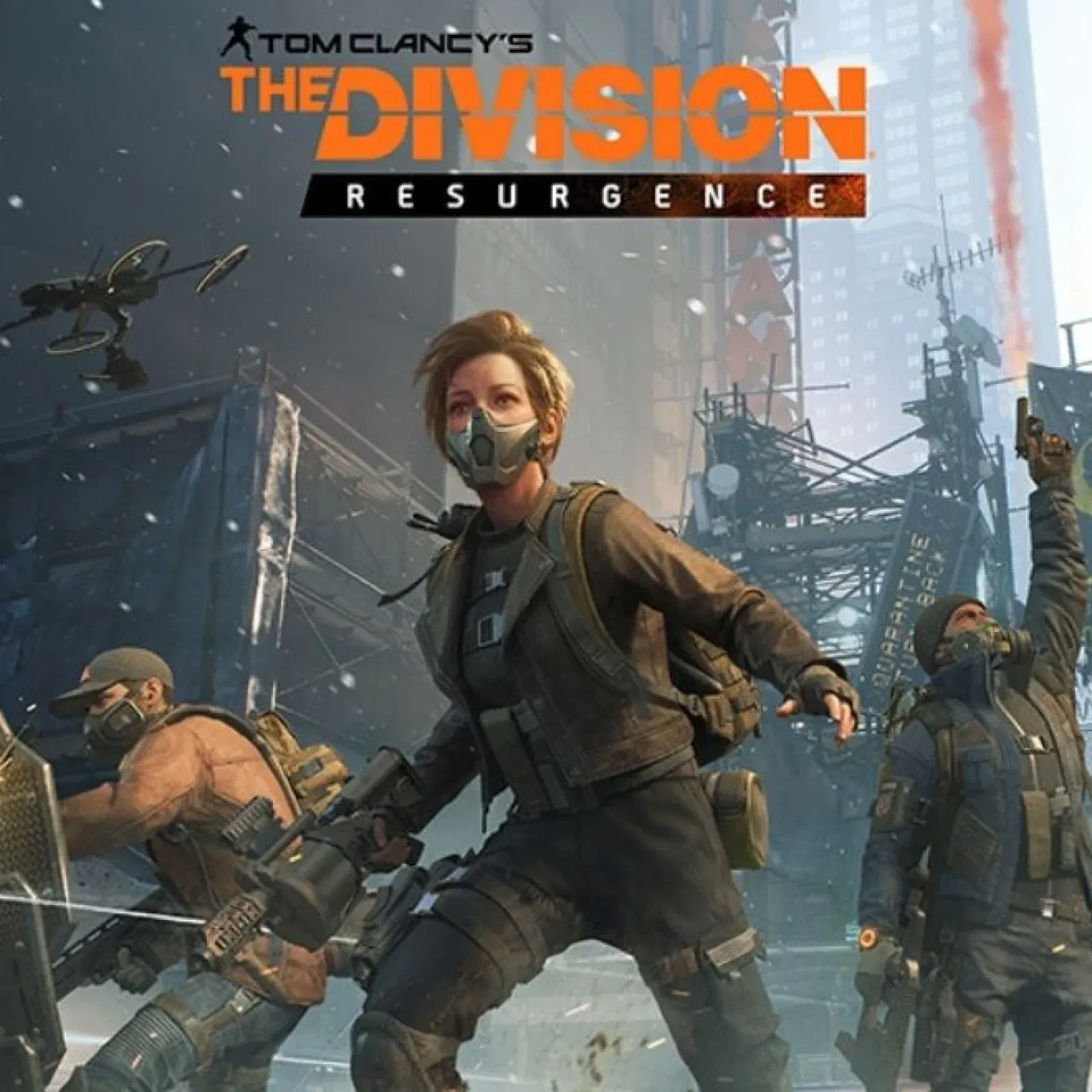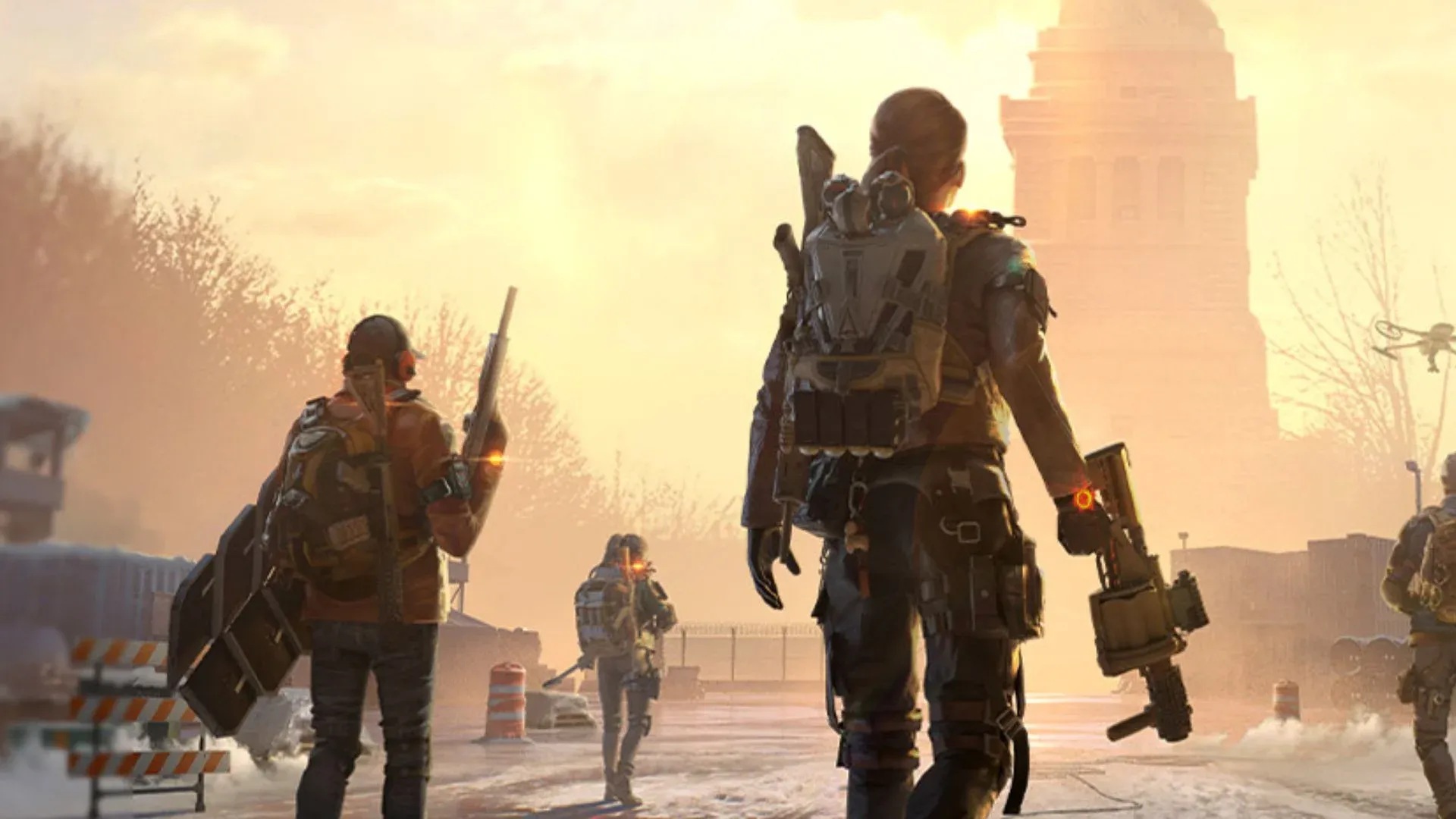

The Division Resurgence drops you into a collapsed New York City with a gun, a specialization you barely understand, and enemies who will absolutely punish you for playing like it's a casual mobile shooter. This is a full tactical looter-shooter with RPG depth, a gear progression system that rivals its console predecessors, and a Dark Zone that will end your run in seconds if you walk in unprepared. Here's everything you need to hit the ground running.
What kind of game is The Division Resurgence?
The Division Resurgence is a mobile third-person tactical shooter set in the same post-pandemic New York City as the mainline series. The story sits between the events of The Division 1 and The Division 2, following Strategic Homeland Division (SHD) agents dealing with the aftermath of the Dollar Flu outbreak. It's not a port or a stripped-down spin-off. The mission structure, gear systems, and multiplayer modes are built specifically for this release. Full details on the game's systems and story are available for deeper reference.
Cross-play between iOS, Android, and PC emulators is fully supported. Cross-server play is not. That second point matters more than most players realize.

Gear level and loadout screen


Essential first steps before you fire a single shot
Server selection is your most consequential early decision. The Division Resurgence runs on isolated regional servers for North America, Europe, and Asia. Your character is locked to whichever server you pick at the start. If your squad is on EU and you picked NA, you cannot play together. Get everyone into the same region before anyone progresses past the tutorial.
Once you're through the tutorial, the game prompts you to pick a specialization. Don't spend 20 minutes agonizing over it. The specialization system is designed for flexibility, and you can swap your active class at the coordinator in the Base of Operations at any point. Your first pick is a starting point, not a contract.
On the performance side, prioritize 60 FPS over higher texture settings whenever your device supports it. Reduced input lag in PvP situations is worth more than sharper grass textures.
Which specialization should you pick?
Four specializations are available, each filling a distinct squad role. Here's how they break down:
| Specialization | Role | Signature Tool | Best Situation |
|---|---|---|---|
| Bulwark | Tank | Ballistic Shield | Frontline pushes, absorbing damage |
| Vanguard | Support | Portable Cover | Open-area advances without natural cover |
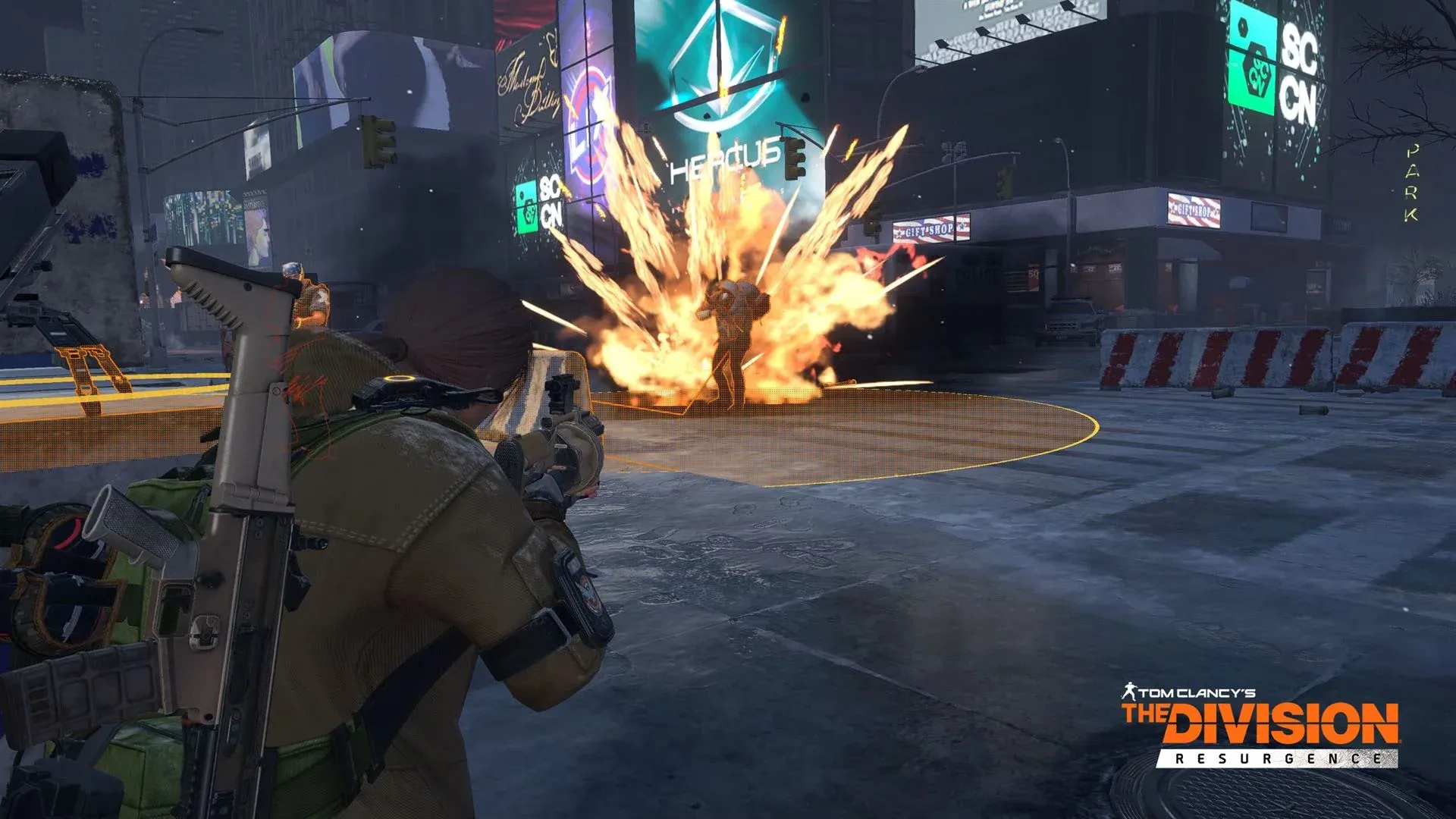
| Demolition | DPS | Grenade Launcher + Mortar Turret | Clearing clustered enemy groups |
| Combat Medic | Healer | Oxidizing Drone Swarm | Group survivability, zoning with chemical traps |
The Bulwark lets you fire your sidearm while absorbing damage behind a ballistic shield and can stun groups with the Shockwave Spike. Vanguard deploys portable barriers mid-street, which is genuinely useful in areas where the environment gives you nothing to work with. Demolition brings a grenade launcher for crowd control and an automated mortar that targets enemies behind cover. Combat Medic runs an Oxidizing Swarm of drones that damages enemies while healing teammates, paired with chemical traps for area denial.
For solo play, Demolition and Bulwark handle the widest variety of encounters. For group content, Combat Medic becomes significantly more valuable as mission difficulty climbs.
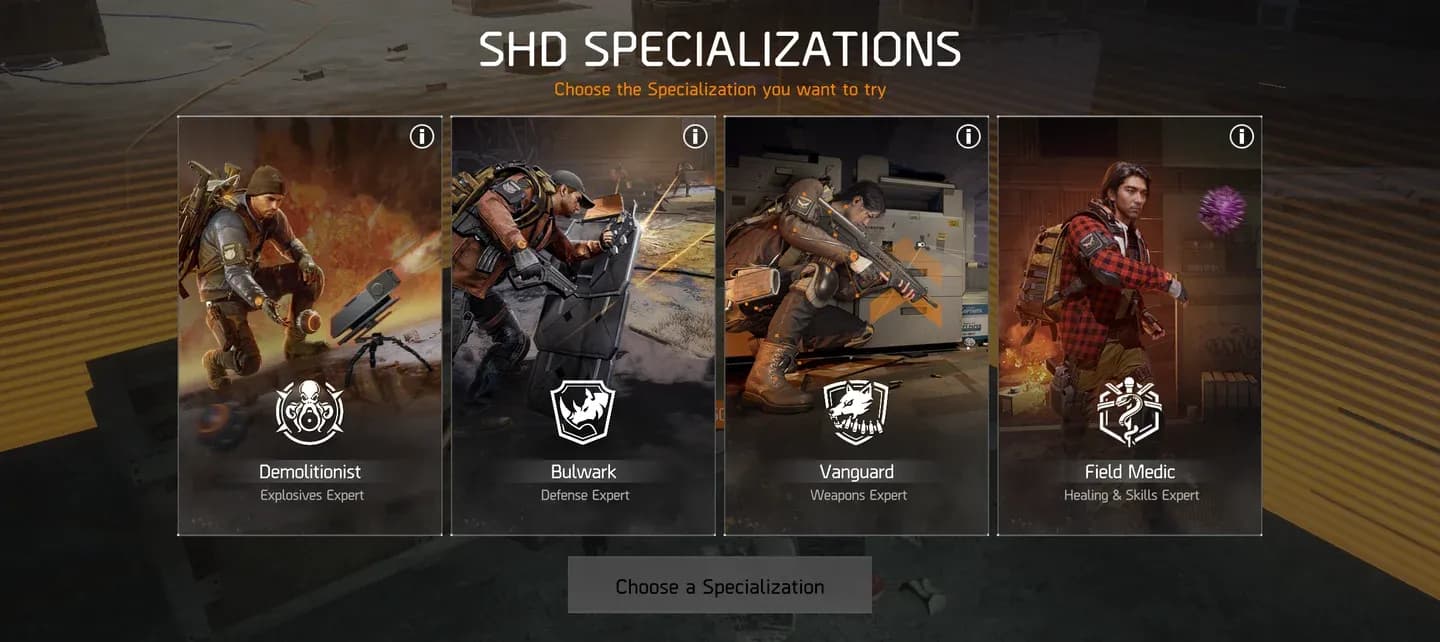
Gear level and spec select menu
How does the Power Score system work?
This is where The Division Resurgence separates itself from most mobile shooters. Your readiness for high-level content is measured by Power Score, not character level. Power Score aggregates your gear stats, weapon levels, mod quality, and even account-wide achievements. If a mission recommends a Power Score of 12,000 and you walk in at 10,000, you will feel that gap in every firefight.
The gear level system works independently of your character level. A piece of gear you find at level 10 can be upgraded all the way to the level 40 cap if its stats and talents are strong enough. This means you should evaluate gear on its talents and damage type coverage, not just its rarity color.
Power Score components:
- Gear and weapon levels: The direct power of your equipped items
- Mods: Quality and level of attachments on weapons and armor
- Achievements: Account-wide milestones that provide small permanent boosts
- Specialization points: Talent tree investment in your chosen class
What are weapon damage types and why do they matter?
Weapon damage types are a system that starts feeling optional in the early game and becomes mandatory by the time you're hitting level 20 content. Every weapon carries a colored icon indicating its damage type:
- Red (Blast): Effective against grouped enemies and specific armor types
- Light Blue (Shredding): Designed to strip standard enemy shields
- Dark Blue (Piercing): Required for heavy physical armor penetration
Late-game bosses cycle through shields that correspond to these types. If you only carry Piercing weapons and the boss switches to a Shredding-vulnerable shield, you're doing minimal damage until you swap. Carry at least one weapon of each type in your inventory at all times.
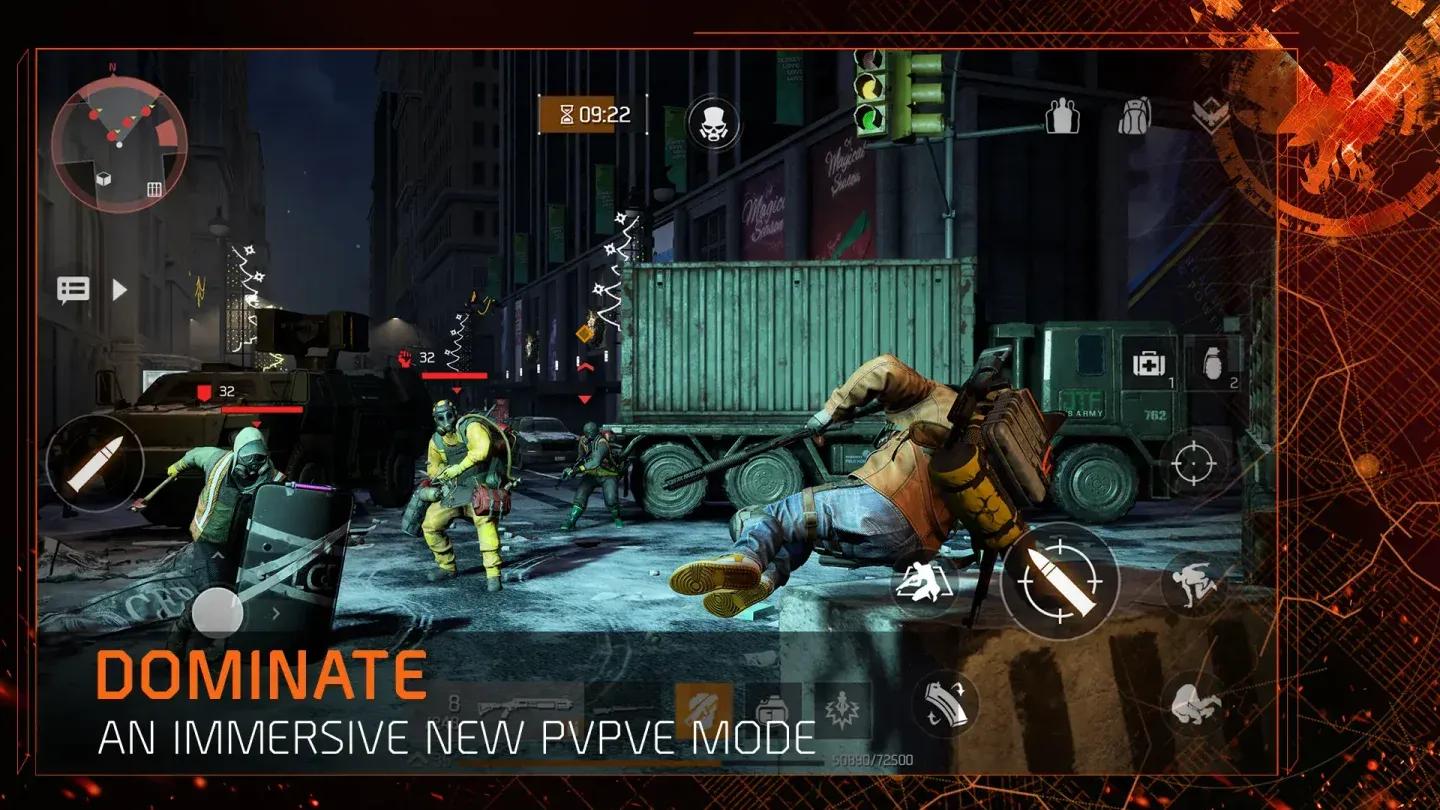
Gear level and damage type icons
How should you manage daily XP and progression?
The Division Resurgence uses a daily XP boost system to manage pacing. When the orange arrow near your level icon is active, you're earning maximum XP. Once you hit the daily threshold, it turns gray and your XP rate drops significantly. The boost does not carry over to the next day.
| Activity | XP Value | Daily Limit |
|---|---|---|
| Daily Quests | Very High | Fixed daily set |
| Main Campaign | Extreme | Once per mission |
| Open World Activities | Moderate | 10 rewarded completions |
| Challenging Nests | High | Rotates every 24 hours |
| Dark Zone Bosses | High | Unlimited |
The most efficient daily loop: complete your daily quests first (highest XP per minute), then run main campaign missions if available, then open world activities up to the 10-completion cap. Once that cap hits, shift to Nests or the Dark Zone to keep farming gear without burning your rewarded activity slots.
How does the Dark Zone work?
The Dark Zone is a contaminated extraction zone where you face both elite AI enemies and real players simultaneously. The goal is to scavenge high-end loot and reach an extraction point before the 20-minute session timer expires. Any contaminated items you collect are lost if you die or fail to extract before the helicopter leaves.
The critical complication: any player can go rogue at any time. Friendly fire is disabled within your immediate squad, but every other agent on the map can turn hostile and steal your loot. Never assume someone standing near the extraction helicopter is friendly.
Prioritize Freemen enemies in any Dark Zone encounter. They're the most dangerous faction in the current build, running advanced drones, tech gadgets, and heavy machinery. Leave a Freeman engineer alive too long and the entire encounter can collapse around you. The other factions, Raiders, Rikers, and Cleaners, are more manageable, though Cleaners carry fuel tanks that explode when shot, which you can use to your advantage.
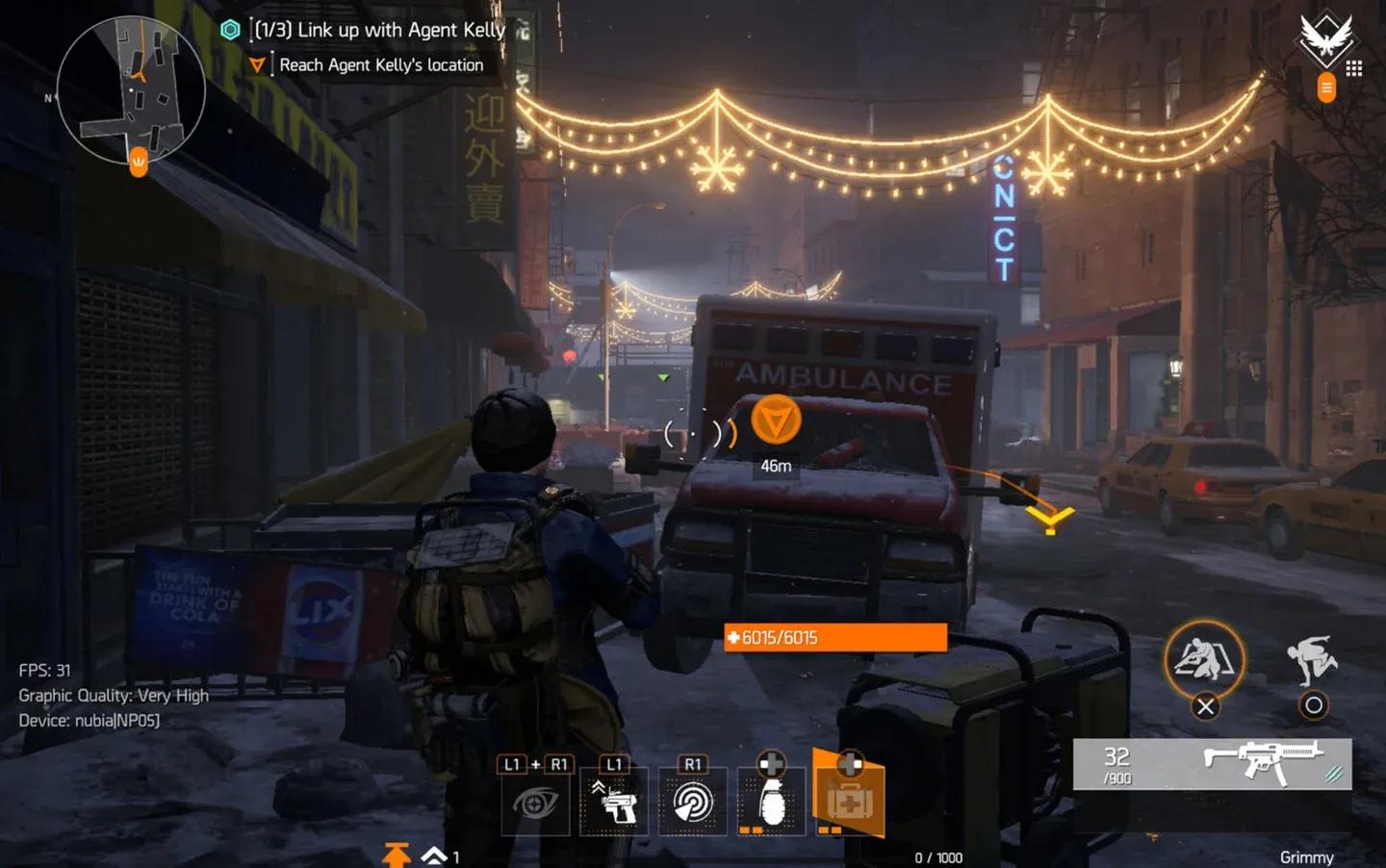
Gear level and Dark Zone extraction
Combat tactics that actually make a difference
Cover-to-cover movement reduces your exposure while repositioning. Hold the move button while transitioning between cover positions rather than sprinting in the open. It's a small habit that matters significantly in higher-difficulty content.
Environmental hazards are worth actively hunting. Red barrels and gas canisters near enemy clusters can clear a group faster than a full magazine. Heavy enemies often have glowing yellow pouches or tanks as weak points. Destroying those triggers status effects like fire or blindness, making them vulnerable to follow-up damage.
On the inventory side, never leave a weapon behind even if it's weaker than your current loadout. Dismantling lower-tier green and blue items gives you Worn Metal Components and Worn Fabric, which are the primary materials for crafting high-tier gear. Selling them for credits is less valuable than the crafting materials they provide.
Is the free-to-play monetization worth engaging with?
The Division Resurgence is free-to-play with optional purchases. All content is accessible without spending, but a few options offer genuine quality-of-life value:
- Classified Ops Pass (Battle Pass): Grants an exotic weapon (the Warlord) early that levels up with you
- Warden Field Supplies: Monthly subscription providing daily Phoenix Credits, 30 extra inventory slots, and a 40% crafting time reduction
- One-Time Level Bundles: Triggered at campaign milestones, strong value for upgrade materials
One thing to know before spending: all purchases are character-bound, not account-bound. A second agent on a different server starts from zero.
For background on the game's development and how it fits into the broader Tom Clancy universe, the Wikipedia overview of The Division Resurgence covers the timeline and production context. For more guides across every genre, browse the full library at GAMES.GG.