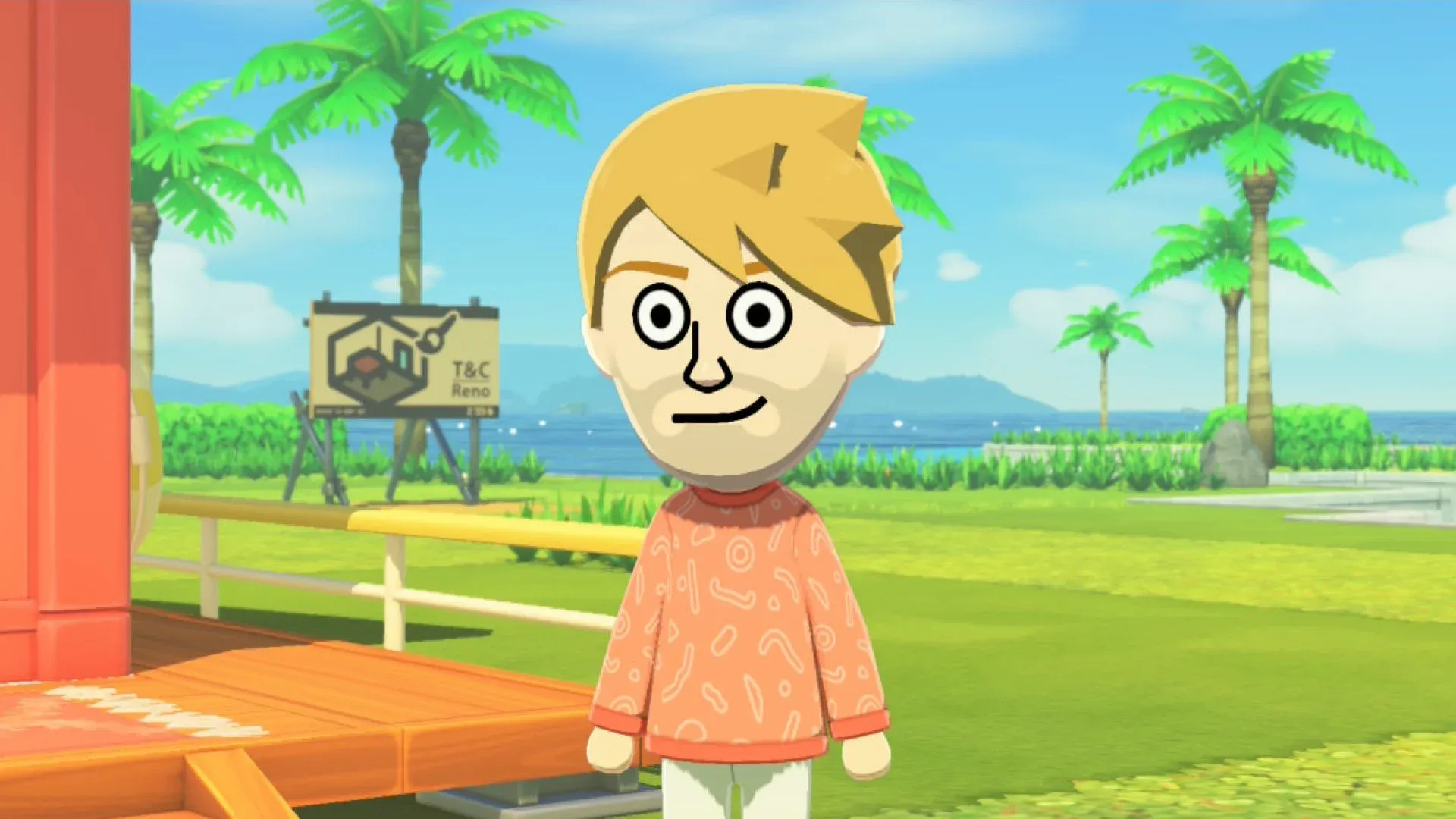


Tomodachi Life: Living the Dream is the long-awaited sequel to the 2013 3DS cult classic, and Nintendo has spent those 13 years addressing practically every complaint fans had with the original. The biggest changes land right at the start: Mii creation now includes pronouns, nonbinary gender options, and same-sex dating preferences, making it the most expressive the series has ever been. On top of that, personalities are no longer a mystery box — there's a reliable formula for getting exactly the temperament you want. Here's everything you need to know before you populate your island.
What's new in Mii creation?
The Mii creation process in Living the Dream builds on the Nintendo Switch Miitopia suite and adds several options that were simply absent from every previous entry in the series. According to Nintendo's January 29 Direct, players can now set:
- Gender identity: male, female, or nonbinary — the first time Nintendo has used the word "nonbinary" explicitly in any of their games
- Dating preferences: choose which genders your Mii will date or marry, including none at all (aromantic/asexual Miis are fully supported)
- Pronouns: set independently from gender identity, so your he/him Mii can be nonbinary, or your she/her Mii can have any dating preference you choose
- Event outfits: pick which gendered clothing style applies to your Mii during seasonal events
- Voice: select from available voice options regardless of other settings
- Birthday: set manually, which affects in-game age and seasonal events
- Face paint: a new cosmetic layer, demonstrated in the Direct through a teddy bear-styled Mii named Mocha
This is a meaningful departure from Animal Crossing: New Horizons, where Nintendo sidestepped gender entirely by offering two unnamed "styles" that were still coded to traditional expectations. Living the Dream just calls things what they are, which the Tomodachi Life Wiki on Fandom confirms as a series first.
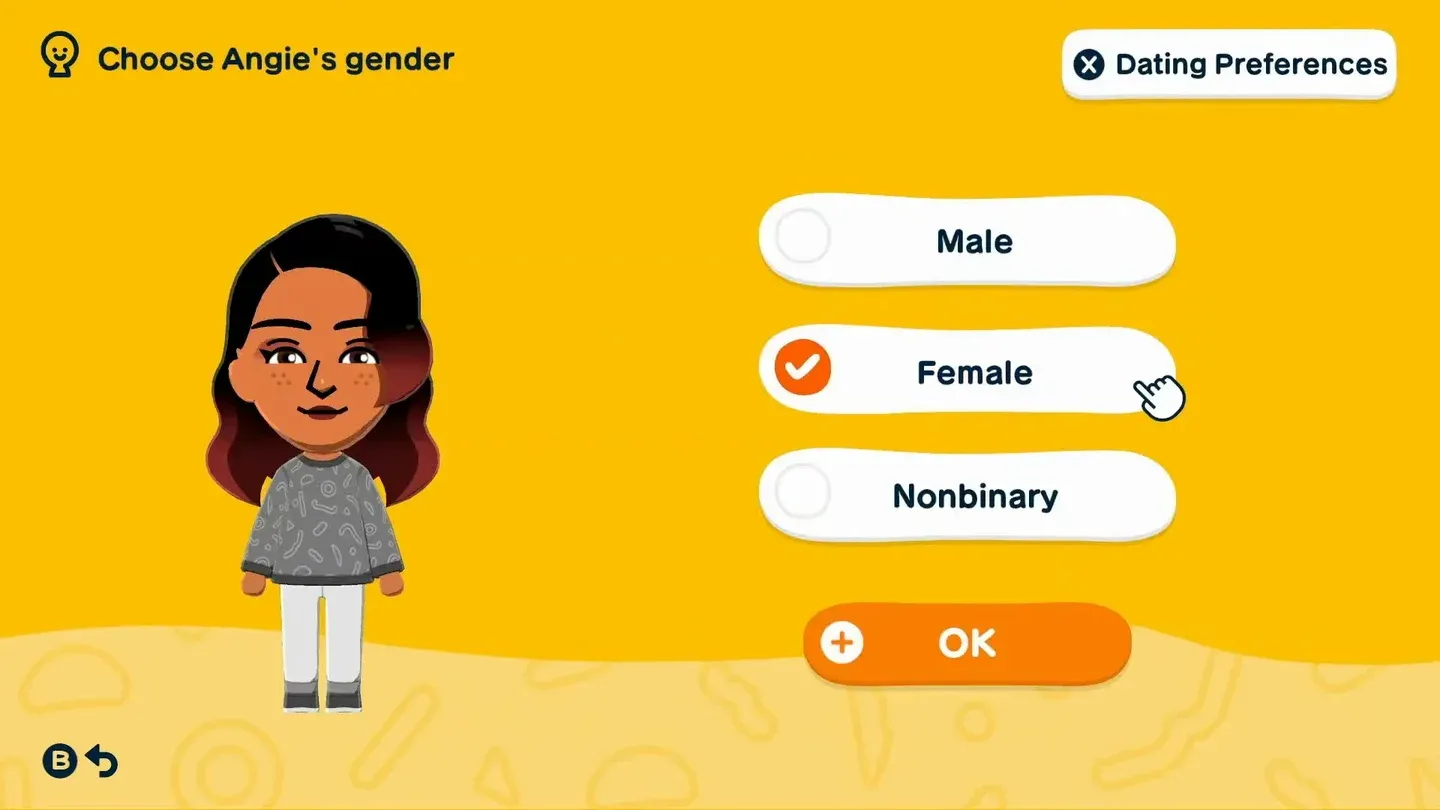
Gender and pronoun setup screen
Why did it take this long?
The short version: Nintendo promised it would happen and then took almost 12 years to deliver.
When the 2014 Western release of Tomodachi Life shipped without same-sex relationship options, fans petitioned for the feature. Nintendo's initial response was tone-deaf, stating the game "never intended to make any form of social commentary" and that relationship options represented "a playful alternate world rather than a real-life simulation." After significant backlash, the company issued a follow-up apology and pledged that any future Tomodachi entry would "strive to design a game-play experience from the ground up that is more inclusive, and better represents all players."
That promise is now fulfilled. The reaction to the January 29 Direct was immediate — the livestream's comments flooded with pride flag emojis, and the r/tomodachilife subreddit lit up with posts celebrating the news. One fan on Reddit put it plainly: "I was so surprised they just used the word nonbinary just plain and simple." Per the Wikipedia entry for Living the Dream, this is also the first entry in the series to support aromantic Miis and customizable clothing preferences tied to identity rather than binary gender.
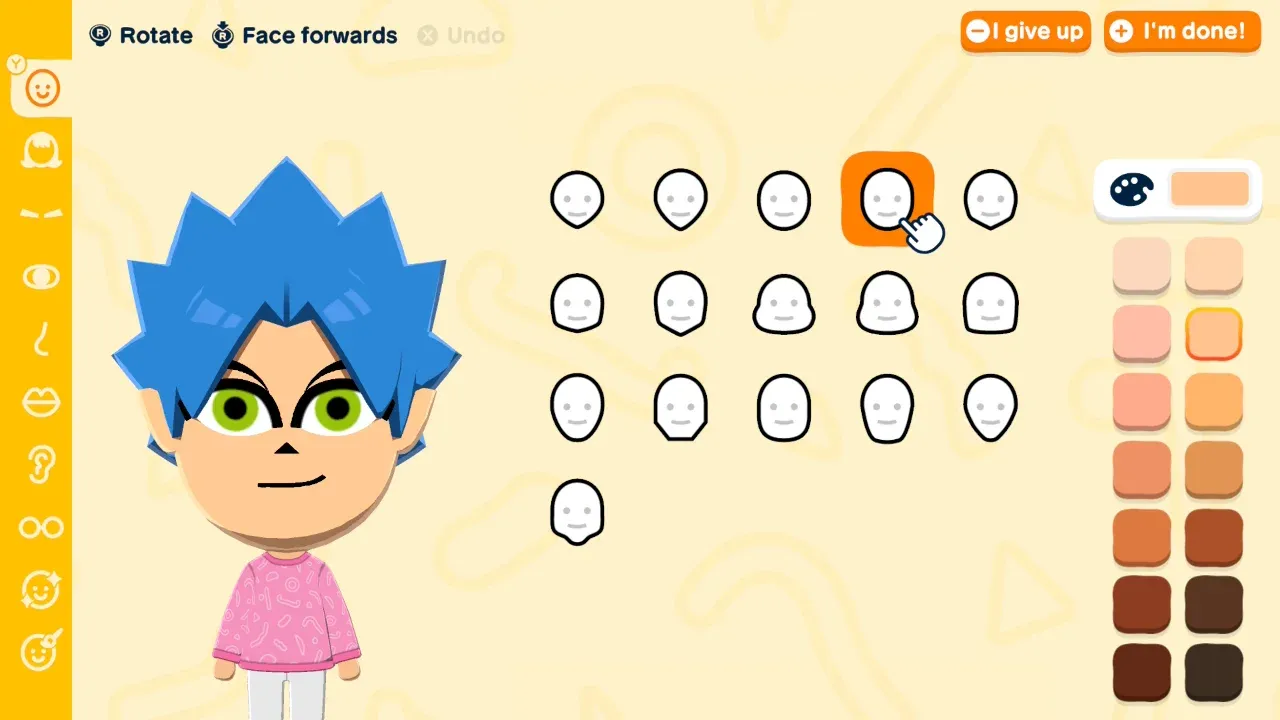
Dating preference options
How do Mii personalities work?
Personality assignment is one of the more opaque systems in the game, but it follows a consistent formula once you understand what's happening under the hood.
During Mii creation, you rate your character across five trait scales:
- Movement: Slow to Quick
- Speech: Polite to Direct
- Energy: Flat to Intense
- Attitude: Serious to Relaxed
- Overall: Normal to Quirky
Each scale runs across eight positions, represented as a color gradient from green (left) to orange (right). The game then assigns a two-word personality type from a pool of 16, organized under four overarching categories:
The Overall scale does not affect personality assignment directly. The four scales that matter are Movement, Speech, Energy, and Attitude — and Speech and Attitude are weighted slightly higher than the other two.
How to calculate your Mii's personality
This method is based on a personality calculator originally developed by GameFAQs user reinseiun for the 3DS game, which VG247 confirmed still applies to Living the Dream with the same underlying math.
Assign numeric values to where you place each slider (left to right, positions 1 through 8):
Note that Speech and Attitude skip the value 4 in the middle, which is what gives them extra weight.
Once you have your values:
- Add Movement + Speech together
- Add Energy + Attitude together
- Find where those two totals intersect on this grid:
What about island and relationship systems?
Mii customization doesn't stop at character creation. Living the Dream adds meaningful social systems that make your choices matter throughout the game.
Households: Miis can now live together in groups of up to 8, forming house dynamics that generate unique interactions separate from standard friendships or romantic relationships. This is new to the series.
Relationship nudging: You can physically pick up and place Miis next to each other to encourage interactions. The Direct demonstrated this leading to one Mii developing a crush and eventually confessing feelings — a more hands-on version of the passive relationship system in the 3DS game.
Island layout: Taking cues from Animal Crossing: New Horizons, the entire island layout is now customizable. Shops sell items, outfits, and apartment decorations, and the island itself can be restructured as it grows.
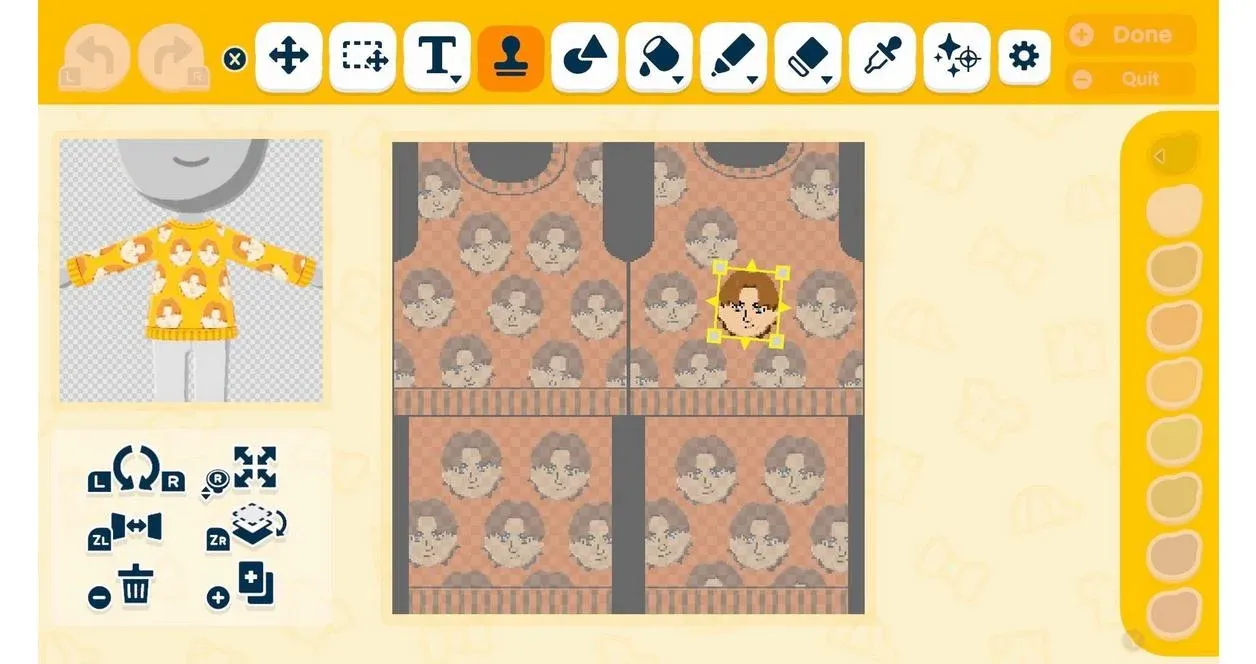
Island and apartment customization
Quick reference: Mii creation checklist
Before you hit confirm on a new Mii, run through this list:
- Set gender identity (male, female, or nonbinary)
- Set dating preferences (which genders they'll pursue, or none)
- Set pronouns independently from gender
- Choose event outfit style
- Pick a voice
- Enter a birthday (affects in-game age and seasonal events)
- Adjust personality sliders using the formula above if you want a specific type
- Add any face paint cosmetics
All settings are editable after creation, so nothing here is permanent.
For more gaming guides covering the latest Nintendo releases and beyond, browse the full guides library at GAMES.GG.