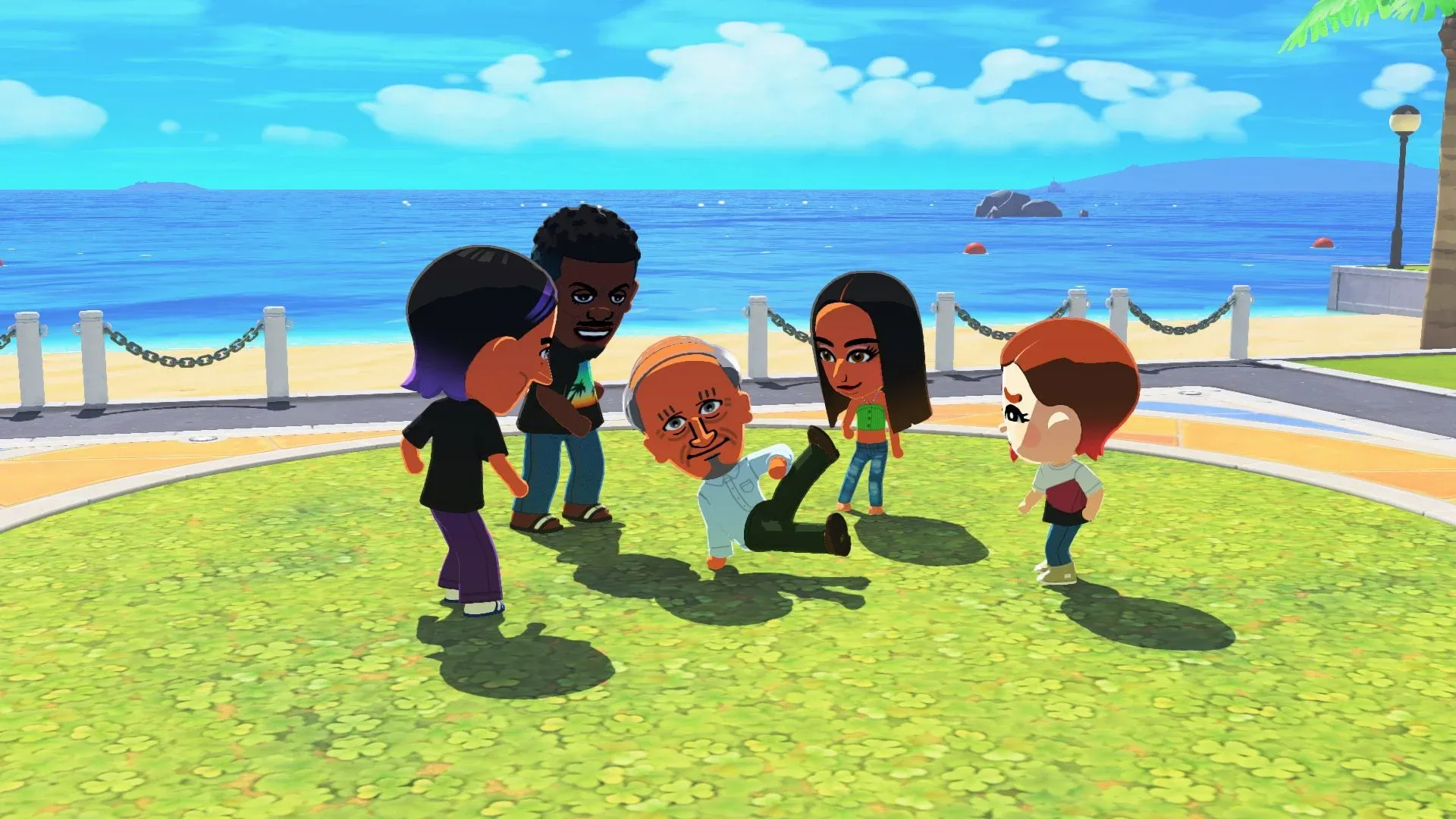


Stop guessing your Mii's personality
Tomodachi Life: Living the Dream gives you five sliders to set when creating a Mii, and then assigns a two-word personality without telling you exactly how the math works. The result can feel arbitrary, especially if you're trying to recreate a specific person and end up with something completely off. The good news: the system follows a precise formula that the community cracked for the original 3DS game over a decade ago, and testing of the Welcome Version demo confirms it works identically in the sequel. Here's everything you need to control which personality your Mii gets, every single time.
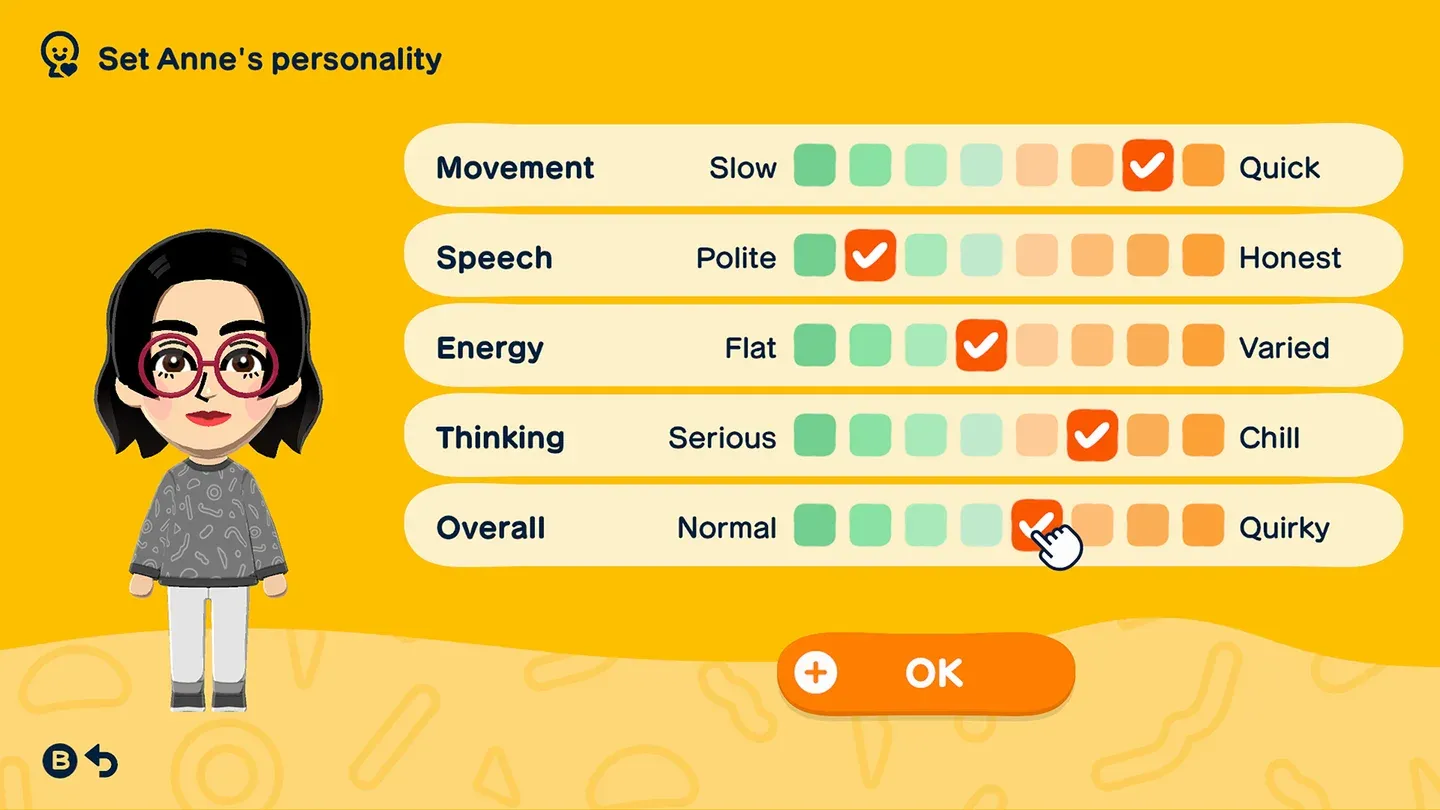
Personality sliders in Mii creation
How does the personality system work?
When you create a Mii, you rate them across five spectrum-based sliders. Those sliders are:
- Movement: Slow to Quick
- Speech: Polite to Direct
- Energy: Flat to Intense
- Attitude: Serious to Relaxed
- Overall: Normal to Quirky
Each slider has 8 positions, displayed as a color gradient running from green on the left to orange on the right. The game then assigns one of 16 two-word personality types based on where you placed those sliders.
Here's what most players miss: the Overall slider does absolutely nothing for personality calculation. Only the top four sliders actually feed into the formula. You can set Overall wherever feels right for the character without worrying about it changing the outcome.
What are the 16 personality types in Living the Dream?
Tomodachi Life: Living the Dream uses updated names compared to the original 3DS game. The four personality groups and their sub-types in the North American version are:
The personality group has the biggest visible impact on your Mii's behavior. In Living the Dream specifically, a Mii's group determines the color scheme of their starting clothes, house exterior, and profile card. Considerate Miis get yellows and pastel oranges. Outgoing Miis land in pinks, reds, and oranges. Reserved Miis wear cool greens and teals. Ambitious Miis get cyans, blues, and purples.
Beyond aesthetics, the broader group action quirks from the original game have been dialed back in Living the Dream in favor of Little Quirks from the Wishing Well, which can be gifted to individual Miis regardless of their group. So a Reserved Mii can, for example, be given a Little Quirk that lets them float instead of walk.
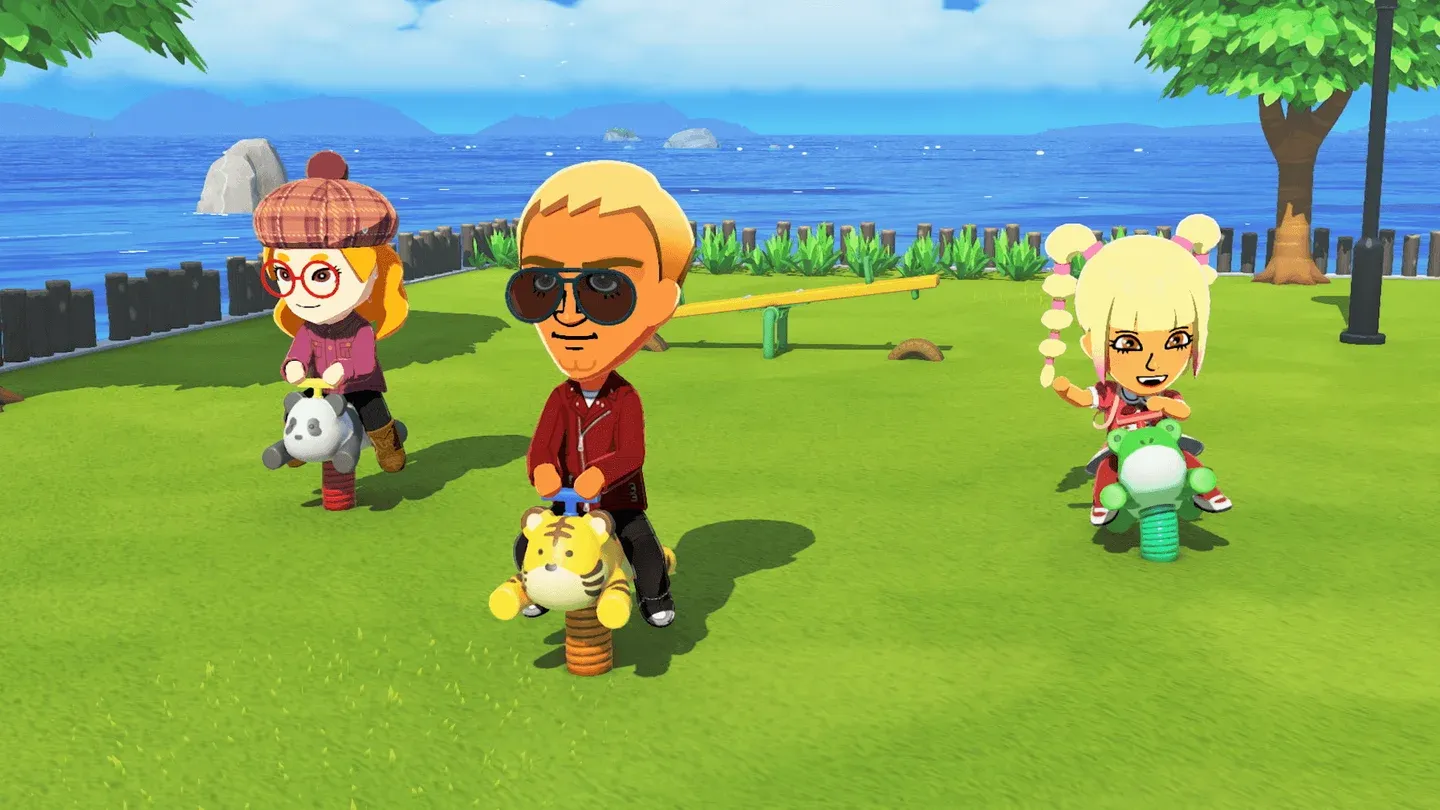
Considerate group reveal animation
How to calculate your Mii's personality before you confirm
This is the part that actually matters. The formula below, reverse-engineered by the community for the 3DS game and confirmed to work identically in the Living the Dream demo, lets you predict the exact personality before you lock it in.
Step 1: Assign numeric values to your slider positions
Read each slider left-to-right (green to orange) and assign the following values. Note that Speech and Attitude skip the number 4 in the middle, making them weighted slightly higher than Movement and Energy:
Step 2: Add up your two totals
Calculate Movement + Speech as one number, and Energy + Attitude as a second number. Both totals can range from 0 to 15.
Step 3: Cross-reference the personality chart
Find where your two totals intersect on the grid below:
What do the personality groups actually look like in-game?
Each group has a distinct animation when the personality is first revealed on the personality screen:
- Considerate Miis stand with arms spread wide, slowly bouncing side to side.
- Outgoing Miis jump in place and whip their head and body around excitedly.
- Reserved Miis stand stiffly with arms folded, then glance left and right in a thinking pose.
- Ambitious Miis look toward their personality description and give occasional self-assured nods.
The greetings also differ by group. Considerate Miis wrap up by hoping they get along with you. Outgoing Miis declare they can't wait to start island life. Reserved Miis say they're looking forward to things. Ambitious Miis thank you in advance for looking after them.
Gender-specific greetings from the original game have been removed in Living the Dream in favor of a more detailed introductory script that each personality group shares.
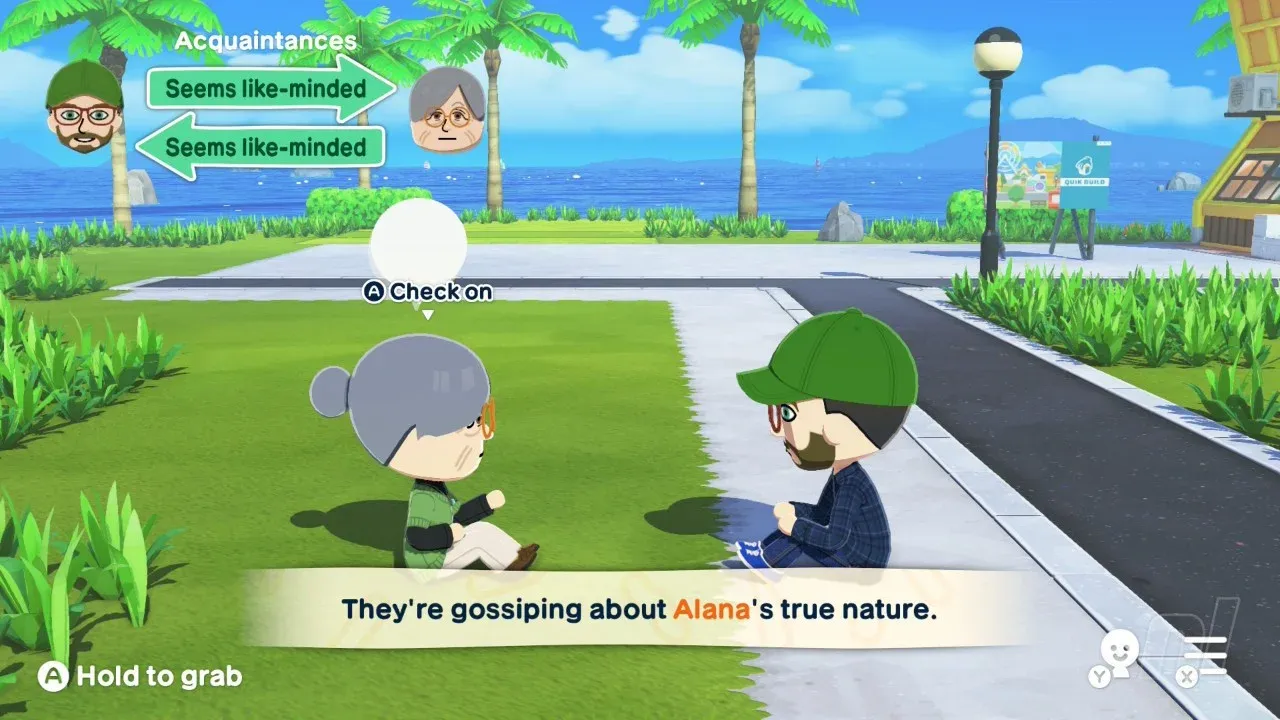
Reserved group reveal pose
Tips for targeting specific personalities
A few practical notes from working through the formula:
- To land in Considerate, keep both totals high. Push Attitude toward Relaxed and Energy toward Intense.
- To land in Reserved, keep both totals low. Slow Movement, Polite Speech, Flat Energy, and Serious Attitude all push you toward the bottom-left of the chart.
- To land in Ambitious, you want high Movement+Speech but low Energy+Attitude. Think someone direct and quick but serious and flat in energy.
- To land in Outgoing, both totals need to be high. Max out everything toward the orange end.
- The specific sub-type within a group depends on whether your totals fall in the lower or upper half of each range. A Considerate Mii with E+A of 8-11 lands on Buddy or Daydreamer depending on M+S, while E+A of 12-15 gives you Sweetie or Cheerleader.
You can also check the Tomodachi Life personality wiki page on Fandom for additional reference on how the chart has evolved across the series.
How different is Living the Dream from the original Tomodachi Life?
The core personality calculation hasn't changed since Tomodachi Collection first introduced it. What Living the Dream updates is mostly naming and presentation. Almost all 16 personalities have new names. The most notable rename in the North American version is the old Outgoing Leader becoming Outgoing Dynamo. The Easygoing group is now Considerate, the Independent group is now Reserved, and the Confident group is now Ambitious.
The bigger mechanical shift is that group-wide behavior quirks, which used to visibly distinguish how Miis from different groups walked, stood, and reacted, have been pulled back. Individual personality expression now comes more from the Little Quirks system via the Wishing Well, meaning two Miis with the same group can behave quite differently depending on what quirks you've given them.
For more Tomodachi Life: Living the Dream coverage and guides for other Nintendo Switch titles, browse our latest guides at GAMES.GG.