

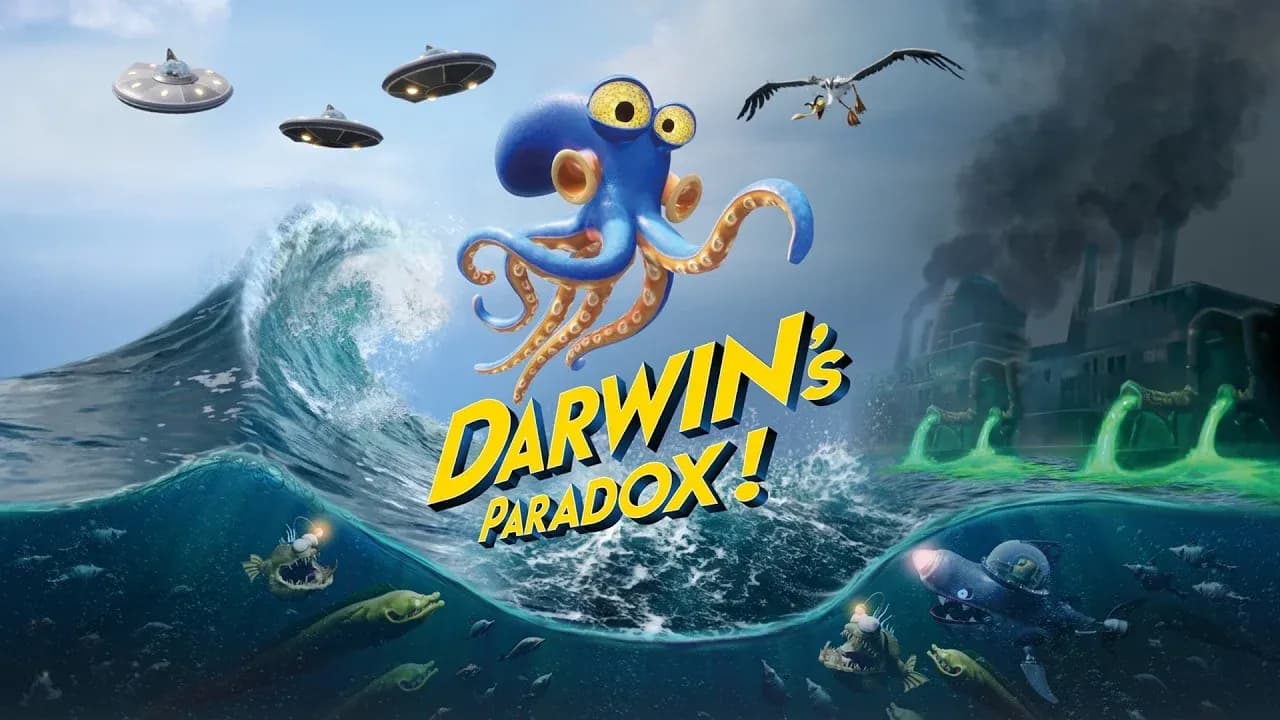
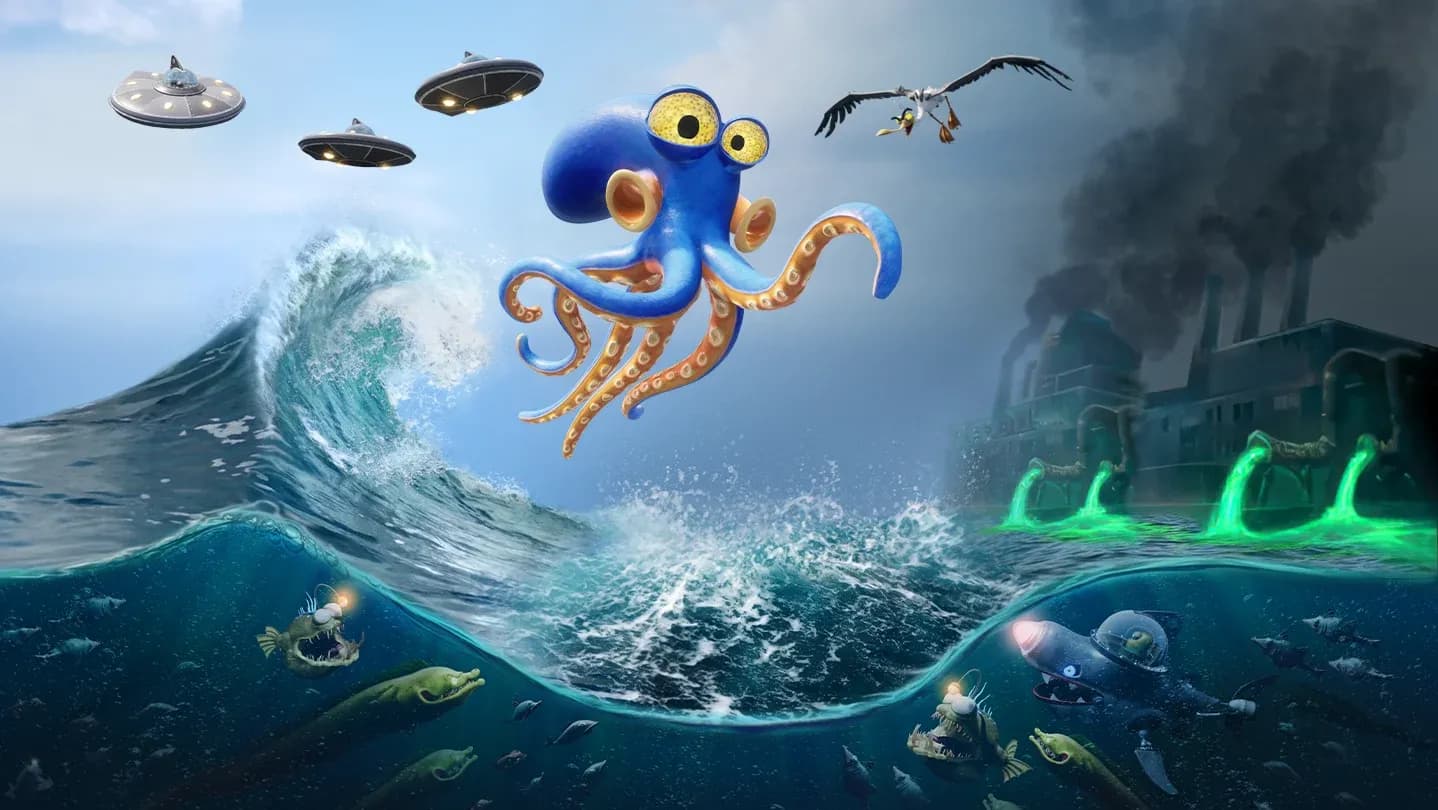
Darwin wakes up in an alien-run industrial complex with no weapons, no armor, and nine brains. That last part matters more than you'd think. Darwin's Paradox!, developed by ZDT Studio, is a side-scrolling action-adventure where your octopus toolkit — camouflage, ink, and fluid multi-surface movement — does all the work that brute force can't. The game is short, occasionally rough around the edges, and absolutely worth your time if you know how to read it. This guide breaks down everything you need to stop retrying the same room and start moving through it with purpose.
What is Darwin's Paradox! actually about?
According to the game's premise, Darwin is snatched from the ocean alongside a red octopus companion and dropped into an industrial complex controlled by alien robots with world domination on their agenda. The story is cartoonish and self-aware, leaning into pop culture references and comedic delivery rather than taking itself seriously. As noted in the Darwin's Paradox! Wikipedia entry, Darwin must navigate this hostile environment and find his way back to the ocean, with abilities unlocked progressively throughout the adventure.
The story is secondary to the gameplay, and the gameplay is mostly about reading rooms correctly before you move through them.
Darwin scopes the next room
How do Darwin's core abilities work?
Darwin has three tools that define every encounter and traversal challenge in the game. Understanding when to use each one separates clean runs from frustrating retries.
Camouflage
Camouflage lets Darwin blend into his surroundings, making him effectively invisible across open sightlines. The key insight from community testing documented by Casual Game Guides: camouflage works best as route setup, not as a panic response. Activating it before an enemy or camera locks on gives you a full window to pick your line. Waiting until you're already spotted wastes most of its value.
Ink
Ink fires a dark spray that distracts threats or blocks vision for a short escape window. The temptation is to save it for emergencies, but that's the wrong instinct. Ink recovers momentum. If a stealth path starts falling apart mid-crossing, a well-timed ink burst can buy one clean lane back to cover. Think of it as a reset tool, not a last resort.
Movement and traversal
Darwin moves well through water and across surfaces, and the full Darwin's Paradox! ability breakdown on md-eksperiment.org confirms that suction-cup tentacles let him cling to walls, ceilings, and almost any surface, including crawling upside-down and squeezing through tight spaces. This 360-degree traversal is what makes the game's level design work. Underwater sections specifically reward smooth movement, letting you avoid obstacles and enemies with real grace once you stop fighting the controls.
info
Treat water exits like platform jumps. A short, straight swim toward the surface gives you a cleaner pop-out and a safer landing than angling in at speed.

Camouflage before they spot you
Why does Darwin keep dying in the same room?
This is the question most new players are actually asking. According to Casual Game Guides, most early deaths aren't about reaction speed. They come from reading the room too late, specifically from committing to a route before watching one full patrol cycle.
The fix is a two-phase approach:
- Scout first. Pause at every room entrance and watch the danger once through. Note patrol timing, jump distances, and the next safe perch before touching anything.
- Execute on purpose. Once you have a route, commit to it cleanly. If you miss the timing mid-attempt, don't improvise. Return to your setup point and repeat the same input deliberately.
Heroic improvising wastes more time than a clean reset. That reset habit is worth building early.
warning
The mid-air controls have been noted as less than ideal by reviewers, and hitboxes can be unforgiving. If a jump section feels wrong, the issue may be setup angle rather than timing. Reposition Darwin before the attempt, not during it.
How do stealth rooms work?
Stealth rooms in Darwin's Paradox! are routing puzzles first and reaction tests second. The "remain still until the enemy moves away" pattern does appear frequently, and as GameTyrant reviewer Alejandro Josan noted, it gets repetitive over time. The more interesting stealth moments come from environmental hazards layered on top of patrol avoidance, like the ocean depths section where avoiding mines in complete darkness requires reading a downward-moving light source.
For standard stealth rooms, two routes exist:
The safe route is slower but teaches you the room. Run it once, then switch to the fast route on your next attempt.
info
If a stealth room feels unfair, treat it as a routing check before assuming it's a reaction test. Watch one full enemy cycle, pick one hiding spot and one bailout spot, then commit to a line.
Pick your line before moving
What's the best way to solve puzzles?
Darwin's puzzles are generally straightforward, though the game occasionally leaves the solution vague. The reliable method: look for the last thing that changed. A moved object, a newly opened path, or a lane that's now safe to cross is almost always the actual hint the game is giving you.
Casual Game Guides describes the game's puzzle philosophy as teaching you something with each room. Tight movement rooms ask for cleaner setup. Stealth rooms ask for safer routing. Vaguer puzzles want you to follow the newest change on screen. Once you identify what a room is asking, the solution usually follows quickly.
One standout section mentioned across sources is when Darwin takes control of an alien suit, which shifts the gameplay feel noticeably and serves as a good example of the game finding ways to extend its limited skill set without just repeating the same patterns.
How do you handle the hardest movement sections?
The swimming and jumping sections are where the game's control imprecision hurts most. The hitboxes are unforgiving, and a pixel of contact with an enemy can end a good run. Based on community documentation from Casual Game Guides, the consistent fix is:
- Stop saving bad attempts. If the timing broke halfway through a swim-jump chain, don't push through. Go back to your setup point.
- Use speed on solved space only. Cross long exposed gaps quickly, but only after you've learned the room at a slower pace.
- Line up Darwin before committing. The angle you enter a jump or swim from matters. A bad approach angle causes more failures than slow inputs.
The anglerfish chase sequence later in the game is worth a specific mention. According to GameTyrant's review, the music and sound design during that encounter are the best in the game, and the tension it creates is earned. Go into it knowing the audio is part of the design, not just atmosphere.
info
When speed matters, apply it to space you've already figured out. Rushing an unknown room teaches you nothing and resets your progress.
Quick-reference tips for new players
- Activate camouflage before enemies spot you, not after
- Use ink to recover a breaking stealth line, not just as a survival tool
- Pause at every new room entrance for one full scout pass
- Treat every repeated death as a routing problem, not a reflex problem
- Follow the newest change on screen when a puzzle feels unclear
- Reset to your setup point rather than improvising through a broken attempt
For more platform and action-adventure guides like this one, browse the full guides library at GAMES.GG.
Darwin's Paradox! is a short game that respects your intelligence more than it lets on. The alien robots are loud and the industrial complex is hostile, but Darwin has nine brains for a reason. Use them.