
Vampire Crawlers takes Poncle's signature bullet-heaven chaos and bolts a deckbuilder on top of it. The result is something that sounds like a genre experiment but plays like it was always supposed to exist. The core idea is simple: play cards in the right order, watch numbers explode. Getting genuinely good at it requires understanding a handful of systems that the game doesn't always explain upfront. This guide covers all of them, from how the Turboturn multiplier actually works to the five mistakes that end most beginner runs early.
How does the Turboturn system work?
The Turboturn is the entire game. Every other system feeds into it, so understanding it first makes everything else click faster.
Your hand contains cards with mana costs: 0, 1, 2, 3, and higher. When you play them in ascending mana order, each card multiplies the effect of the one that follows it. A 0-cost Knife that deals 40 damage, played before a 1-cost King James Bible that also deals 40 damage, doesn't produce 80 total damage. The Bible deals 80 on its own because the combo multiplier doubled it. Add a 2-cost card after that and it gets doubled again.
A full chain of 0 → 1 → 2 → 3 → 4 turns modest individual cards into screen-clearing damage. Chains can extend to 10, 20, 30 or more cards in sequence, and reaching "infinite" combos is built into the game's design. The developers explicitly intended for players to discover and exploit these massive chains.
The speed element is real, too. You can play cards as fast as you physically can, mashing through your hand at full speed, and the game calculates every multiplier accurately. There's no penalty for playing quickly, which gives Vampire Crawlers the same kinetic rush as Vampire Survivors while still rewarding careful sequencing.
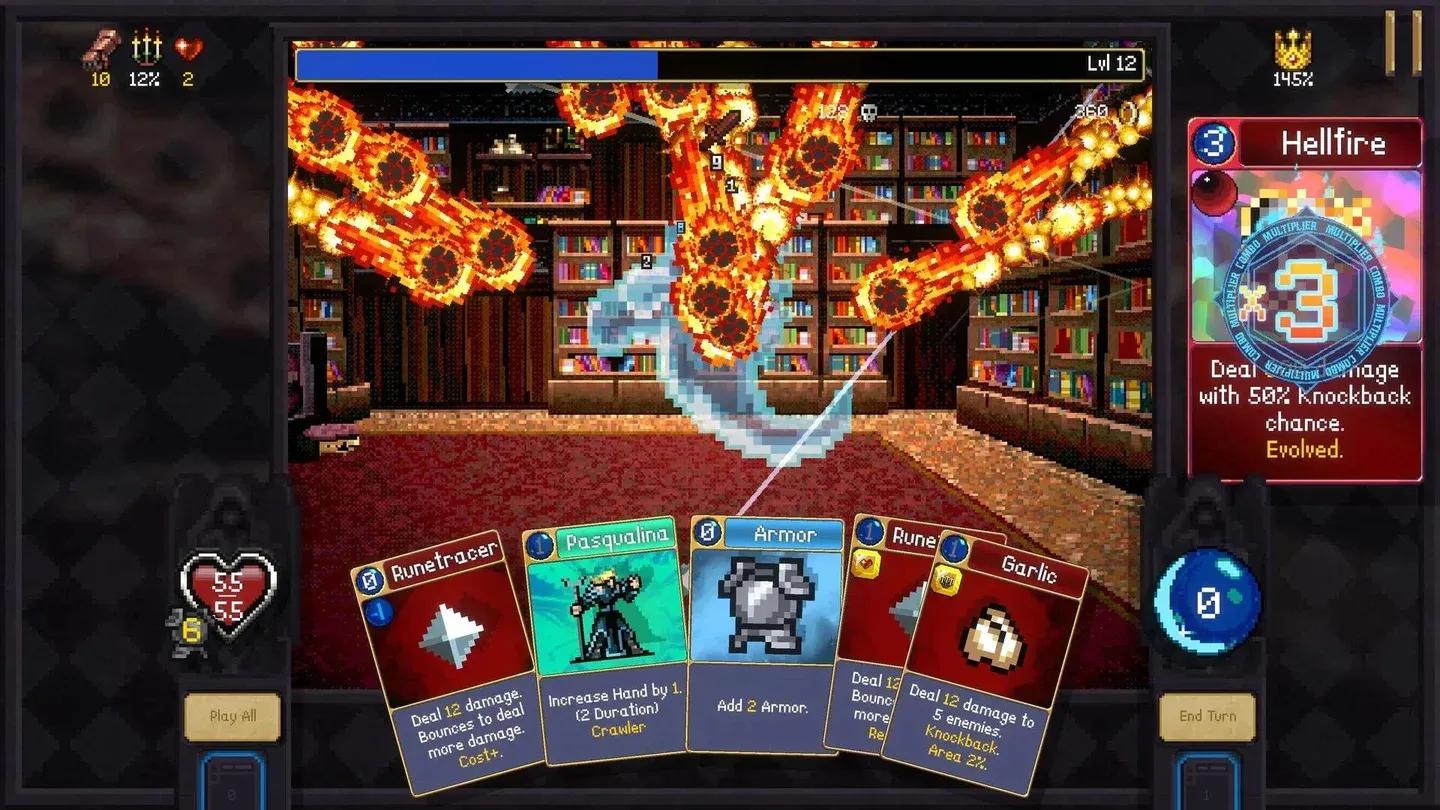
Turboturn combo chain in action


What do the card colors mean?
Every card in Vampire Crawlers is color-coded by function. Learning these seven types is the fastest way to understand what a new card does before you read a single word of its description.
| Color | Type | Primary Function |
|---|---|---|
| Red | Attack | Damage dealers: Knives, Axes, Fire Wands, and other Vampire Survivors weapons |
| Blue | Defense | Generate Armor to absorb incoming hits |
| Teal | Character | Summon Vampire Survivors characters with passive Trigger effects |
| Yellow | Stat Boost | Temporary or permanent buffs to damage, armor, and other stats |
| Purple | Mana Generator | Generate extra mana to extend combo chains beyond your natural pool |
| White | Wildcard | Substitute for any mana cost in a combo chain |
| Black | Temporary | Powerful single-use cards that disappear after being played |
Red cards are what most players default to building around, and that's fine early on. The deeper layer is understanding that Teal character cards don't just deal damage when played. They stay on the field and activate passive bonuses whenever you play cards of a specific color. That leads directly into the mechanic most beginners overlook entirely.
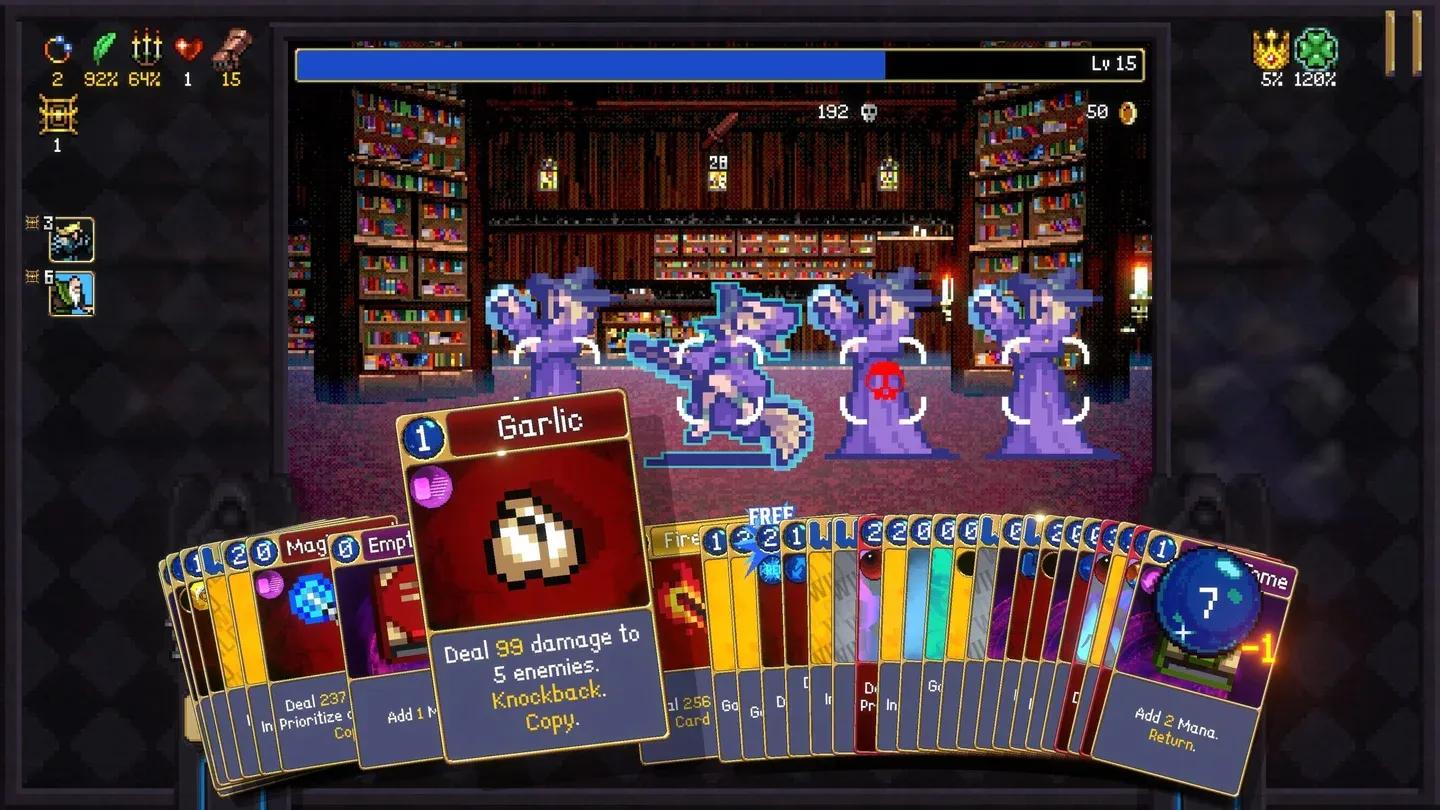
Card color types in hand
Crawler Triggers: the system most players miss
Each playable Crawler has a Trigger effect tied to a specific card color. When a Crawler is active on the field (summoned via their Teal Character card), every card you play of their trigger color activates a bonus effect automatically, on top of that card's normal function.
This means your Crawler choice isn't cosmetic. It defines which card colors you should prioritize when building your deck and which cards to pick up between floors. A Crawler whose trigger fires on red cards turns every Attack card into a two-for-one. A Crawler with a blue trigger makes your defense cards do double duty.
The demo included three unlockable Crawlers, and the full game adds significantly more. Each one opens a different strategic direction. When you're offered new cards between floors, always evaluate them through the lens of your active Crawler's trigger color first.
How do weapon evolutions work in Vampire Crawlers?
If you've played Vampire Survivors, you know the evolution system: combine a weapon with the right passive item, open a chest, and the weapon transforms. Vampire Crawlers keeps the concept but changes the execution entirely.
Here, you apply Evolution Gems directly to your base weapon cards. These gems are found by headbutting treasure chests as you explore dungeons. The gems physically modify your cards, upgrading them into evolved versions with enhanced effects. Familiar weapons return, including the Holy Bible, Garlic, and others from the original game, all available as evolvable cards.
Players are actively documenting all confirmed evolution recipes as they discover them in the full game. The complete list continues to expand as more combinations get tested and verified through actual play.

Evolution Gem upgrade screen
The Village hub and permanent progression
Failed runs aren't wasted. Gold collected during dungeon runs carries back to The Village, the between-run hub where permanent upgrades are purchased. These upgrades persist across every future run, so each attempt builds toward something.
The Village contains a Blacksmith for weapon upgrades and card modifications, a Jeweller for gem-related upgrades, stat improvement vendors, and unlock stations for new Crawlers and mechanics. The game also includes an Arcana system that functions as game modifiers, similar to how Arcanas operate in Vampire Survivors.
Spend your early Village gold on unlocking new Crawlers before optimizing any single build. The variety pays off faster than incremental stat upgrades.
Village hub upgrade vendors
5 beginner mistakes that end runs early
After time in the demo and watching how players approach the game at launch, these five errors show up constantly in early-game play.
1. Playing cards out of mana order. A hand of 0, 1, 2, 3 played in sequence is dramatically stronger than the same four cards played randomly. Always sort your plays by ascending mana cost. The combo multiplier is everything.
2. Ignoring Wildcard cards. White Wildcards don't deal damage on their own, which makes them feel like filler. They're not. A Wildcard that bridges a gap from a 1-cost to a 3-cost card keeps a chain alive and generates more total damage than any single attack card could. Pick them up.
3. Skipping blue defense cards entirely. Early floors are forgiving enough that pure aggression works. Later floors are not. Blue cards that generate Armor are the difference between reaching the final floor and dying on floor 6 with no way to absorb a big hit.
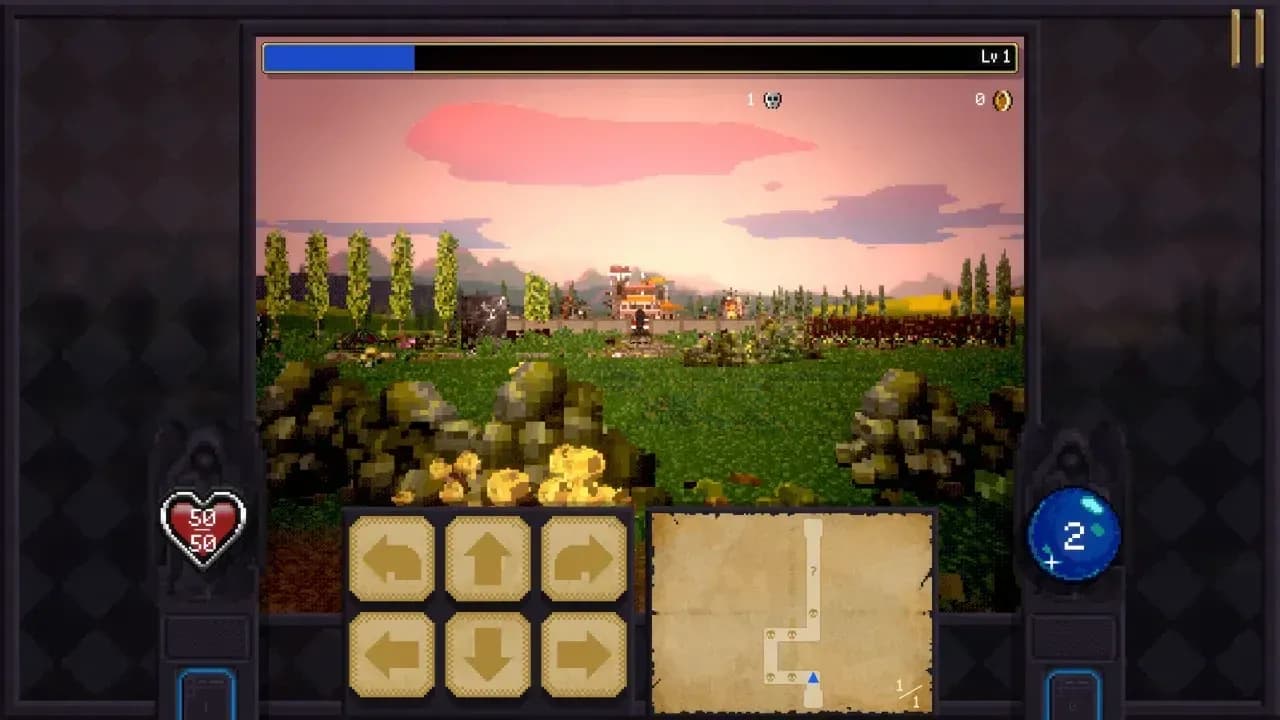
4. Rushing past treasure chests. Chests contain Evolution Gems and power-ups. They're your primary source of card customization. Explore branching dungeon paths instead of heading straight to the floor exit. The loot is worth the detour.
5. Sticking with one Crawler. Playing only one Crawler means only ever seeing one strategy. The demo had three, the full game has more. Try different Crawlers in early runs while you're still learning the systems. You might find that a Crawler you initially ignored fits your preferred card colors perfectly.
What does Vampire Crawlers cost and where can you play it?
Vampire Crawlers launched on April 21, 2026, on PC via Steam, PS5, Xbox Series X/S, and Nintendo Switch at $9.99. A Switch 2 Edition is available at the same price. Mobile versions for iOS and Android are confirmed for later in 2026.
The game is available on Xbox Game Pass and PC Game Pass from day one. If you played the Steam Next Fest demo, your progress (unlocked characters, upgrades, and completed runs) carries over to the full game.
Poncle describes the full game as having "a beginning and an end," meaning it's a complete experience at launch rather than Early Access. Post-launch content is planned based on community feedback, following the same model that expanded Vampire Survivors from a $3 release into a BAFTA-winning game.
At $9.99 with Game Pass availability, the barrier to entry is about as low as it gets. For more guides across the full range of new releases, browse the latest gaming guides on GAMES.GG.