

Vampire Crawlers is a deck-building roguelike from Poncle that takes the familiar weapons of Vampire Survivors and turns them into cards you draft, sequence, and combo through turn-based dungeon floors. Your starting hand is practically useless against anything past the first few rooms. The game only gets winnable once you understand how mana economy, gem socketing, and the Blacksmith's permanent upgrades actually interact. Get those three systems working together and runs that felt impossible start feeling inevitable.
What cards does every deck need?
Before touching weapons, you need to sort out your support cards. Mana book cards are non-negotiable in any deck. They range from 0 to 3 mana cost and generate mana immediately when played, which is the only way to extend your turn long enough to play your heavy hitters.
The general target is roughly two of each mana cost in your book selection. The 0-cost books carry you through the early game by enabling your 2 and 3-cost weapons right away. The stronger books pay off later when your hand size grows and you have Wild Cards bridging your combo chains.
Armor cards fill the third role in a functional deck. They provide temporary hit points that absorb incoming damage, and they matter most during the Bridge levels where enemies flood the narrow corridors before you have access to status-effect weapons. Once you pick up cards that can inflict Disarm or Knockback, armor becomes far less important and you can start cutting those slots for more weapons.
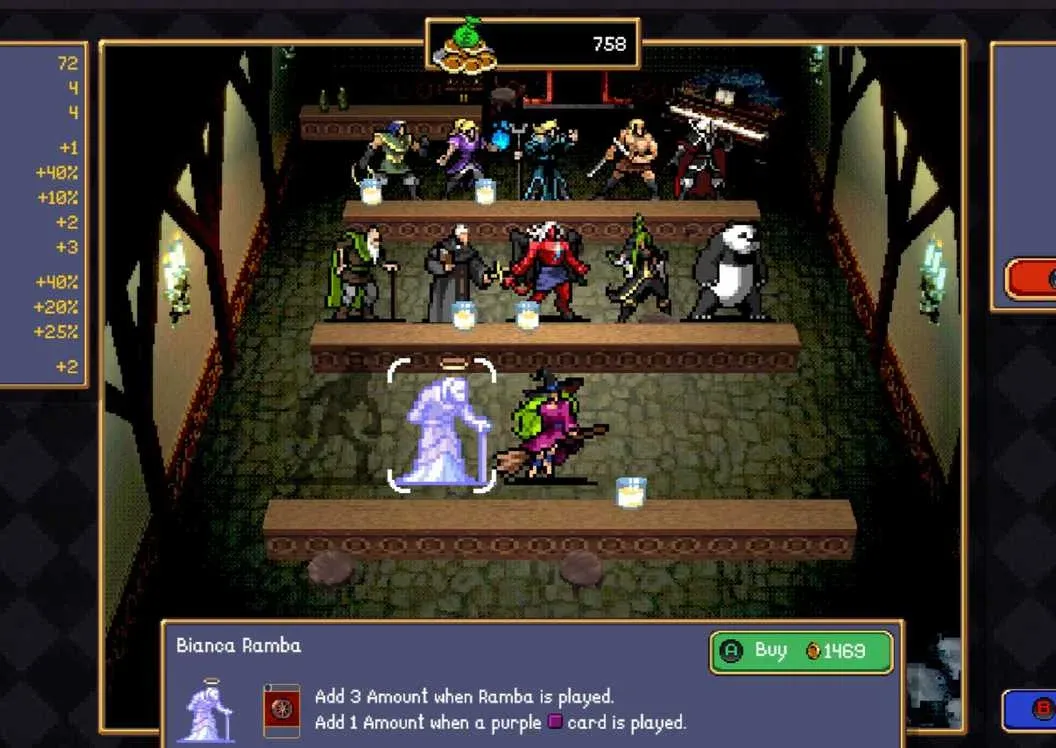
Mana books extend your turn
Best weapon cards by mana cost
The weapons in Vampire Crawlers vary by mana cost, damage output, area coverage, and status effects. Drafting randomly will get you killed. Here is what actually works at each cost tier.
The Bone is the standout card in the entire game at zero cost. It can hit every enemy on the field simultaneously, and when you play as Mortaccio (unlocked by killing large numbers of skeletons in the initial forest stage), his inherent Amount buffs turn the Bone into something that trivializes Bridge encounters. The three Bridge levels specifically reward Amount-stacking and armor because they are linear gauntlets with limited loot opportunities.
At the high end, Song of Mana and Vandalier are not cards you cast mid-combo. You build your ascending multiplier from a sequence of cheap weapons and drop one of these at the very end to close out the turn. Casting them dry wastes their potential entirely.
What are the best gems to socket?
Gems are modifiers you socket into individual cards to change how they function. The gem you choose matters as much as the card you put it on. A bad pairing wastes a slot; a good one breaks the game in your favor.
Wild Gem
This is the best gem in Vampire Crawlers, full stop. Socketing it removes the card's mana cost entirely and grants it the Wild Card trait, meaning it never breaks your ascending combo chain. You can insert it anywhere in a sequence without resetting your multiplier. If the Wild Gem appears as an option, you take it.
Free to Play
Do not confuse this with Wild. Free to Play sets the card's cast cost to zero, but the card's printed mana value still counts toward your combo multiplier logic. That distinction is significant. You cast a 3-cost weapon for free, and the game still registers it as a 3-cost card for sequencing purposes. This makes it superior to the Refund gem, which requires you to have the mana available before refunding it.
Triple Damage
Triple Damage works on almost any weapon in the game. On something cheap like Bone it clears weak enemies faster. On Vandalier it produces numbers that feel like a mistake.
Yin-Yang
This gem checks your current mana when you cast the card. Even mana total gives you one mana. Odd mana total draws a card. Both outcomes are useful, but the mana gain is the stronger effect and can save a run in the early floors when your hand is too expensive to play out fully.
Freeze Gem
The Freeze gem belongs on a 0-cost weapon, specifically the Bone or Whip. You hold that card in hand specifically for boss fights. When the boss's attack timer fills, you drop your free Freeze attack to shut down their turn and reset the phase. This makes Clock Lancet less mandatory as your only freeze option.
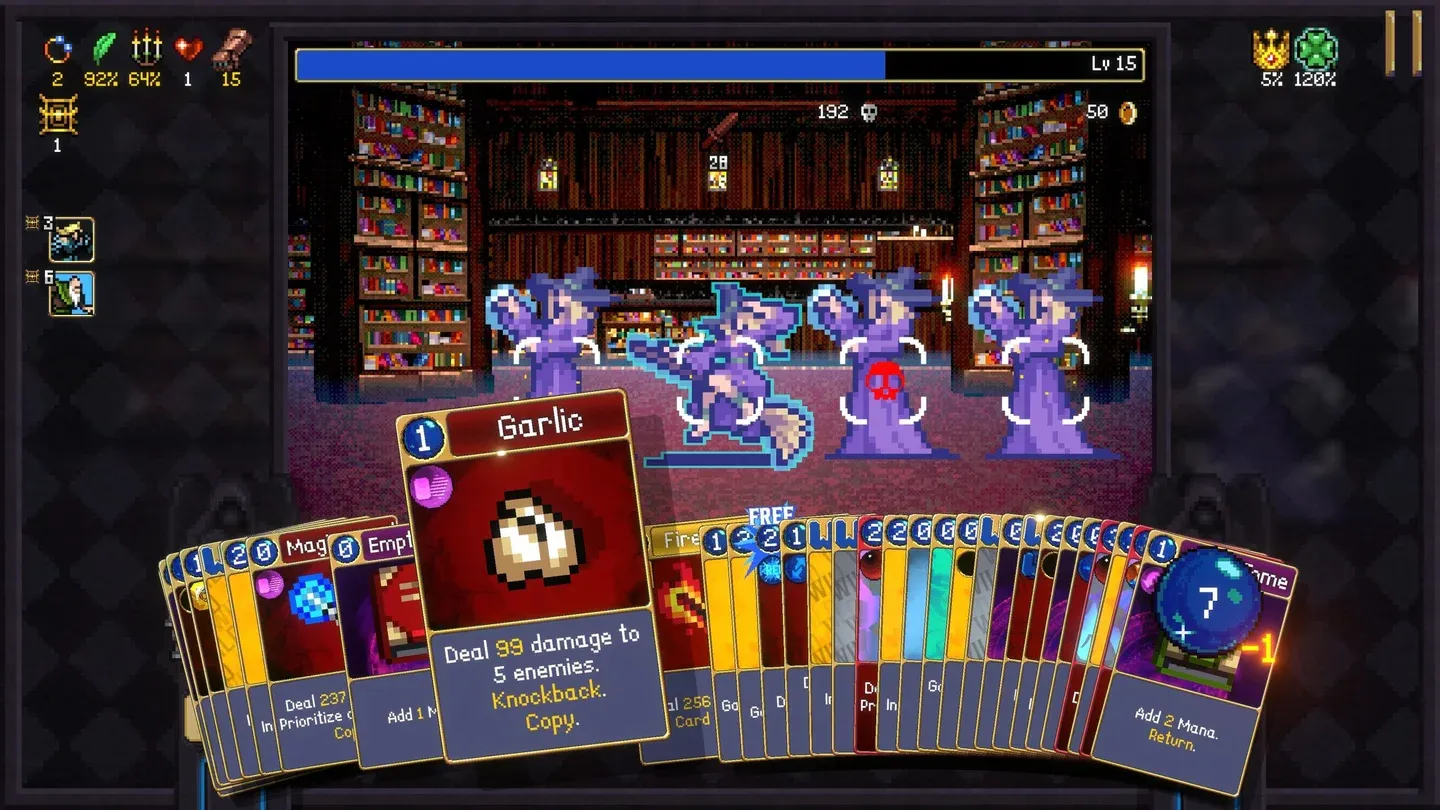
Gem socket upgrade screen
How does the Blacksmith work?
The Blacksmith is a village building that lets you permanently add empty gem slots to any card you have previously discovered. To unlock it, you need the Stardust Anvil Relic, which sits halfway through the Teeny Bridge location. The Bridge is a linear enemy gauntlet, and Pasqualina handles this run well because her Runetracers work efficiently in the narrow corridors.
Once the Blacksmith is open, you can pay gold to add slots to cards that normally do not have them, or stack additional slots onto weapons that already carry one.
The cost is steep. A single slot on a basic card starts at 500 gold and scales into the thousands for higher-tier weapons. This is a late-game investment, not an early one. Spend your early gold on Greed and Might at the Power Up shop first. Paying 3,000 gold to add a gem slot to your Magic Wand while your base damage stats are still low is a bad trade regardless of which gem you plan to socket.
The Overkill relic is what makes the Blacksmith affordable. Once you have it, gold accumulates fast enough that the Blacksmith's prices stop feeling punishing.
Building the right deck for each stage
Most dungeon floors reward a balanced deck with mana books, a couple of armor cards, and weapons arranged by combo sequence. The Bridge levels play differently. They are linear, enemy-dense, and offer almost no mid-run loot. On those floors, the Bone with Amount-building support and 0-cost armor cards carry the early waves, while your mana books keep you playing cards long enough to reach the boss phase.
For boss fights specifically, your freeze option (either Clock Lancet or a Freeze-gemmed 0-cost weapon) and your status-effect weapons (Garlic, King Bible, Unholy Vespers, Soul Eater) do more work than raw damage. Disarm and Knockback prevent the boss from acting, which buys you the turns to build your combo multiplier and close with Song of Mana or Vandalier.
For more deck-building and roguelike guides across other games, browse more guides at GAMES.GG.