


Vampire Crawlers takes the Vampire Survivors formula and wraps it inside a first-person dungeon-crawling deckbuilder with a combo system that can turn a 50-damage card into a 6,000-damage finisher in a single turn. Developed by poncle (the triple-BAFTA winners behind Vampire Survivors) alongside Nosebleed Interactive, the game launched April 21, 2026 on PC, PS5, Xbox Series X/S, Nintendo Switch, and Switch 2 for $9.99, with day-one availability on Xbox Game Pass. If you've never touched a deckbuilder before, this guide will get you up to speed fast.
How does the TurboTurn system work?
The TurboTurn is the entire game. Every other system feeds into it, so understanding it before your first run saves a lot of frustrating deaths.
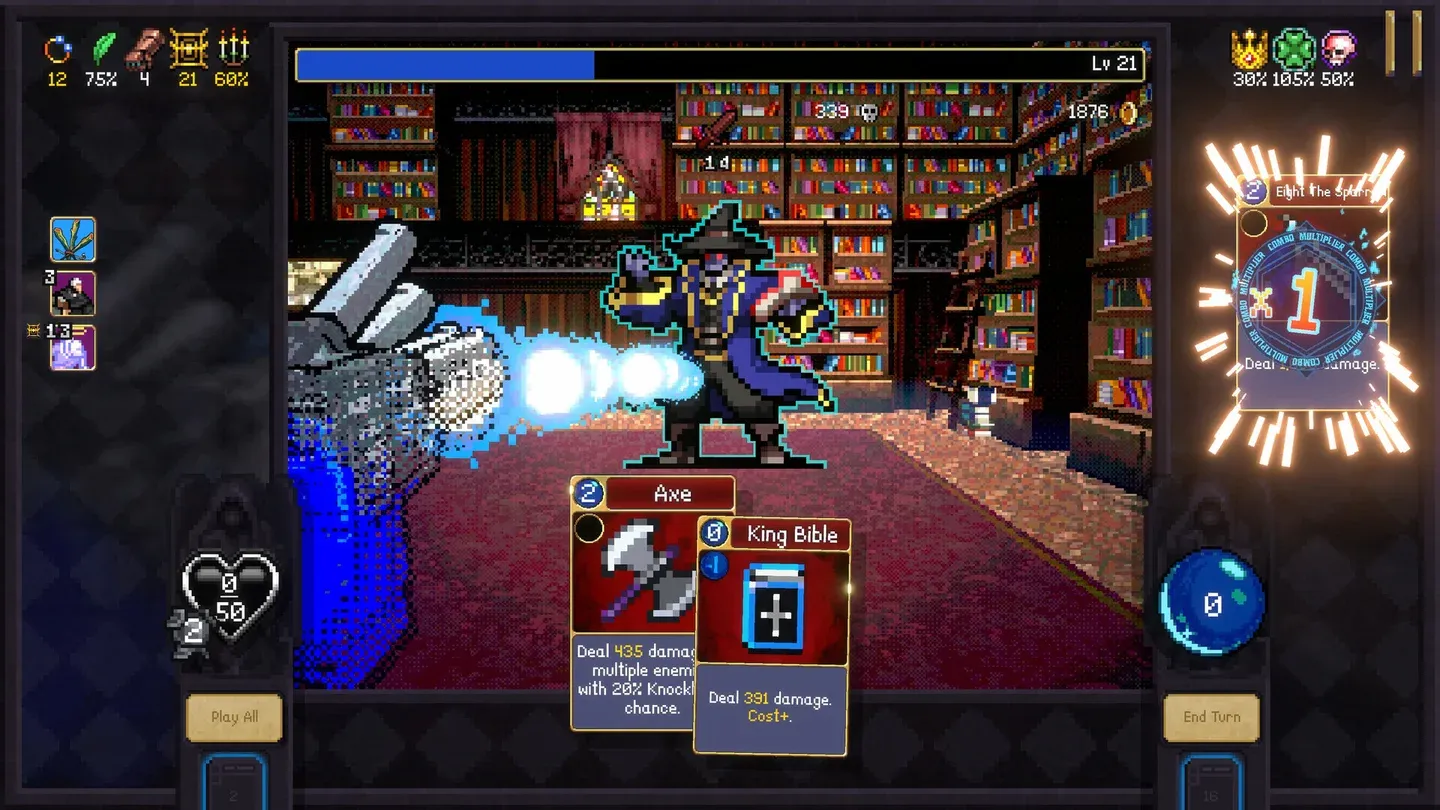
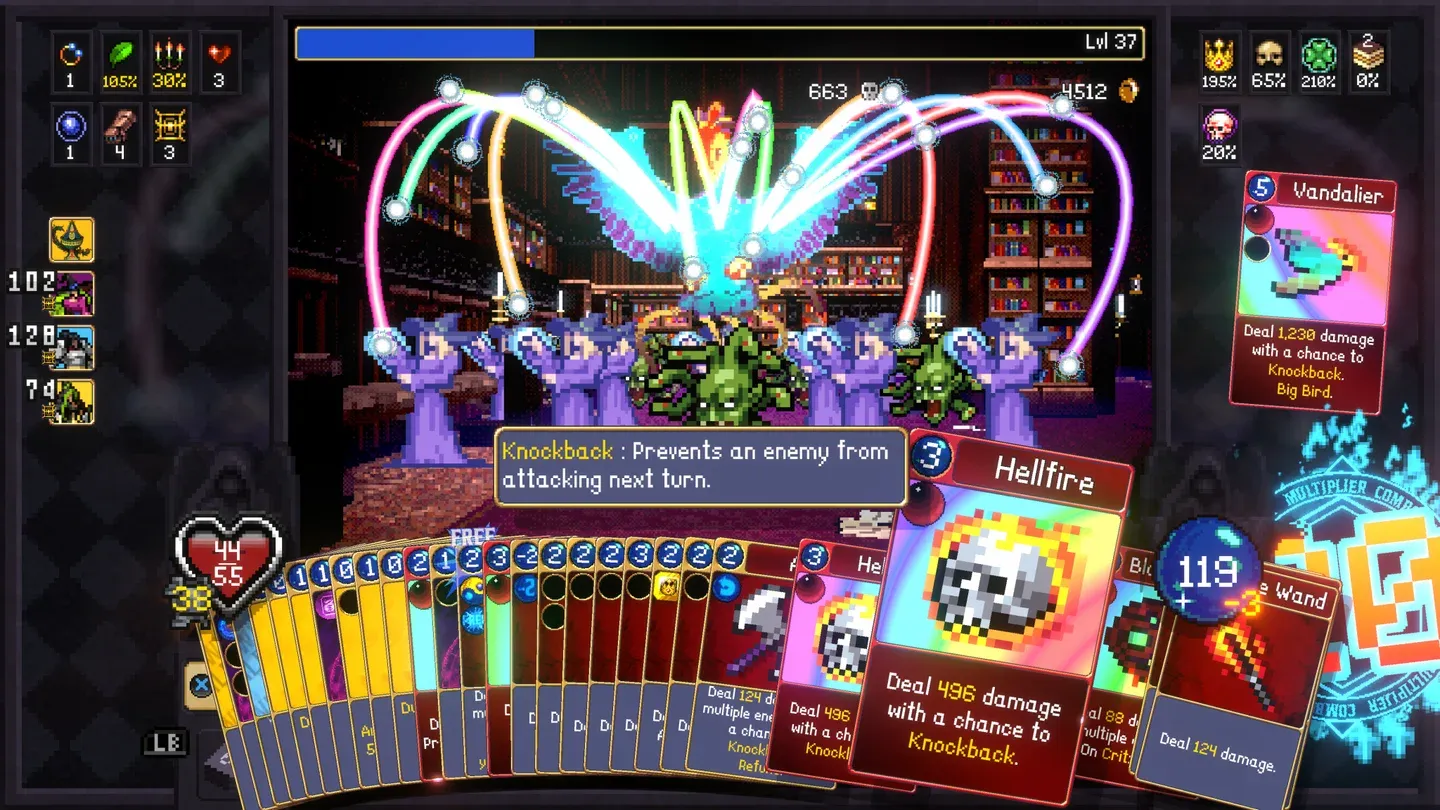
The core idea is the Mana Chain: play cards in ascending mana cost order (0 → 1 → 2 → 3) and each card multiplies the damage of the next one. The damage multipliers work like this:
- A 0-cost card makes the next card deal ×2 damage
- A 1-cost card makes the next deal ×3
- A 2-cost card makes the next deal ×4
- A 3-cost card makes the next deal ×5
Chain all four together and the final card lands at a ×120 total multiplier. A base hit of 50 damage becomes 6,000. That's not a typo.
Poncle describes chains of 10, 20, 30, or more cards as part of the design, with "infinite" combos explicitly built into the game's goals. The "Turbo" part means you don't wait for animations between cards. Play them as fast as you physically can and the game calculates everything correctly. Slow and deliberate or full mash — both work.
What are Wildcard cards and why do they matter?
Wildcard cards (marked with a W cost, color-coded white) slot into any position in the Mana Chain without breaking the ascending order requirement. If your hand has a 0-cost and a 2-cost card but nothing at 1, a Wildcard bridges that gap and keeps your multiplier running. Most decks want 2 to 3 Wildcards for consistent chains. Wildcards don't add their own multiplier — they just preserve the sequence.
Here's the thing most new players miss: Wildcards look boring on paper because they don't deal damage directly. But a well-placed Wildcard that extends a chain from 5 cards to 8 generates more total damage than almost any single attack card you could play instead.
What do the card colors mean?
Every card in Vampire Crawlers belongs to one of seven color-coded types. Learning what each does is the foundation of deck building.
Red and white cards are what most beginners focus on first, which is correct. But blue defense cards become non-negotiable in later dungeon floors. A pure aggression deck that skips blue entirely will fall apart once enemies start hitting hard enough that a single big attack ends your run.
All seven card color types
How do Crawler Triggers change your deck?
This is the mechanic that separates players who are just playing cards from players who are actually building something. Each Crawler (your playable character) has a Trigger effect tied to a specific card color. When that Crawler is active on the field via their teal Character card, every card you play of their trigger color fires a bonus effect automatically, on top of the card's normal result.
The four Crawlers available at launch are Antonio Belpaese, Imelda Belpaese, Poe Ratcho, and Arca Ladonna. Antonio and Imelda are available from the start. Poe unlocks after completing Mad Forest Floor 3, and Arca unlocks after completing Inlaid Library Floor 2.
Your Crawler choice isn't cosmetic. It defines which card colors you should stack in your deck. When you're offered new cards between floors, the first question to ask is whether a card's color lines up with your active Crawler's trigger. A strong card in the wrong color is often weaker than a mediocre card in your trigger color.
How do weapon evolutions work?
Weapon evolutions in Vampire Crawlers work differently from Vampire Survivors. Instead of combining a weapon with a passive item in your loadout, you need three things at the same time:
- The Base Card weapon with an empty Gem Socket in your deck
- The specific Item Card ingredient in your deck simultaneously
- Access to a Gem Station inside the dungeon
Interact with the Gem Station while holding both cards to trigger the evolution. The evolved card inherits any remaining Gem Slots from the base card. Item cards with "Destroyed after use" text cannot serve as evolution ingredients.
Here are all 9 confirmed evolution recipes:
What is the Village and why does it matter?
Between dungeon runs, you return to The Village, the meta-progression hub. Gold earned during runs gets spent here on permanent upgrades that carry into every future run, meaning failed attempts still move you forward.
The Village includes a Blacksmith for weapon upgrades and card modifications, a Jeweller for gem-related upgrades, stat improvement vendors, and unlock stations for new Crawlers and mechanics. Poncle's official "Let's Explore" video series also confirmed an Arcana system that functions as run modifiers, similar to how Arcanas work in Vampire Survivors.
Spend your early Village gold on unlocking new Crawlers before anything else. Variety in playstyle is how you figure out which strategies click for you, and that knowledge pays off across every future run.
Village hub upgrade vendors
The 5 mistakes that end runs early
Playing cards out of mana order. The Mana Chain multiplier is the entire damage engine. A hand of 0, 1, 2, 3 played in sequence hits dramatically harder than the same four cards played randomly. If you can't continue a chain, it's often better to hold cards for the next turn than to play them without a multiplier.
Cutting Wildcards from your deck. They don't deal damage, so they look like dead weight. They're not. Wildcards are what keep 10-card chains alive when you don't draw a perfect sequence. Most decks want 2 to 3 of them.
Skipping blue defense cards entirely. Early dungeon floors let you coast on pure aggression. Later floors don't. Blue Armor cards are what keep you alive long enough to reach the big combo turns.
Ignoring treasure chests. Chests are the primary source of Evolution Gems and power-ups. You find them by headbutting chests as you explore (yes, headbutting, this is still a poncle game). Take branching dungeon paths instead of rushing straight to the floor exit.
Staying locked on one Crawler. Each Crawler's trigger fundamentally changes which card colors matter in your deck. Playing only Antonio or Imelda means you're only seeing one version of the game. Unlock Poe and Arca as soon as you hit the requirements and experiment.
Is Vampire Crawlers worth $9.99?
At $9.99 with day-one Game Pass availability, the barrier to entry is as low as it gets. The game delivers 20 to 30 hours of content, with additional unlock layers pushing well past that. It's a complete experience at launch, not Early Access, and poncle has confirmed post-launch content support following the same model that turned Vampire Survivors from a $3 game into a BAFTA-winning franchise.
Mobile versions for iOS and Android are confirmed for later in 2026, but the full release is available now on Steam, PS5, Xbox Series X/S, Nintendo Switch, and Switch 2. The Switch 2 Edition is priced at the same $9.99.
For more roguelite and deckbuilder strategy content, browse more guides on GAMES.GG to find builds and tips across the genre.