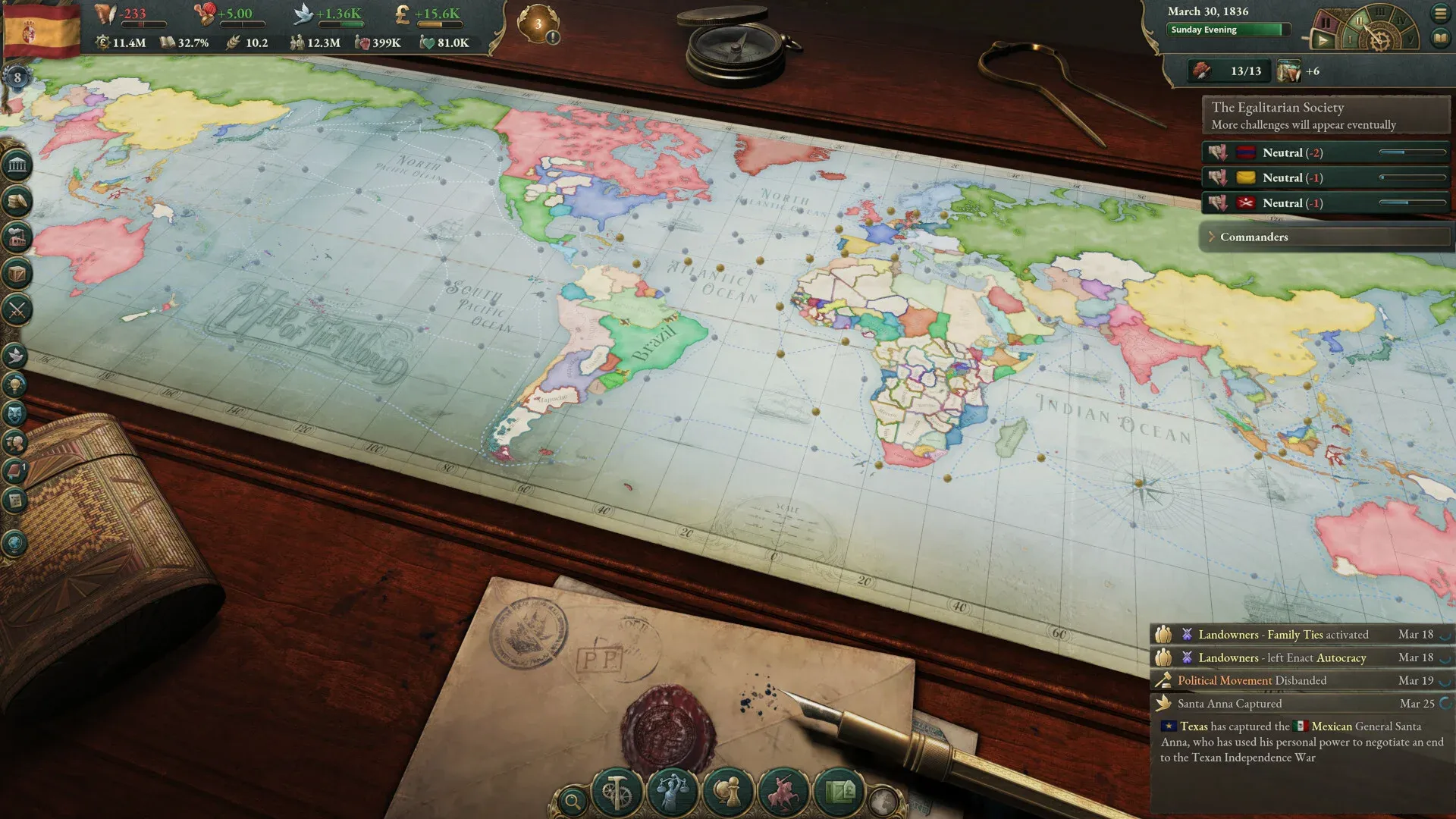


Victoria 3 drops you into 1836 with a nation to run, a population to feed, and absolutely zero handholding. The game spans from 1836 to 1936, covering one of history's most eventful centuries, and every decision you make shapes how that century plays out for your country. Most new players lose their first few runs not because the game is unfair, but because the core systems connect in ways the tutorial never fully explains. This guide breaks those systems down so your second run looks nothing like your first.
The 1836 starting political map
What makes Victoria 3 different from other grand strategy games?
Unlike most Paradox titles where armies and territory dominate, Victoria 3 puts economic simulation at the center of everything. Your nation's power comes from GDP, industrial output, and the living standards of your population, called Pops. Military strength matters, but it flows from economic strength, not the other way around.
The game tracks hundreds of goods, from grain and iron to luxury clothes and automobiles, and your buildings consume and produce these goods in a simulated market. Prices shift based on supply and demand across every nation on the map. Build too many steel mills without enough coal input, and your production grinds down. Ignore your population's needs, and you get political radicalization that makes passing laws nearly impossible.
The Steam community guide by Andy's Take, rated 5 stars and described as a complete tutorial covering every aspect of the game, identifies understanding these interconnected systems as the foundation every new player needs before anything else.
How does the economy actually work?
Every building in Victoria 3 belongs to a production method chain. Buildings hire Pops as workers, consume input goods, and produce output goods. Your job is to build the right mix of industries so that supply meets demand without creating expensive bottlenecks.
Buildings and production methods
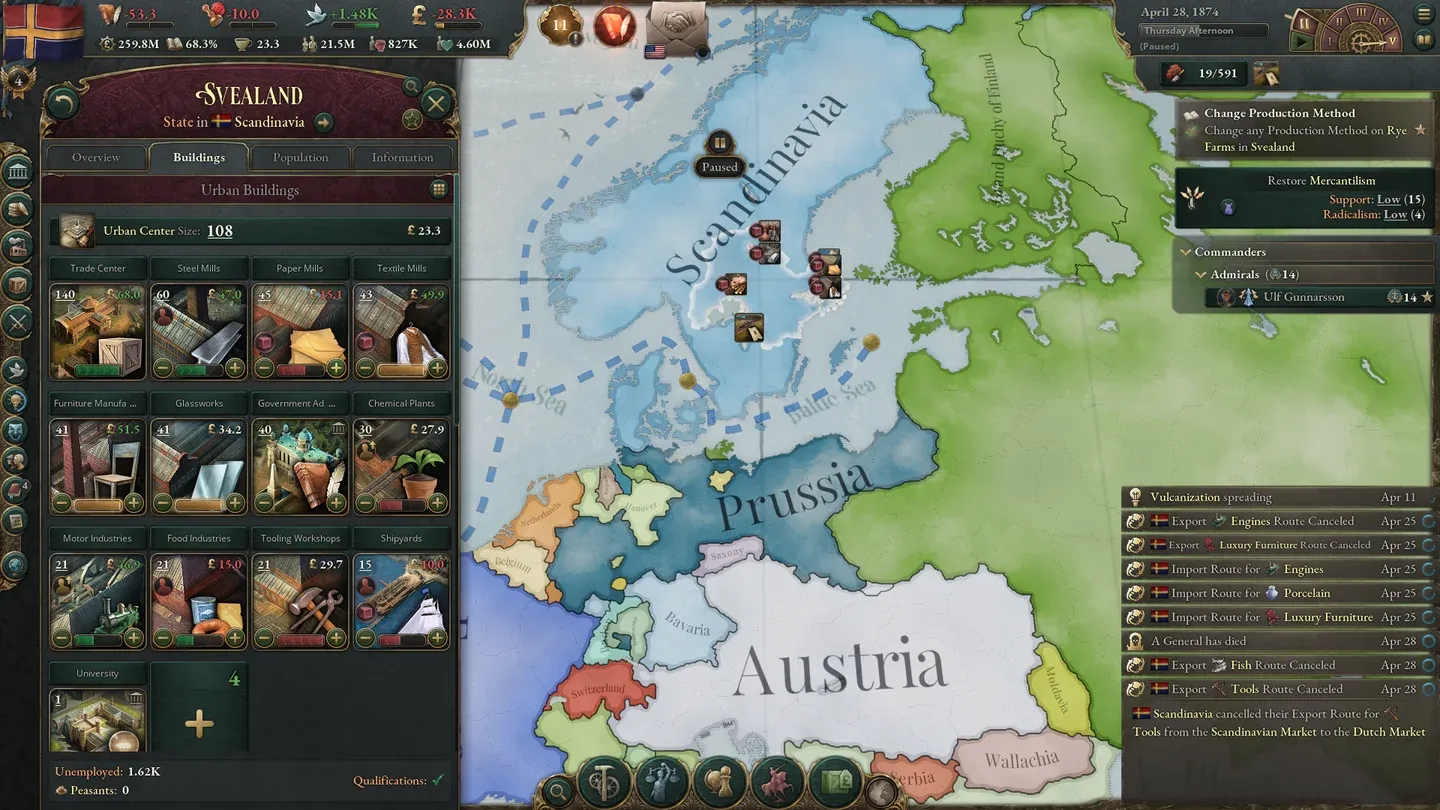
The Steam guide by Jared, focused on industrialization, points out that knowing which buildings to prioritize and which laws support industrial growth separates fast-developing nations from stagnant ones. The basic progression looks like this:
- Farms and ranches feed your population and supply raw inputs
- Mines extract coal, iron, lead, and other resources
- Manufacturing buildings (textile mills, steel mills, motor industries) convert raw goods into finished products
- Service buildings (financial districts, universities) generate money and research
Each building can switch between production methods, which change the ratio of inputs, outputs, and worker types. Switching a farm to Mechanized Agriculture increases output but requires tools, which means your tool workshops need to keep pace.
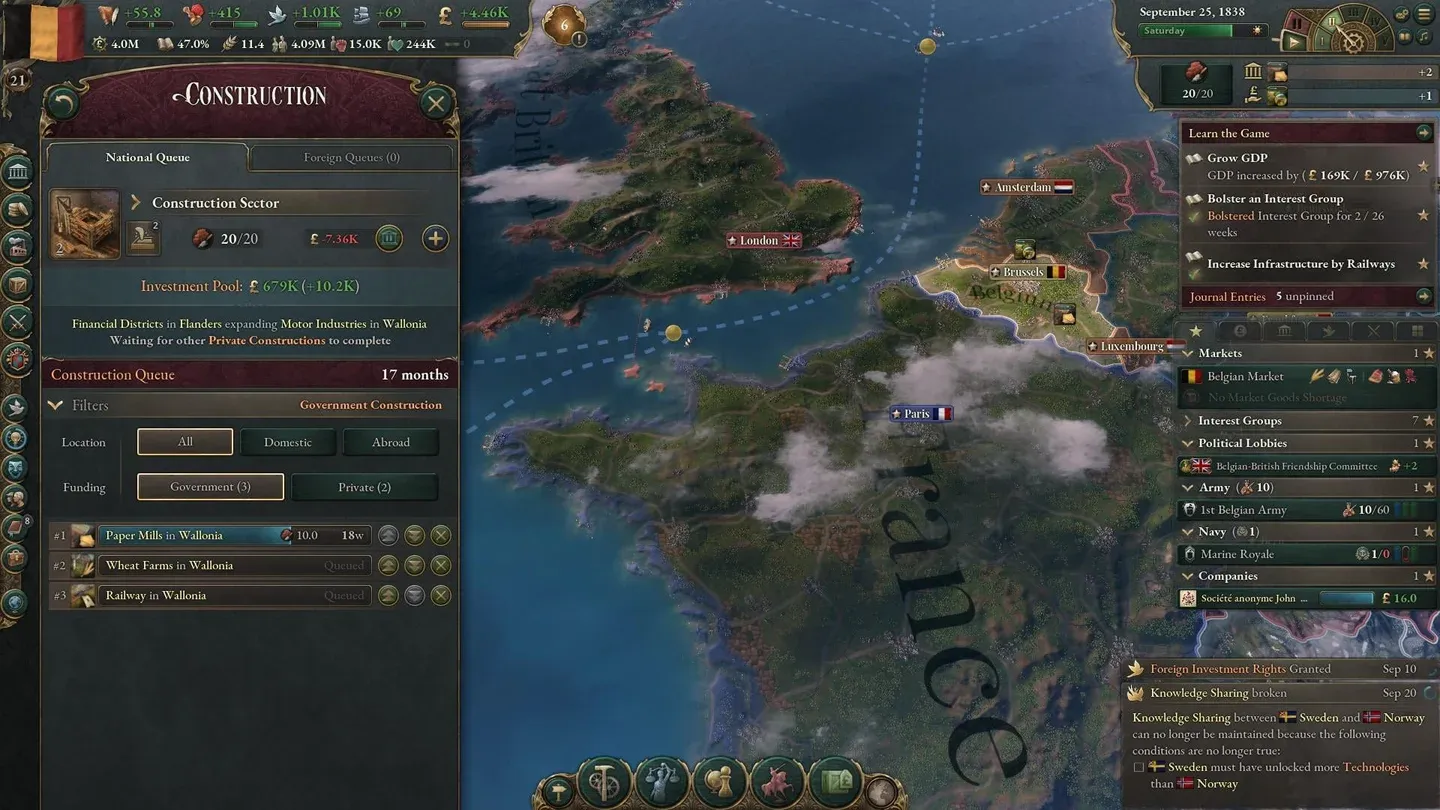
Construction queue management
Why does GDP matter more than army size?
GDP determines your prestige, which affects your rank among nations. Higher rank unlocks better diplomatic options, more favorable trade deals, and the ability to form or join powerful power blocs. A nation with a massive army but weak economy will still lose influence to a smaller, richer rival over time.
According to the Steam guide by Tim Apple, updated for patch 1.11, the current meta favors building up your domestic market aggressively in the early game rather than expanding territory. Conquering poor regions often costs more to develop than they return in value, at least until your industrial base can absorb them.
How do politics and laws shape your nation?
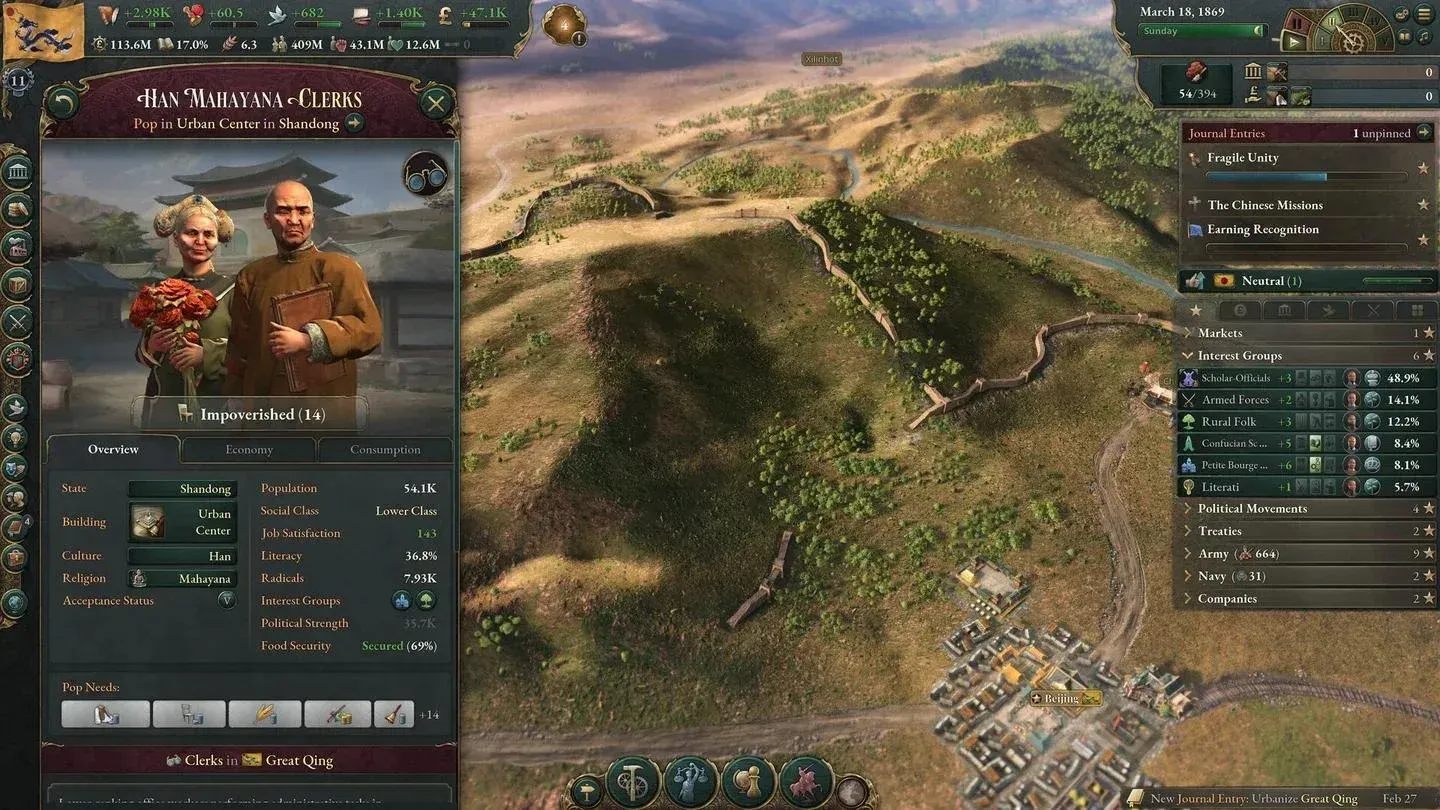
Your population is divided into Interest Groups (IGs), each representing a political faction with its own ideology and demands. The Landowners, Industrialists, Trade Unions, Church, and others all want different laws, and keeping the right ones in your government coalition determines what reforms you can pass.
What are Interest Groups and why do they matter?
Each IG has an approval rating that shifts based on your laws, economic conditions, and events. IGs in your government give you political power to pass legislation. IGs in opposition can block reforms or trigger political unrest if they become radicalized.
The Steam guide by Jared specifically highlights getting the best IGs in control of your government as a key objective, not just something that happens passively. You actively shape which IGs are powerful by changing economic conditions: building more factories strengthens the Industrialists, improving worker conditions empowers Trade Unions.
How do you pass laws without triggering a revolution?
Law changes require enough political support from your governing coalition. Trying to push through radical reforms too quickly radicalizes opposition IGs and can trigger a revolution or coup. The safe approach is to shift your economic structure first so that the IGs who support your target laws naturally grow in power, then pass the laws once the political math works in your favor.
Interest group approval ratings
How does warfare work in Victoria 3?
Victoria 3 handles war differently from most strategy games. You do not directly control individual units on a battlefield. Instead, you manage war goals, fronts, and the military power your economy generates.
Setting up your military before war
Your army strength depends on your military buildings, the conscription laws you have passed, and your industrial capacity to supply equipment. Underfunded armies suffer attrition and lose battles regardless of troop numbers. Before declaring war, make sure your arms industries are producing enough weapons and your supply lines are functional.
The Steam world conquest guide by Gonio notes that wars in Victoria 3 are won or lost in the preparation phase more than the execution phase. Nations that enter wars with well-supplied armies and clear diplomatic support almost always outperform larger but poorly equipped opponents.
Diplomacy and war support
Before any war, check your diplomatic relations and potential allies. Joining or leading a power bloc gives you allied support during conflicts. Attacking a nation that is part of a strong power bloc without allies of your own is a fast way to lose a war you should have won on paper.
For more strategy content and the latest gaming guides, browse more guides at GAMES.GG to find resources on other grand strategy and simulation titles.
What are the most common beginner mistakes?
After testing early-game scenarios across multiple nations and difficulty settings, a few mistakes show up almost every time:
- Building too many military units too early. Armies are expensive to maintain and drain your budget before your economy is strong enough to support them.
- Ignoring literacy and education. Low literacy slows research and limits which production methods you can unlock. Investing in schools early pays off dramatically by mid-game.
- Passing laws out of order. Trying to jump to advanced political reforms without the supporting economic structure almost always triggers political crises.
- Neglecting trade. If you produce a surplus of goods you do not need domestically, export them. If you lack key inputs, import them. Autarky sounds appealing but usually results in slower growth.
- Forgetting about Pops' standard of living. Happy, well-fed Pops pay more taxes, radicalize less, and support your government. Starving your population to fund military expansion is a short-term strategy with long-term consequences.
How do you industrialize fast?
The Steam guide by xX_Sexy_Abe_Lincoln_Xx, focused specifically on industrialization and GDP growth, outlines that the core of fast industrialization is building your construction sector first, then using that capacity to rapidly expand manufacturing.
The basic fast-industrialization sequence:
- Build construction sectors in your most developed states first
- Expand coal mines and iron mines to secure raw material supply
- Build tooling workshops to produce the tools that other industries need
- Expand steel mills once your iron and coal supply is stable
- Move into textile mills and furniture factories for consumer goods that raise living standards
- Reinvest profits into financial districts to generate investment pool funds for further expansion
The investment pool is the engine that sustains late-game industrialization. Once private investors are funding your expansion automatically, your government budget frees up for military, education, and social spending.
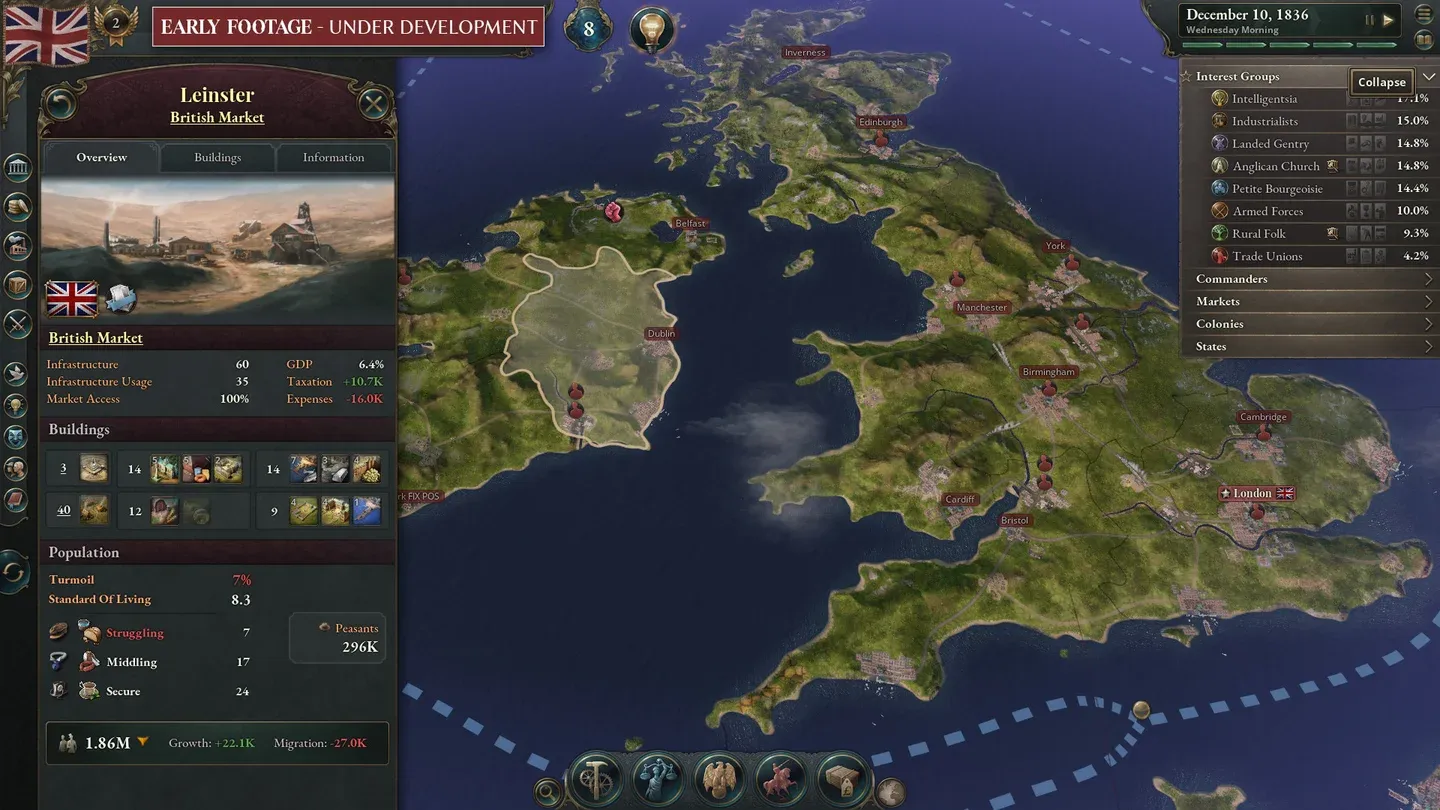
GDP growth in economy panel
Victoria 3 rewards patience more than aggression. The nations that dominate the 1900s are the ones that spent the 1840s and 1850s quietly building factories, educating their populations, and passing the right laws at the right time. Get those fundamentals right, and the rest of the game opens up in ways that make every subsequent run more interesting than the last.