
Crew skills are one of the most misunderstood systems in War Thunder. New players often wonder why they can't spot enemies at 800 meters, why their turret won't traverse diagonally, or why their reload feels sluggish compared to veterans. The answer is almost always crew level. This guide breaks down exactly what crew skills do, why they matter, and how to manage them without letting the grind ruin your experience.
What do crew skills actually do in War Thunder?
Crew skills govern a surprisingly wide range of in-game performance, and the gap between a level 0 crew and a leveled one is not subtle. A level 0 crew has hard mechanical limitations that no amount of skill or positioning can fully compensate for.
Here are the areas directly affected:
- Spotting range: A level 0 crew cannot reliably spot enemies in third-person view at 800 meters. Optic upgrades on gunner or commander sights help, but the base limitation is real.
- Turret traverse: A level 0 gunner physically cannot rotate the turret left and up simultaneously. That diagonal movement requires leveled targeting skills.
- Reload speed: A low-level loader works slower, which directly costs you follow-up shots in close engagements.
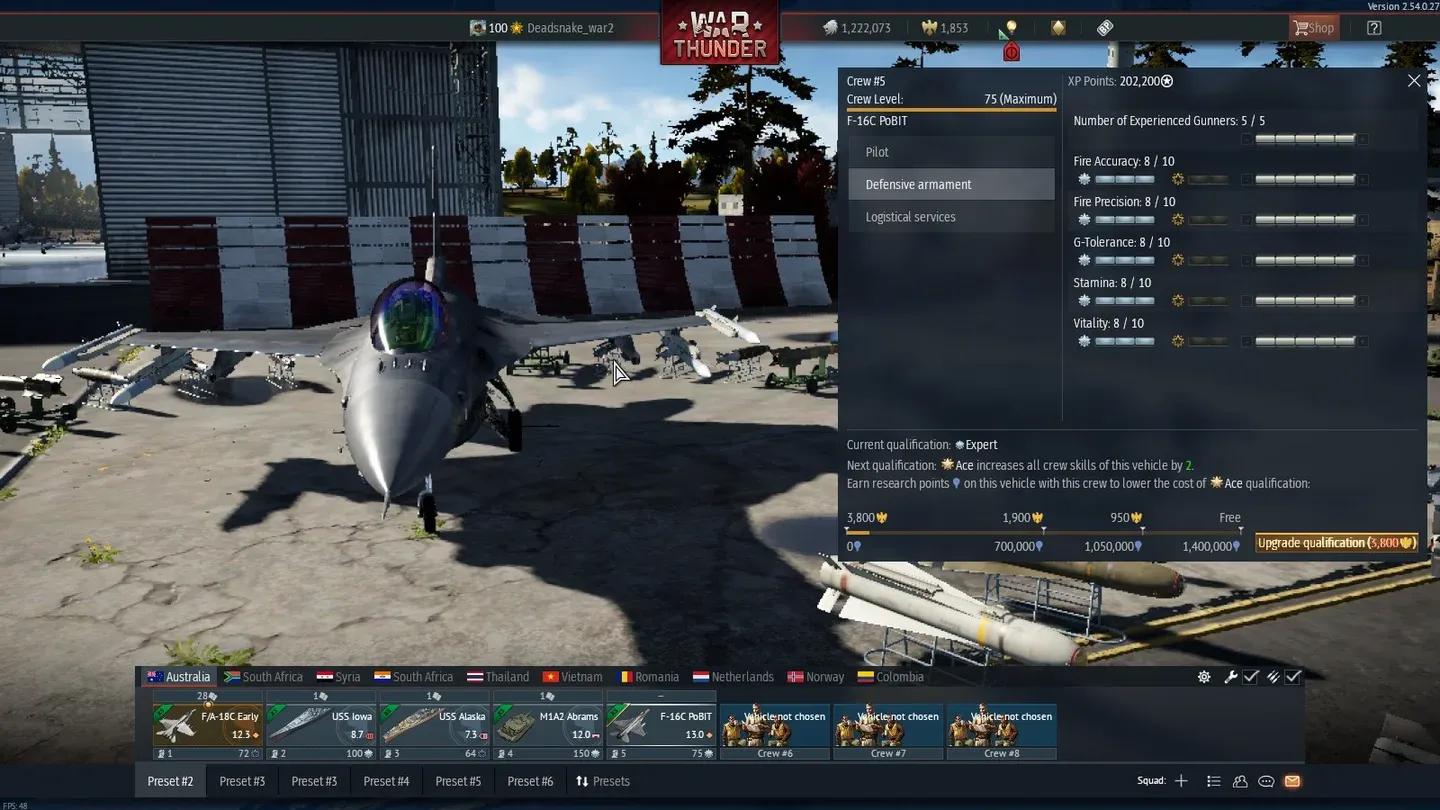
- G-force tolerance: In air battles, a low-level pilot cannot sustain the same turns as even a level 3 pilot. This is not marginal; it affects your ability to stay on target or evade.
These are not soft penalties. They are hard caps on what your vehicle can do, regardless of how well you play.
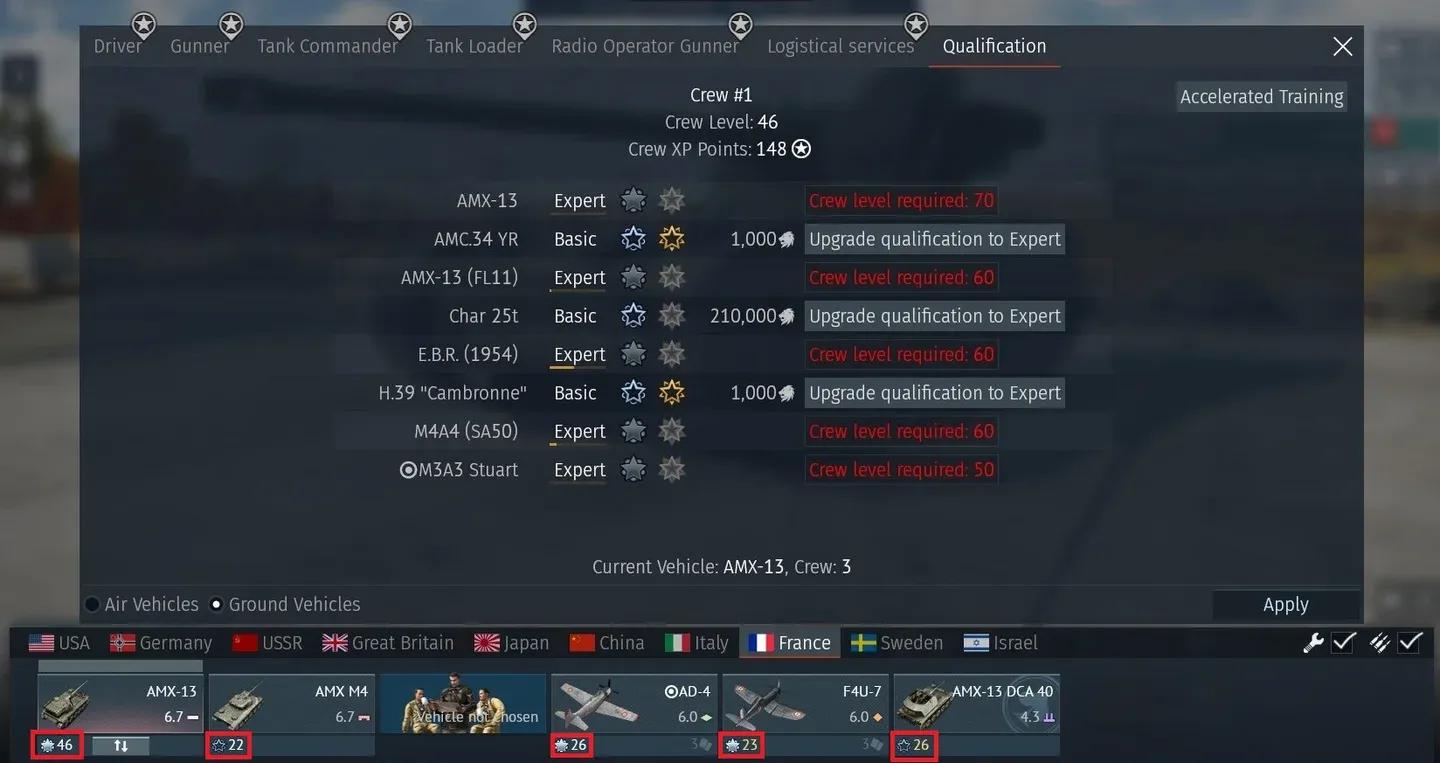
Gunner targeting skill tree

How much do low-level crews actually hold you back?
The honest answer is: it depends heavily on how you play.
Community veterans with close to 3,000 hours in the game point out that a large percentage of kills come from flanking enemies who simply aren't looking at you. In those moments, reload speed and spotting range don't decide the outcome. A level 10 crew in a stock tank taken into a full uptier on an unfamiliar map can still perform well if the player avoids direct confrontations where crew limitations become deciding factors.
That said, the disadvantage is real in head-on engagements or when you're trying to trade shots at distance. If you're playing aggressively or in situations where reaction time and reload speed matter, a low-level crew will cost you kills and get you killed.
The key insight from experienced players: adjust your playstyle to minimize the situations where crew skills are deciding factors. Don't sit at long range trying to spot enemies when your crew can't see past 800 meters. Don't trade shots with a fully-crewed opponent when your reload is slower.
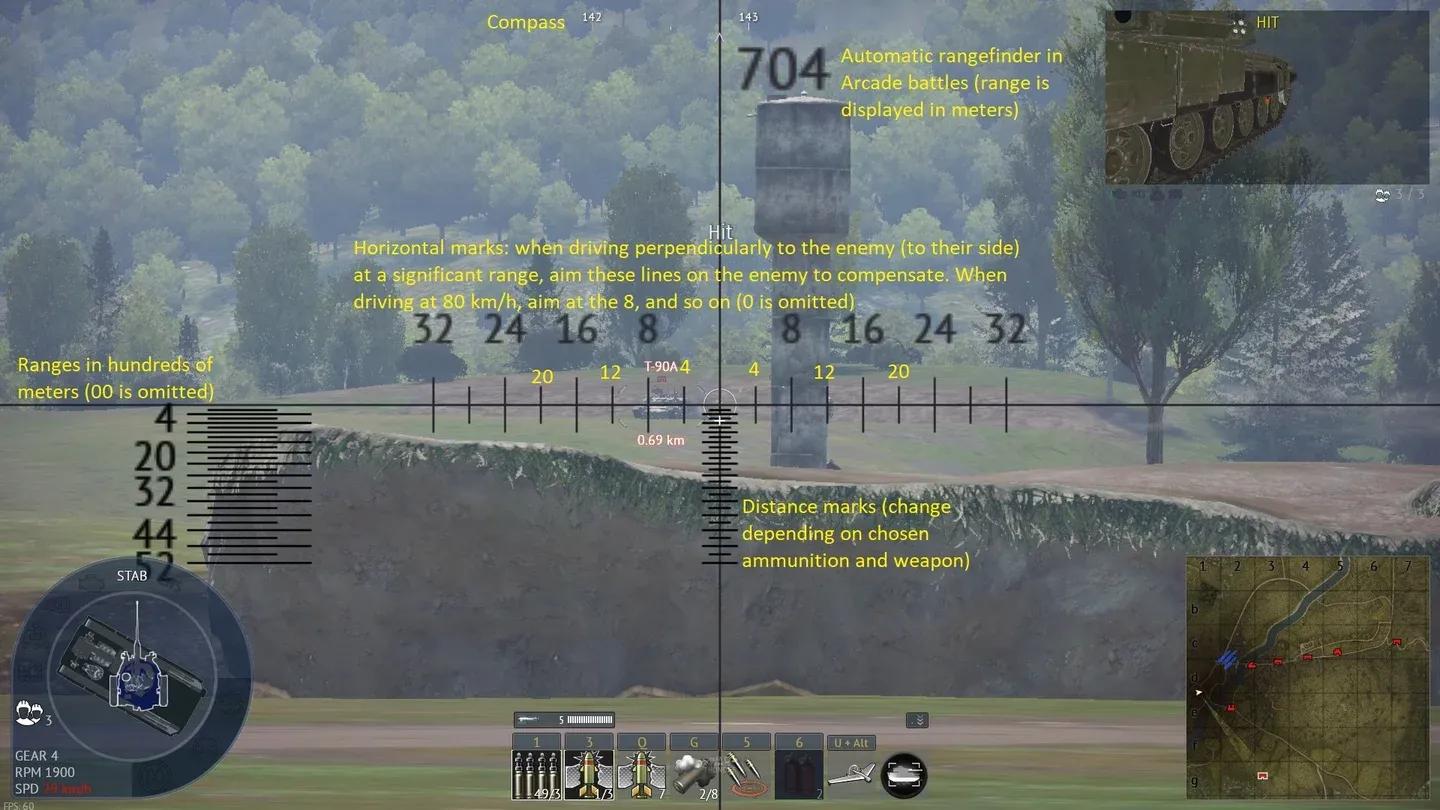
Commander sight spotting range
Why is the crew grind so frustrating for new players?
The core problem is structural. A player who has spent months or years on a single tech tree will have a crew leveled well above what a new player or someone branching into a new nation can field. This creates an uneven playing field that has nothing to do with game knowledge or mechanical skill.
The frustration compounds because you're not grinding for new tanks or planes. You're grinding just to reach baseline functionality that veterans take for granted. Losing a match and knowing your crew literally could not see the enemy who killed you is a specific kind of demoralizing that other progression systems don't produce.
Several structural fixes have been proposed in the community:
| Proposed Change | Core Benefit | Main Drawback |
|---|---|---|
| Remove crew skills entirely | Levels playing field completely | Removes a monetization layer for Gaijin |
| Unified crew level per slot | Simpler progression, less micromanagement | Still requires grinding per slot |
| Nation-wide crew level | Premium/event vehicles contribute to main crew | Loses per-vehicle specialization |
| Blanket level per slot | No skill tree decisions needed | Less depth in progression |
None of these changes are confirmed for any upcoming update. Based on available information, Gaijin has not announced a crew system rework as of May 2026.
How should you prioritize crew skills when leveling?
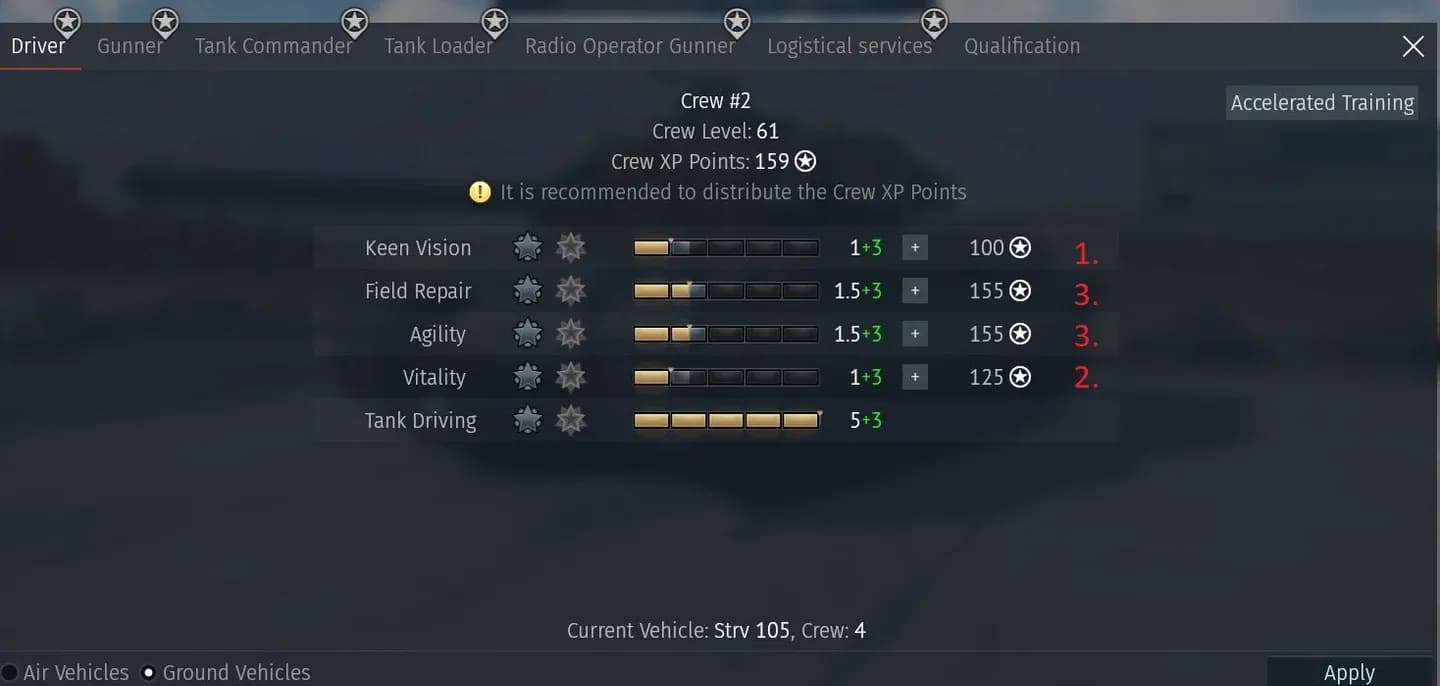
Based on the mechanical limitations documented in community discussions, here's a practical priority order for ground vehicles:
Gunner skills first:
- Targeting (fixes the diagonal turret traverse limitation)
- Rangefinding
Loader skills second:
- Reload speed (directly reduces time between shots)
Commander skills third:
- Situational awareness / spotting range (addresses the 800-meter visibility cap)
Driver and other crew:
- Level these after the above, as their impact is less immediately felt in most engagements
For air battles, pilot G-tolerance and stamina should be your first investments, since even a small level advantage translates directly into tighter turns and longer sustained maneuvers.
Loader reload speed skills
What's the fastest way to level crews in War Thunder?
Based on available information from community sources, the most efficient methods are:
- Play consistently on one nation: Crew experience is earned per match and accumulates faster when you're not splitting attention across multiple nations simultaneously.
- Use premium vehicles in your main crew slots: Premium and event vehicles generate crew experience, and placing them in your primary crew slots helps level those crews faster.
- Avoid spreading crew XP too thin: Leveling five different crew slots at once slows progress on all of them. Focus on two or three slots tied to your most-played vehicles.
- Expert and Ace qualifications: Once a crew reaches the required level, qualifying them as Expert (purchasable with Silver Lions) or Ace (earned through play) gives a significant flat bonus to all skills.
Playing smart around crew limitations
While the grind is real, there are concrete ways to reduce its impact on your win rate right now. The crew skill gap matters most in specific scenarios, and you can actively avoid most of them.
For ground battles:
- Flank rather than brawl. Most kills in tank battles come from opponents who weren't watching the angle you attacked from. Reload speed and spotting range are irrelevant in those moments.
- Stay out of long-range duels until your commander spotting skills are leveled. At 800 meters with a level 0 crew, you're essentially blind while your opponent can see you fine.
- Avoid maps and modes that force prolonged head-on engagements at range.
For air battles:
- Stay out of the main furball until your pilot's G-tolerance is leveled. Low-level pilots bleed energy faster in turns and can't match the sustained maneuvers of leveled opponents.
- Boom-and-zoom tactics reduce the reliance on sustained turning, which is exactly where low-level pilots fall apart.
For more strategies and nation-specific advice, the War Thunder guides collection covers everything from beginner setups to high-tier play.
Pilot stamina and G-tolerance
Is the crew system worth engaging with at all?
Yes, but with realistic expectations. The crew system is not going away, and the mechanical limitations it imposes are real enough that ignoring it entirely will cost you in competitive matches. The goal isn't to max every crew slot immediately. It's to get the specific skills that remove the hardest limitations (diagonal turret traverse, spotting range, reload speed) as quickly as possible, then let the rest level naturally through play.
The War Thunder community has debated this system for years, and the consensus is that skilled positioning can compensate for a lot, but not everything. A level 0 crew is a genuine handicap. A partially leveled crew with the right skills prioritized is competitive enough to hold your own while you continue grinding.
If you're exploring other shooter games with deep progression systems, the same principle applies: understand which progression elements have hard mechanical effects versus soft bonuses, and prioritize accordingly.
For everything else War Thunder-related, check out the full War Thunder strategy guides to keep building on what you've learned here.