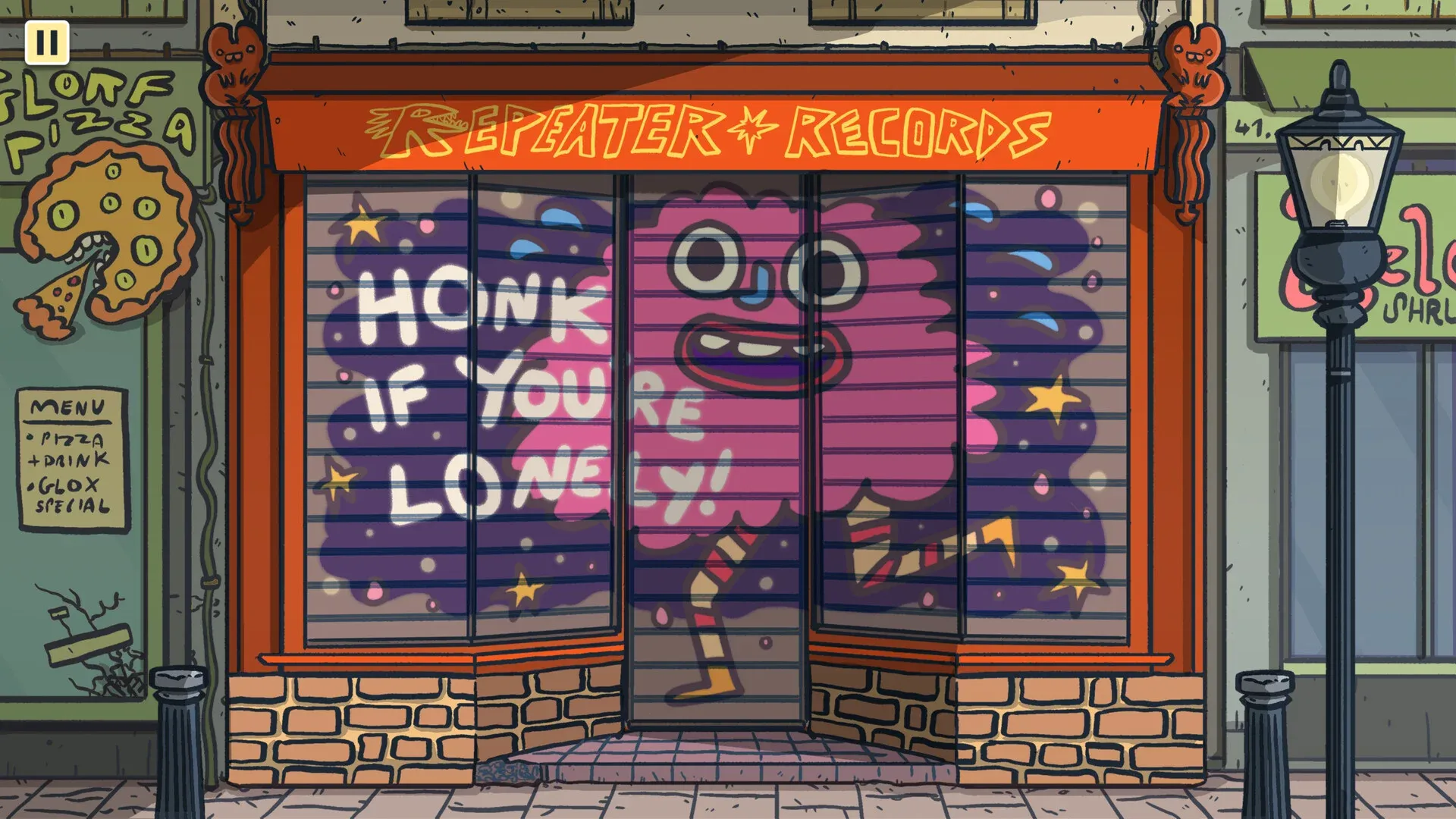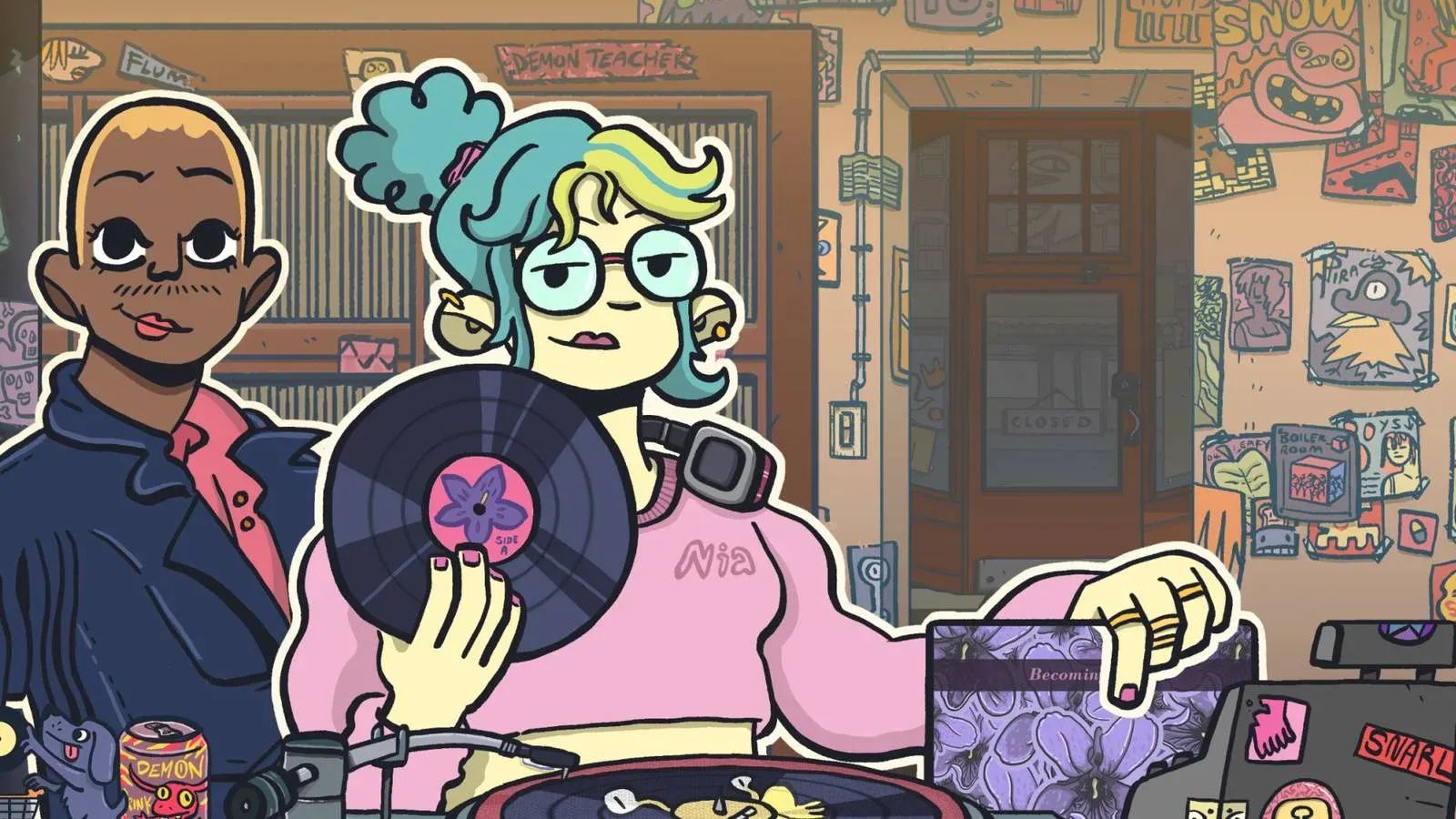

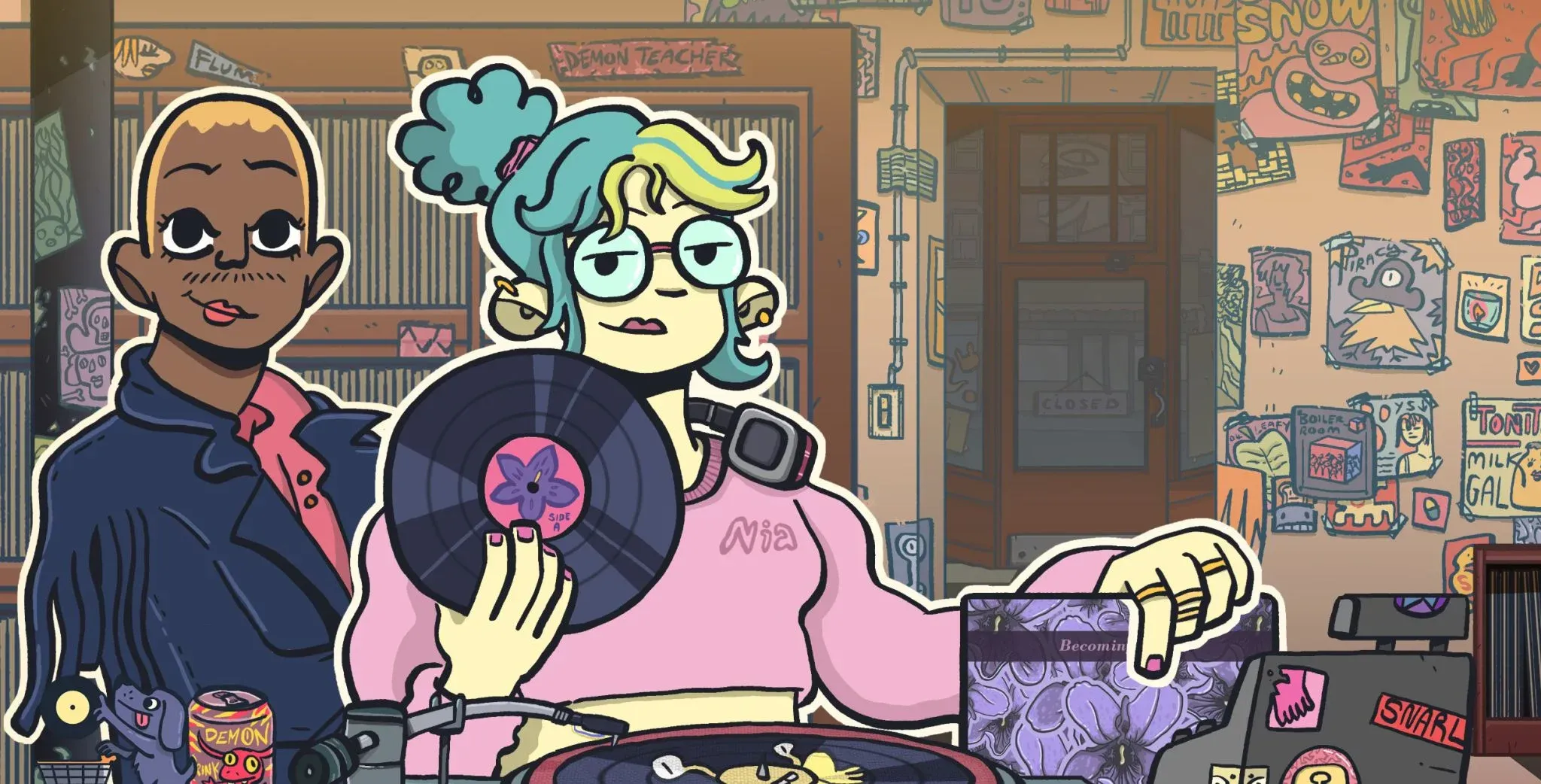
Wax Heads is a narrative sim about working at a struggling record store called Repeater Records, developed by Patattie and published by Curve Games. Released on May 5, 2026 for PC and Xbox Series S/X, it blends music-themed puzzle mechanics with visual novel storytelling and a cast of characters that feel genuinely alive. After spending serious time with it, the verdict is simple: this is one of the most carefully crafted games of the year.
What is Wax Heads actually about?
You play as the new hire at Repeater Records, a shop run by Morgan, a former member of what was apparently the biggest band on the planet. She has since retreated from the spotlight and refuses to stock any records from her old band. Her past, including a sister and an ex-lover, refuses to stay buried, and the shop's survival is directly tied to the drama that follows.
The supporting cast fills out the store with real personality. Tee loves music deeply but cannot stand live concerts. Hank, despite his age, is still grinding away trying to make it with his band. Every colleague carries their own relationship with music, and those relationships matter to the plot.
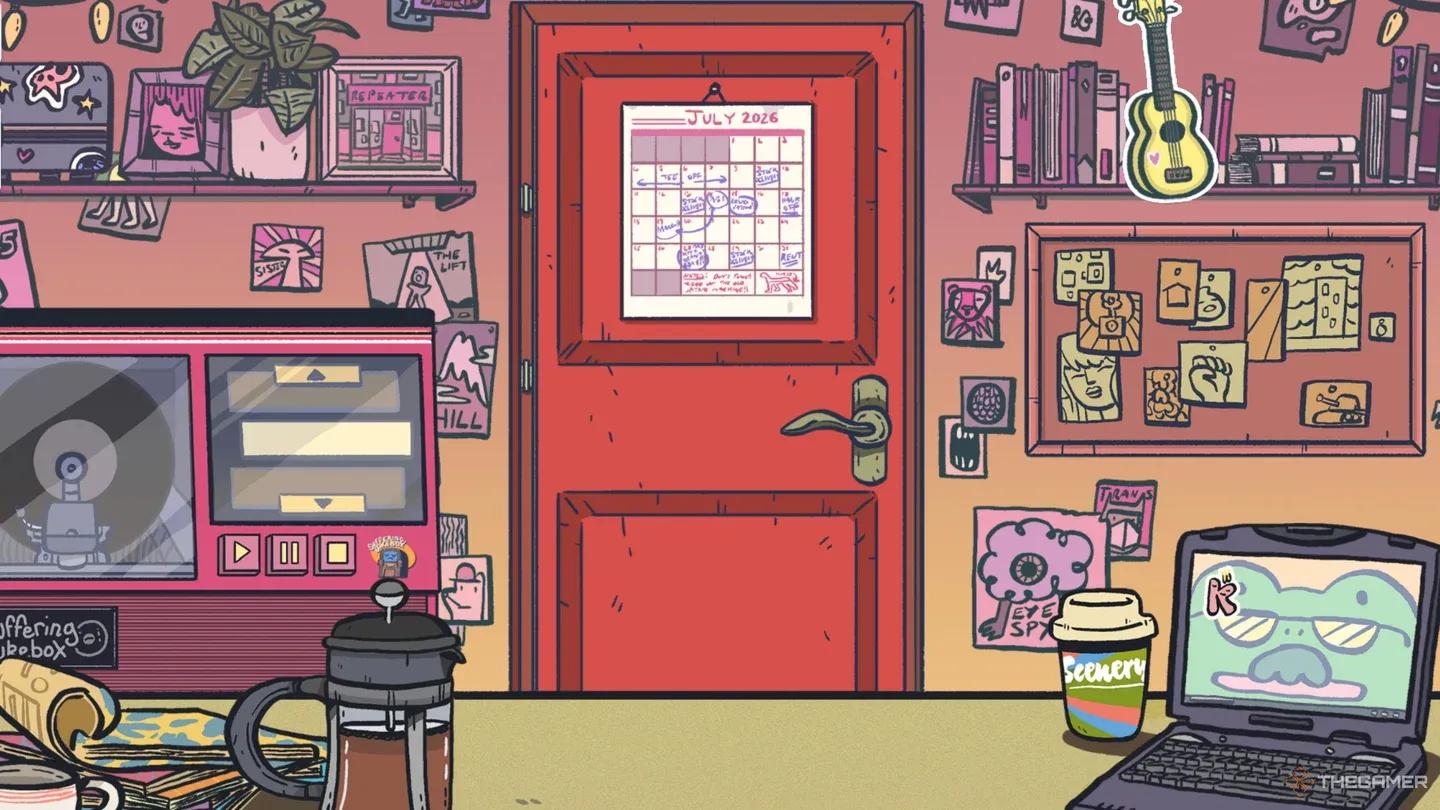
Repeater Records shop floor
The story unfolds across two layers: the daily grind of running the shop and a larger arc about whether Repeater Records can survive at all. The game critiques capitalism and AI from what the review at So Many Games describes as "a hopeful place," never letting the commentary tip into cynicism.

How do the music recommendation puzzles work?
The core gameplay loop centers on helping customers find the right record. Here is the catch: no customer will simply tell you what they want. You piece together their taste from visual clues (what they are wearing), social media posts, and other contextual hints scattered around the store.
What makes this work is that developer Patattie built an entirely original music scene for the game rather than licensing real artists. Composer Gina Loughlin created music spanning death metal, rap, indie, and pop, and you can actually hear most of it in-game. Every record in the game has its own unique artwork, which adds genuine depth to the fictional discography you are navigating.
The puzzles scale in difficulty as the game progresses. Early recommendations are relatively straightforward, but later customers require you to cross-reference multiple clue types before committing to a choice. The variety holds up across the full runtime and never grows stale.
What else do you do besides recommend records?
Record recommendations are the spine of the game, but Wax Heads layers in other activities to break up the rhythm.
- Flyer design: You get to design promotional materials for the store.
- Packing collector's editions: A tactile, satisfying side task.
- Visual novel dialogue: Story beats play out through conversation screens with the cast.
- A game within the game: The So Many Games review mentions this as something worth returning to on a second playthrough.
- Secret collector group: A band of secret collectors exists in the game whose secrets reportedly take more than one run to uncover.
These elements combine to make Repeater Records feel like a real place with real rhythms rather than a single-mechanic puzzle game with story padding.
How does Wax Heads look and sound?
The art comes from the same creator behind Welcome to Elk, and the visual style draws comparisons to the kind of cartoons that used to air on MTV. Every record in the game has completely unique artwork, which is a staggering amount of original illustration work.
The music, as mentioned, covers an enormous range of genres. Gina Loughlin's original compositions are described in the So Many Games review as "absolutely insane work," and the breadth of what she produced gives the fictional music scene genuine texture. You are not listening to placeholder audio; these tracks are designed to sound like real releases from real (fictional) artists.
Wax Heads difficulty and accessibility options
The game ships with a solid set of accessibility features, which is worth knowing before you buy.
| Feature | Available |
|---|---|
| Key rebinding | Yes |
| Volume settings | Yes |
| Override mouse cursor | Yes |
| Override game font | Yes |
| Subtitles with custom fonts | Yes |
| Difficulty settings | Yes |
The difficulty settings mean you can tune the puzzle challenge to your preference, which matters given that later recommendations get genuinely demanding. The font override and subtitle customization are particularly useful for players with visual processing needs.
Is Wax Heads worth replaying?
Finishing the game once still leaves content undiscovered. The in-game game, the secret collector group, and presumably branching dialogue paths all give a second run genuine purpose. The review states the writer "most definitely will" replay it, which is a meaningful signal for a narrative game in this format.
For fans of adventure games with strong writing and music-focused mechanics, replayability is a real selling point here rather than a marketing bullet point.
Final verdict: should you play Wax Heads?
The So Many Games review scores it 5/5 and describes it as "a true marvel." After reviewing the available material, that score feels earned. The game delivers on music culture, puzzle design, character writing, visual art, and original composition simultaneously, which is a lot to get right at once.
The comparison to High Fidelity and Scott Pilgrim is apt because Wax Heads understands what those works understood: music is not just sound, it is identity, memory, and connection. The game builds a fictional music scene from scratch and makes you care about it.
For everything else you need before jumping in, the Wax Heads strategy guides at GAMES.GG cover the puzzles, characters, and collectibles in detail.