

Where Winds Meet has a full Homestead mode built around Blissful Retreat, your personal inn and farm. The currency that powers everything inside it is Bounty Gourd, and spending it faster than you earn it is one of the most common early-game traps. Furniture, seeds, retainer invitations, and facility items all drain your balance quickly if you are not generating income deliberately. The good news is that Blissful Retreat functions like a real business, and once you understand the production chain behind it, steady income becomes predictable rather than accidental.
How does the Bounty Gourd production chain work?
Every Bounty Gourd you earn traces back to a chain where each stage feeds the next. Nothing in this chain operates on its own, and a gap anywhere in the line means lost income. Here is how the full chain breaks down:
| Stage | What it produces |
|---|---|
| Farmland | Crops that supply the kitchen |
| Kitchen (stove) | Dishes cooked from harvested crops |
| Porcelain Kiln | Vases and dishware |
| Aromas Brewery | Wine made from kiln goods |
| Inn (Restaurant) | Sells dishes and wine to customers for Bounty Gourd |
Inn serving menu overview
To get the chain moving, place a stove and assign a retainer as Cook, then set up two dining tables with two retainers assigned as Caterers. Tell the Cook which food to prepare and assign finished dishes to the Caterers for serving. The starter recipe is Potato Stew, and Bounty Gourd starts flowing the moment customers sit down and get served.
The goal is to keep every stage staffed and stocked at the same time. Some items finish in minutes, others take hours, so check in regularly rather than waiting for one stage to complete before starting the next.


Why you should always cook the week's hot dishes
Every week the Inn marks certain dishes as hot dishes, flagged with a thumbs-up icon. These sell for more Bounty Gourd than standard menu items, making them the highest-return use of your Cook's time. Match your farmland output to whatever ingredients those hot dishes need so the kitchen never stalls waiting on crops.
This is the single biggest income lever in the early game. A player who cooks hot dishes consistently will outpace someone running the same setup but ignoring the weekly flags by a meaningful margin.

Hot dish weekly bonus flag
How to run the Young Master's Routine for daily income
The Young Master's Routine is a daily questline that tasks you with managing Blissful Retreat as its young master. Completing it pays out Bounty Gourd on top of whatever the Inn earns passively, making it one of the most consistent income sources in Homestead.
The tasks inside the routine mirror the normal management loop you are already doing, so there is almost no extra effort involved. Open the Homestead menu to find and start the questline, work through the daily tasks, and collect the reward on completion. Running this every day stacks up fast over a week.
What is Trade for Profit and when should you use it?
Trade Goods unlocks at Homestead Level 3, which requires raising Blissful Retreat's Prosperity to 1,500. Until then, the Inn is your only sales outlet. Once it opens, Trade for Profit lets you sell surplus dishes, wine, and porcelain directly rather than letting them pile up in storage. Nothing you produce goes to waste.
Reaching Level 3 costs Bounty Gourd because Prosperity-boosting furniture is not free, so the early game is about building a buffer first. Focus on Inn income and daily quests until your balance is stable, then scale up by trading surplus goods once the feature unlocks.
Trade for Profit goods screen
How do retainers affect your income?
Every facility in Blissful Retreat needs an assigned retainer to function. An unstaffed facility earns nothing. Assign at least one retainer to gathering, hunting, mining, and fishing on a regular rotation so the kitchen and brewery always have raw ingredients coming in.
To hire more retainers, buy a Confidant's Invite for 200 Bounty Gourd or a Companion's Call for 20 Bounty Gourd from the Homestead Shop tab in the Qinghe Shop, then recruit through the Retainer menu. More retainers mean more simultaneous operations, which directly increases how much the chain produces per hour.
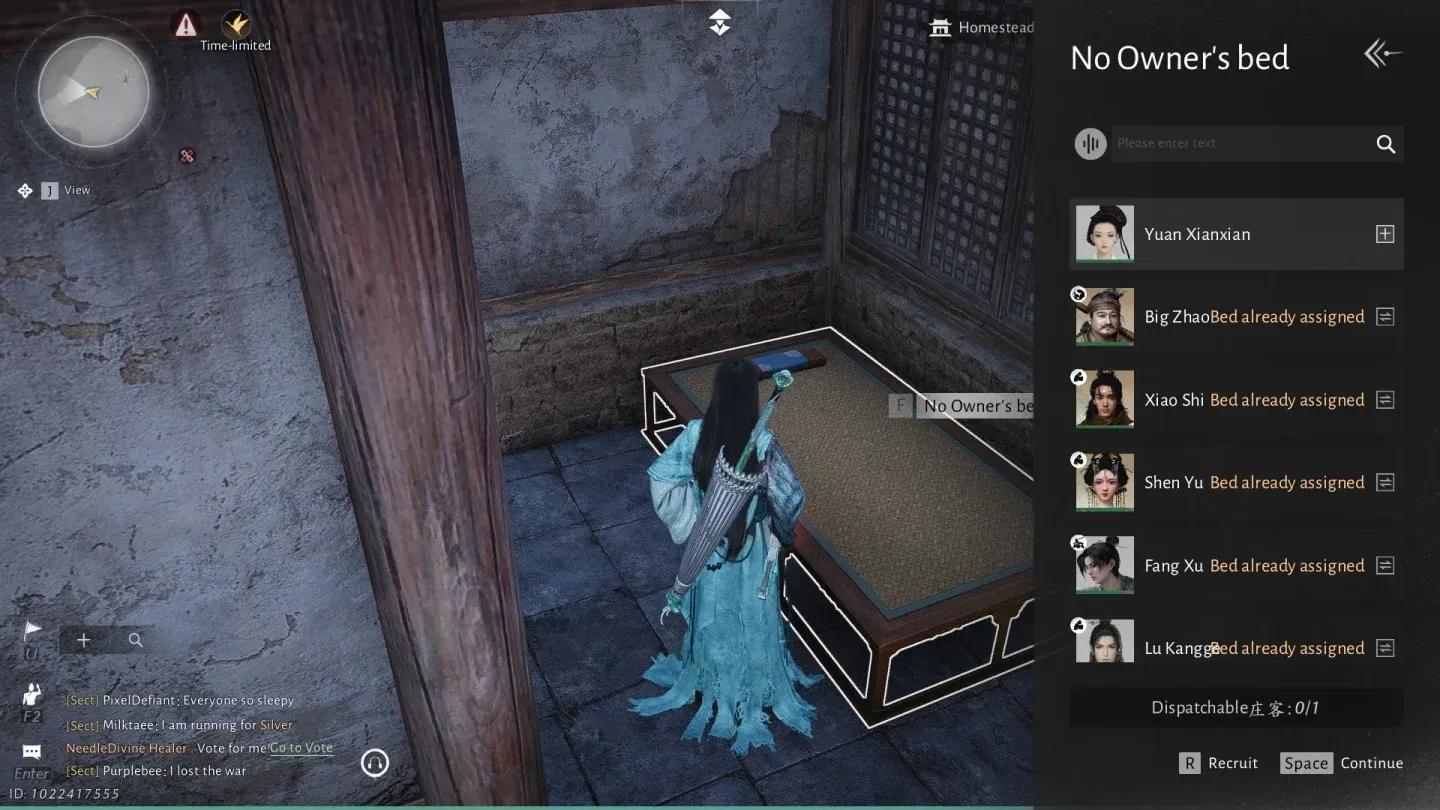
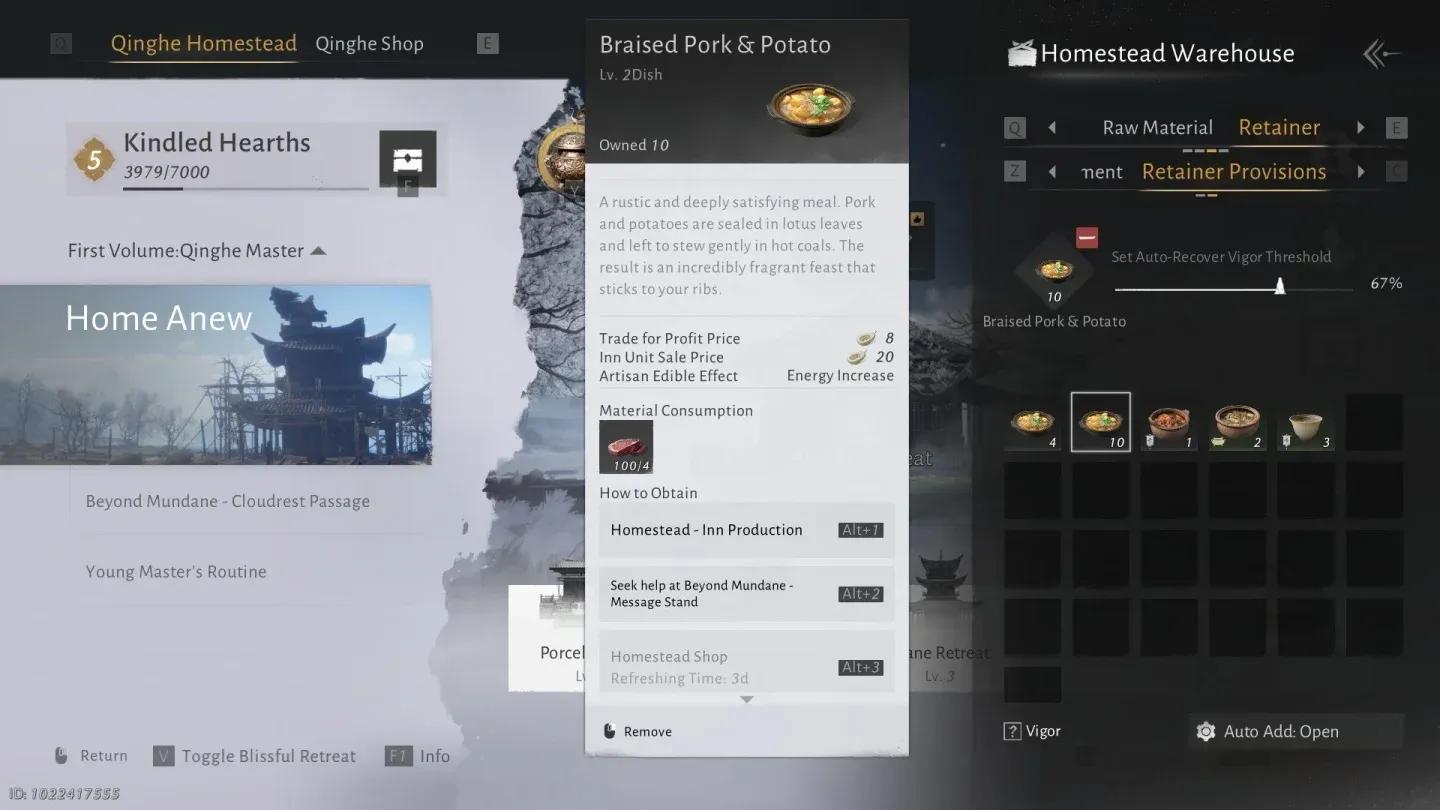
Retainer vigor is the other variable to watch. Give each retainer a bed inside a residence and keep seats nearby for rest. Use the Warehouse Auto Add option under Retainer Provisions to automatically refill their food and wine so they stay productive without manual intervention. If a retainer's vigor drops too low, unassign them and send them to recover before they slow the whole chain.
What should you spend Bounty Gourd on first?
Early-game spending discipline matters more than most players expect. Until the Inn and daily quests generate a clear surplus, limit purchases to seeds, essential facility items, and retainer invitations that directly increase output. Decorative spending can wait.
For a broader look at how currency and progression fit into the rest of the game, the Where Winds Meet beginner strategies guide covers character upgrades, curiosities, and weapon progression alongside Homestead basics. If you want to stretch your Bounty Gourd further, check the active exchange codes for free resources that reduce how much you need to farm.
How to tell if your income setup is actually working
The simplest check is watching the Bounty Gourd counter in the Homestead menu tick upward as customers get served in the Inn. Between play sessions, the total should climb if every facility is staffed and stocked. If it stalls, the cause is almost always one of three things: a facility sitting idle without an assigned retainer, a Cook or Caterer with depleted vigor, or the kitchen running out of ingredients because no gathering retainer is active.
Fix whichever of those applies, make sure hot dishes are queued, and keep the Young Master's Routine in your daily routine. Those three habits together produce a reliable Bounty Gourd flow that scales as you unlock more facilities and hire more retainers.
For more help across all parts of the game, the full Where Winds Meet strategy guides collection has everything from combat techniques to gear set optimization.