
Building an elite courier stable in The Legend of Khiimori is one of the most rewarding and punishing systems the game throws at you. The Mongolian steppe is beautiful and absolutely unforgiving, and your horses are the only thing standing between a successful delivery and a very expensive disaster. Understanding how genetics work, which traits to chase, and how to train your mount's hidden skills will separate a struggling courier from a seasoned rider who never gets caught in a blizzard on the wrong horse.
What Do You Actually Need Before You Can Start Breeding?
Before the breeding station becomes useful, you need to hit a specific roster threshold. The game requires a minimum of three horses in your possession to initiate any breeding session. That means one active mount for daily courier runs, plus one stallion and one mare resting in the stable simultaneously.
If your current roster falls short, the trader is your only option. Fresh stock costs 1,000 coins per horse, which is a serious investment early in the game. Every individual mating session also carries a flat fee of 20 coins, paid each time you arrange a pairing. After the fee clears, gestation takes exactly one full in-game day. If standing around the stable sounds tedious, walk to your shack and sleep until sunrise to skip the wait.
Your newborn foal spawns at the gate just left of the breeding station. You can enter the pen and interact with it immediately, but do not expect to saddle it up right away. Foals require approximately three in-game days to mature into a rideable delivery mount.
Which Starter Breed Should You Buy First?
The trader offers three distinct breeds when you first gain purchasing access. Each maps directly to a specific stat focus:
For most players, the Ferghana is the strongest first purchase. Its elevated Strength stat lets you carry heavier cargo loads without exhausting the animal prematurely, which directly protects your income during the early courier grind. If your playstyle leans toward quick, lightweight runs across open terrain and you want the ability to outpace wolves, the Akhal Teke is a legitimate alternative.
Neither choice locks you in permanently. Once your breeding program produces superior foals, you can sell older horses back to the trader and rotate in better stock.
How Do Personality Traits and Genetics Work?
Every foal born in your stable inherits a randomly assigned personality trait from its parents. These quirks are not cosmetic flavor text. They actively alter how the horse behaves during long deliveries and can either complement or completely undermine a specific route.
Here are some examples of traits you may encounter:
- Nocturnal: The horse receives a significant mood boost during nighttime travel, making it ideal for overnight delivery runs.
- Lazy: The horse becomes agitated and may refuse to gallop if pushed at full speed for extended periods.
- Wind Spooked: Mood drops sharply during heavy gusts or exposed ridge crossings, reducing speed and responsiveness.
Trait inheritance carries real long-term consequences. Breeding two horses with anxiety-prone traits together risks producing foals that are difficult to manage across multiple biome types. Read each horse's profile card carefully before pairing. The traits visible on the parents are the same trait pool the foal draws from.
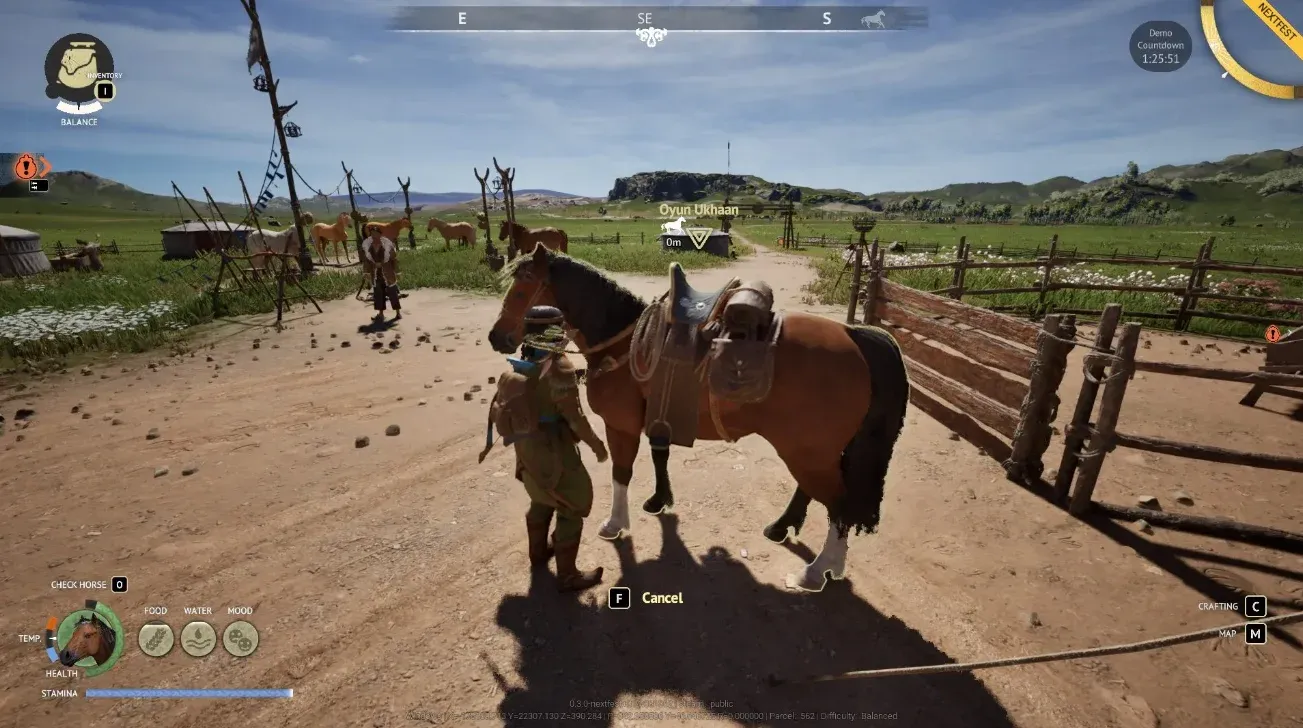
Horse trait profile card view
What Are the Five Core Horse Skills and How Do You Train Them?
Every horse carries five trainable skills that scale through direct environmental exposure. You cannot grind these stats in a safe paddock. The game forces you to put your mount through specific stressors to trigger growth.
The training loop here is intentional. A horse destined for mountain routes needs deliberate Endurance and Balance exposure before you send it into the high passes. A plains sprinter benefits most from consistent Agility sessions on flat, hard ground. Plan your training rides around the routes you actually need to run.
How Do You Keep Your Horse Healthy Between Deliveries?
Your horse tracks six wellbeing bars at all times. Letting any of them drop too low creates cascading penalties that slow your delivery times and drain your coin on supplies.
- Temperature: Rises in deserts, drops in snowy mountains. Craft and use tonics to counteract extreme temperature effects before they damage health.
- Health (HP): Depleted by stamina exhaustion, temperature extremes, missed feeding, missed watering, and predator attacks.
- Stamina: The primary limiter on galloping. Running a horse to zero stamina directly damages its HP.
- Food: Horses consume berries and hay. Stock up at settlements before long routes.
- Water: The horse must be near a water source to drink. Plan route stops accordingly.
- Mood: Low mood reduces speed. At critically low mood, the horse stops running entirely.
Mood recovery options include petting, brushing, and tending hooves. Each action has its own cooldown, so rotate through them during rest stops rather than spamming a single interaction. Brushing and hoof tending also remove the dirt debuff accumulated from muddy or rough terrain travel.
Saddlebag balance is a separate but equally critical system. Heavy cargo shifts the weight distribution visible on your balance indicator. Keep the arrow in the green zone by redistributing items between left and right bags. Riding in the red zone makes your horse prone to injury, which means bandage costs and lost delivery time.
How Should You Match Horses to Biomes and Routes?
Once your stable grows past three horses, biome specialization becomes the most important strategic layer in the game. No single horse handles every environment efficiently, and the weather system punishes mismatches hard.
Here is a practical framework for building a specialized roster:
- Mountain and blizzard routes: Prioritize high Endurance and Strength. Deep snow drains stamina fast and requires physical force to push through.
- River crossing routes: High Strength is non-negotiable. Strong river currents will stop a low-Strength horse mid-crossing.
- Desert and flatland sprints: High Agility and Spirit keep pace up and fear responses suppressed in open terrain.
- Cliff and ridge routes: High Balance prevents stumbles on steep inclines and recovery from headwind disruptions.
Check the in-game weather forecast before selecting your mount. A fast Akhal Teke built for desert sprints will burn through its Endurance bar almost instantly in a mountain blizzard, and it will lack the Strength to push through deep powder. Pulling the right horse from your stable before departure is not optional. It is the difference between a profitable delivery and an emergency retreat.
Key Takeaways for Building Your Ideal Stable
The breeding economy in The Legend of Khiimori rewards patience and deliberate planning. Here is a quick summary of the priorities that matter most:
- Start with the Ferghana for Strength-focused early deliveries unless your route preference leans heavily toward speed.
- Hit the three-horse minimum before investing in breeding, and budget for the 1,000 coin per horse purchase cost plus 20 coin per session breeding fees.
- Read every foal's trait card before committing it to a specific route role. Anxious or reactive traits require route accommodation.
- Train each horse's five skills through deliberate environmental exposure rather than passive riding.
- Maintain all six wellbeing bars and keep saddlebag weight in the green zone to avoid injury penalties.
- Match every horse to a specific biome role and check the weather forecast before every departure.