

The Legend of Khiimori drops you into 13th-century Mongolia as a Yam courier rider, and your horse is not just a vehicle. It is your survival partner, your cargo carrier, and the one thing standing between you and getting stranded on a frozen ridge. Understanding how horses work, from their five trainable stats to the personality quirks they pass down to foals, is the difference between a thriving stable and a very expensive pile of regrets. This guide walks you through every system: buying your first real mount, running a breeding program, training each skill, and matching the right horse to the right terrain.
What Horse Should You Buy First?
After finishing the opening tutorial quests, Yisu hands you some starting coin and points you toward the horse trader. At this stage, you have exactly three options, and the coat variety is minimal. That is fine. These are starter animals, not forever animals.
The trader sells three distinct types:
- A strong horse (the Ferghana breed)
- A fast horse (the Akhal Teke breed)
- A balanced horse (the Mongolian breed)
For most players, the Ferghana is the strongest early pick. Its elevated Strength stat lets you haul heavier cargo loads without exhausting the animal on your first few delivery runs. If your preferred style is light, fast work across open plains, the Akhal Teke suits that approach with its Agility focus. The Mongolian breed sits in the middle and works fine if you want flexibility while you learn the systems.
None of these decisions are permanent. Once your breeding program is running and you are producing superior foals, you can sell older horses back to the trader and reinvest the coin.
How Does the Breeding System Work?
Breeding is the central progression loop in The Legend of Khiimori, and the barrier to entry is intentionally steep. You cannot start the process until you meet a strict minimum requirement.
Stable Requirements Before You Can Breed
You must own at least three horses simultaneously:
- One horse actively used for daily courier deliveries
- One stallion resting in the stable
- One mare resting in the stable
If you need to purchase stock to hit that number, the trader charges 1,000 coins per horse. If the current selection does not appeal to you, waiting a few in-game days rotates new animals into the trader's inventory.
Step-by-Step Breeding Process
- Pay the 20-coin mating fee at the breeding station.
- Wait one full in-game day for gestation to complete. Sleep in the nearby shack until sunrise to skip the wait.
- Collect your newborn foal at the gate on the left side of the breeding station. Walk up and interact with it to enter the pen and pet the foal.
- Wait approximately three in-game days for the foal to mature into a rideable mount.
What Are the Five Horse Stats and How Do You Train Them?
Every horse in The Legend of Khiimori has five trainable skills. These stats increase naturally through specific activities, so the routes you choose and the conditions you ride in directly shape your animal's capabilities over time.
Strength Training in Practice
If your horse trips and sustains an injury during a rough terrain crossing, that stress actually contributes to Strength gains. Do not leave an injured horse untreated for extended periods, since prolonged injury carries negative effects, but a brief recovery window after a stumble is not wasted time.
Balance Training Trick
To deliberately trigger the unbalanced riding condition for Balance training, place cargo unevenly between the left and right saddlebags. This is the same mechanic you normally want to avoid during deliveries, so treat it as a controlled training exercise on shorter, safer routes.
How Do Personality Traits Affect Your Horse?
Every horse carries a set of personality traits that directly influence its mood and behavior during rides. These quirks are randomly assigned at birth and can be inherited by foals through breeding.
Some traits provide clear benefits:
- Nocturnal boosts mood significantly when you travel at night
- Galloper increases mood while the horse is sprinting at full speed
Others create specific vulnerabilities you must plan around:
- Lazy causes mood to drop when forced to gallop for extended stretches
- Wind Spooked tanks mood rapidly when the horse is exposed to strong wind on open ridges
- Drinker increases the rate at which water consumption depletes
A horse with Wind Spooked, for example, will refuse to run if a heavy gale hits while you are crossing exposed terrain. That is not a bug. It is the trait punishing you for not checking the weather forecast before departure.
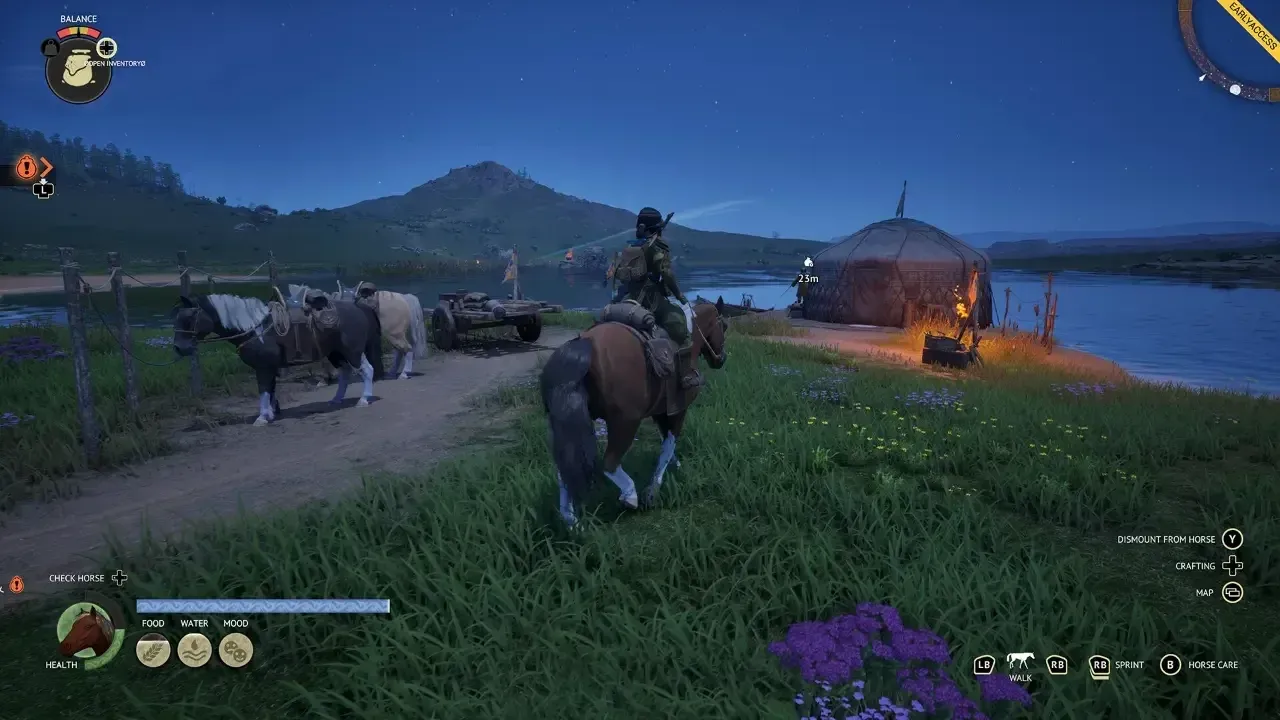
Horse trait profile card view
How to Keep Your Horse Alive: Full Care Breakdown
Your horse tracks six wellbeing bars at all times. Letting any of them fall too low will slow your mount, lock out sprinting entirely, or cause health damage.
Temperature Management
Temperature fluctuates based on the biome you are riding through. Snowy mountain passes will drain the temperature bar quickly and deal direct health damage. Craft cold tonics and keep them slotted in your quick inventory before heading into high-altitude routes. The same principle applies in reverse for desert crossings.
Food and Water
Food and hydration deplete naturally during travel. Stock berries and hay before long deliveries. For water, the easiest method is riding directly into a river or puddle. The horse will automatically lower its head to drink without any additional input required.
Mood Restoration
A horse in a low mood will cap your movement speed at a slow walk. In severe cases it will refuse to run at all. Restore mood through:
- Petting (has a cooldown between uses)
- Brushing the coat (also removes the dirt debuff, has a cooldown)
- Tending hooves (removes mud-related speed penalties, has a cooldown)
After crossing a swamp or muddy trail, clean the hooves immediately. The dirt debuff cuts speed significantly and stacks with any mood penalties already in effect.
Injuries and Ailments
Tonics and bandages for treating injuries are available at general shops inside settlements. Keep a small supply in your inventory on any route that involves rough terrain or predator territory.
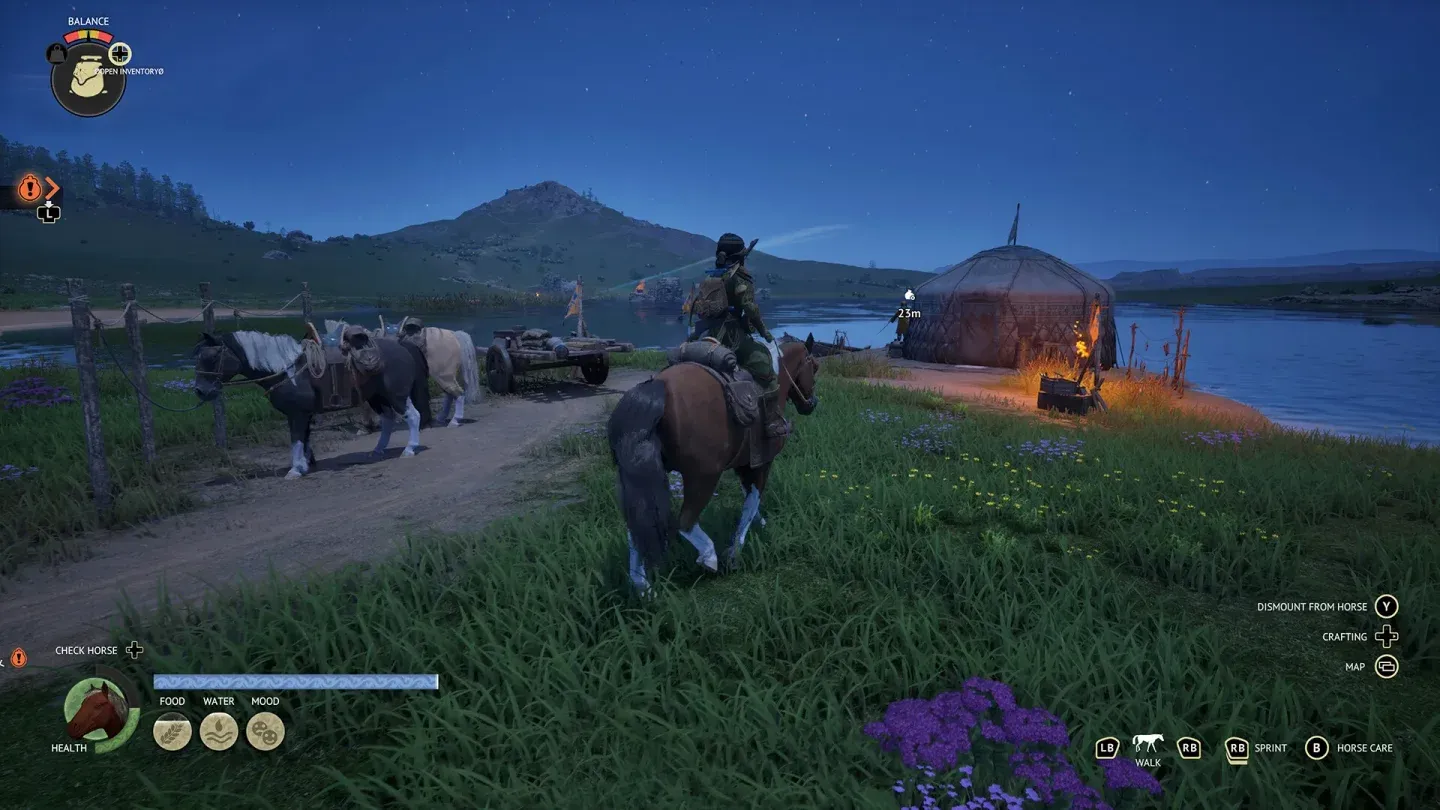
Horse care action tab UI
How to Balance Saddlebags Correctly
Every item you carry has weight, and the distribution between your left and right saddlebags matters mechanically. An uneven load applies an off-balance debuff that exhausts your horse faster and dramatically increases the chance of a leg injury.
Manually shift items between the two bags until the balance arrow on your screen sits inside the green zone. Each horse breed has a different total carry capacity, so check your current mount's limit before packing for a long route. The Strength stat directly influences how much total weight the horse can handle before performance degrades.
Why Do You Need a Specialized Stable?
One horse cannot handle every delivery route in The Legend of Khiimori. The biome variety is wide enough that bringing the wrong animal to a job will end your run early.
- Deep rivers with strong currents demand high Strength to push through without being swept or exhausted
- Snowy mountain passes require high Endurance to survive the temperature drain and extended duration
- Desert ravines and open plains favor high Agility for quick acceleration and jumping across gaps
Check the delivery route and the weather forecast before pulling a horse from the stable. A fragile, fast desert sprinter will burn through its Endurance bar in minutes on a mountain crossing. Build your stable with at least one specialist per major biome, and rotate mounts based on the job at hand.