

Alabaster Dawn is a top-down 2.5D action RPG from Radical Fish Games, the studio behind CrossCode. You play as Juno, the Outcast Chosen, navigating the ruined world of Tiran Sol. The surface pitch is fast action combat with puzzles and exploration. The real structure underneath involves 4 elements, 8 weapons, weapon-specific Growth Charts, gem slots, cooking with Palate Level scaling, and dungeon puzzle rooms that actively test whether you understand your loadout.
The game entered Steam Early Access on May 7, 2026, and the current build covers through roughly mid-Chapter 2. It already holds a 96% positive rating across 247 Steam reviews at the time of writing.
If you only pick up the sword and crossbow and mash through the first hour, the first real dungeon will punish you for it. This guide covers everything you need to build solid habits before that wall arrives.
Why the weapon system matters more than your level
The most common new-player mistake is treating weapon choice as cosmetic. Alabaster Dawn is built around a 4 elements × 2 weapons per element structure. Each weapon has its own Growth Chart (the upgrade path), its own Combat Arts, and its own gem slots. Weapon XP is also tracked separately, so spreading usage across every new weapon you find will slow down the tools you actually rely on.
The four weapons you meet earliest are:
- Claio Solas (sword): Fast melee, safe pressure, combo timing, good for learning break follow-ups.
- Bogha Solas (crossbow): Ranged pressure, hits flying enemies, activates switches and puzzle orbs.
- Ortrom Solas (hammer): Heavy impact, breaks shells and armored targets, commits you to animations.
- Fain Solas (chakram): Catches and redirects objects, handles ring puzzles, becomes important for dungeon mechanics.
The practical rule from community testing: do not rotate a new weapon seriously into your main loadout until your core melee and ranged weapons each have at least one useful Growth Chart unlock. New weapons are problem-solving tools, not replacements for a stable foundation.
How does combat actually work?
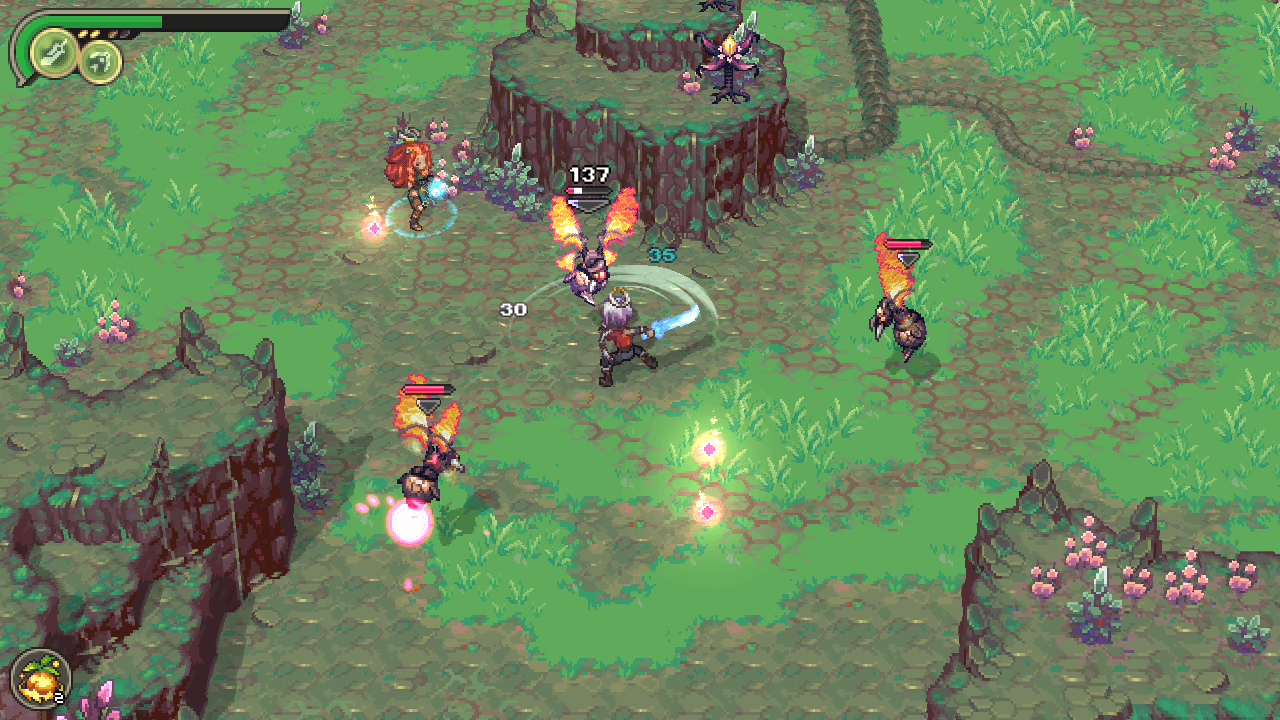
Alabaster Dawn takes clear inspiration from Devil May Cry and Kingdom Hearts in its combat design. The result is a system that rewards reading enemies rather than mashing.
Three layers define how fights go:
Break pressure: Most enemies have a break threshold. Breaker-focused weapons and Combat Arts stagger enemies faster, opening them up for bigger punishes. If a fight feels like you are chipping away forever, check whether the enemy needs a specific break tool rather than assuming you are underleveled.
Animation commitment: Heavy attacks and charged strings lock you into animations. Use them after an enemy whiffs, after a break state triggers, or after a projectile pattern ends. Starting a slow hammer swing while the enemy is still active is how most players take unnecessary damage.
Divine Shield timing: Incoming projectiles marked with warning arrows can sometimes be reflected rather than dodged. A timed guard with Divine Shield turns the enemy's attack into your punish window. It takes practice but pays off significantly in the Trial of Aether dungeon and against Inferna Vespa.
Enemy response quick reference
What is the Growth Chart and how should you build it?
The Growth Chart is each weapon's upgrade tree. Early nodes unlock Combat Arts, gem slots, stats like strength and armor, Breaker pressure improvements, and defensive options after parries or charged attacks.
A useful early framework: prioritize enough survival to make mistakes, enough break to create openings, and enough weapon identity to solve rooms efficiently. Chasing pure damage early leaves you fragile and unable to open armored enemies.
Gems, Artificers, and early build direction
Gems slot into weapons and the core equipment to activate enchantment effects. These range from simple stat increases to situational effects that change how you approach specific enemy types. Artificers are specific NPCs who craft and upgrade gems as your build develops.
The practical early approach: use simple stat gems while you are still learning a weapon's rhythm, then swap to situational gems once you understand what the enemies in a zone are actually doing to you.
Bring upgrade materials back from exploration to Artificers regularly. Treasure from hidden paths and optional content can include gems and materials directly, so exploration feeds your build outside of normal leveling.
How does the cooking and Palate Level system work?
Cooking is not just emergency healing. Meals give temporary combat boosts, and holding the boost input during a fight slows time slightly, making activation safer mid-combat. The deeper mechanic is Palate Level: the more different dishes you cook and use, the more effective your food becomes over time.
Players who cook only one basic meal repeatedly miss out on this scaling. Rotating through different recipes grows Palate Level, which makes every future meal more rewarding.
Ingredients picked up during exploration feed into the food XP loop, so collecting while you move through zones naturally supports cooking progress without requiring dedicated farming sessions.
How do you solve the Trial of Aether dungeon?
Trial of Aether is the first dungeon that genuinely tests whether you understand the weapon and element system. The core mechanic: stand on Aether panels or use the Power of Aether ability to charge your ranged attacks, then fire at purple orbs, crystals, switches, and enemies that respond to lightning.
The most common failure mode is trying to solve rooms with normal ranged shots. If a purple orb, ring, or crystal does not respond, check these three things in order:
- Are you standing on the Aether panel or have you already gained Power of Aether?
- Are you firing an Aether-charged shot, not your default ranged attack?
- Does the room need a ring interaction or Chakram catch before the shot matters?
Key Trial of Aether room solutions
The B5 puzzle trips up a lot of players because the Chakram is not just a combat weapon here. It catches and redirects the ball, which is the actual puzzle solution. If the ball ends up in the wrong position, reset your thinking around the platform location rather than trying to force the shot.
How do you beat Inferna Vespa?
Inferna Vespa is the first boss that stops rewarding sloppy play. The fight takes place in a nest arena where the boss uses dive chains, multi-shot projectile patterns, and close-range hover attacks. Most deaths happen because players swing during movement phases instead of waiting for the final landing.
Pre-fight checklist:
- Fill your Healing Bulbs before entering. Arena plants can be denied by the boss during the fight.
- Activate a food boost if you have one ready.
- Use ranged attacks during airborne phases instead of chasing.
- Build break pressure consistently rather than forcing long melee strings.
- Save heavy attacks for confirmed recovery windows or break states.
Exploration, settlements, and what to do with unreachable chests
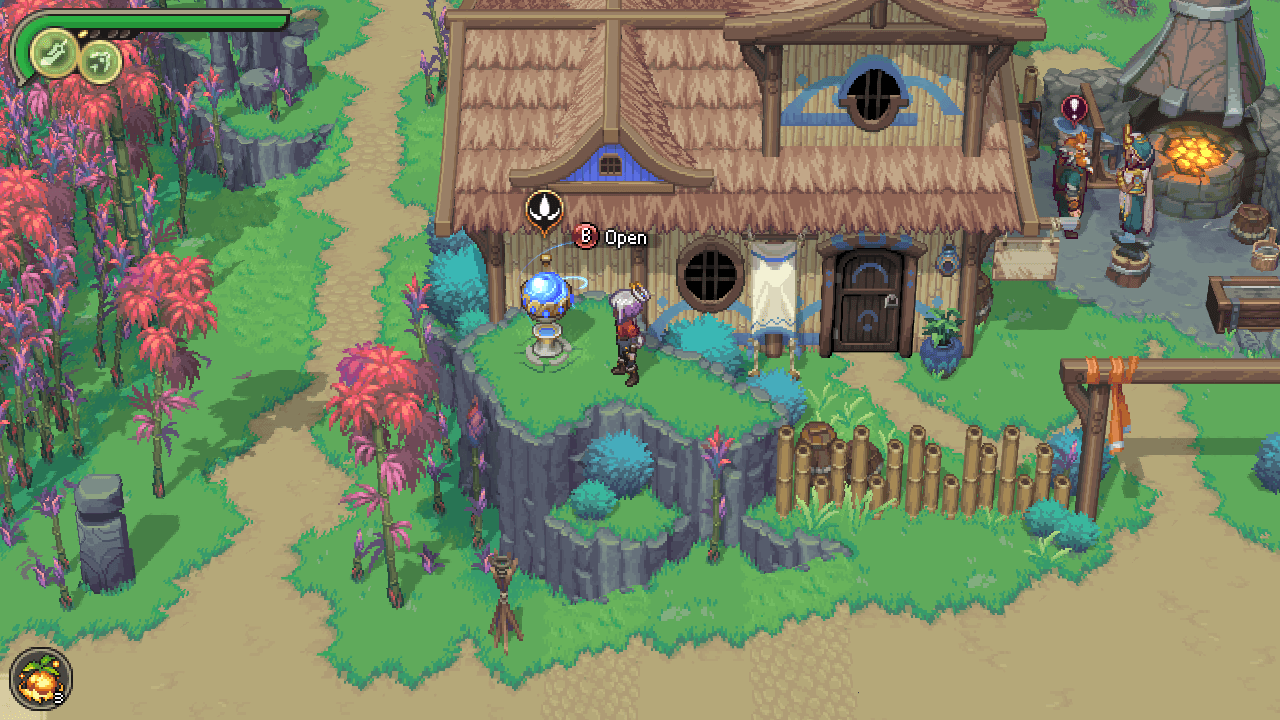
Tiran Sol is built around visible rewards you cannot always reach immediately. That is intentional. Many locked chests and blocked routes require a later weapon, a specific Divine Art, a side quest result, or a rebuilt path. Marking suspicious spots with the map reminder tool and returning later is the correct strategy, not treating every unreachable reward as a failure.
The settlement rebuilding system gives long-term progression outside combat. Completing side quests and supporting communities visually changes towns, opens trade routes, and can unlock new paths. After a settlement upgrades, checking the connected routes for newly accessible content is worth doing.
The Dreamer roguelite mode unlocks through story progress and lets you run seed-based layered dives using Somu, a mysterious entity Juno meets early in the adventure. Main game levels, gems, and weapon upgrades carry into the Dream. Healing Bulbs reset inside. Dream Shards earned during runs convert into Sleep Tokens afterward, which unlock permanent perks outside the Dream.
For deeper coverage of every system in the game, the Alabaster Dawn guides collection covers builds, dungeon puzzles, bosses, and exploration in dedicated pages.
What should new players focus on first?
Here is the practical priority order for your first session, based on how the game's systems build on each other:
- Follow the main objectives through the onboarding route before taking heavy detours. The early path teaches combat cadence efficiently.
- Build a reliable sword and crossbow foundation before rotating new weapons in seriously.
- Cook before difficult routes and bosses. Do not save every meal for emergencies.
- Use side content and optional quests to smooth out progression before story difficulty jumps.
- Mark unreachable chests and return with better tools rather than spending time trying to force solutions.
The full seven-chapter journey is planned for the complete release. The current Early Access build gives a substantial first arc, and the systems already in place reward players who engage with them properly rather than rushing past.
Alabaster Dawn sits comfortably among the more demanding action games releasing in 2026, and the depth of its weapon and element systems makes that difficulty feel earned rather than arbitrary. Start with the guide above, get your Growth Chart priorities sorted before the first dungeon, and the rest of the game opens up considerably.
For more strategies across every major system, check the full Alabaster Dawn page on GAMES.GG.