Overview
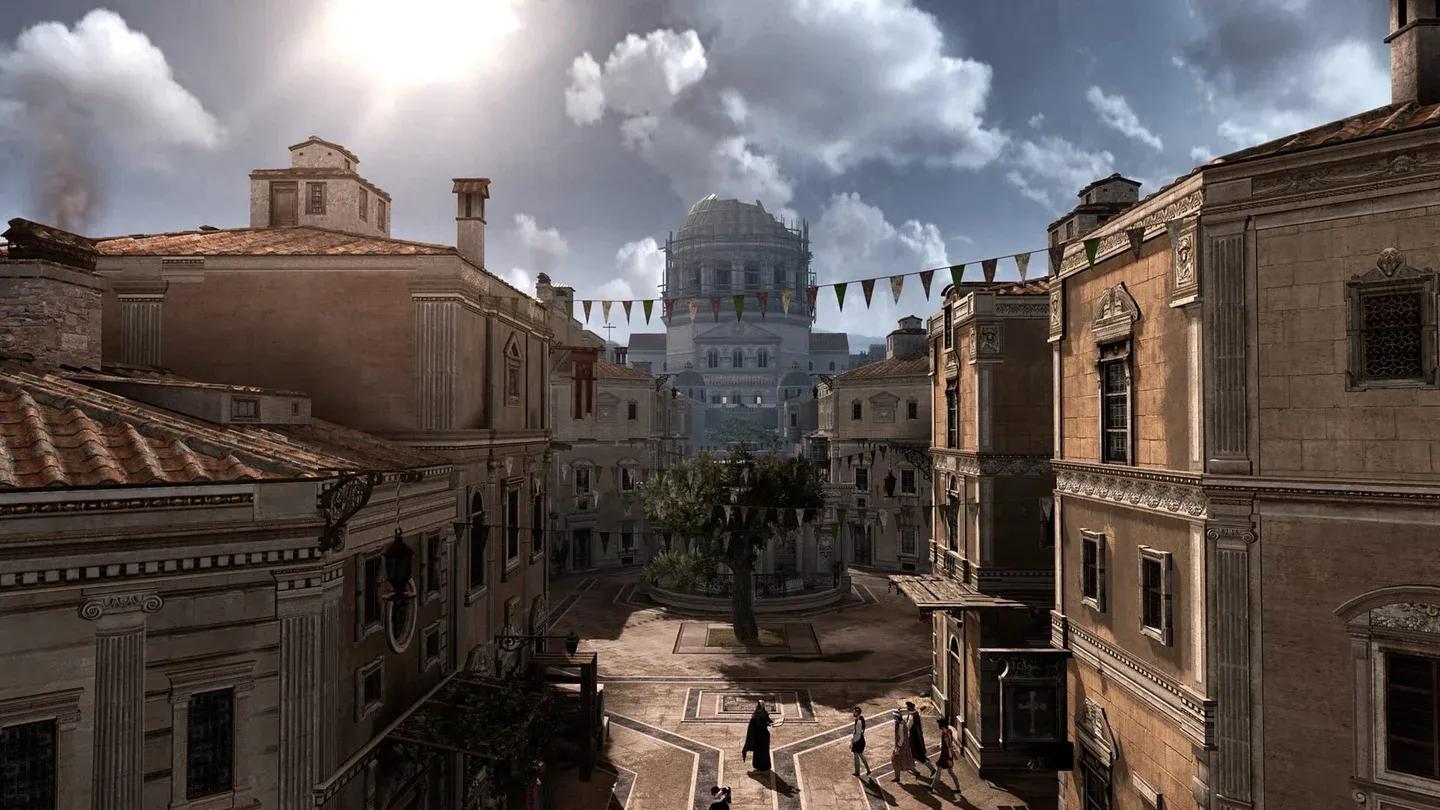
Released in November 2010 by Ubisoft Montreal, Assassin's Creed Brotherhood is a direct sequel to Assassin's Creed II and the third mainline entry in the franchise. Ezio Auditore, now a Master Assassin, arrives in Rome after Cesare Borgia's forces storm Monteriggioni, kill his uncle Mario, and seize the Apple of Eden. What follows is a 15-plus hour single-player campaign built around dismantling the Borgia's stranglehold on the city, one captain and tower at a time.
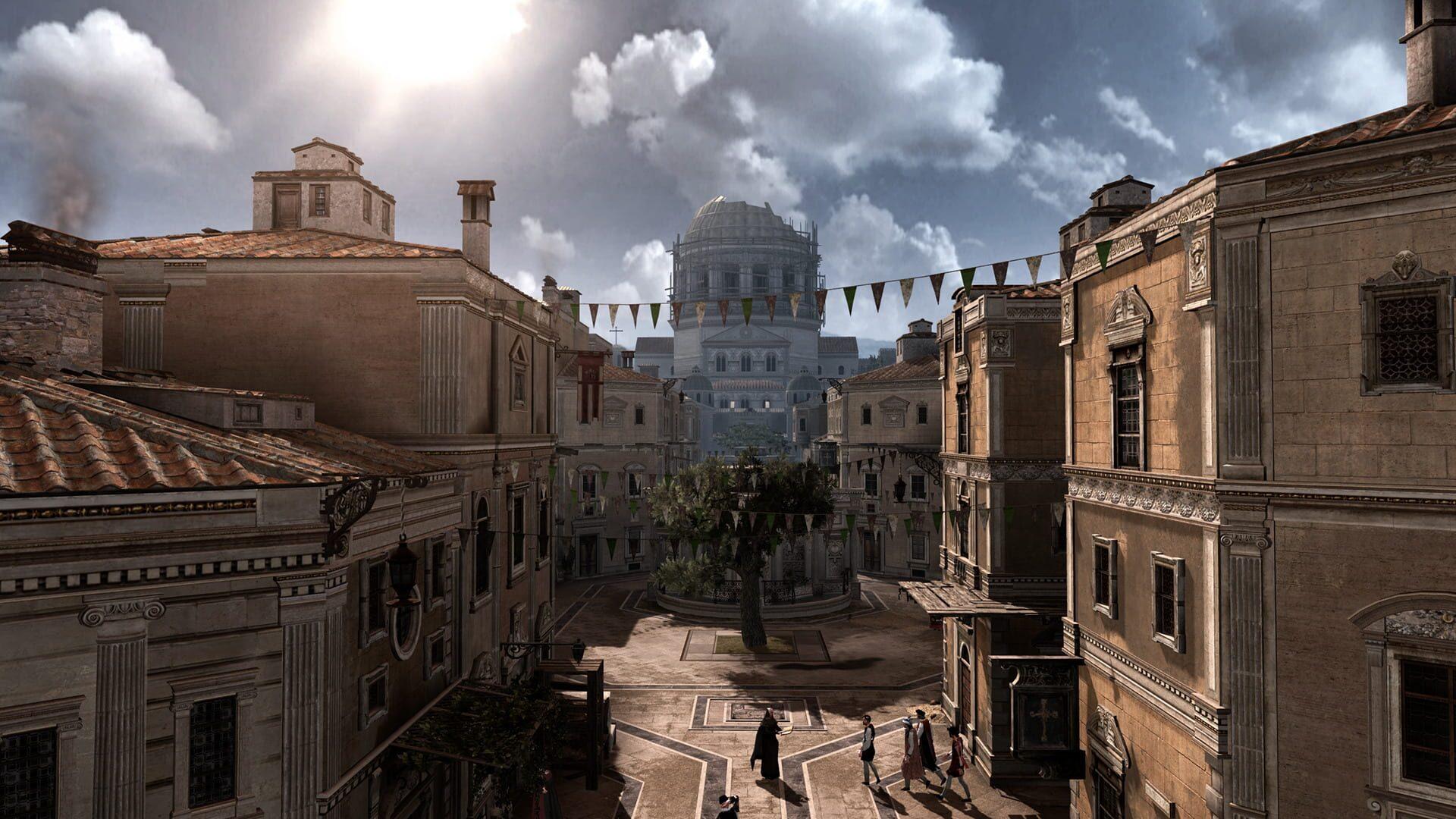
The game's Rome is the largest open world the series had delivered at that point, and it functions as more than a backdrop. Burning Borgia towers unlocks districts, and spending in-game currency on shops, aqueducts, and landmarks physically restores the city while generating passive income. Every coin spent on rebuilding Rome feeds directly back into Ezio's arsenal and operational reach.
Gameplay and mechanics
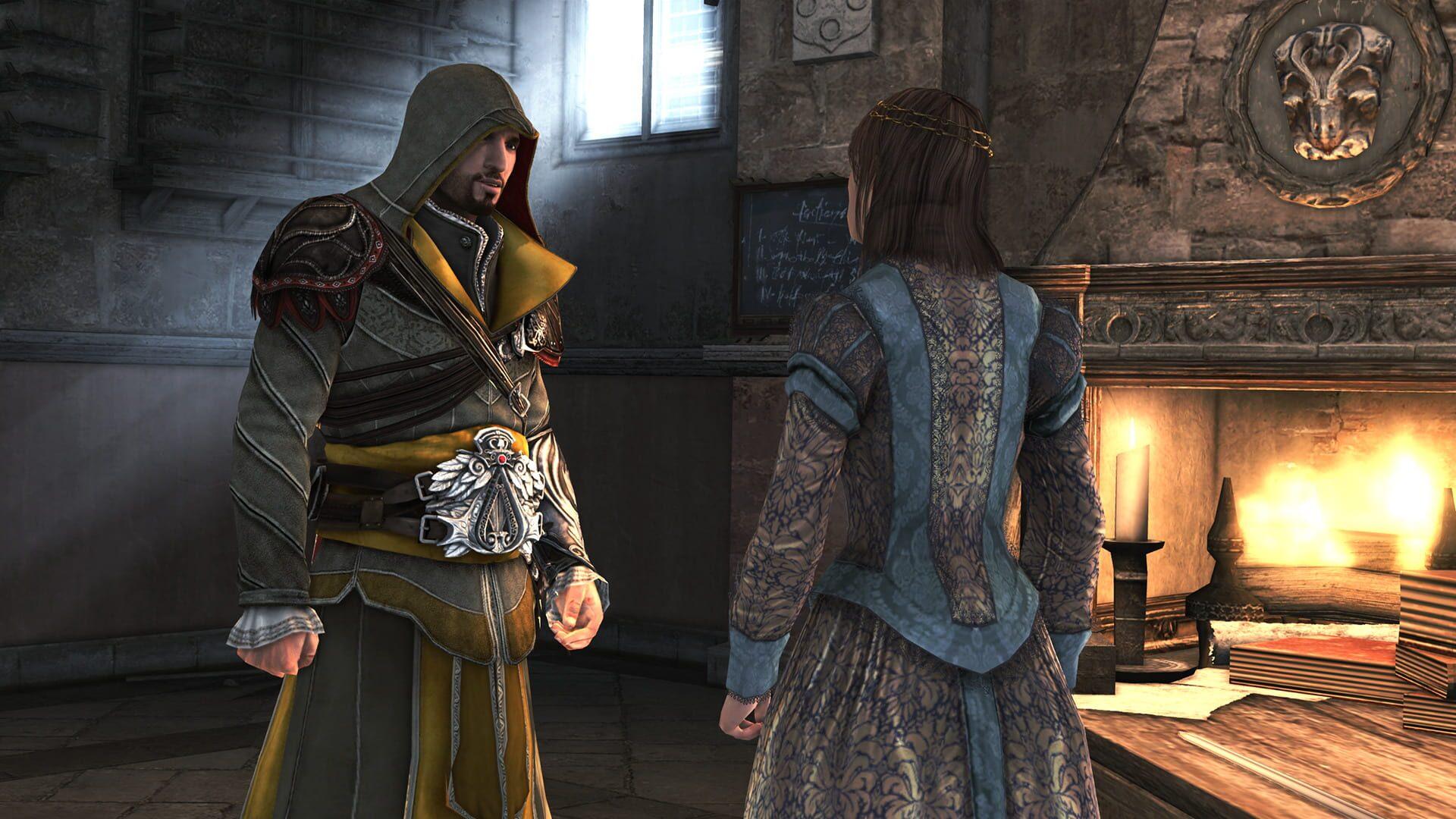
Brotherhood refines the combat and traversal systems from Assassin's Creed II while layering in new tools and a fully developed Brotherhood command system. The core mechanics players will spend the most time with include:
- Recruiting citizens and leveling them up to full Assassin rank
- Calling in Brotherhood members for air assassinations or group strikes
- Using poison darts, double hidden blades, and a hidden gun
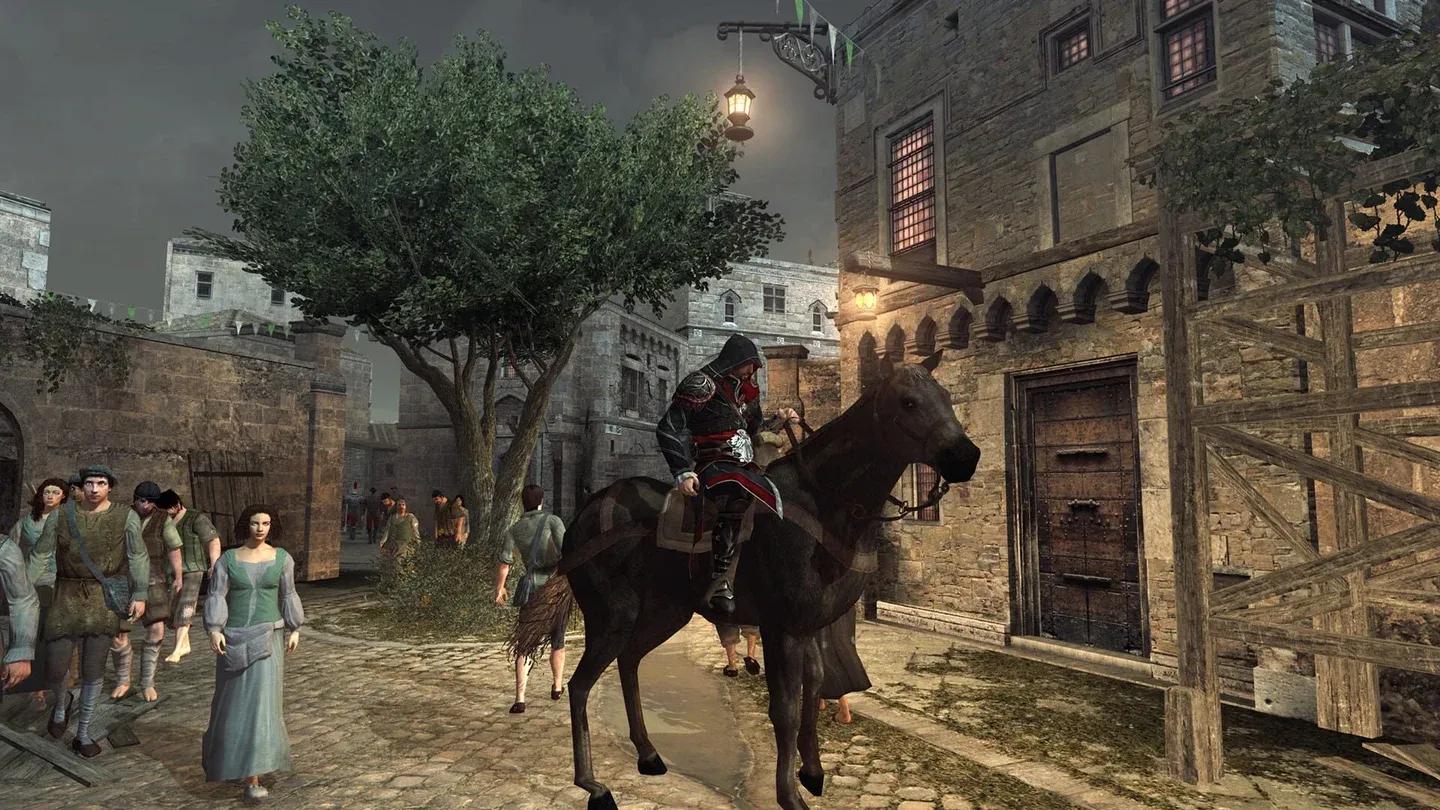
- Riding on horseback through Rome's streets and ruins
- Deploying Leonardo da Vinci's flying machine in specific missions
The Brotherhood recruitment loop is where the game earns its name. Rescuing citizens from Borgia soldiers adds them to the roster, and sending them on contract missions across Europe earns experience even when they're off-screen. Managing that roster, keeping Assassins alive, and knowing when to spend a call-in versus handling a target personally gives the open-world structure a layer of strategy that wasn't present in earlier entries.
World and setting
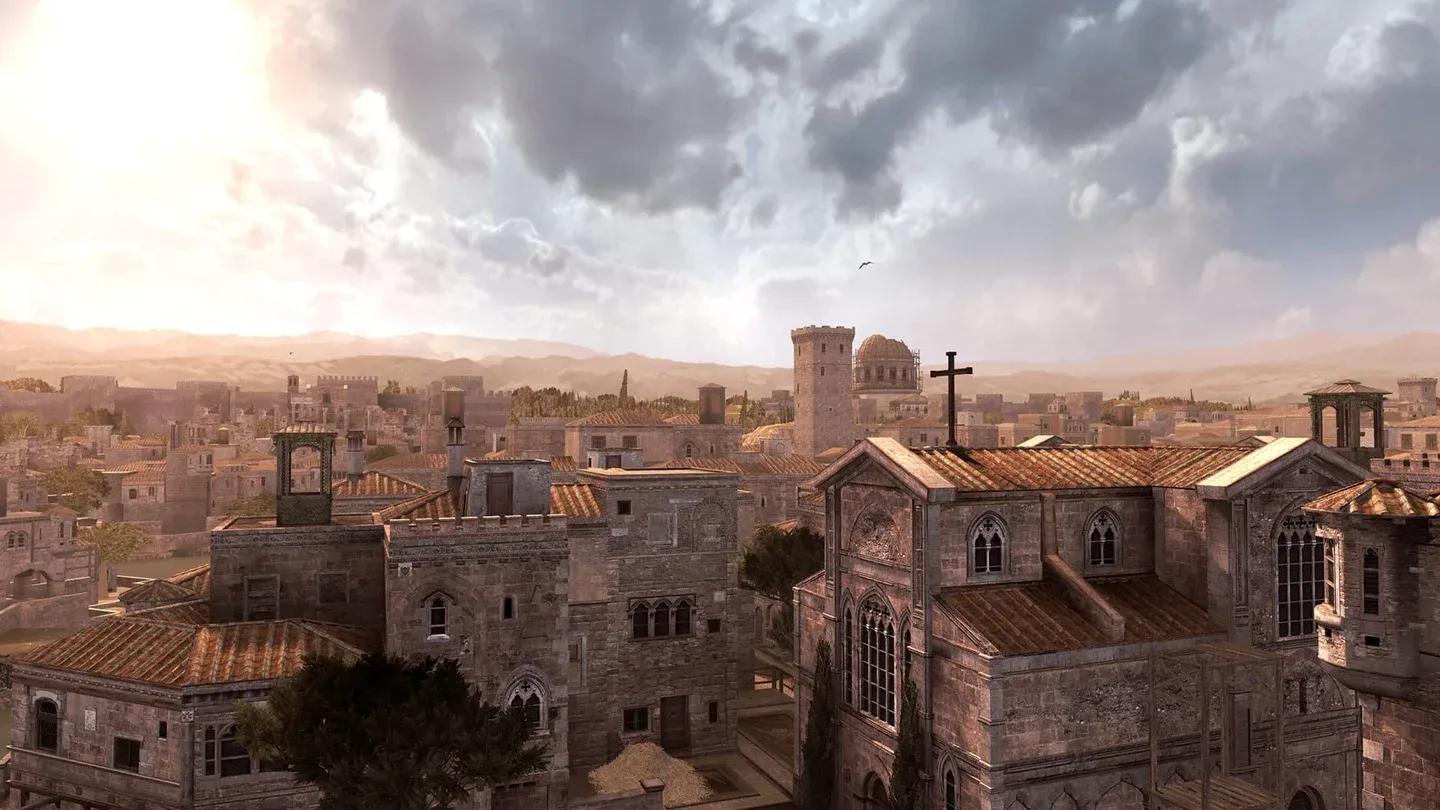
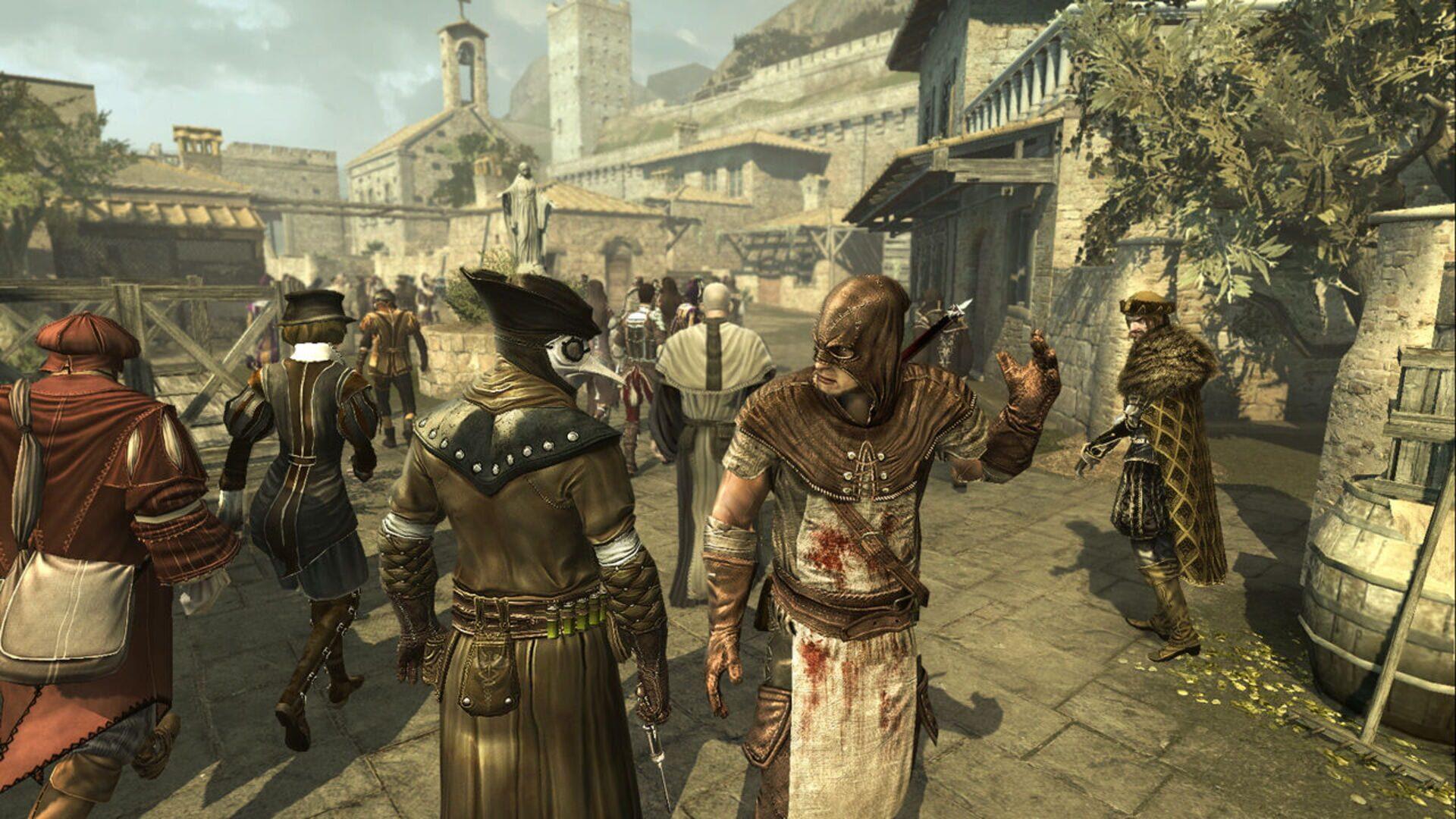
Renaissance Rome in 1499 to 1507 is the game's single playable city, and the decision to focus on one location rather than multiple cities pays off. The Colosseum, the Pantheon, the Castel Sant'Angelo, and the Vatican all appear in recognizable form, and the Borgia towers scattered across districts give the map a clear progression structure. Burning each tower after killing its captain visually changes the surrounding area, which makes the conquest feel tangible rather than abstract.
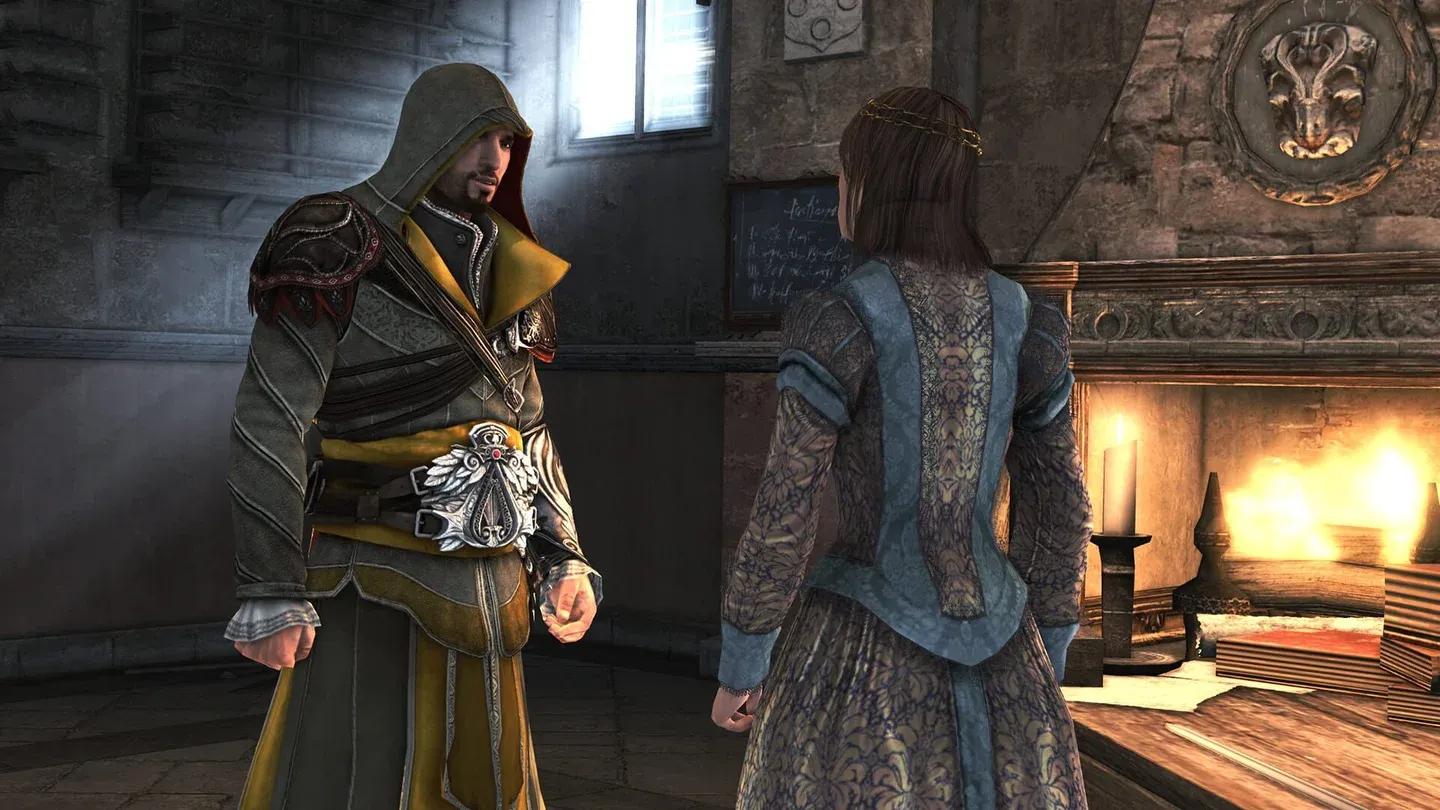
The story runs parallel between Ezio's timeline and Desmond Miles in the modern day, with Desmond reliving Ezio's memories through the Animus while searching for an artifact that could prevent a global catastrophe. The Borgia storyline, centered on Cesare's arrogance and his father Rodrigo's political maneuvering, gives the campaign a clear and satisfying villain arc.
What does the multiplayer mode add?
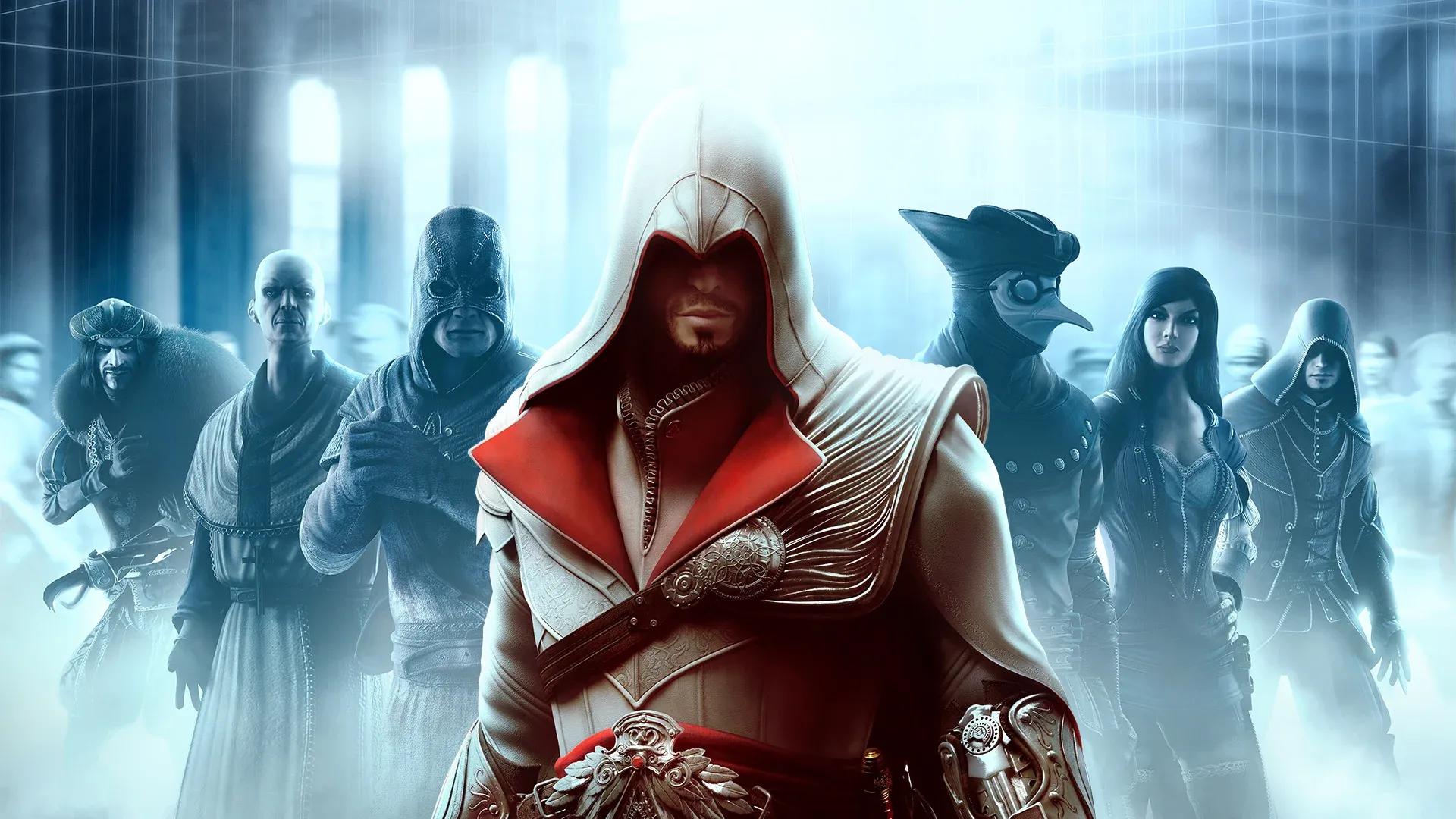
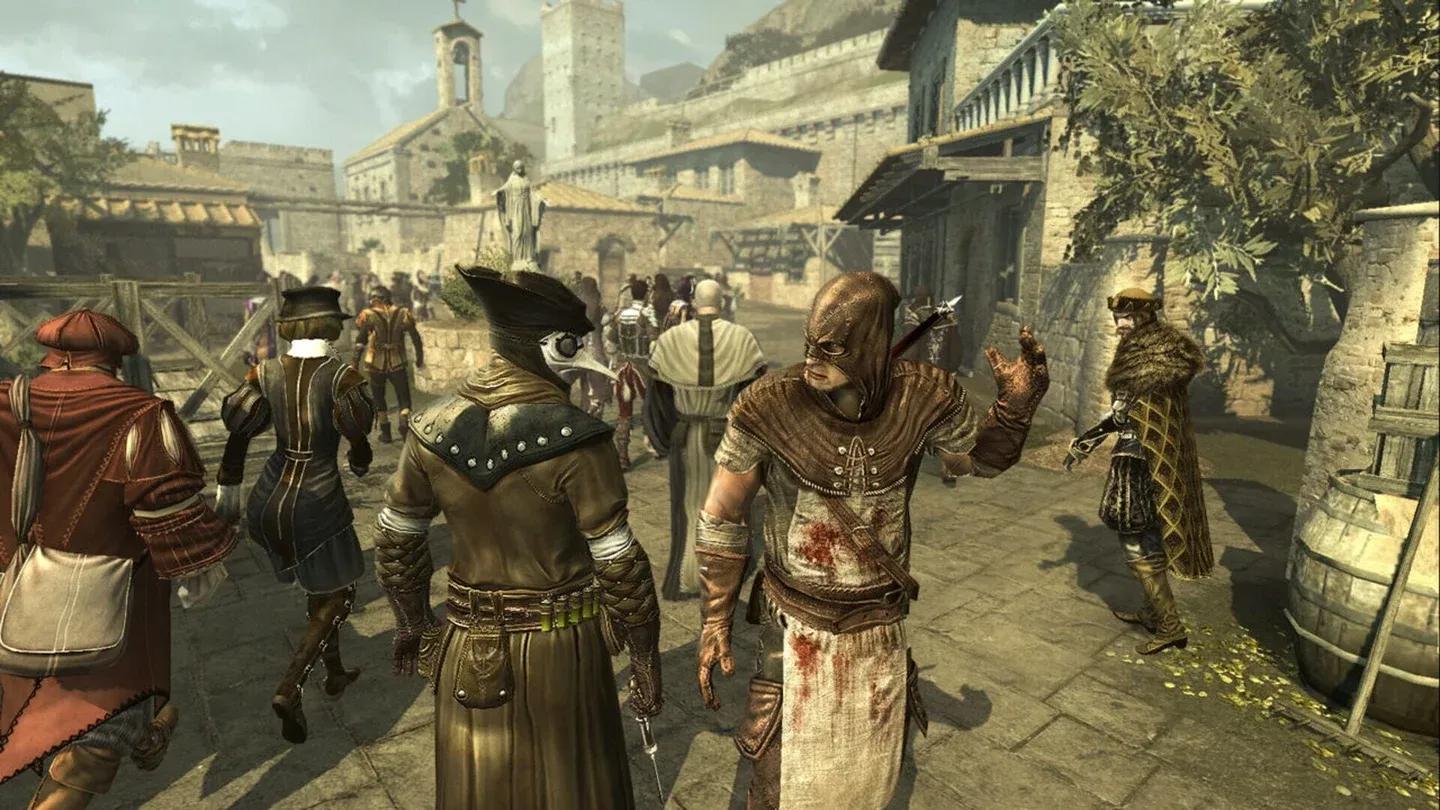
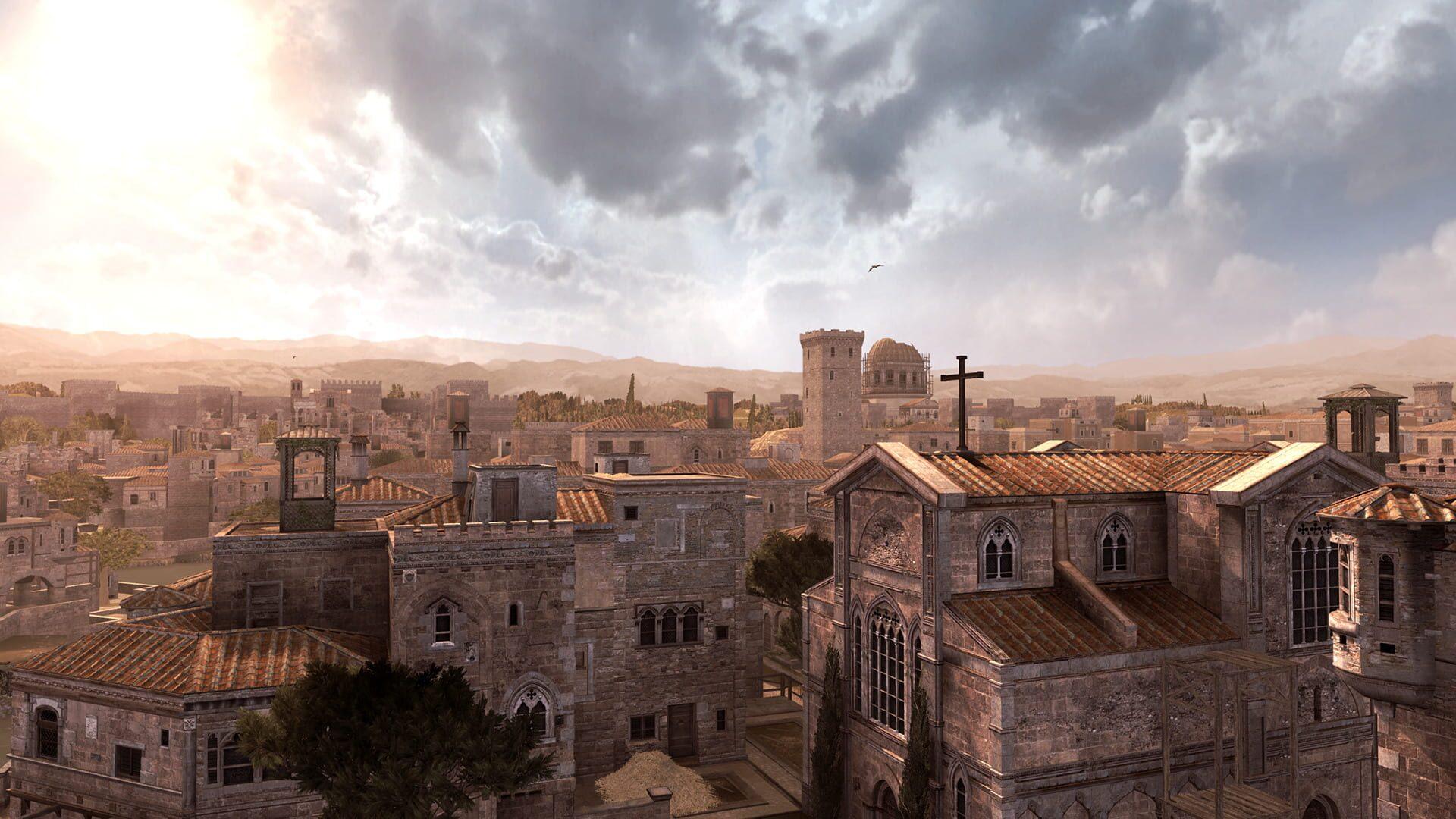
Assassin's Creed Brotherhood introduced the series' first multiplayer component, and it remains one of the more original takes on competitive online play from that era. Players choose from a roster of distinct characters, each with their own weapons and kill animations, then hunt assigned targets through crowds while simultaneously avoiding a player who is hunting them.
The tension comes from blending into NPC crowds and identifying which moving figure in a busy square is actually a human player. Maps like Mont Saint-Michel and Pienza reward patience and movement reads over raw reflexes. Multiple DLC expansions added characters, maps, and modes, including the Advanced Alliance and Chest Capture formats.
Content and replayability
Beyond the main campaign, Brotherhood includes a substantial amount of additional content. The Da Vinci Disappearance DLC adds a self-contained single-player storyline where Leonardo da Vinci is kidnapped after the Borgia fall, sending Ezio into new locations with a fresh set of objectives. Jesper Kyd's 22-track original soundtrack carries across every mission type, and the Digital Deluxe Edition bundles exclusive maps, two additional multiplayer characters, and the Helmschmied Drachen Armor skin alongside the full Assassin's Creed Lineage film. The game is available on PlayStation, Xbox, Windows, macOS, and Steam, making it accessible across a wide range of hardware generations.