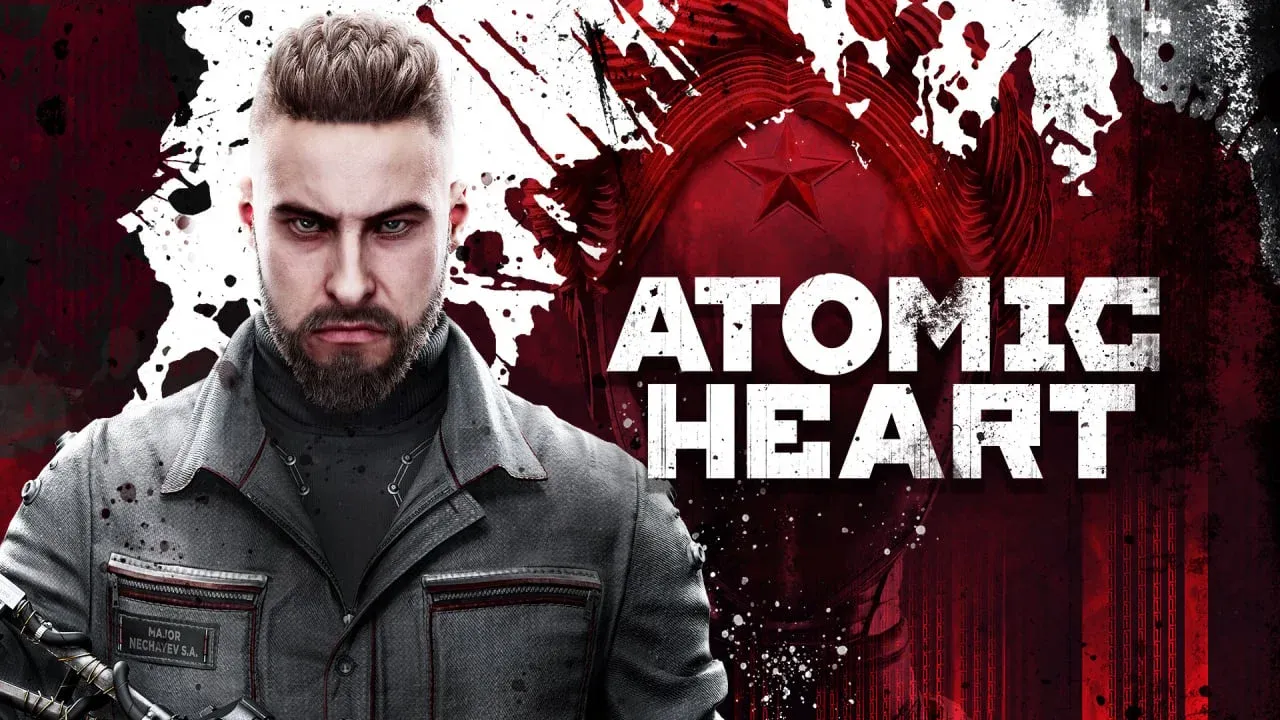


Atomic Heart doesn't pretend to be a slow-burn mystery. The balance of power is clear early: you know who's trustworthy, who's dangerous, and who's responsible for the meme-worthy refrigerator. What makes the story work is how it builds on those simple foundations, giving each major character a real arc before the finale arrives. Most of those arcs land. One of them doesn't.
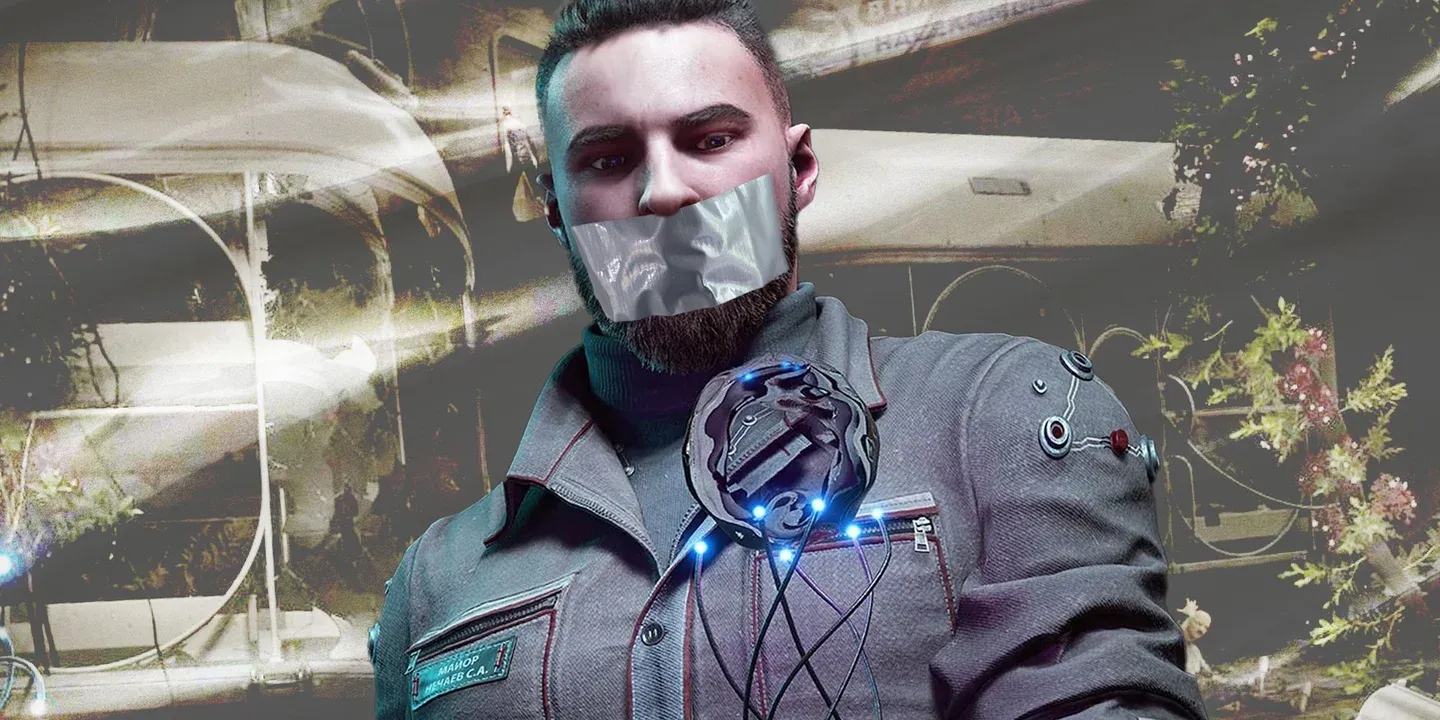
Major P-3 character overview
Who is Major P-3 and how does he change?
Major P-3, whose real name is Sergei Nechaev, is the first test subject for an experimental neuropolymer module called Voskhod. Before the events of the game, Nechaev served in the Argentum special forces unit alongside his wife. A severe injury nearly killed him, and his superior, Dmitry Sechenov, stepped in, saved his life, erased his memories, and implanted the polymer to stabilize his condition.
The game opens with P-3 as a loyal, unquestioning soldier. He wears a uniform that looks like a janitor's smock, asks no unnecessary questions, and repeats a near-devotional line about never letting Sechenov down. He is, to put it plainly, a tool.
What follows is a textbook hero's arc of enlightenment, and it's executed well. P-3 starts piecing things together through terminal records, conversations with the dead, and the words of Viktor Petrov. His tone shifts gradually, his questions get sharper, and by the time the truth about his past surfaces, the transformation from obedient operative to enemy of the man who made him feels completely earned.
What makes Sechenov such an effective villain?
Academician Dmitry Sechenov, head of Enterprise 3826, is introduced as a Soviet-era Tony Stark. He's calm, visionary, paternally warm toward P-3, and completely free of the cartoonish villain signals you'd expect. There is nothing clichéd about him in the opening hours.
The first crack appears when a government commission from Molotov arrives at the facility. Sechenov orders the cold-blooded disposal of a party official's body to cover up evidence of an accident. It's a small moment, but it reframes everything that came before it.
The full reveal comes at the climax: the Atomic Heart project. Sechenov's plan is global mind control through universal polymerization, starting with the United States. The ambition is staggering, and the slow burn from trusted mentor to world-domination villain is one of the game's genuine strengths. His rise is never rushed.
Who are the supporting characters worth paying attention to?
Enterprise 3826 is populated with characters who each carry their own weight, and none of them exist purely as set dressing.
Viktor Petrov is the engineer who switched the robots to combat mode, triggering the facility's collapse. He hides the scale of staff casualties from his girlfriend, suffers from real mental health struggles, and chooses to end his life on a theater stage with theatrical deliberateness. He feels no remorse for the deaths he caused, only grief over unrequited love. It's a genuinely unsettling portrait.
Larisa Filatova, Petrov's girlfriend and a neurosurgeon, represents the scientist who stays silent too long. She knew about volunteer deaths during polymer trials and said nothing until the very end, when she finally reveals the truth about Nechaev's past to him. Her arc is about complicity and the point at which conscience finally overrides ambition.
Michael Stockhausen, Sechenov's right-hand man, is easy to underestimate. He shuffles around hunched and deferential for most of the game. The moment power shifts into his hands, via control of the red polymer used to absorb Petrov's brain, his posture straightens and his smirk arrives. The chaos around him is intoxicating to someone like him.
Baba Zina (Zinaida Muravyova) is the character most players remember as a meme, but she's more than that. She's a former communications officer capable of intercepting government channels, and the secret she carries is a significant one: she is Nechaev's mother-in-law, the mother of his late wife Ekaterina, and she despises Sechenov. Her role in turning P-3 against his handler is earned, not convenient.
How does KHRAS evolve across the game?
KHRAS (Khariton Radenovich Zakharov) is your talking neural glove, and his character goes through three distinct phases.
Early on, KHRAS functions as the perfect partner: a radar, a source of lore, and a guide through the facility. The comparison to the visor in Horizon Zero Dawn isn't far off. He's useful, personable, and trustworthy.
The middle section reframes him entirely. KHRAS reveals that he is the original creator of Enterprise 3826 and the inventor of the polymer itself. He voluntarily gave up his physical body to become a polymer mass. He persuades Nechaev to destroy the robot control rings, which reveals a hidden agenda. At this point, the player has reason to feel clever for picking up on his importance.
Then comes the final act.
Why does the KHRAS twist fail to land?
In the game's primary ending, P-3 eliminates Sechenov. KHRAS then drops all pretense, kills Nechaev, and declares that polymer life forms are superior to humanity. The twist exists to shock the player. The problem is that it has no real foundation in the character as written.
Everything that defined KHRAS, his personality, his relationship with P-3, his apparent goals, gets discarded in seconds. His transformation into a misanthropic villain happens so abruptly that it reads as a narrative reset rather than a payoff. The source analysis at walkthroughs.games puts it plainly: this is a twist for the sake of a twist, and it breaks narrative logic rather than deepening it.
The comparison to Metro 2033 is apt. In that game, the Blacks are framed as pure evil throughout, only to be revealed as potential saviors at the end, with the "bad" ending becoming the canonical one. Atomic Heart pulls a similar move: the ending that feels narratively satisfying (Sechenov defeated, P-3 and Baba Zina drinking tea, Filatova's fate open) gets undermined by a forced revelation that exists to set up a sequel rather than resolve the story it told.
A cleaner version of the ending would have let the main conflict resolve on its own terms. Sechenov down, P-3 changed, Enterprise 3826 in need of rebuilding. That setup works as a foundation for a second game without requiring a sudden villain pivot from the character who's been your companion the entire time.
What the story gets right and where it stumbles
Atomic Heart's narrative succeeds because its core character work is honest. P-3's arc is a classic enlightenment story told without shortcuts. Sechenov is a villain built through accumulation, not announcement. The supporting cast, from Petrov's theatrical self-destruction to Baba Zina's hidden grief, adds texture that most action games don't bother with.
The stumble is specific: KHRAS. Not the character in general, but the decision to use him as a late-game shock device rather than a conclusion to the arc he'd been building. The writers earned the trust of the player through 17 hours of careful setup, and the finale spends that trust on a reveal that doesn't pay off what was promised.
For players who want to go deeper into the mechanics and systems that run alongside this story, browse more guides on GAMES.GG for breakdowns of combat, abilities, and the DLC content that extends the world of Enterprise 3826.