


Dead or Alive 6 Last Round brings the full DOA6 experience back to current platforms with cleaner visuals, Photo Mode, and a selection of previously DLC fighters baked in. The combat is still the strongest reason to play: fast 3D rounds built on reads, counters, and positioning. Whether you're stepping into the series for the first time or returning after years away, understanding how the Triangle System and Break Gauge work together is what separates a reactive player from one who actually controls a match. This guide breaks down every layer of that system so you can start winning rounds instead of just surviving them.
How does the Triangle System work in Dead or Alive 6 Last Round?
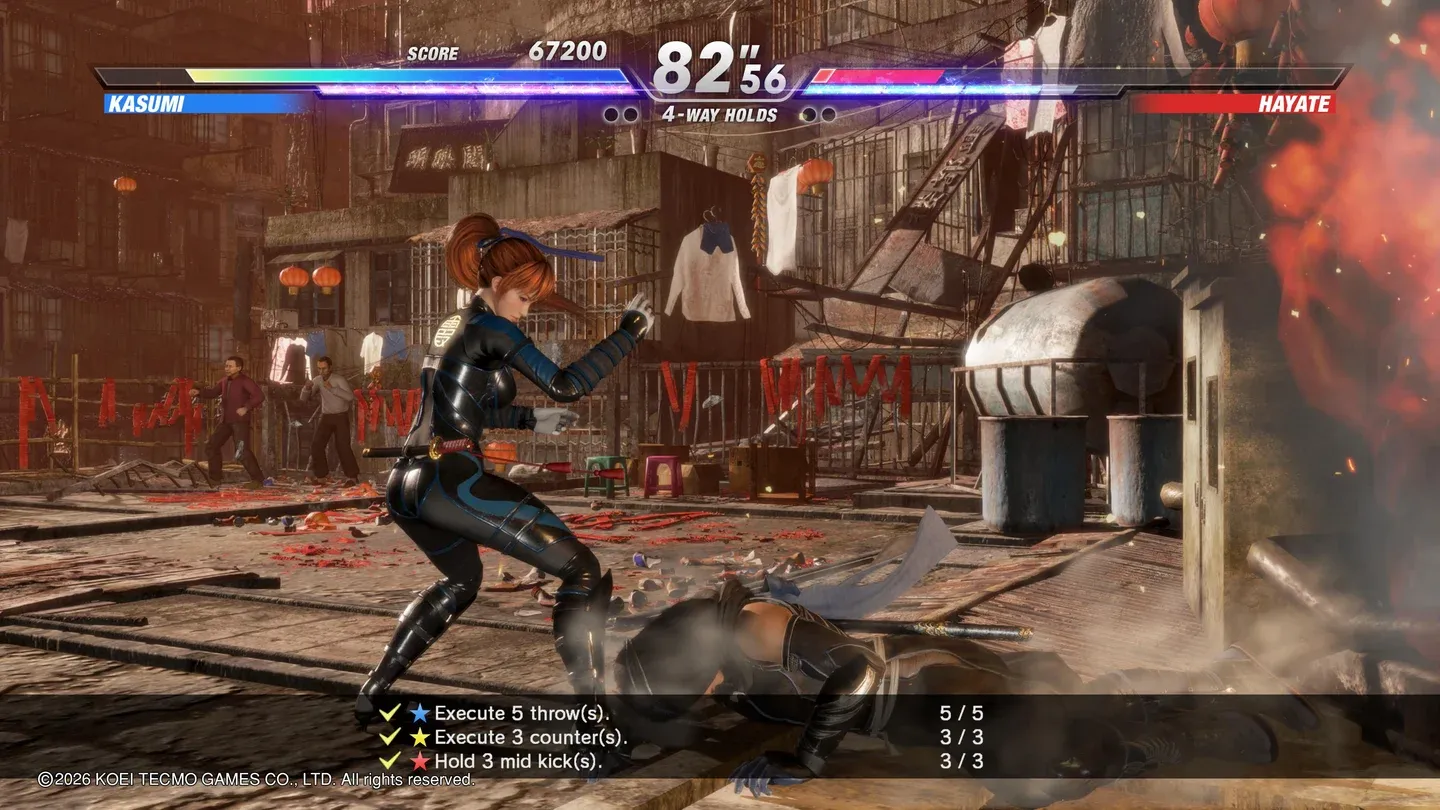
Triangle System in action
The entire combat philosophy in Dead or Alive 6 Last Round runs through the Triangle System: Strikes beat Throws, Throws beat Holds, and Holds beat Strikes. Every exchange you have in a round is a negotiation between these three options.
The practical effect is that you're always reading your opponent rather than just pressing buttons. If someone keeps throwing out strikes, the correct answer is a Hold. If they start anticipating your Holds and sitting on a Throw instead, you need to switch to Strikes. That constant back-and-forth is what makes matches feel like actual competition rather than a damage race.
Holds are the mechanic that trips up most new players. You can't just throw out a Hold and expect it to work against everything. Holds are tied to attack height: you need to read whether an incoming attack is high, mid, or low and input the correct Hold for that level. Getting that wrong means eating the hit anyway. Getting it right means stopping the attack and punishing your opponent.
Throws and the guessing game
Throws are your answer when an opponent starts sitting back and waiting to Hold everything you do. A Throw breaks through Hold attempts and forces the opponent to make a different read. This is where the Triangle System creates real depth: once your opponent knows you can Hold, they'll try to Throw. Once they know you'll Throw, they'll Strike. The loop never fully resolves, which keeps rounds interesting at any skill level.
What does the Break Gauge do and when should you use it?
The Break Gauge is Dead or Alive 6's biggest mechanical addition over older entries in the series. It fills as you fight and gives you access to two powerful options: Break Blow and Break Hold.
Break Blow is the offensive use. It's a hard-hitting attack that deals significant damage when the meter is ready. Use it to close out a round when you've built a lead, or to punish an opponent who's playing too defensively.
Break Hold is the defensive use, and it's the one that changes how pressure feels in this game. Unlike a standard Hold that only answers one attack height, Break Hold can stop attacks across multiple levels when meter is available. That broader coverage acts as a safety net when you're not sure exactly what's coming.
When to hold your meter vs. spend it
The decision to use Break Blow offensively or save Break Hold for defense is a real in-round choice that affects how your opponent plays against you. A full gauge changes opponent behavior: they'll be more cautious about leaving gaps. An empty gauge tells them they can pressure freely without fear of Break Blow punishes.
How do danger zones and stage hazards change a fight?

Stage hazards shift damage plans
Dead or Alive 6 Last Round's stages are active participants in every round. Knocking an opponent into an electric fence, an explosive object, or a stage transition point deals extra damage and resets positioning. This means spacing isn't just about staying at the right range for your character's moves. You're also working to push your opponent toward the part of the stage that benefits your damage plan.
Stage transitions send fighters to a new section of the arena, which can completely change the geometry of a round. Knowing which direction to push someone, and when to chase a knockback toward a hazard, is a layer of strategy that separates players who understand Dead or Alive from those who are just learning the move list.
Positioning near a danger zone also affects your Hold decisions. If your back is near a hazard, eating a Throw or a knockback attack is more costly than it would be in the middle of the arena. That extra pressure can force you into more aggressive Strike choices to escape the corner.
What's new in Last Round compared to the original Dead or Alive 6?
Last Round is a re-release rather than a sequel, so the additions are refinements rather than overhauls. The clearest upgrades are:
- Cleaner visuals: Improved lighting and shading give matches more visual punch without altering how the game plays
- Performance modes on PS5: Prioritize Graphics and Prioritize Action let you choose between image quality and a performance-focused frame rate
- Photo Mode: Set up fighters, poses, and arena compositions outside of matches
- Included DLC fighters: Several characters that were paid add-ons in the 2019 release are now part of the base package
The visual upgrade is most apparent on the OBORO Lost Paradise stage, where the lighting treatment is noticeably stronger than the rest of the game. The whole game hasn't been rebuilt from the ground up, but the presentation is cleaner than the 2019 original.
Should returning owners buy Dead or Alive 6 Last Round?
This is the question the re-release doesn't answer cleanly. For players who never touched Dead or Alive 6, Last Round is a solid entry point: the combat is fast and tactical, the tutorial tools are genuinely useful, and the visual upgrade is a nice bonus on top of a complete package.
For players who already own Dead or Alive 6 and spent money on its DLC, the value calculation is harder. There's no discounted upgrade path for existing owners. Photo Mode and cleaner visuals are welcome, but they don't change how the game plays or fix the two biggest online limitations.
What are the online limitations in Last Round?
Two omissions stand out for anyone planning to play online regularly:
- No rollback netcode: Last Round still uses delay-based netcode. That doesn't kill online play, but rollback has become the standard expectation for fighting games in 2026. Matches over worse connections will feel it.
- No crossplay: The online player base is split by platform, and Last Round players can't match up against people on the original Dead or Alive 6 release either.
For a re-release trying to rebuild an online community, splitting the audience by platform while also separating it from the existing player base makes finding matches harder than it needs to be.
Story Mode: worth playing or skip straight to versus?
Story Mode covers a conflict involving Honoka, MIST, and the ninja side of the cast including Kasumi, Ayane, and Hayate. The setup has potential. The structure undercuts it.
Chapters are short, fights are quick, and the mode constantly sends you back to the story menu between scenes. That stop-start rhythm kills any momentum the plot builds. The English voice acting doesn't always match the tone the scenes are going for, and the narrative keeps spreading its attention across too many fighters instead of staying focused on the central conflict.
Story Mode is worth a single run to see the cast in action. It's not the reason to keep playing. Command Training, Arcade, and Versus are where the actual game lives.
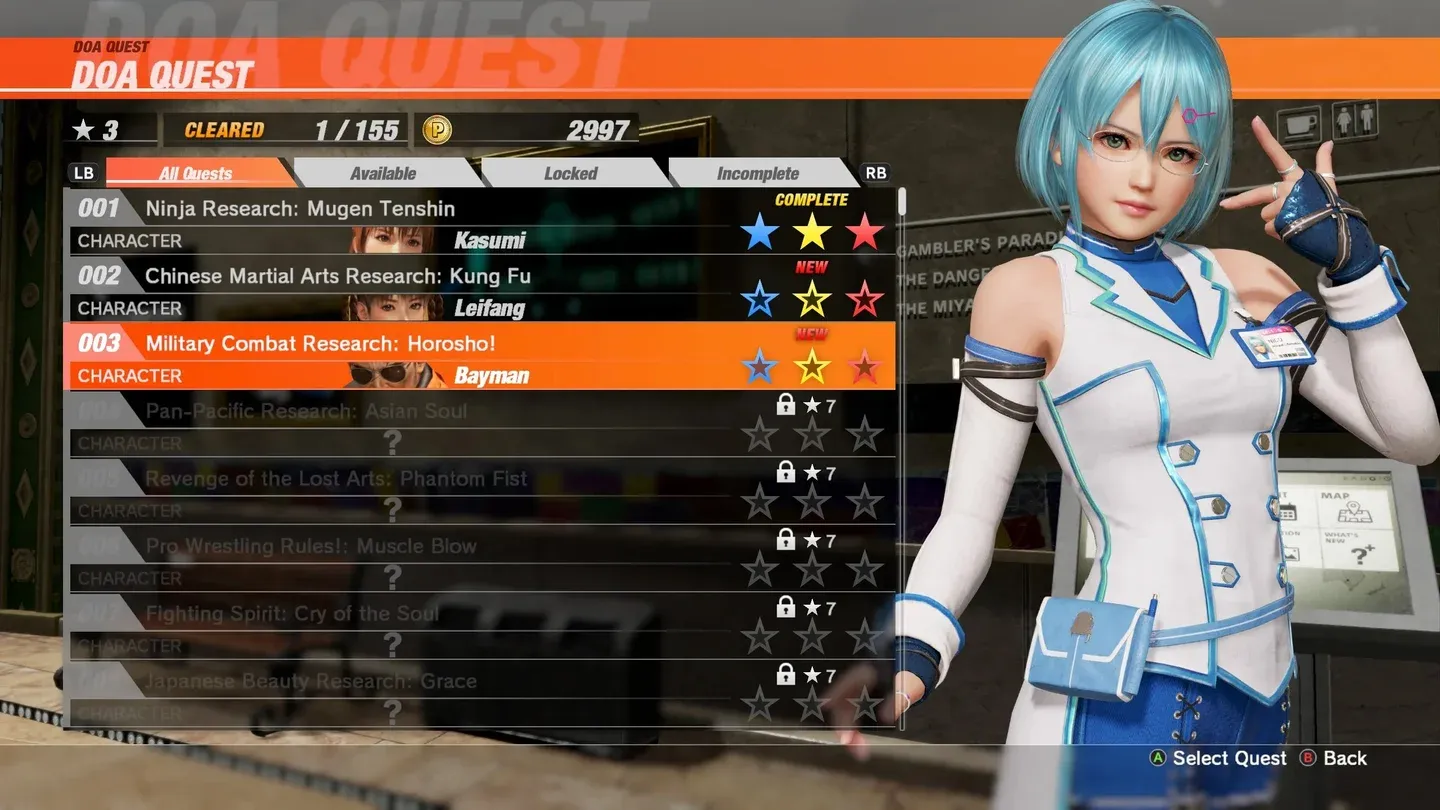
Command Training covers the essentials
Quick-start tips for new players
If Dead or Alive 6 Last Round is your first entry in the series, the learning curve is real but manageable. Here's where to focus first:
- Start in Command Training and learn attack heights before anything else. Hold timing depends on reading high, mid, and low attacks correctly.
- Practice the Triangle System in Versus against the CPU before going online. Understanding when to Strike, Throw, or Hold is more important than knowing a full combo.
- Learn your character's move list before worrying about Break Gauge optimization. Break Blow and Break Hold are powerful, but they only matter once you're reading the match.
- Pay attention to stage geometry from the start. Knowing where the hazards are in each arena changes how you approach spacing.
- Don't ignore the DOA Quest mode if you want structured challenges outside of Story Mode. It gives you specific goals to work toward while you're still learning the system.
For more on building strong fundamentals and tackling the game's boss-style encounters, the Dead or Alive 6 Last Round combat and upgrades guide covers the full picture. If you want to go deeper on specific matchup strategies and loadout priorities, the Dead as Disco best builds and tier list is worth a read alongside this one.
The full collection of Dead as Disco strategy guides has everything else you need to keep improving.