

Overview
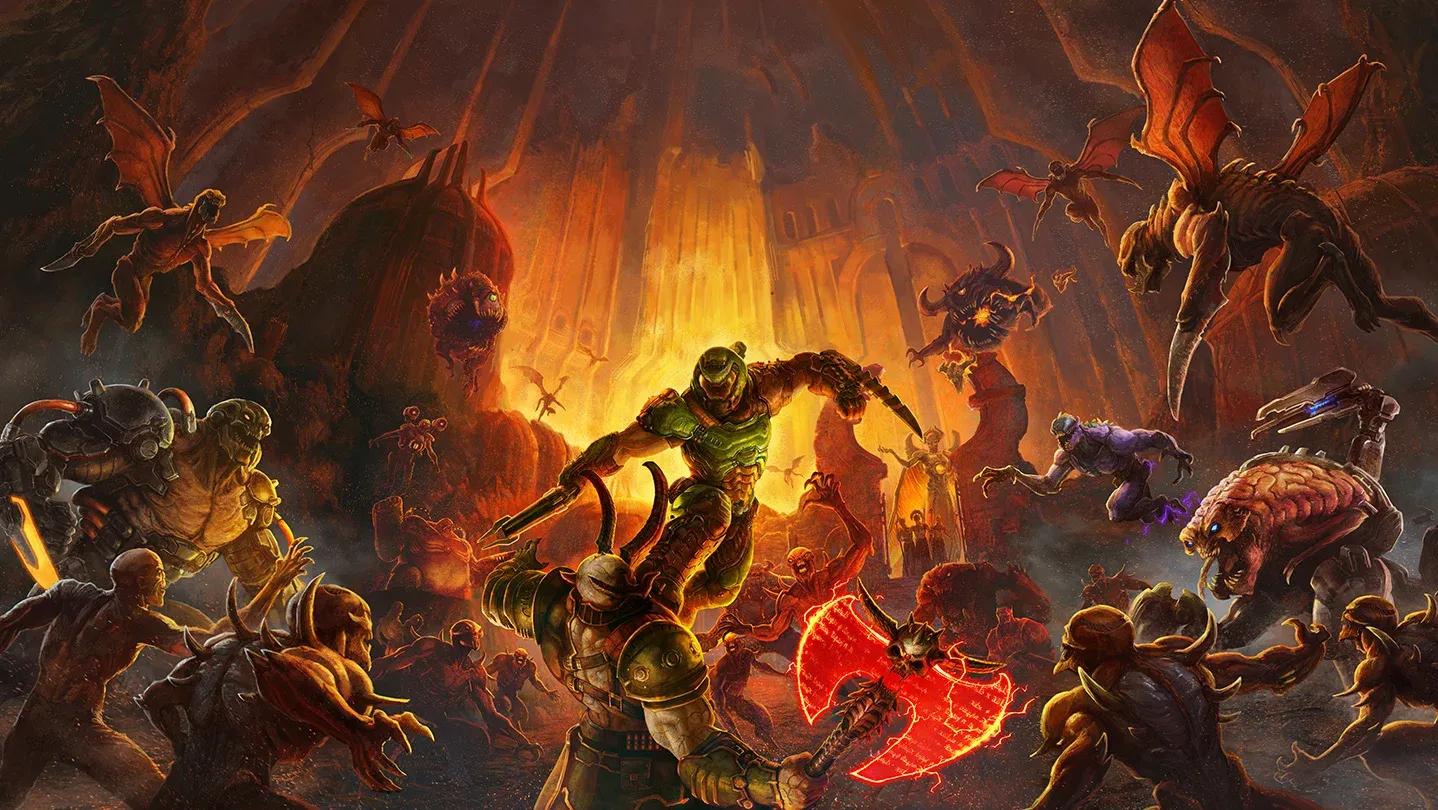
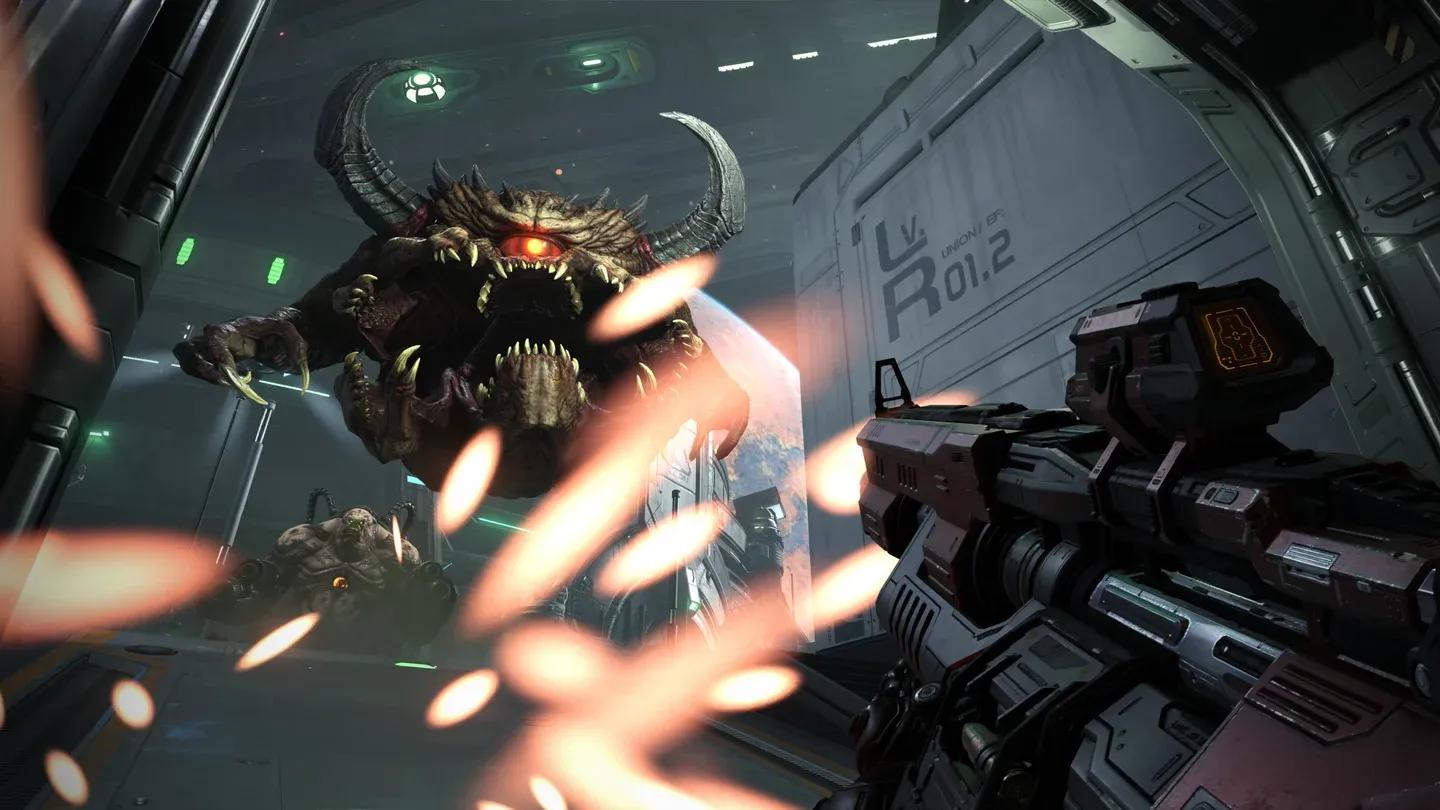
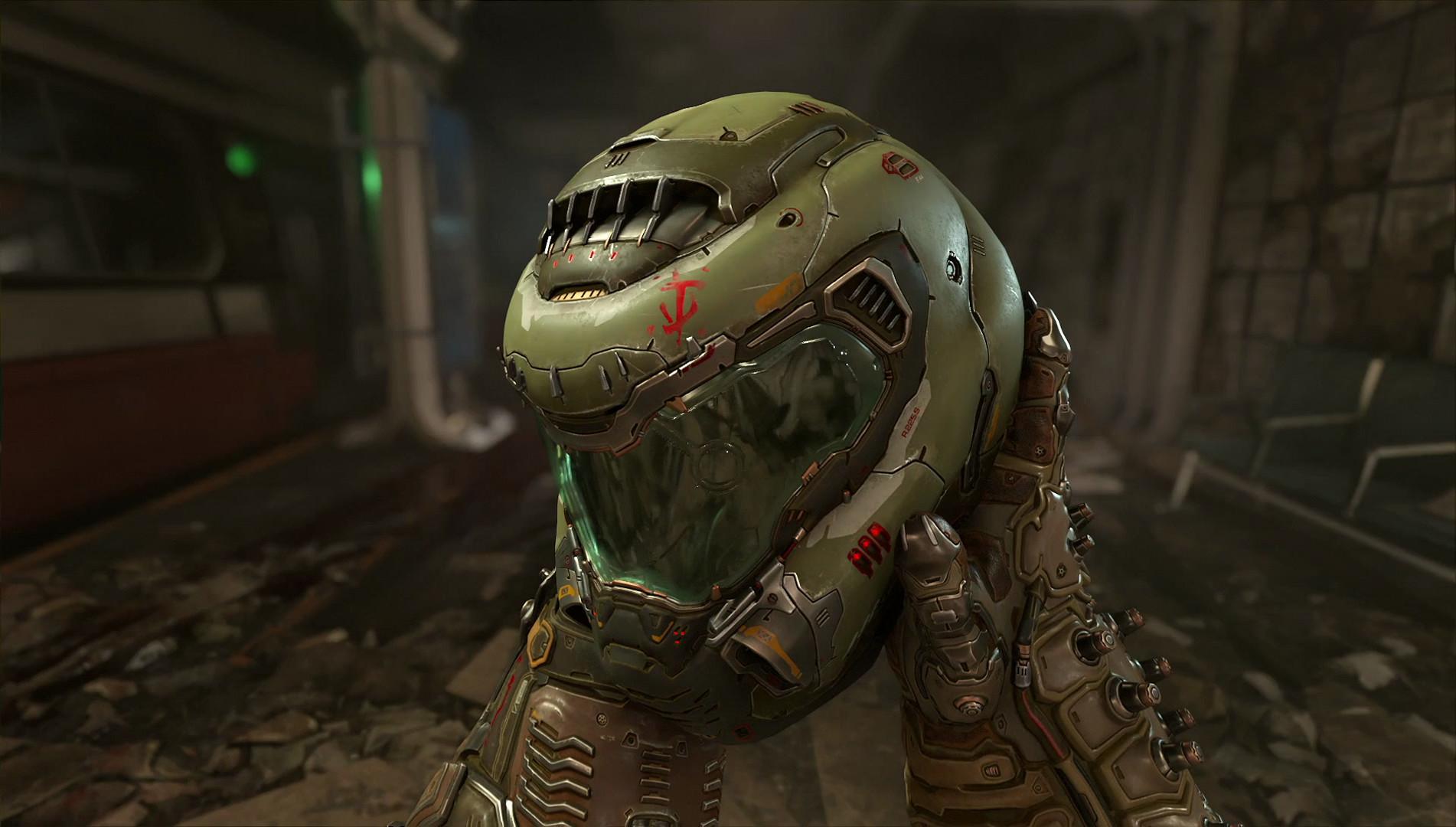
Released on March 19, 2020, DOOM Eternal picks up after the events of DOOM (2016) with Hell's armies having wiped out 60% of Earth's population. The Doom Slayer operates out of a satellite fortress called the Fortress of Doom, hunting down three Hell Priests who serve the Khan Maykr, an angelic ruler willing to sacrifice humanity to sustain her own civilization. The story goes deeper than most players expect, pulling Heaven, Hell, and an ancient soul-harvesting pact into a conflict that gives the Slayer's rampage actual weight.
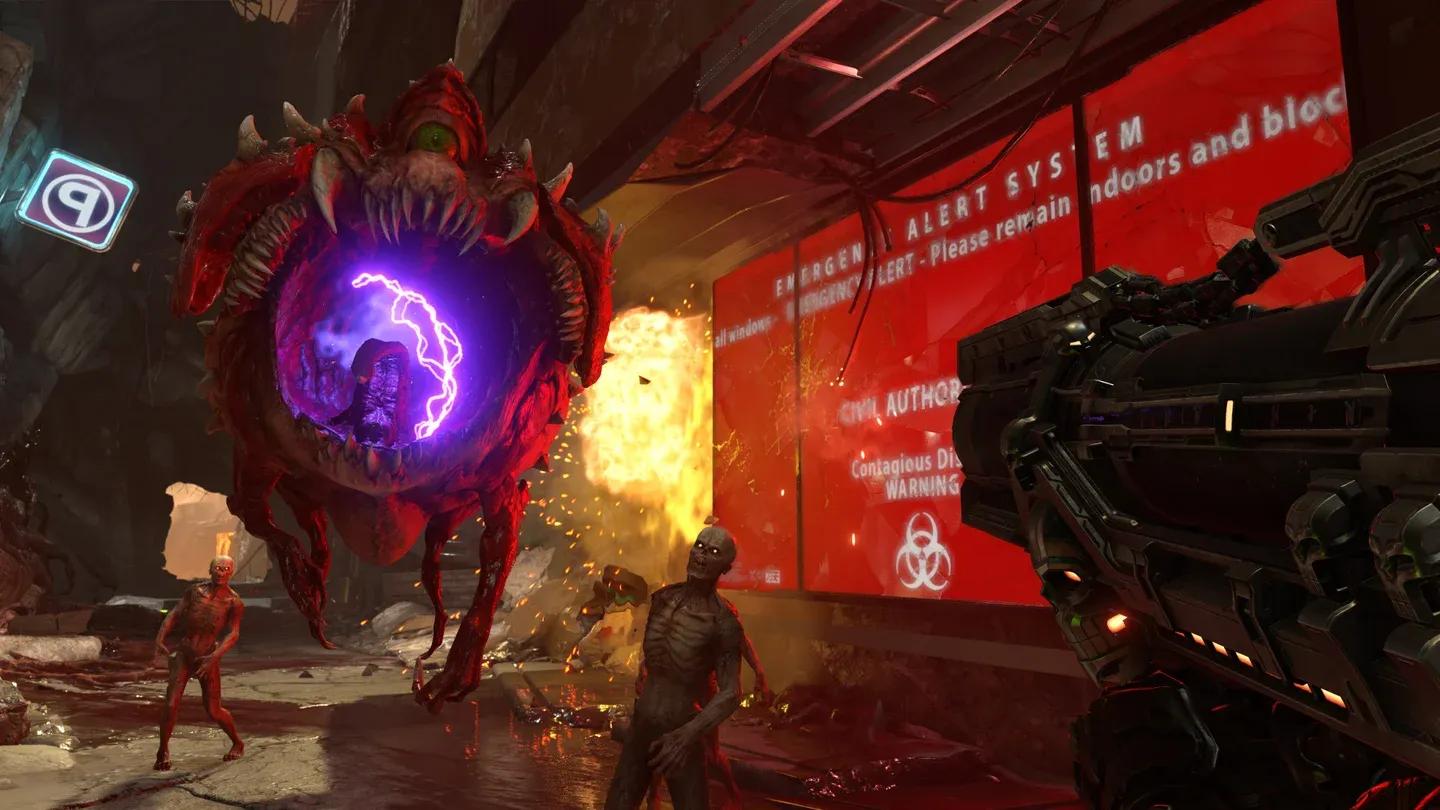
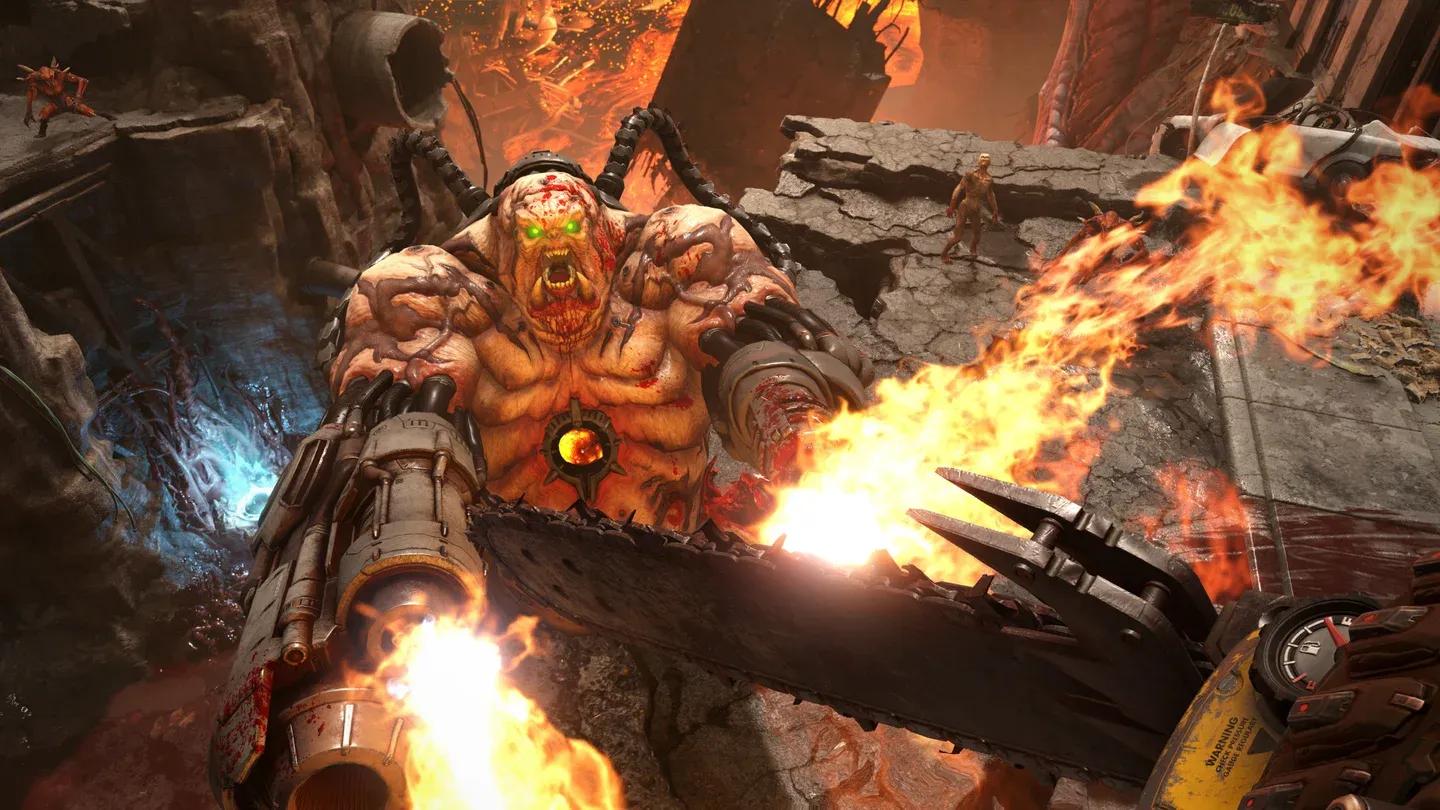
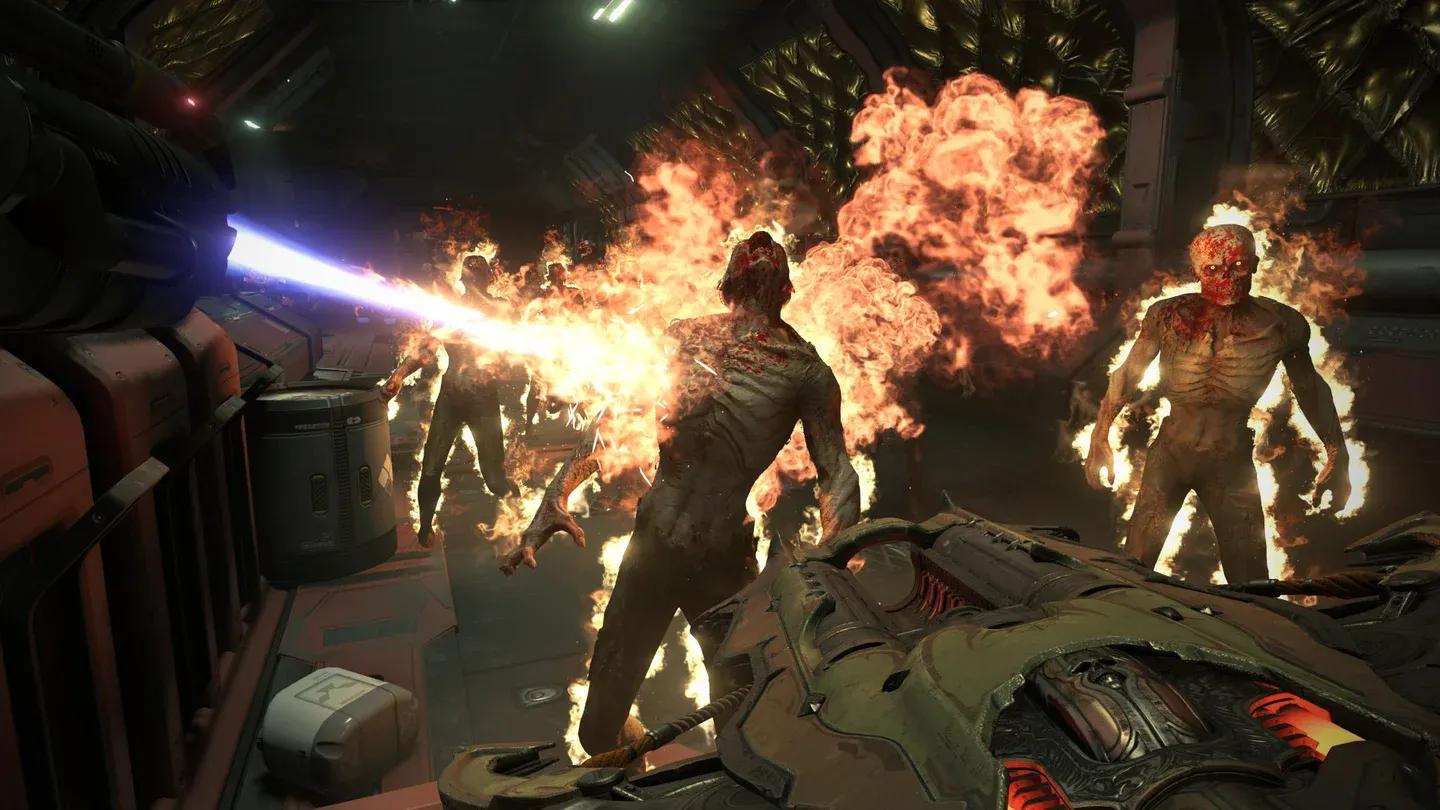
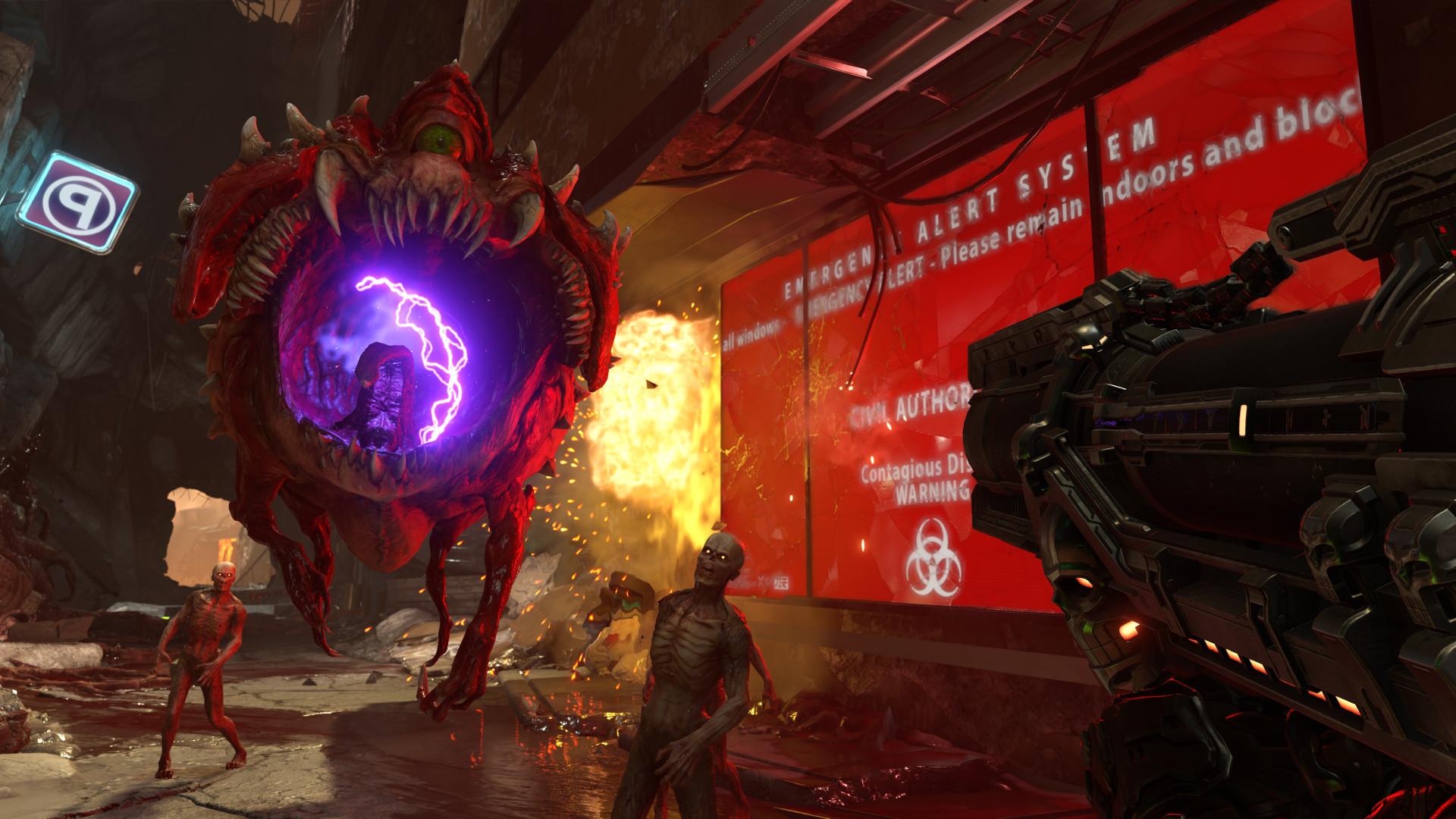
What separates DOOM Eternal from its predecessor is how tightly the combat system locks resource generation to aggression. Running away is not a strategy. Glory kills on staggered enemies drop health, igniting enemies with the shoulder-mounted flamethrower produces armor, and the chainsaw (which refuels on a timer) instantly fills your ammo reserves. Every encounter becomes a resource puzzle you solve at 60 frames per second.
Gameplay and mechanics: how does the combat system work?
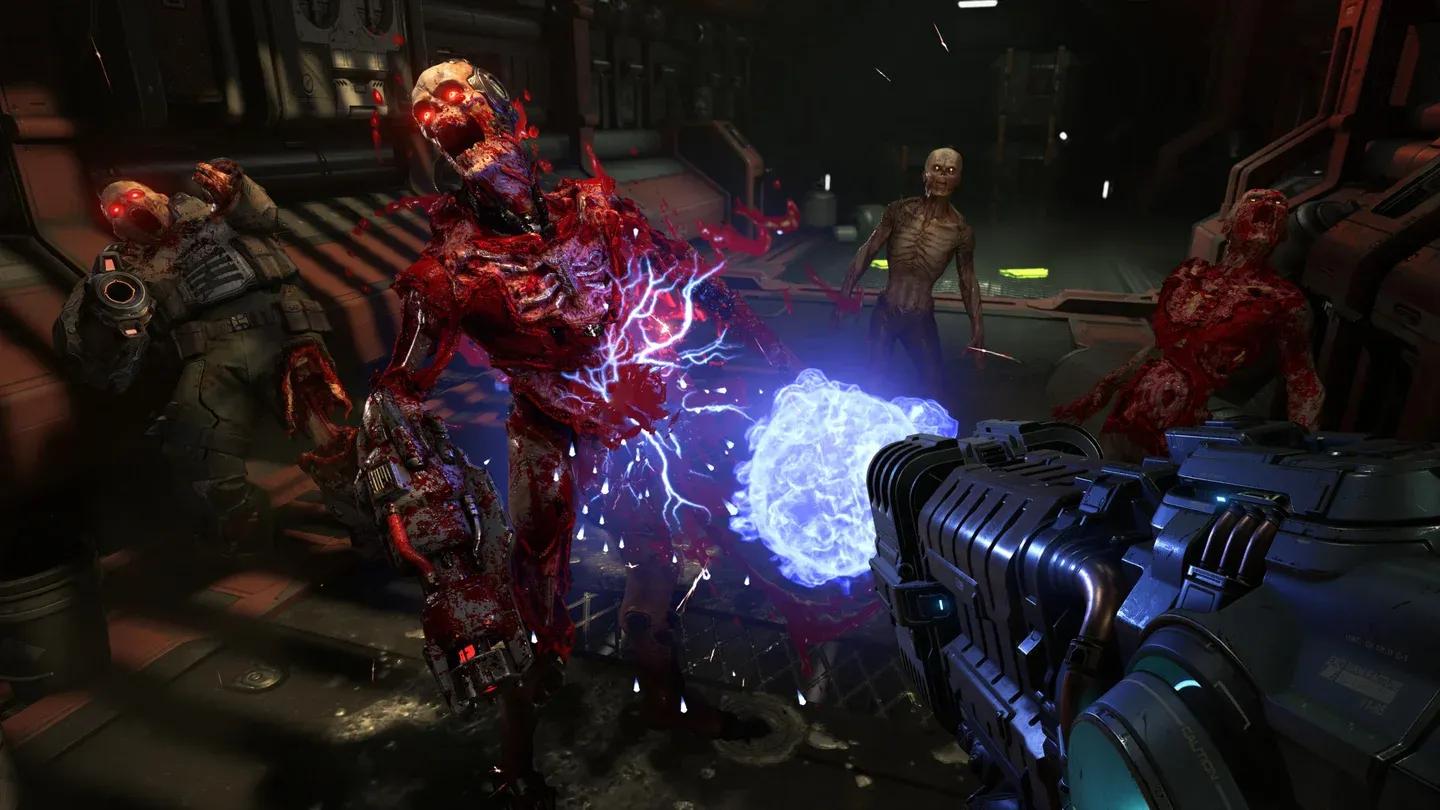
DOOM Eternal's core loop forces constant movement and target prioritization. Weaker demons like Imps and Zombies exist partly as resource dispensaries when larger threats like Marauders or Archviles are draining your health. The game wants you managing four different meters simultaneously while double-dashing across arenas.
Key mechanics that define the experience:
- Glory kill system for health recovery
- Flamethrower armor generation
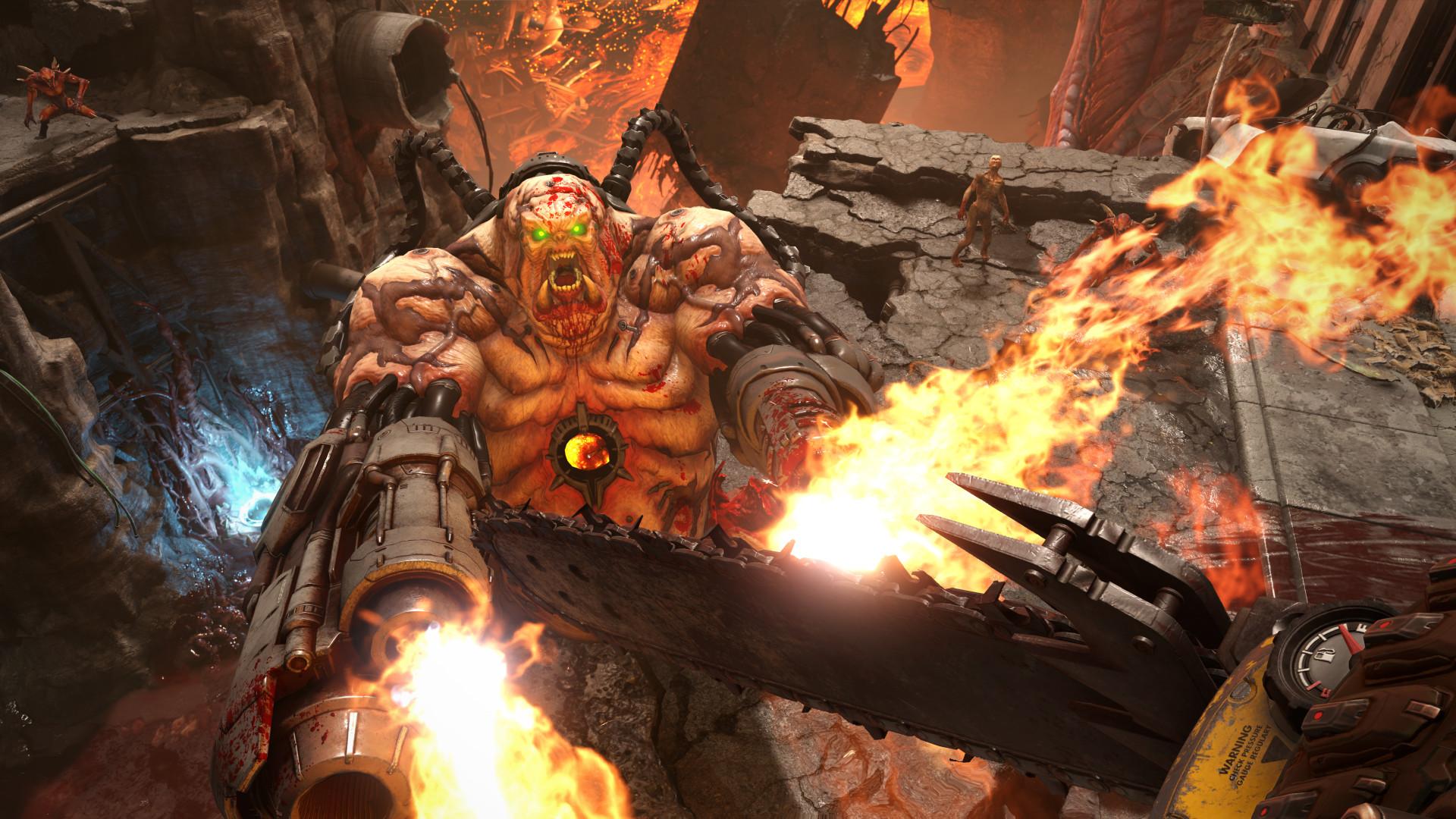
- Chainsaw ammo refueling on a cooldown timer
- Destructible demon weak points (arm cannons, shield emitters)
- Double Dash ability for rapid repositioning
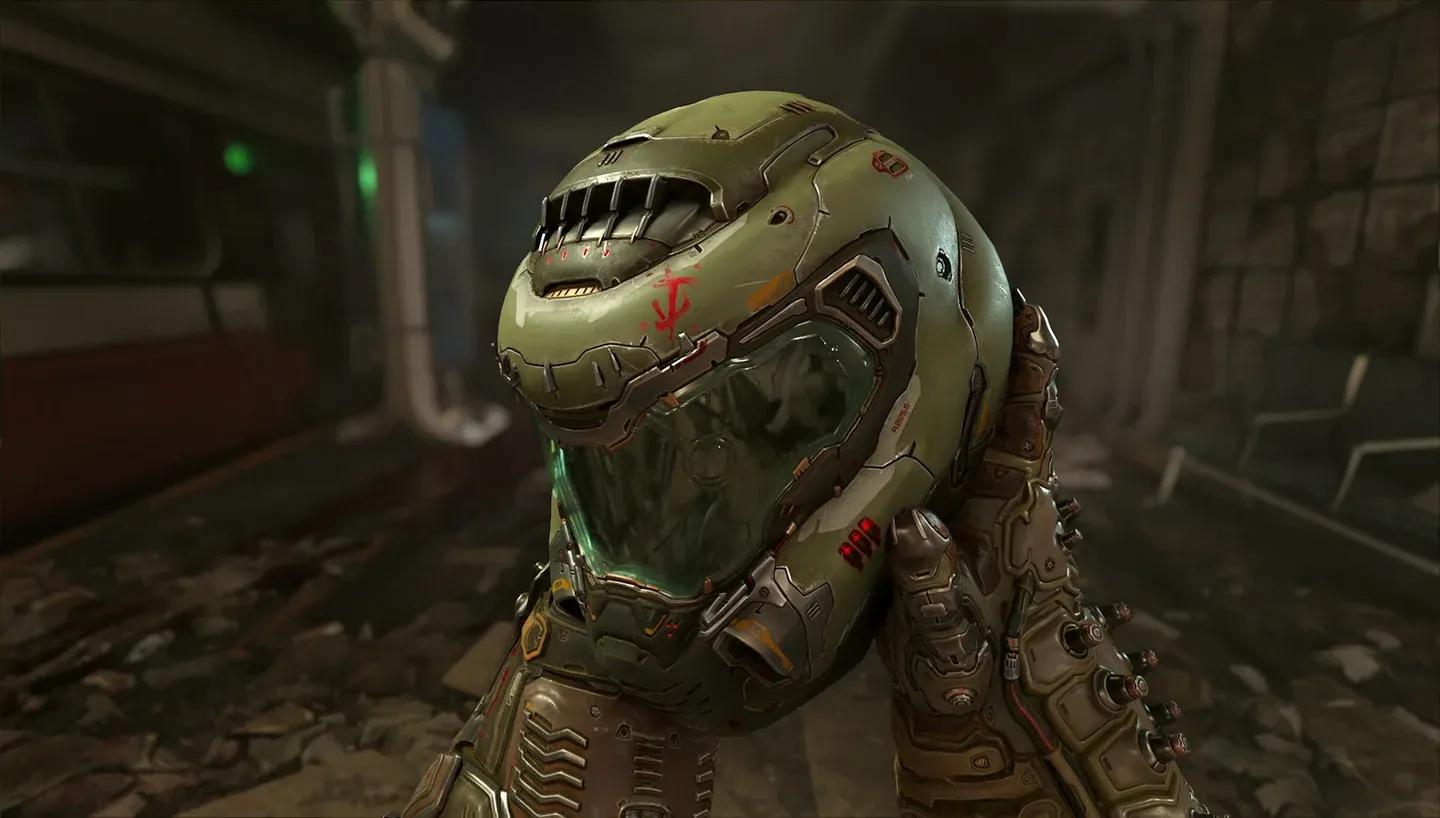
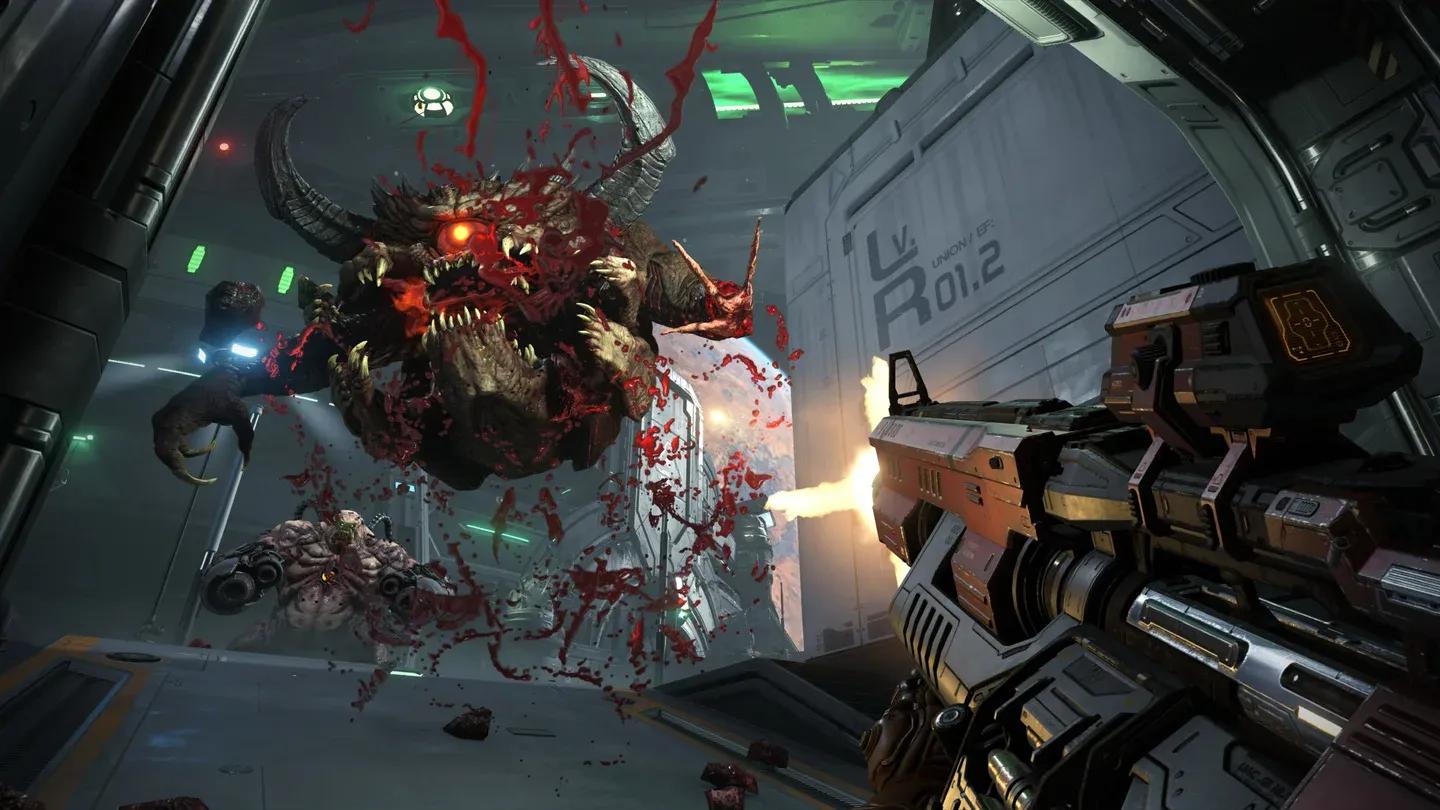
The weapon arsenal expands significantly over DOOM (2016). The Super Shotgun gets a Meat Hook attachment that launches you toward a target like a grappling hook, turning a close-range weapon into a movement tool. Every gun carries two mod slots with upgrade paths, and the Praetor Suit unlocks passive abilities as you find combat challenges and exploration tokens scattered through each level.
World and setting
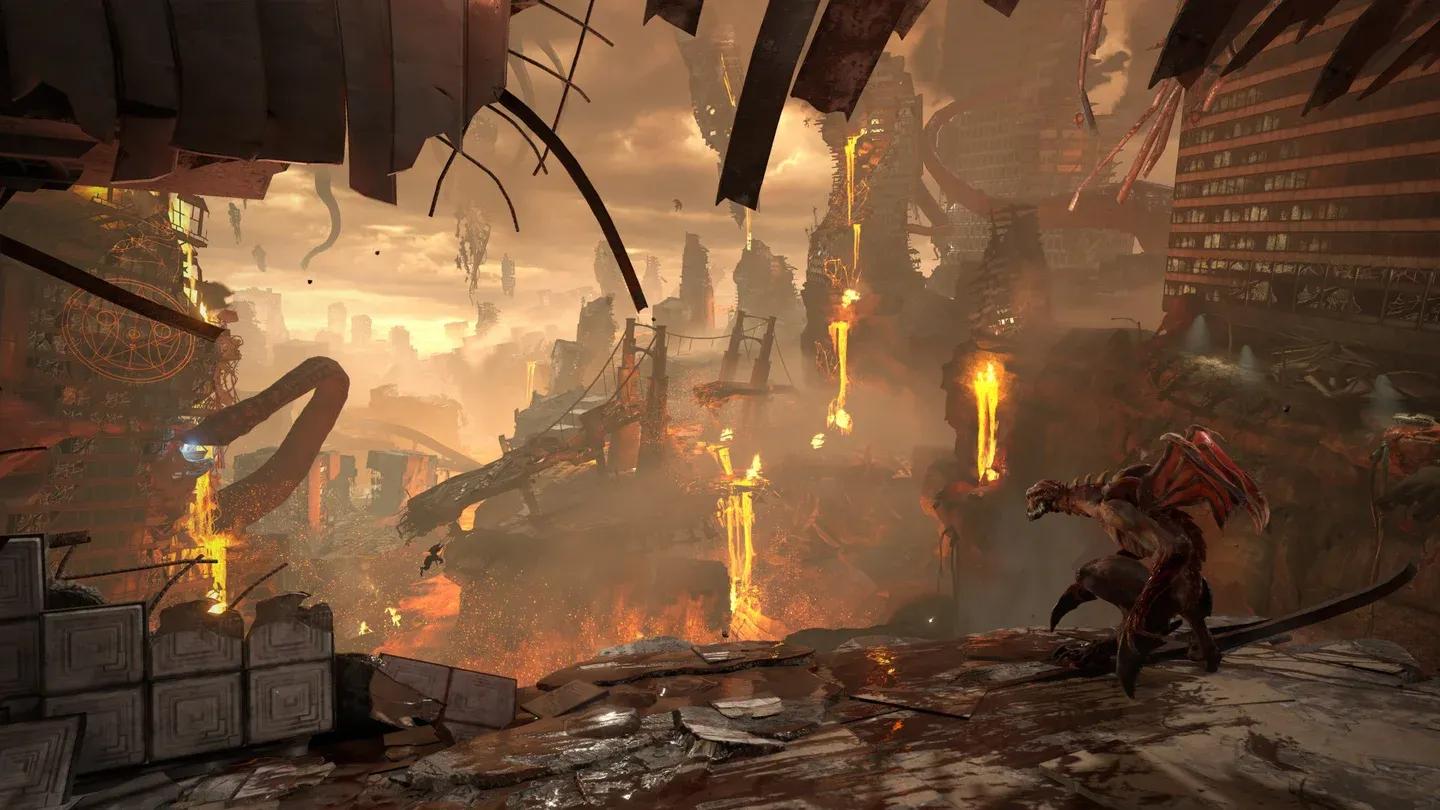
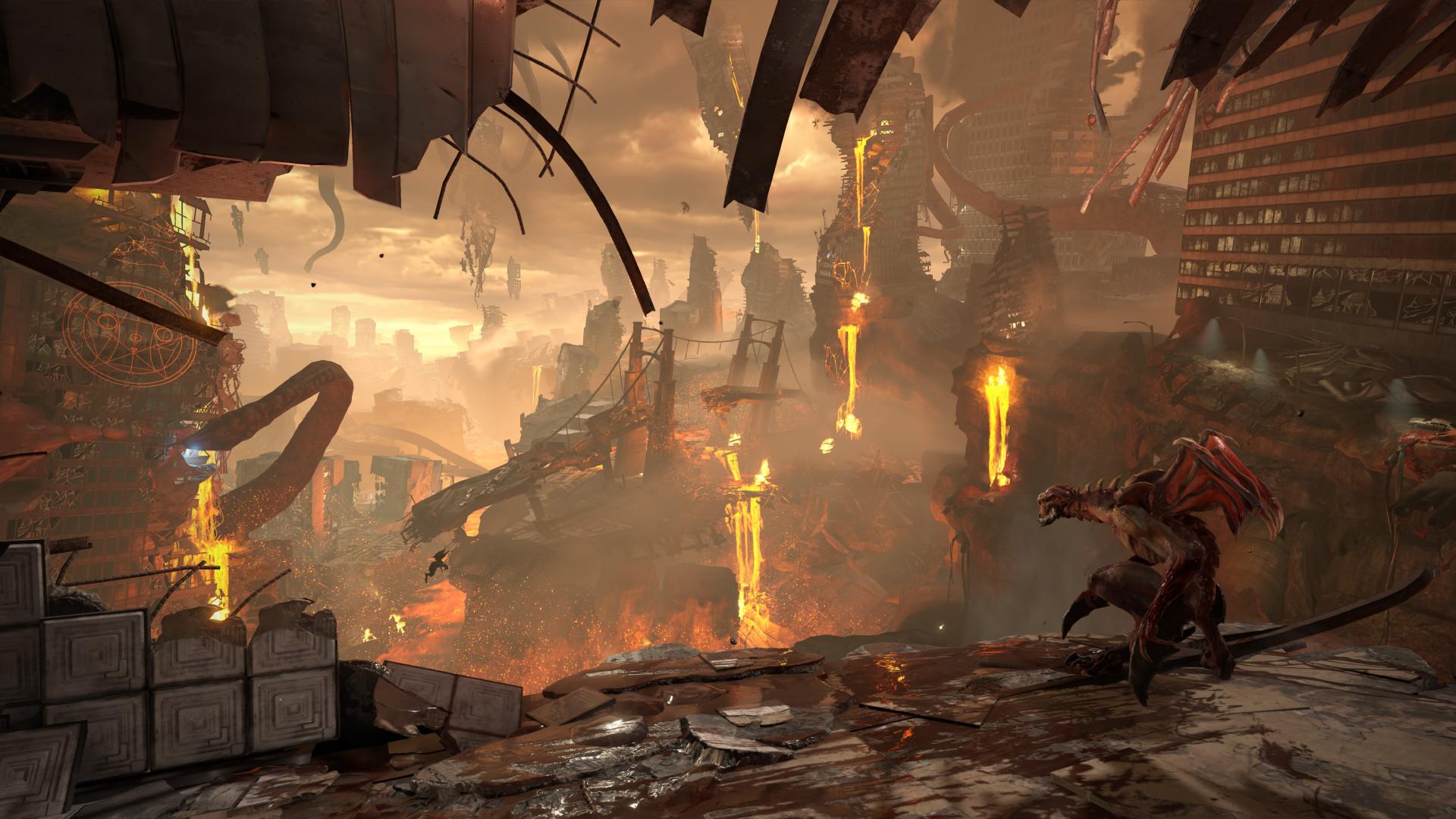
The campaign spans a wide variety of environments, from the burning ruins of Earth's cities to Hell's fortress interiors, ancient temples, and the Khan Maykr's celestial realm. id Software's level design rewards exploration with hidden items, optional challenges, and collectibles that flesh out the Slayer's lore. The Fortress of Doom itself serves as a hub between missions, and finding Sentinel Batteries to unlock its rooms adds a light progression layer between combat arenas.
The two campaign expansions, The Ancient Gods Part One and Part Two, continue the story after the base game's ending and introduce new enemy types, arenas, and story beats that resolve the broader Heaven versus Hell conflict. Both are included in the Digital Deluxe Edition alongside several cosmetic packs.
Multiplayer and social features
Battlemode is DOOM Eternal's asymmetric multiplayer mode, pitting one fully equipped Doom Slayer against two player-controlled demons in a best-of-five round format. Playable demons include the Revenant, Pain Elemental, and Mancubus, each with unique abilities and the capacity to spawn AI reinforcements. The mode rewards coordination between the two demon players, since a lone Slayer can cut through either one individually without much trouble.
Content and replayability
The base campaign runs roughly 15 to 20 hours depending on difficulty and exploration, with the Master Levels offering remixed versions of campaign stages at significantly higher difficulty for players who want a harder test. DOOM Eternal carries an ESRB Mature rating for Blood and Gore and Intense Violence, and it runs on Windows PC, Xbox, PlayStation 4 and 5, and Nintendo Switch. The game holds a 4.59 out of 5 star average from over 41,000 PlayStation Store ratings, which reflects how well the combat system lands with players who commit to learning it. The learning curve is real, but the payoff for anyone willing to internalize the resource loop is one of the tightest action games in the genre.
System Requirements
| Requirement | Minimum | Recommended |
|---|---|---|
| OS | - | 64-bit Windows 10 |
| Processor | Intel Core i5 @ 3.3 GHz or better, or AMD Ryzen 3 @ 3.1 GHz or better | Intel Core i7-6700K or better, or AMD Ryzen 7 1800X or better |
| Memory | 8 GB RAM | 8 GB RAM |
| Graphics | NVIDIA GeForce GTX 1050Ti (4GB), GTX 1060 (3GB), GTX 1650 (4GB) or AMD Radeon R9 280(3GB), AMD Radeon R9 290 (4GB), RX 470 (4GB) | NVIDIA GeForce GTX 1060 (6GB), NVIDIA GeForce 970 (4GB), AMD RX 480 (8GB) |
| Network | Broadband Internet connection | Broadband Internet connection |
| Storage | 80 GB available space | 80 GB available space |