Overview
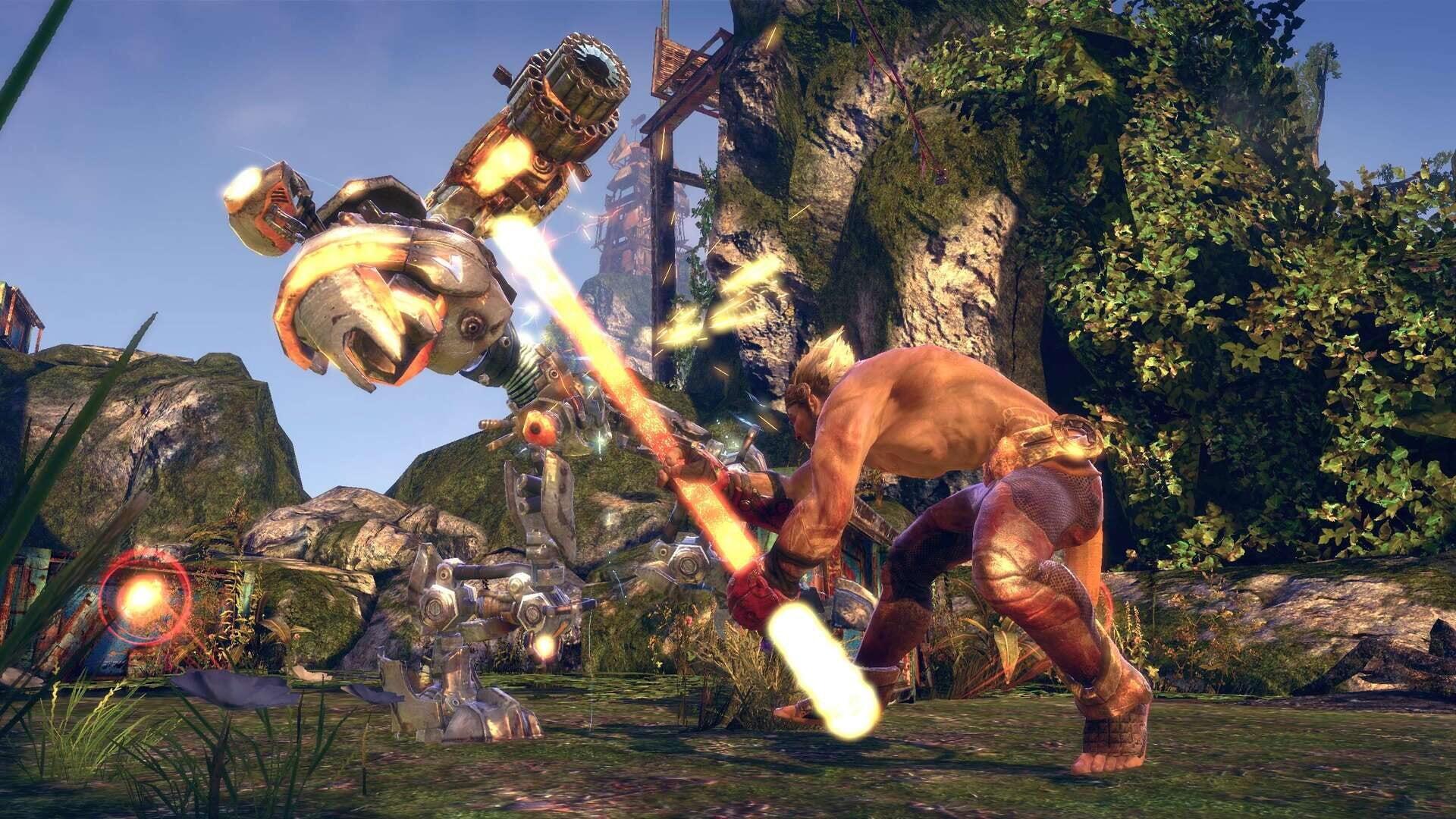
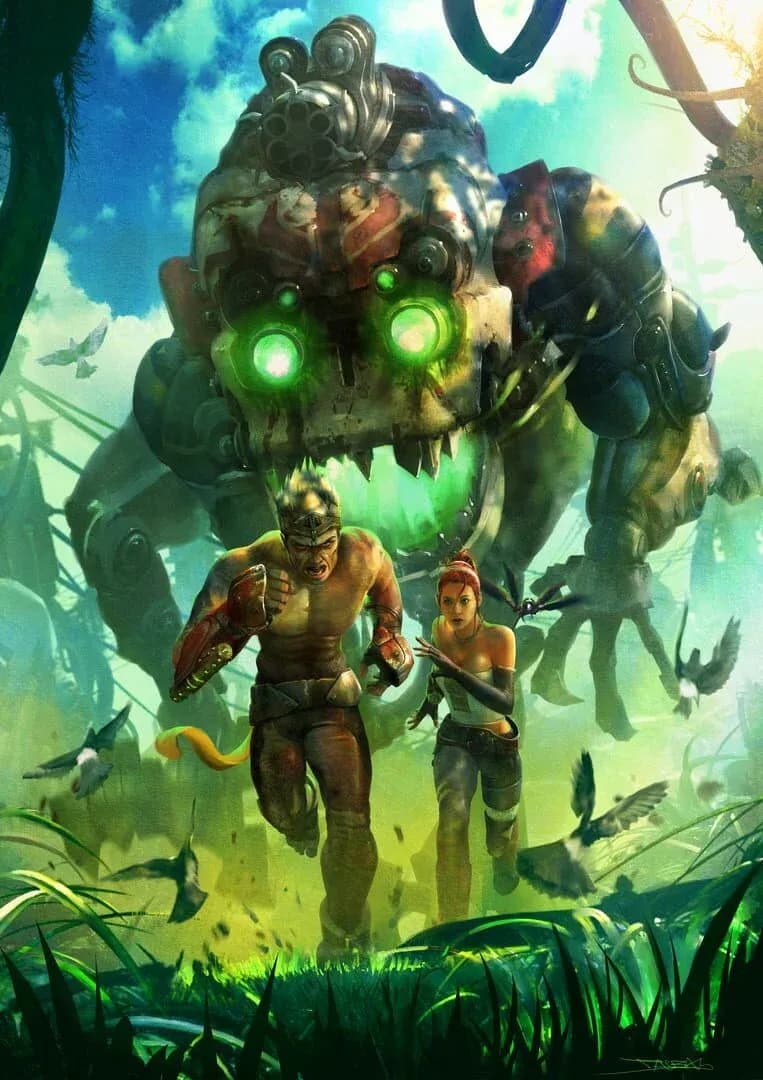
Enslaved: Odyssey to the West is a third-person action-adventure game developed by Ninja Theory and published by Namco Bandai Games, released in October 2010. Set in a post-apocalyptic America roughly 150 years after a catastrophic global war, the game follows Monkey and Trip, two survivors with conflicting motivations forced into an uneasy alliance. The world around them is lush and overgrown, reclaimed by nature, yet laced with danger from the automated war machines still carrying out their original programming with no one left to call them off.
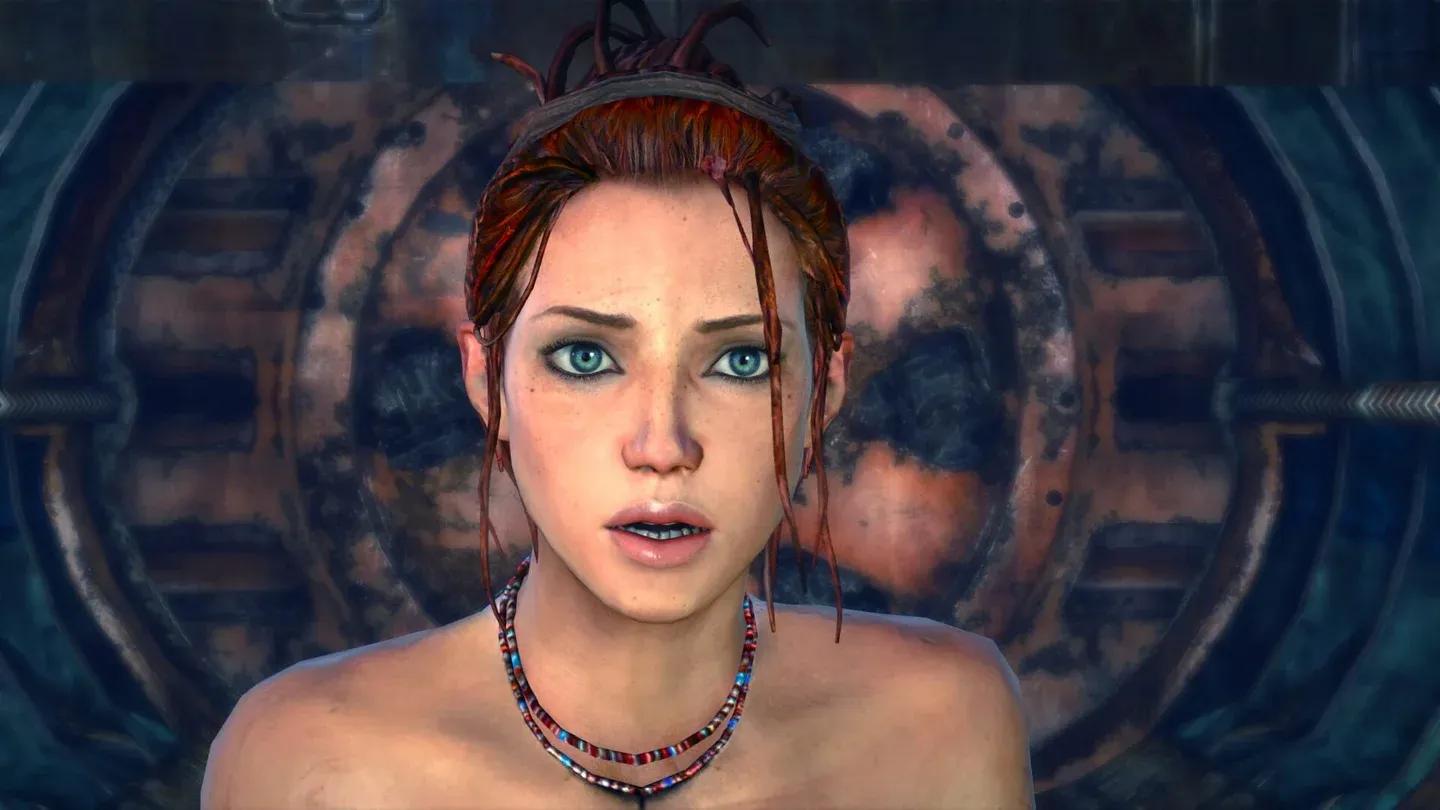
The game's premise draws directly from Wu Cheng'en's 16th-century novel Journey to the West, transplanting its core dynamic into a sci-fi setting. Alex Garland, known for his screenwriting work on 28 Days Later and Ex Machina, wrote the script, giving the narrative a weight and pacing rarely seen in the genre. Andy Serkis, the motion-capture veteran behind Gollum and Caesar, both performed and directed the motion capture for Monkey, while Lindsey Shaw voices and performs Trip. The result is character work that carries the game even when the mechanics take a back seat.
Gameplay and mechanics
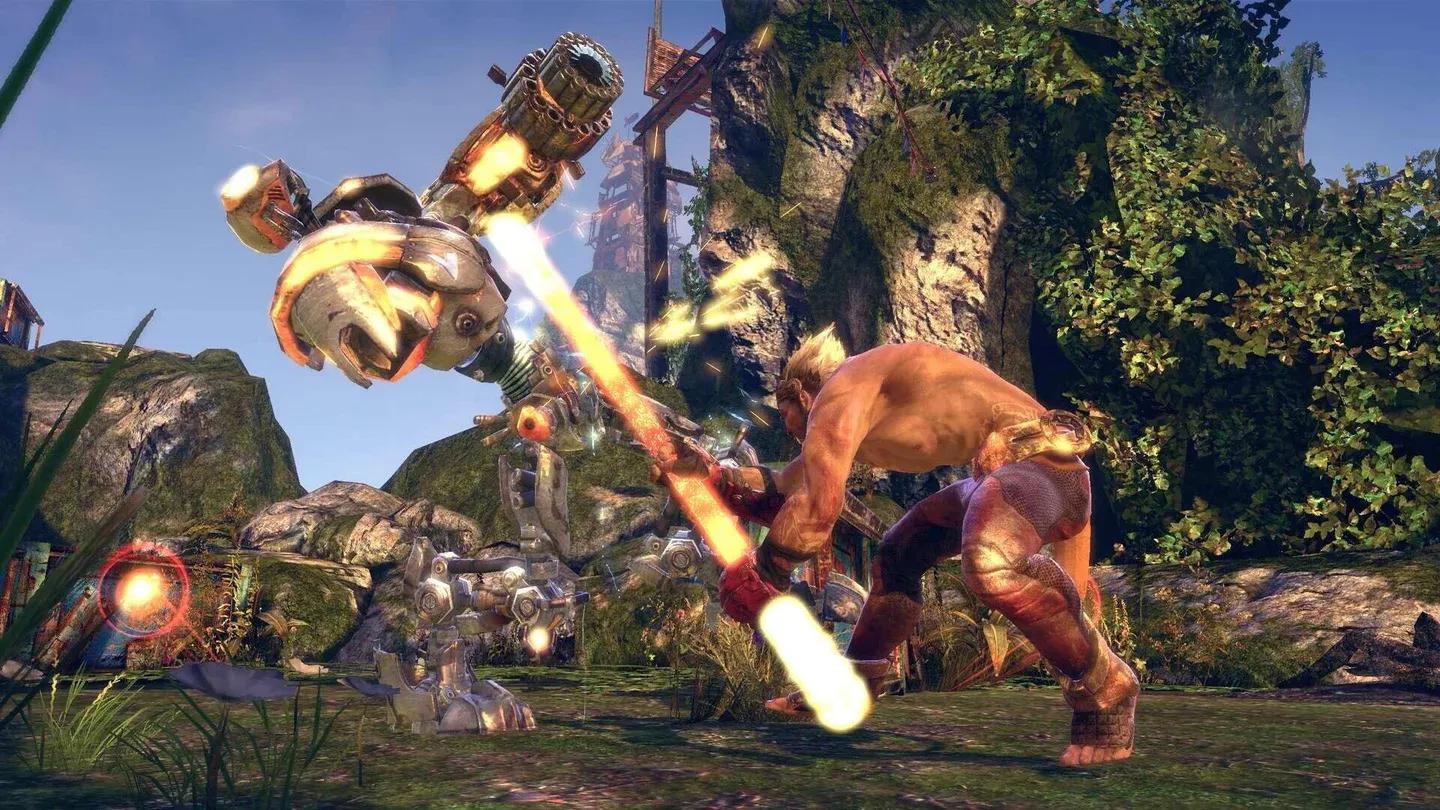
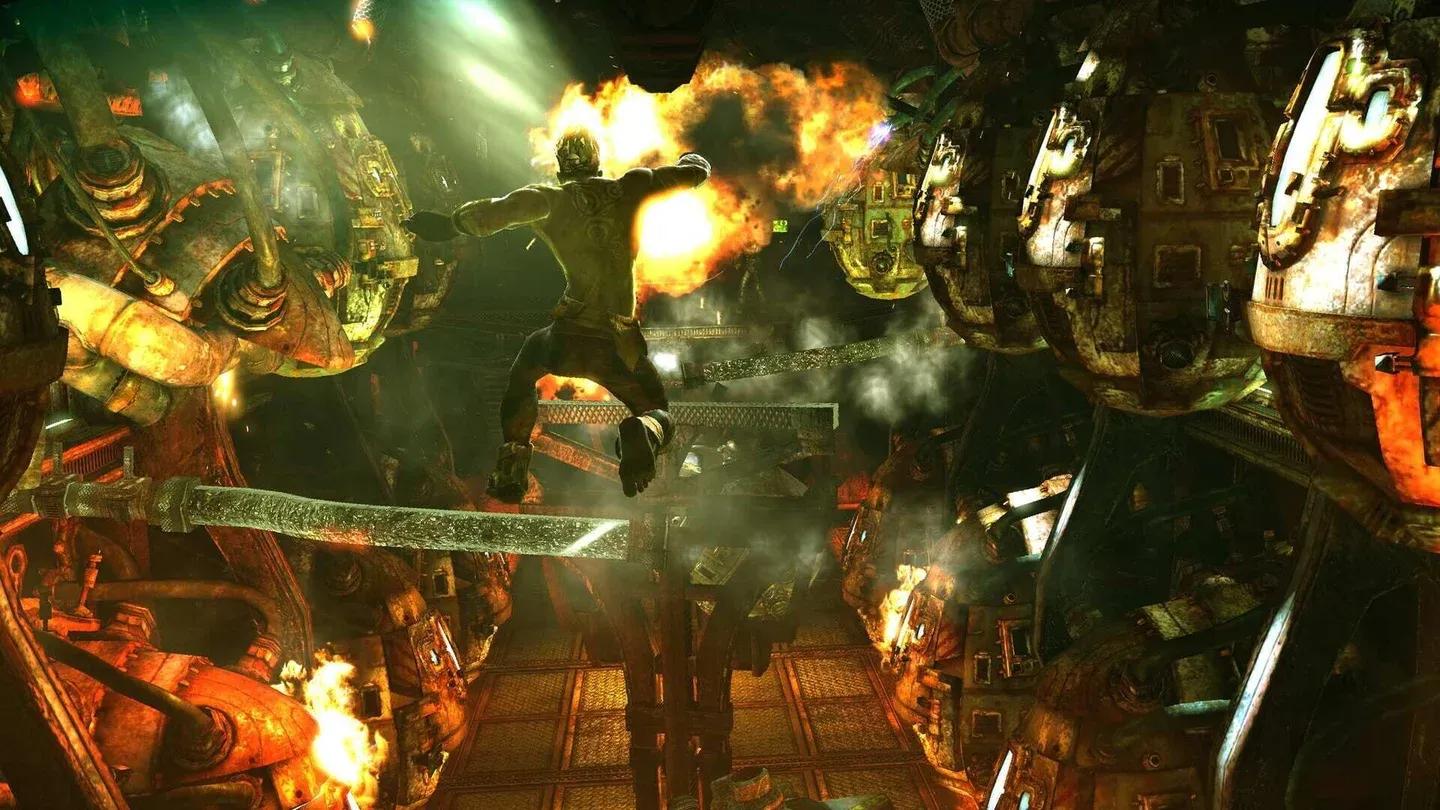
Enslaved blends platforming, combat, and light puzzle-solving across a series of linear levels. Monkey handles the physical heavy lifting, climbing, vaulting, and brawling through waves of mechs, while Trip provides support through her headband tech. The core loop centers on this cooperation:

- Monkey climbs and clears paths for Trip
- Trip hacks terminals and opens routes
- Plasma rifle combat handles mech encounters
- Environmental puzzles require both characters
- Headband upgrades expand Monkey's abilities
Combat is straightforward by design. Monkey can stun, slam, and shoot mechs, but the game never lets fighting overshadow the story. Platforming sections are generous with handholds and largely forgiving, keeping the pace moving rather than punishing players for mistimed jumps.
World and setting
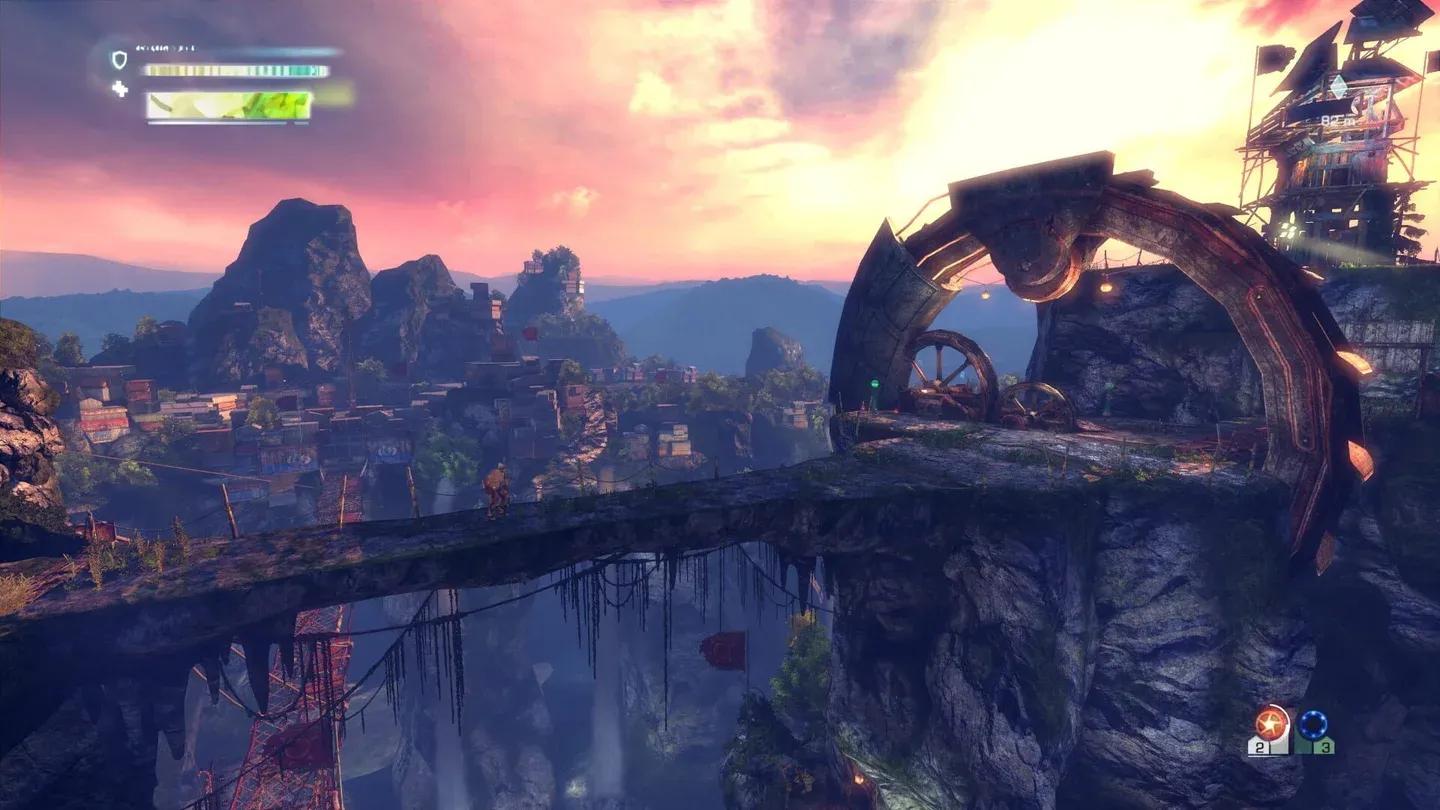
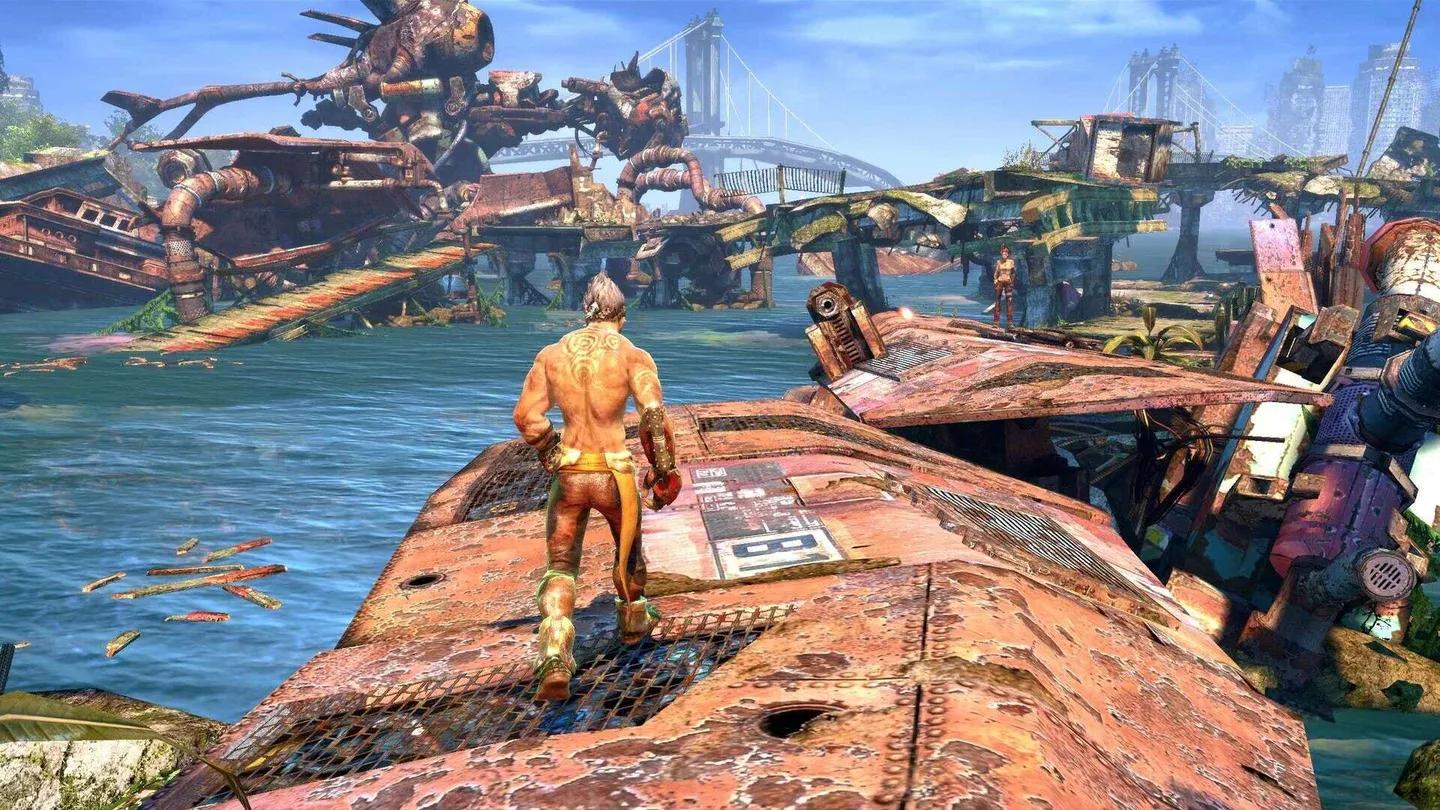
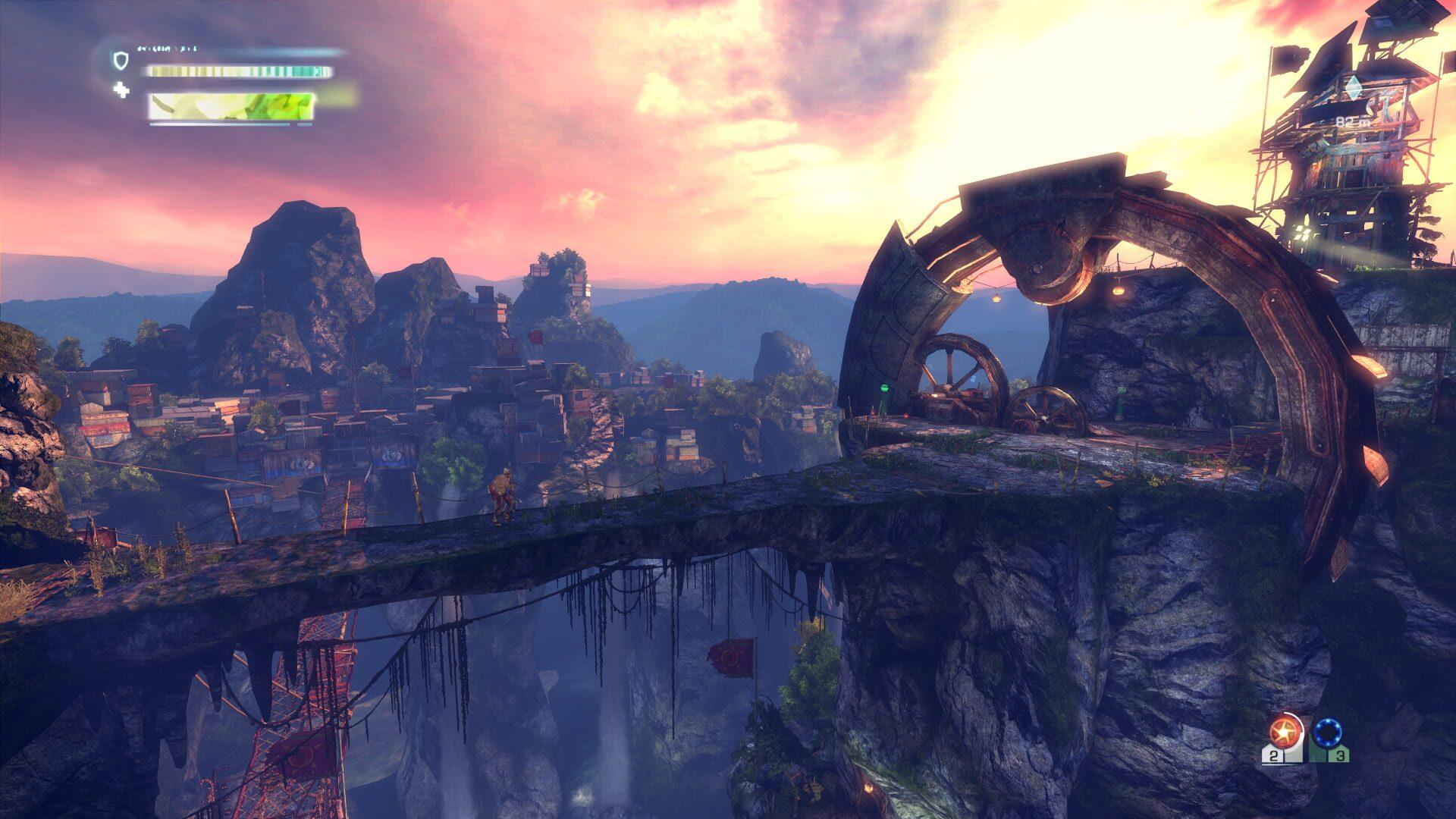
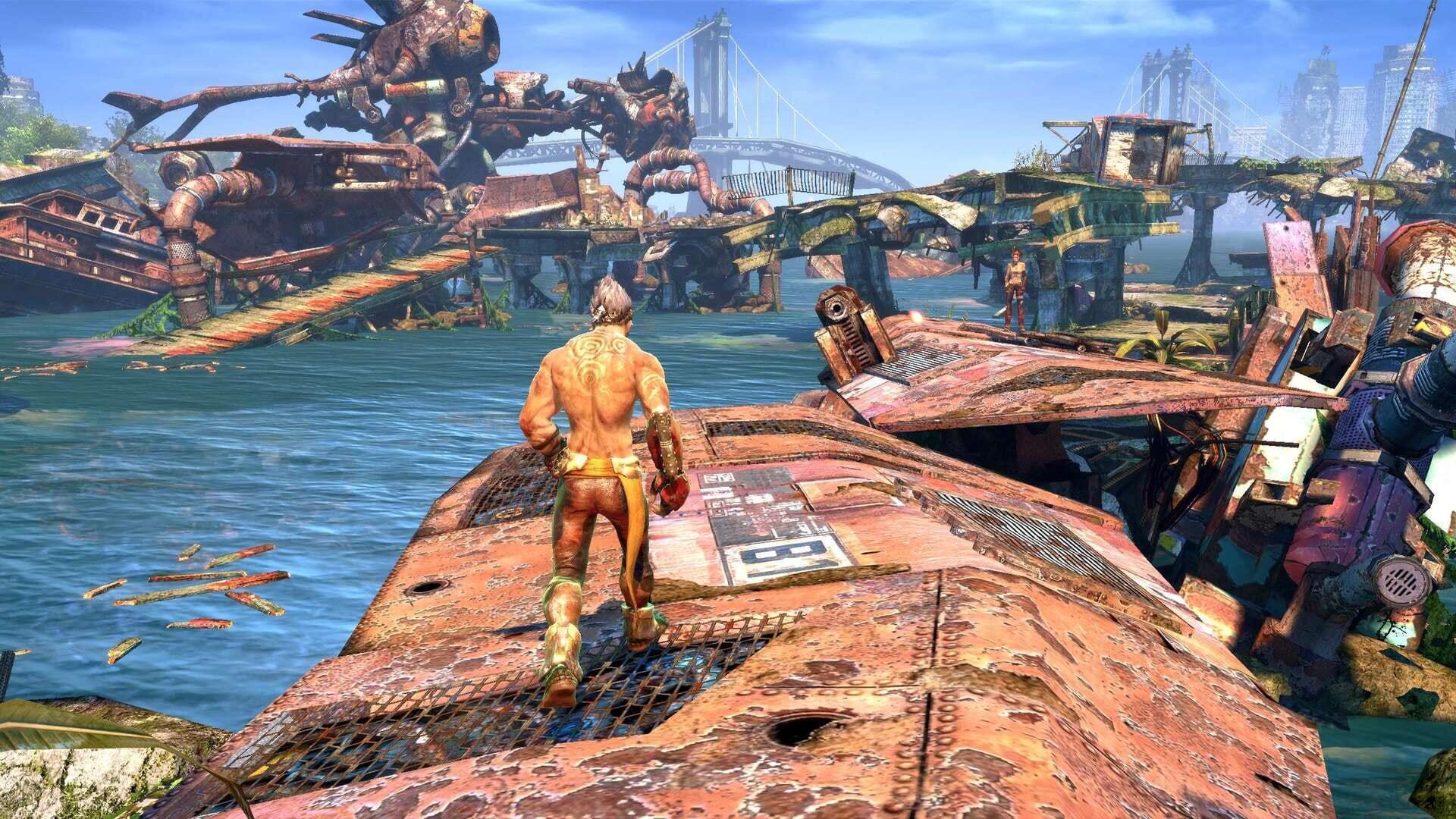
The post-apocalyptic setting in Enslaved stands apart from the grey, ash-covered wastelands common to the genre. Decades of abandonment have let forests, vines, and rivers reclaim skyscrapers and highways, producing environments that feel simultaneously beautiful and haunting. New York City crumbling under a canopy of trees, rusted mechs half-buried in undergrowth, these visuals tell a story of collapse without a single line of dialogue.
This contrast between natural beauty and mechanical threat gives the game its visual identity. The world feels lived-in and specific, not just a backdrop for action sequences.
Story and character work
The relationship between Monkey and Trip is the engine that drives Enslaved forward. Trip enslaves Monkey using a neural headband at the start of the game, meaning he dies if she does, which creates a partnership built on coercion rather than trust. Watching that dynamic shift over the course of the game is where Garland's script earns its reputation.
Serkis brings a physicality to Monkey that sells every interaction, and the facial animation work, advanced for its 2010 release, communicates subtext that the dialogue leaves unspoken. The story takes its source material seriously without being beholden to it, using Journey to the West as a structural framework rather than a plot-by-plot adaptation.
Impact and legacy
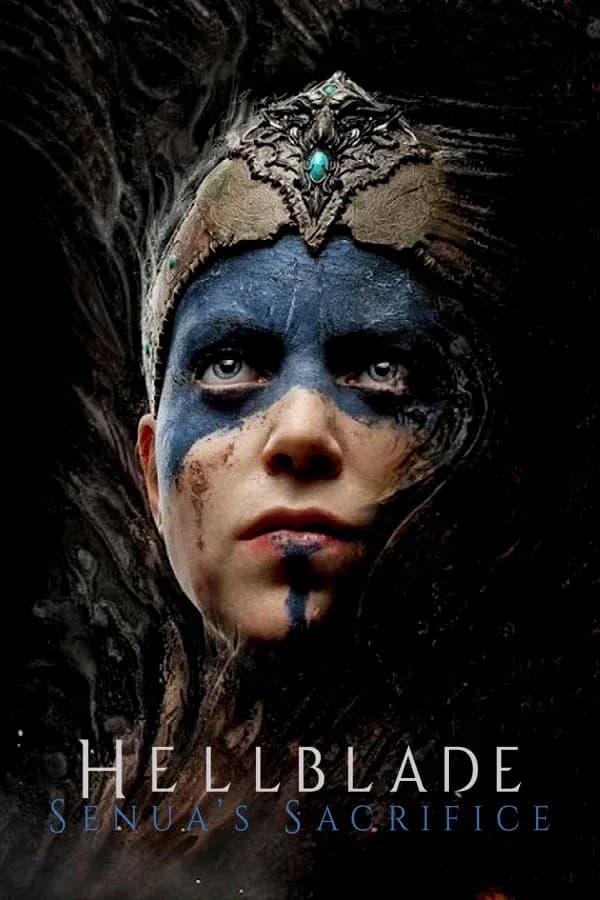
Enslaved arrived during a period when narrative-driven action games were still finding their footing, and it made a case that character performance and story craft belong in the same conversation as gameplay design. Ninja Theory's approach, prioritizing emotional storytelling within an action-adventure framework, anticipated the direction the studio would later take with Hellblade: Senua's Sacrifice. For fans of story-rich adventure games and post-apocalyptic fiction, Enslaved remains a distinct entry worth tracking down on PC via Steam or on console platforms.