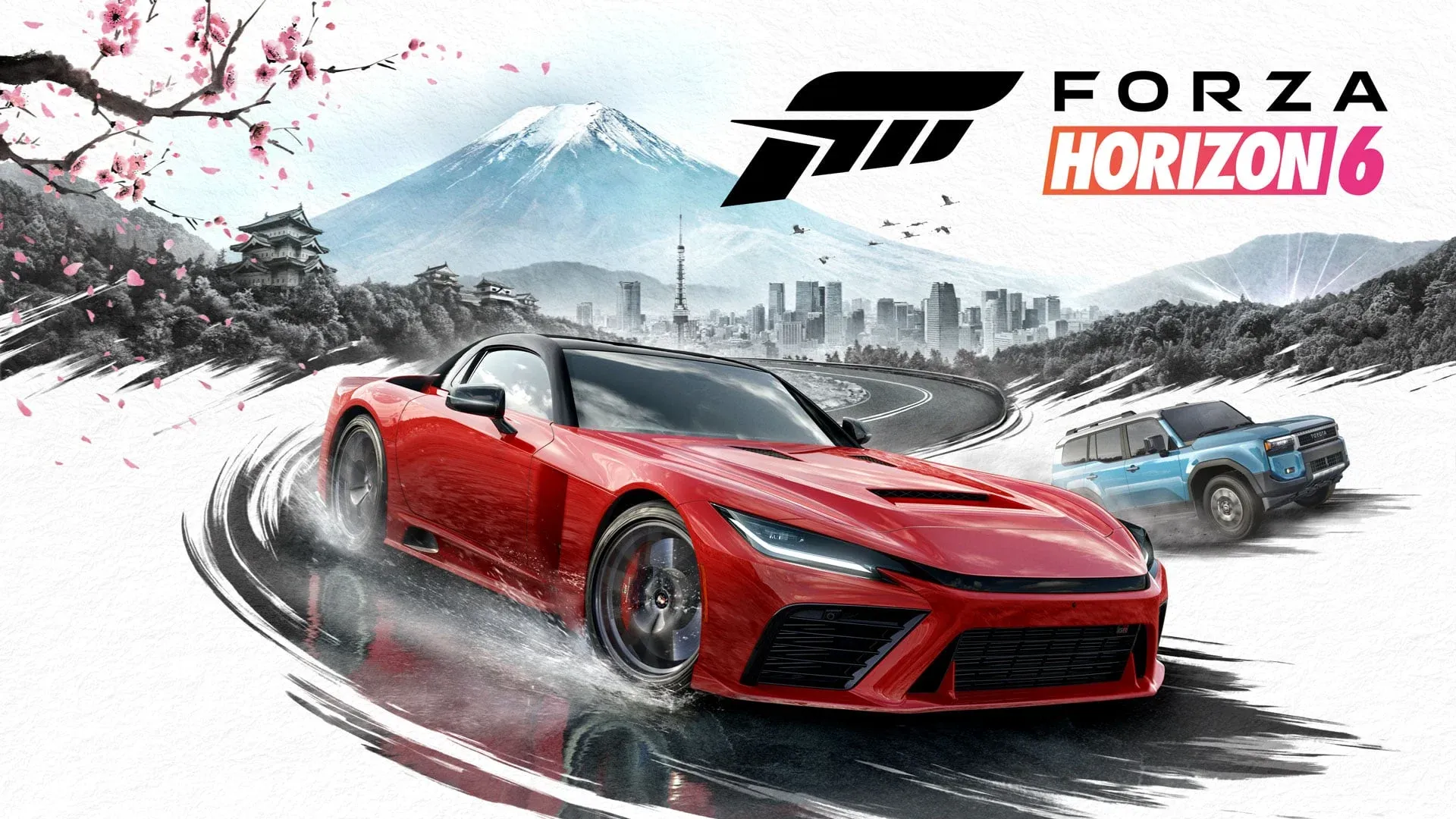


How tuning actually works in Forza Horizon 6
Forza Horizon 6 puts you on Japan's most technically demanding roads the series has ever produced, and the gap between a car that feels planted and one that fights you through every hairpin comes down to tuning. The good news: you don't need an engineering degree to get results. Most tuning adjustments follow a simple cause-and-effect logic, and once you understand what each setting actually does, dialing in a build becomes methodical rather than guesswork.
How do you access the tuning menu?
Open the main menu, go to the Cars tab, select the vehicle you want to work on, then choose Tune Car. That opens the full tuning setup where you can adjust handling, gearing, suspension, aerodynamics, and more. Every category in this menu has a direct, predictable effect on how your car behaves on the road.
Accessing the tuning menu
What does each tuning setting do?
Here's a plain-language breakdown of every tuning category, what it controls, and the right direction to move it based on what you're experiencing.
Tire pressure
Tire pressure controls how much grip your tires generate. Lower pressure spreads the contact patch and improves feel, while higher pressure makes the car feel snappier but reduces corner grip.
- If the car won't turn in: lower front tire pressure
- If the rear slides too much: lower rear tire pressure
- If you want a quicker, more responsive feel on straights: raise pressure slightly, accepting less corner grip
Gearing
The gearing setup controls how fast you accelerate and what your top speed ceiling is. Japan's map has wildly different demands across regions, so matching your gearing to the event type matters.
- If the car hits its top speed too early and stops pulling: lengthen the gears
- If the car feels sluggish off the line: shorten the gears for faster acceleration
- For touge races, shorter final drive ratios help you exit corners faster
- For highway events, longer gearing lets you keep building speed
Alignment
Alignment determines how your tires sit relative to the road surface when cornering.
- Adding a small amount of negative camber improves mid-corner grip
- If steering feels heavy or slow to respond: add a little toe-out to sharpen turn-in
- Keep changes small here. Large alignment shifts make cars harder to control, not easier.
Anti-roll bars
Anti-roll bars control body roll through corners. Stiffer bars reduce lean but can make the car push wide (understeer). Softer bars allow more lean but improve rotation.
- If the car refuses to rotate and pushes wide: soften the front anti-roll bar or stiffen the rear
- If the car feels loose and oversteers easily: do the opposite
Springs
Springs affect ride height and how stiff the chassis feels over bumps and during weight transfer.
- If the car feels bouncy or unstable: stiffen the springs
- If it feels harsh and twitchy over rough surfaces: soften them
- Lowering ride height improves stability and speed, but watch for scraping on mountain roads
Damping
Damping controls how quickly the suspension settles after a bump or weight shift. It works alongside springs but handles the recovery phase.
- If the car keeps bouncing after hitting a bump: increase damping
- If it feels stiff and jittery: reduce damping
- Make small adjustments here, as large changes can destabilize an otherwise good setup
Suspension damping adjustment
Aerodynamics
Aero generates downforce, pushing the car into the road at high speed. More downforce means more grip in fast corners but a lower top speed.
- If the car slides in fast sweepers: increase rear downforce
- If top speed on expressways is your priority: reduce downforce
- Touge builds generally don't need maximum downforce since speeds are lower
Brakes
Japan's mountain passes and tight Tokyo streets make brakes one of the most important tuning categories in Forza Horizon 6, not an afterthought.
- If wheels lock up under heavy braking: lower brake pressure
- If the car takes too long to slow down: increase it
- Adjusting brake balance toward the front helps keep the car stable and predictable under hard stops
Differential
The differential controls how power is distributed between your driven wheels, affecting both acceleration out of corners and stability under braking.
- If the car pushes wide when you get back on the throttle: lower the acceleration differential setting
- If the car feels unstable when lifting off: increase the deceleration setting
Tuning settings comparison table
What's the best upgrade order before you tune?
The upgrade order that consistently produces results on Japan's technical roads is:
- Tires first — more grip makes every other setting more effective
- Brakes second — Japan's downhill zones and tight exits demand proper stopping power
- Weight reduction third — improves acceleration, braking, and cornering without adding complexity
- Transmission and gearing fourth — match the car to the specific event type
- Power last — adding power to a car without grip just makes it harder to drive
This order applies to most cars across most event types. Raw horsepower is the last thing you need when mountain passes punish every braking mistake.
Tuning baselines for Japan's different road types
Not every setting works the same across all of Japan's regions. Here's a practical starting point for the map's main environments:
For touge specifically, the goal is clean exits, not raw corner speed. Brake early, rotate the car before the apex, then accelerate straight. A build that feels boringly controllable will almost always beat one that feels exciting but unpredictable.
How does tuning connect to the rest of your progression?
Tuning isn't separate from progression in Forza Horizon 6. It's part of the same loop. The most efficient early-game pattern is: race, explore, upgrade lightly, then tune before buying another car. Spending credits on a new vehicle when your current one just needs a brake balance adjustment is one of the most common early mistakes.
For players building out their garage, the complete Forza Horizon 6 car list guide covers every vehicle available at launch, including Barn Finds and Treasure Cars, so you can target the right platforms for each tuning build before spending credits.
If you're still working through the wristband system and want to push XP faster while testing your tunes, the Forza Horizon 6 wristbands and leveling guide breaks down the most efficient XP routes across races, stunts, and Link Skills.
For a broader look at everything Japan's map offers, from fog of war mechanics to Car Meets and launch details, the Forza Horizon 6 what to expect guide covers the full picture.
For more guides across every system in the game, the full Forza Horizon 6 guide collection has you covered.