Overview
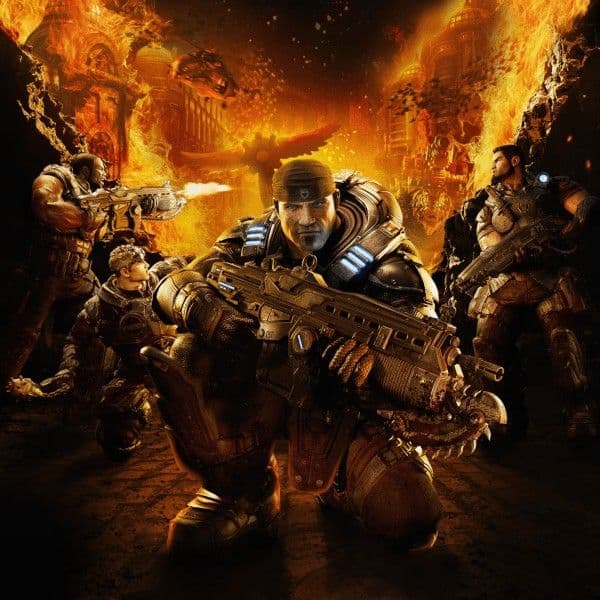
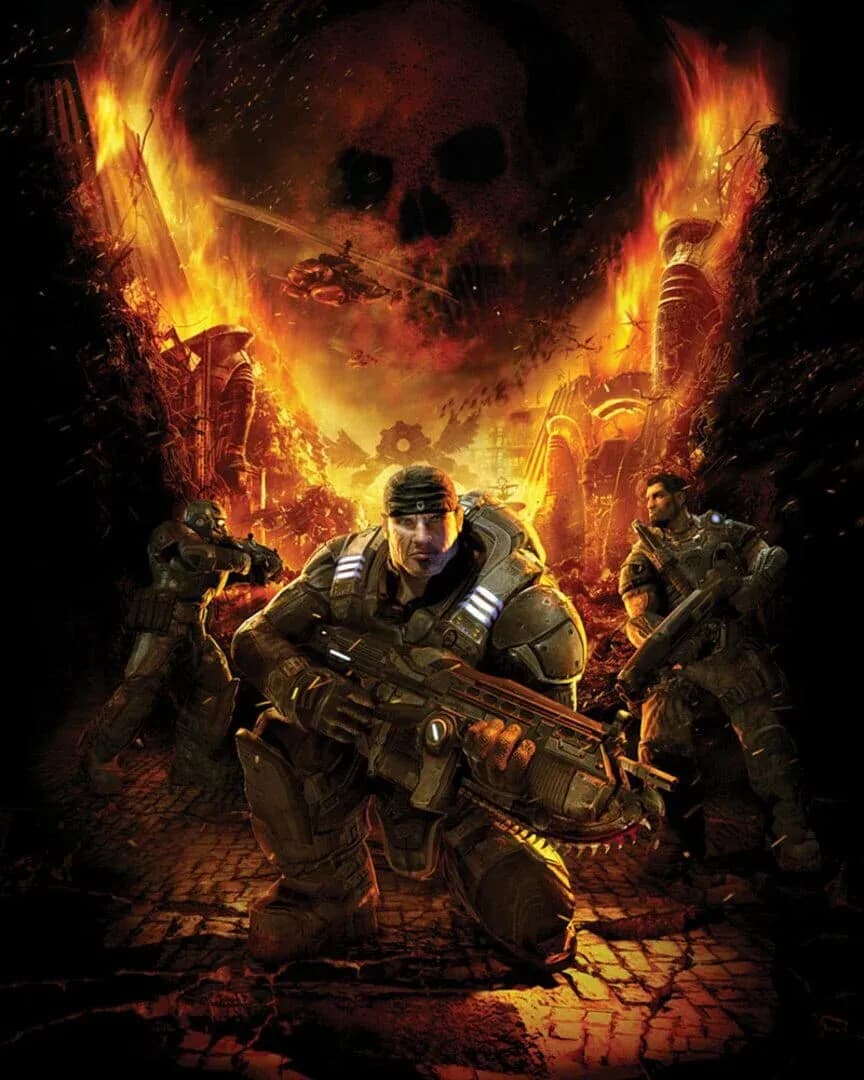
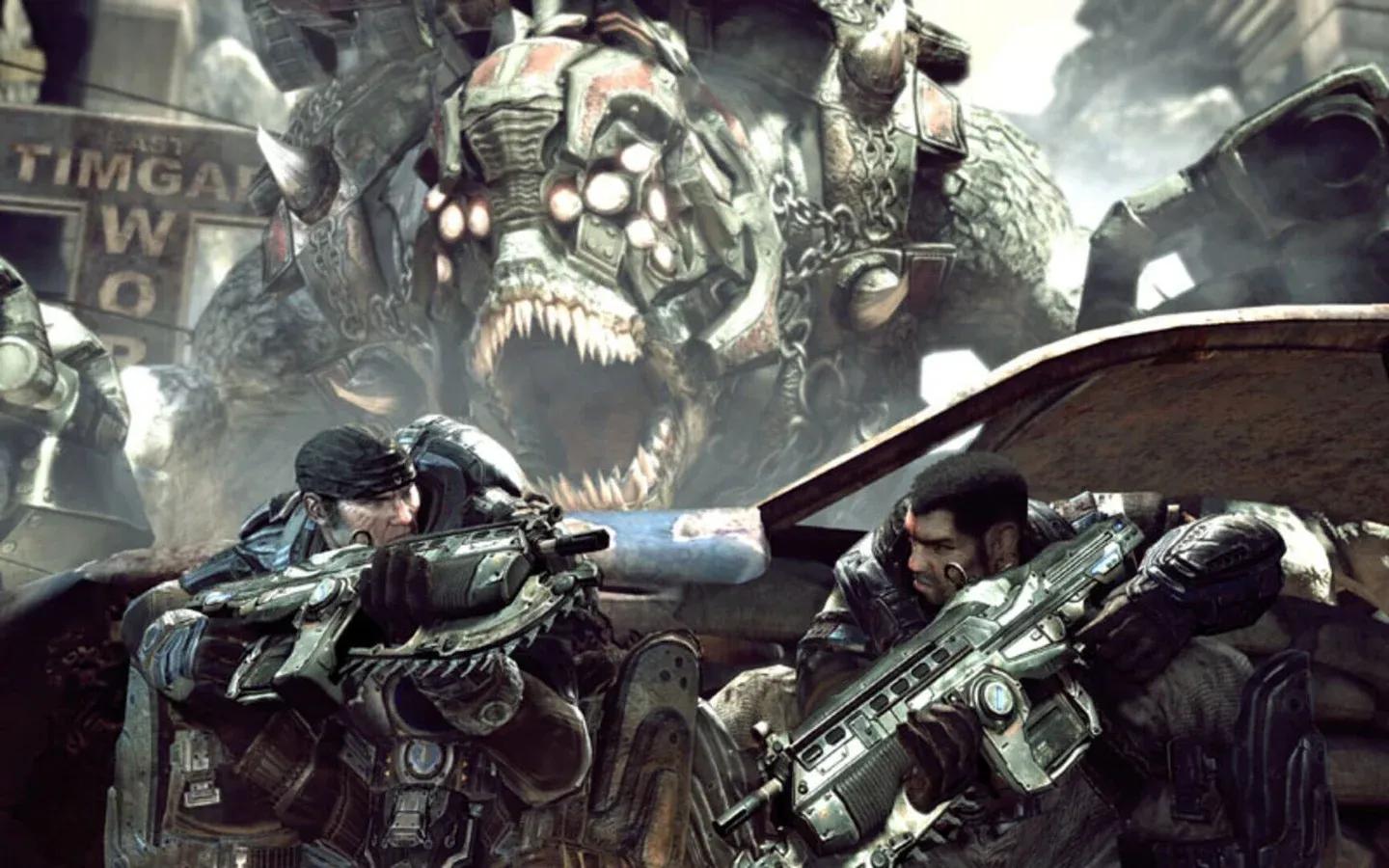
Gears of War is a third-person tactical shooter developed by Epic Games and published by Microsoft Game Studios, released on November 7, 2006, exclusively for Xbox. Set on the planet Sera, the game follows Marcus Fenix and Delta Squad as they battle the Locust Horde, a subterranean enemy that has nearly wiped out humanity. The tone is relentlessly grim, the stakes feel enormous, and the cover system that defines its combat was unlike anything else on the market at the time.
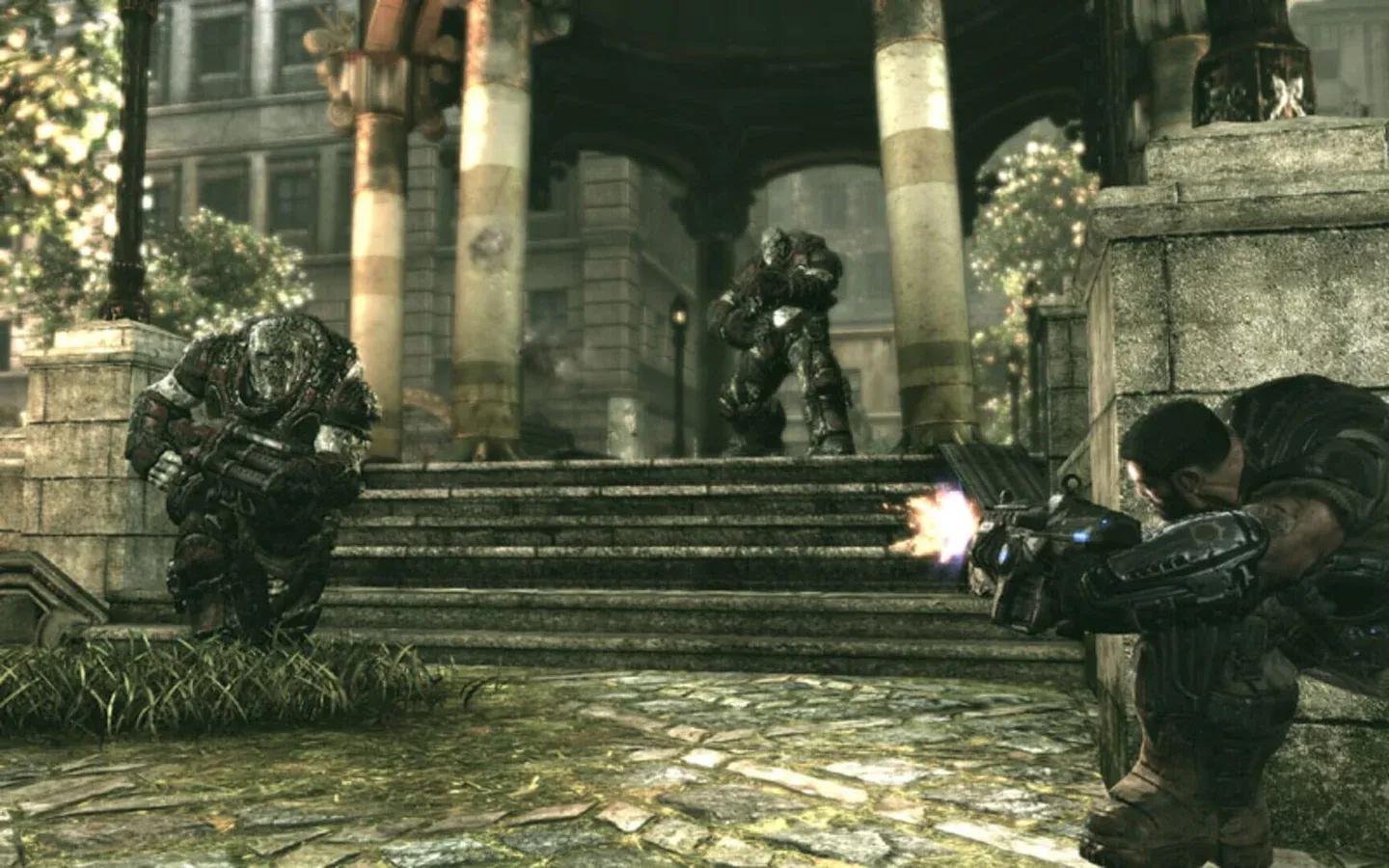
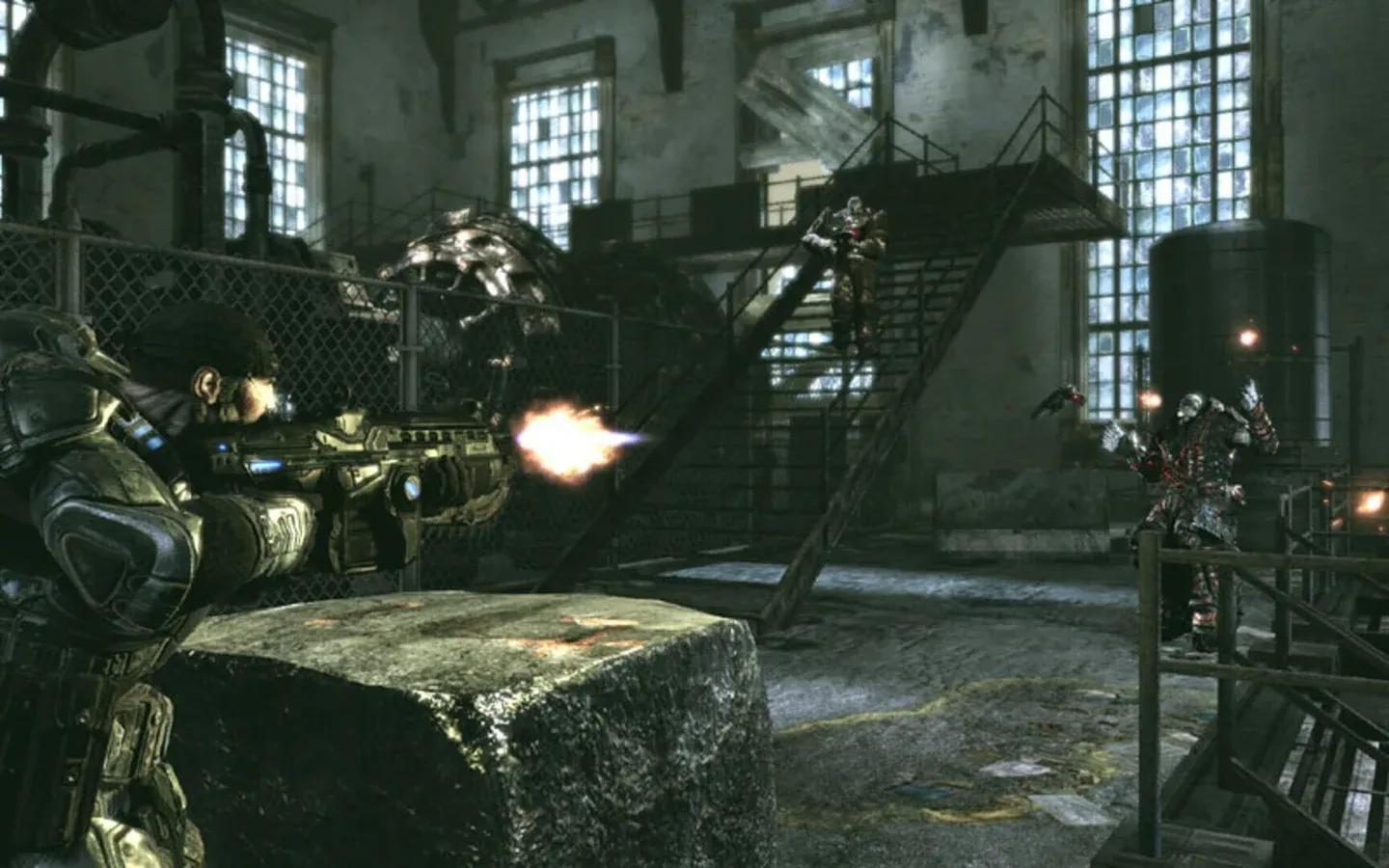
Running on Unreal Engine 3, the game was a technical statement in 2006. Character models carried visible weight and detail, environments crumbled under fire, and the lighting gave every underground corridor a genuinely oppressive feel. The art direction leaned hard into browns and grays, which drew criticism from some quarters, but served the war-torn world exactly as intended.
Gameplay and mechanics
The cover system is the backbone of everything in Gears of War. Snapping to cover, blind-firing around corners, and timing your movement between positions forms the core loop of every encounter. This was not the first game to use cover, but it was the first to make it feel physical and consequential in the way it does here.
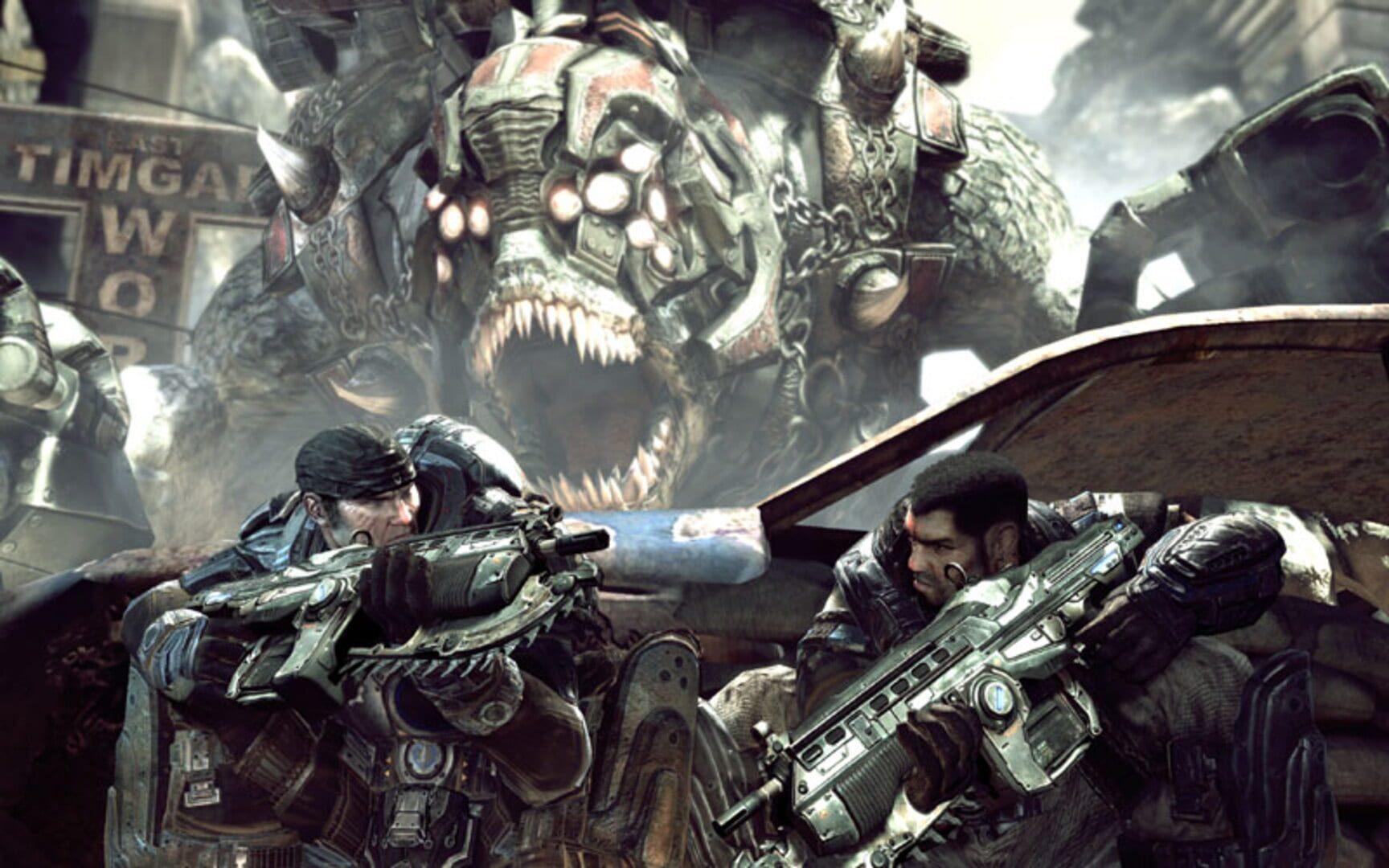
Key mechanics that define the experience:
- Active Reload system for timed weapon bonuses
- Chainsaw bayonet executions on the Lancer assault rifle
- Roadie Run for fast, crouched movement between positions
- DBNO (Down But Not Out) downed state before full elimination
- Curb stomp and other melee finishers
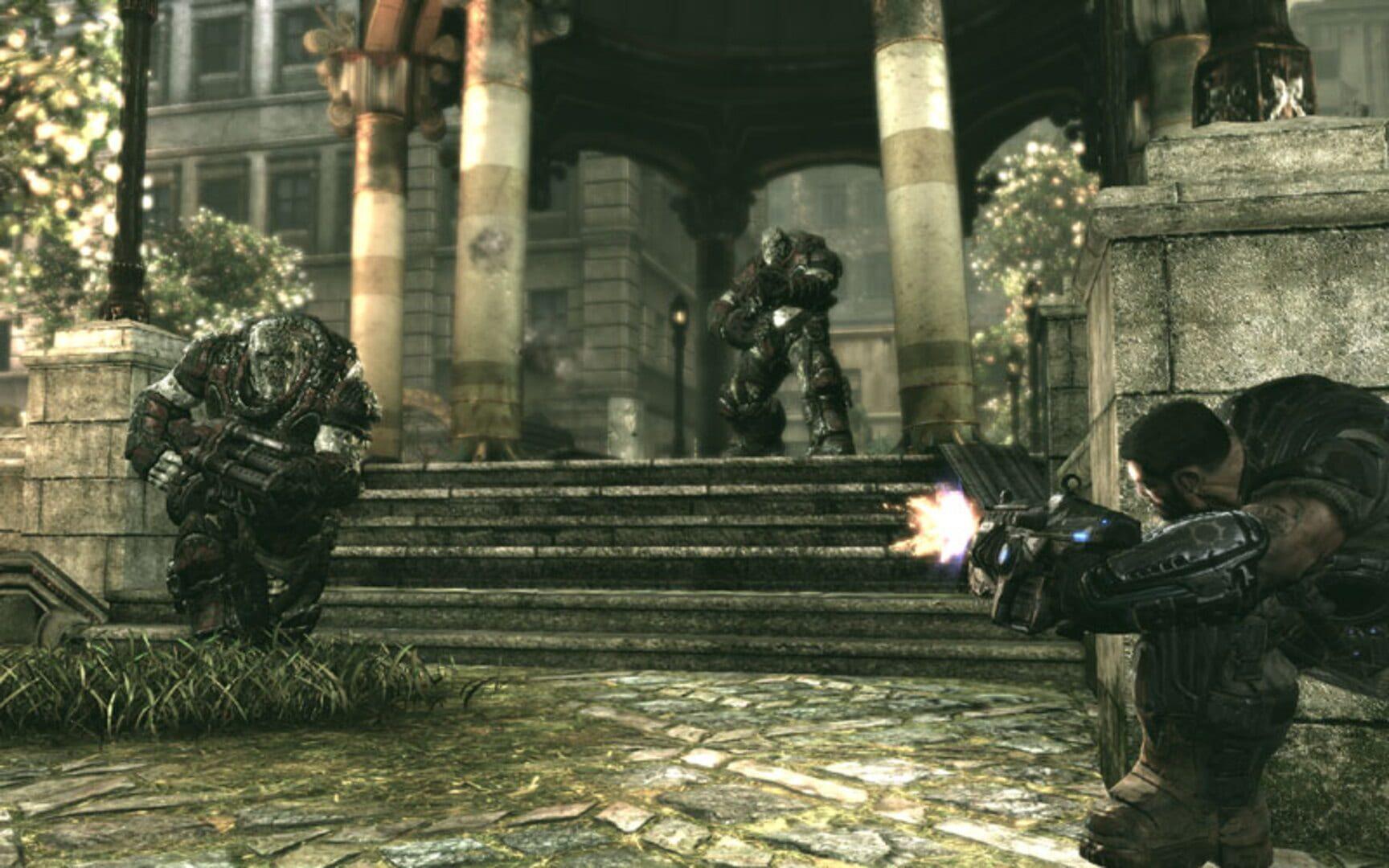
The Active Reload mechanic deserves particular attention. Tapping a button at the right moment during a reload grants a damage boost and faster chamber time. Miss the window and you jam the weapon. It sounds simple, but it adds a rhythm to firefights that keeps even routine encounters engaging.
Co-op and multiplayer
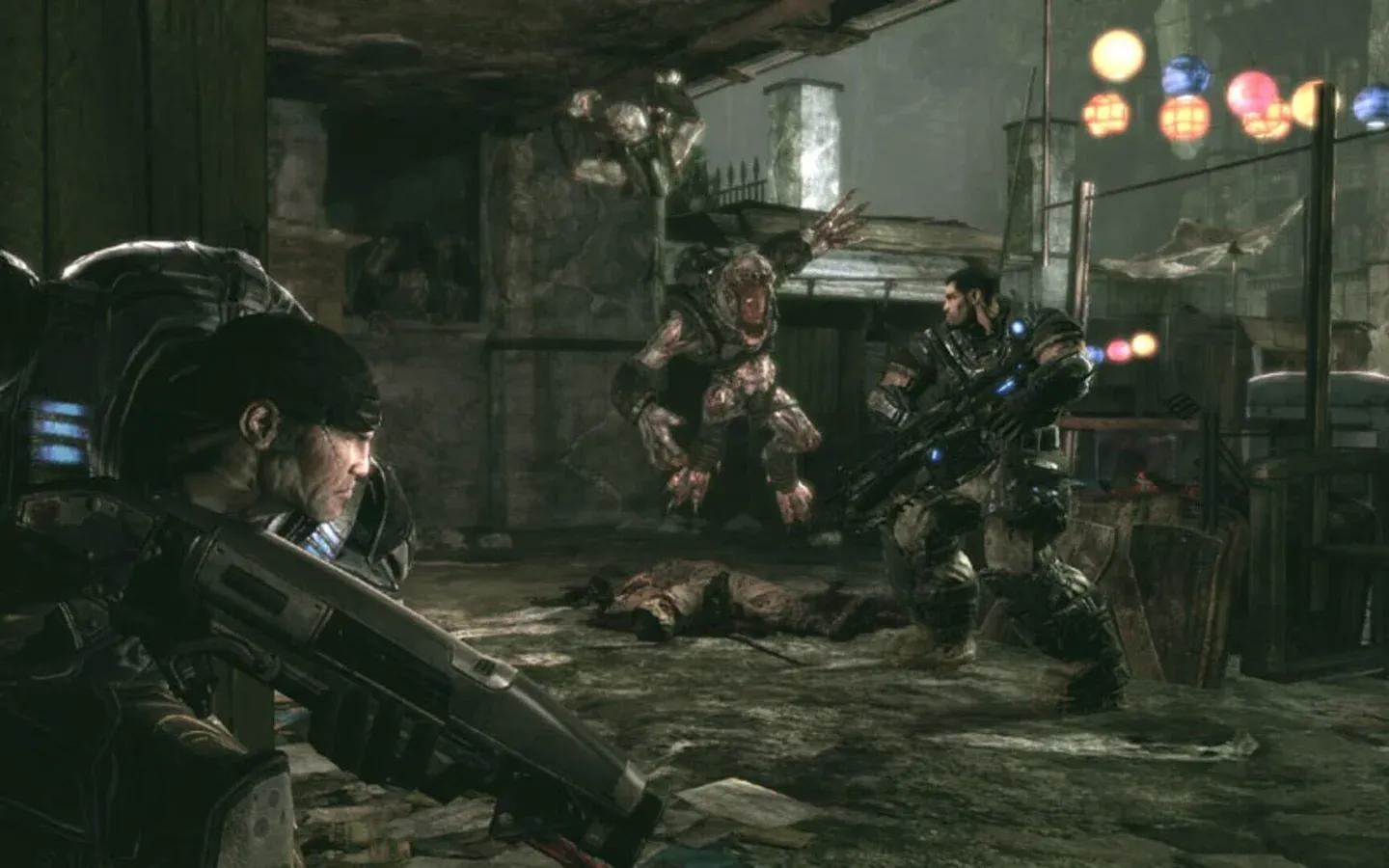
Epic designed every campaign level with two-player co-op in mind from the start, not as an afterthought. The AI partner, Dom Santiago, has distinct behavior patterns and covers flanks in ways that feel intentional rather than scripted. Drop in a second human player and the dynamic shifts noticeably, with communication becoming the difference between clean runs and chaotic retreats.
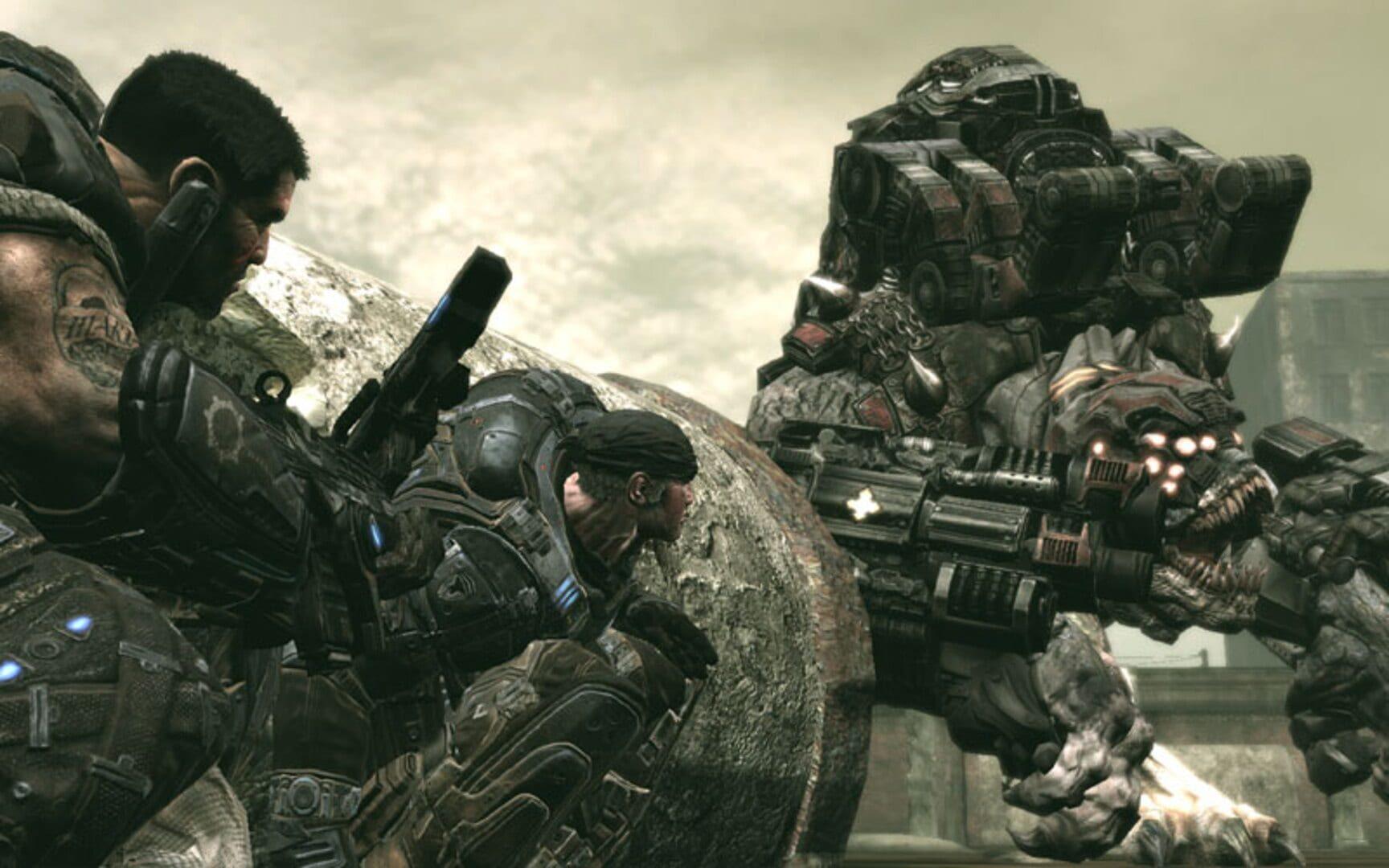
Online multiplayer on Xbox Live includes competitive modes alongside the co-op campaign. The matchmaking system, player statistics tracking, and achievement integration were well-implemented for 2006 standards. Voice recognition also appears as a feature, allowing players to issue commands without touching a button.
World and setting
Sera is a planet that already lost. The war against the Locust Horde, known as Emergence Day, happened years before the game begins, and civilization never recovered. Marcus Fenix enters the story as a convicted soldier pulled from prison because the COG (Coalition of Ordered Governments) is desperate enough to take anyone. That context colors every ruined building and abandoned street.
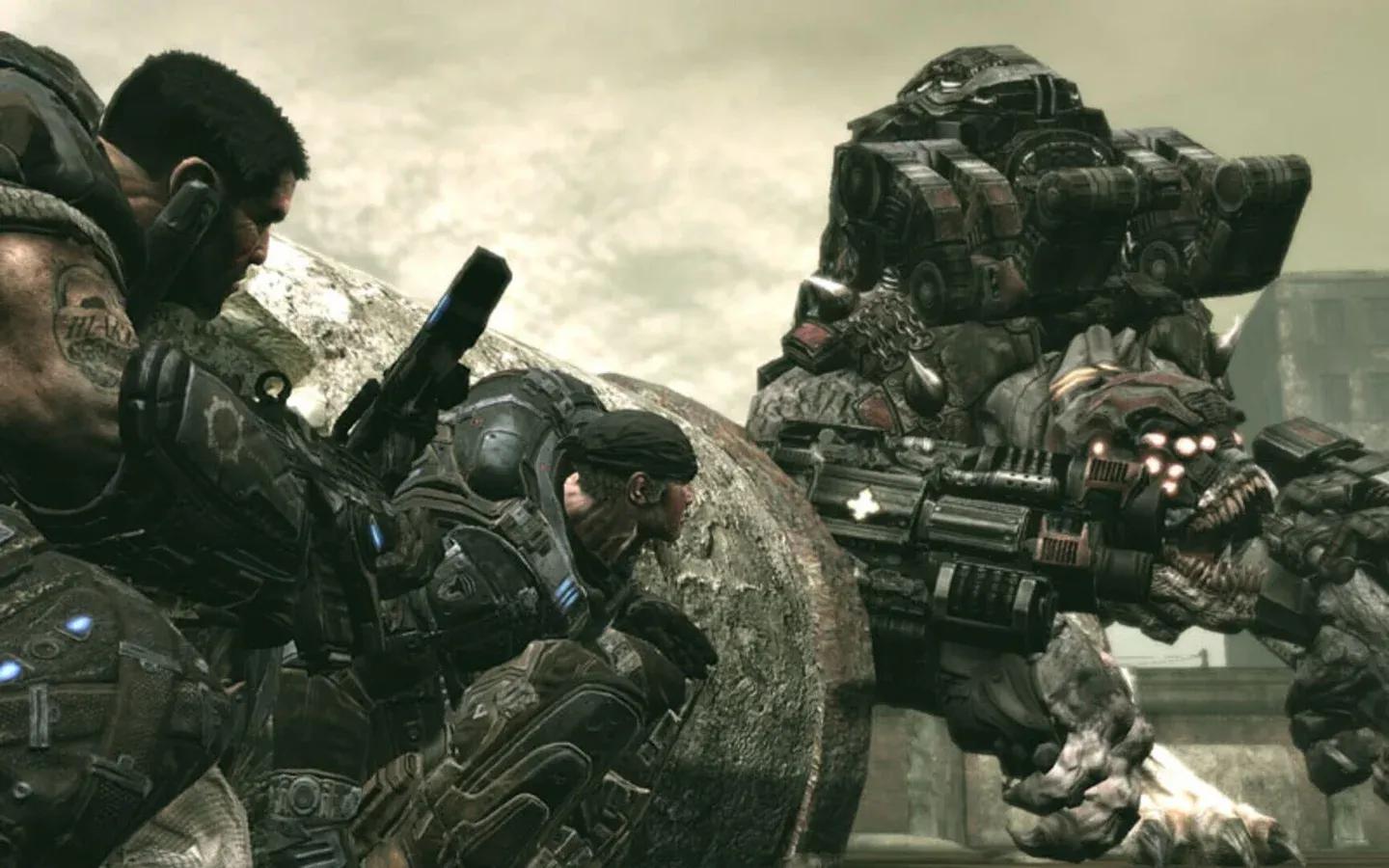
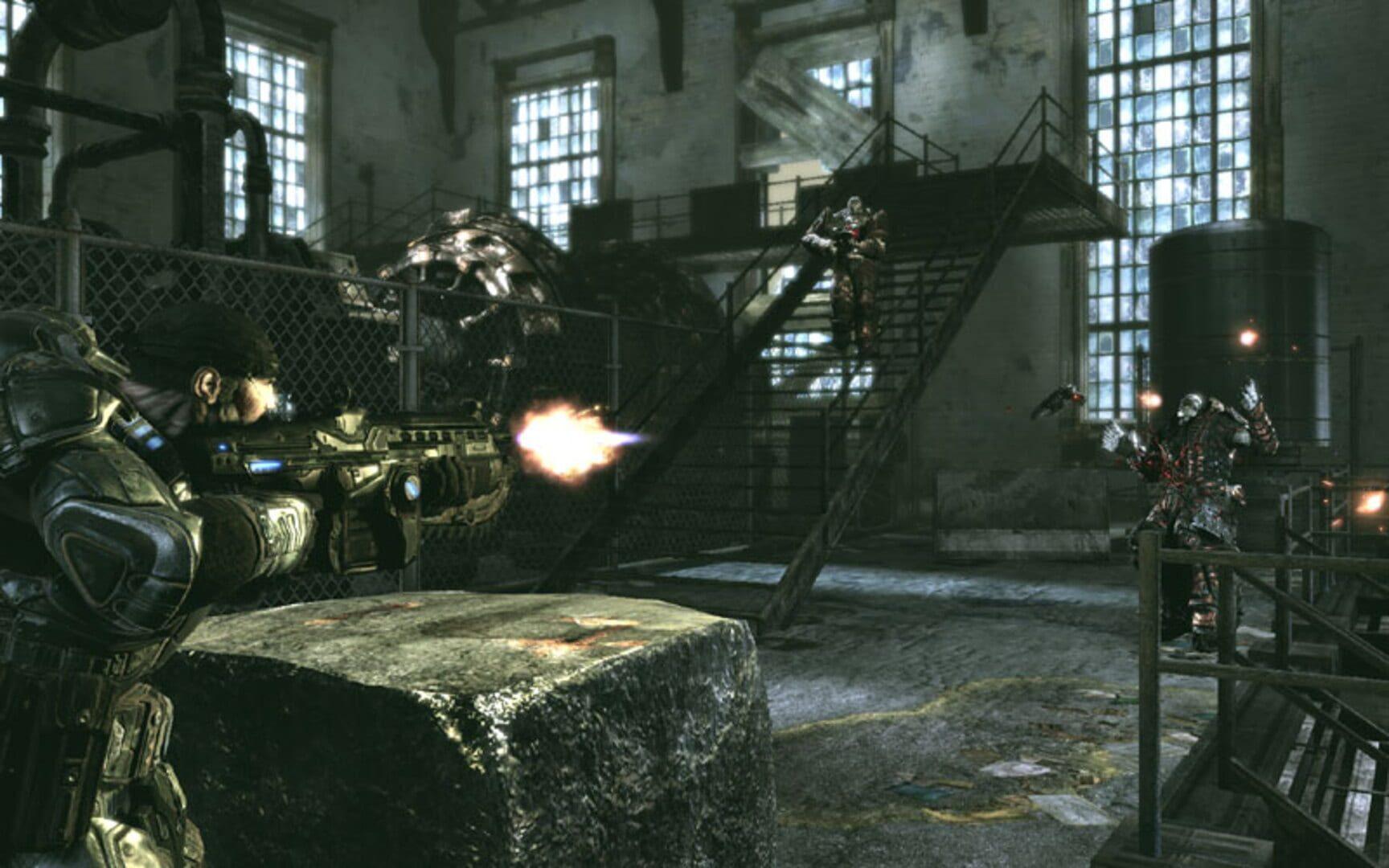
The Locust Horde functions as more than a faceless enemy. Different enemy types require different tactical responses, from the hulking Boomers carrying grenade launchers to the fast-moving Wretches that swarm close. Learning the enemy roster is part of mastering the game.
Impact and legacy
Gears of War reshaped third-person shooter design in ways that are still visible today. The cover-based combat loop it popularized influenced an enormous number of games released in the years following its launch. The Lancer's chainsaw bayonet became one of gaming's most recognized weapons, and the Active Reload system has been borrowed and adapted by multiple franchises.
For a game released in 2006, the campaign holds up as a tight, well-paced tactical shooter with a co-op structure that genuinely rewards coordination. The Locust Horde encounters scale in difficulty naturally, and the final act delivers on the tension built throughout. As the foundation of a long-running franchise, it remains the clearest example of what the series does best.