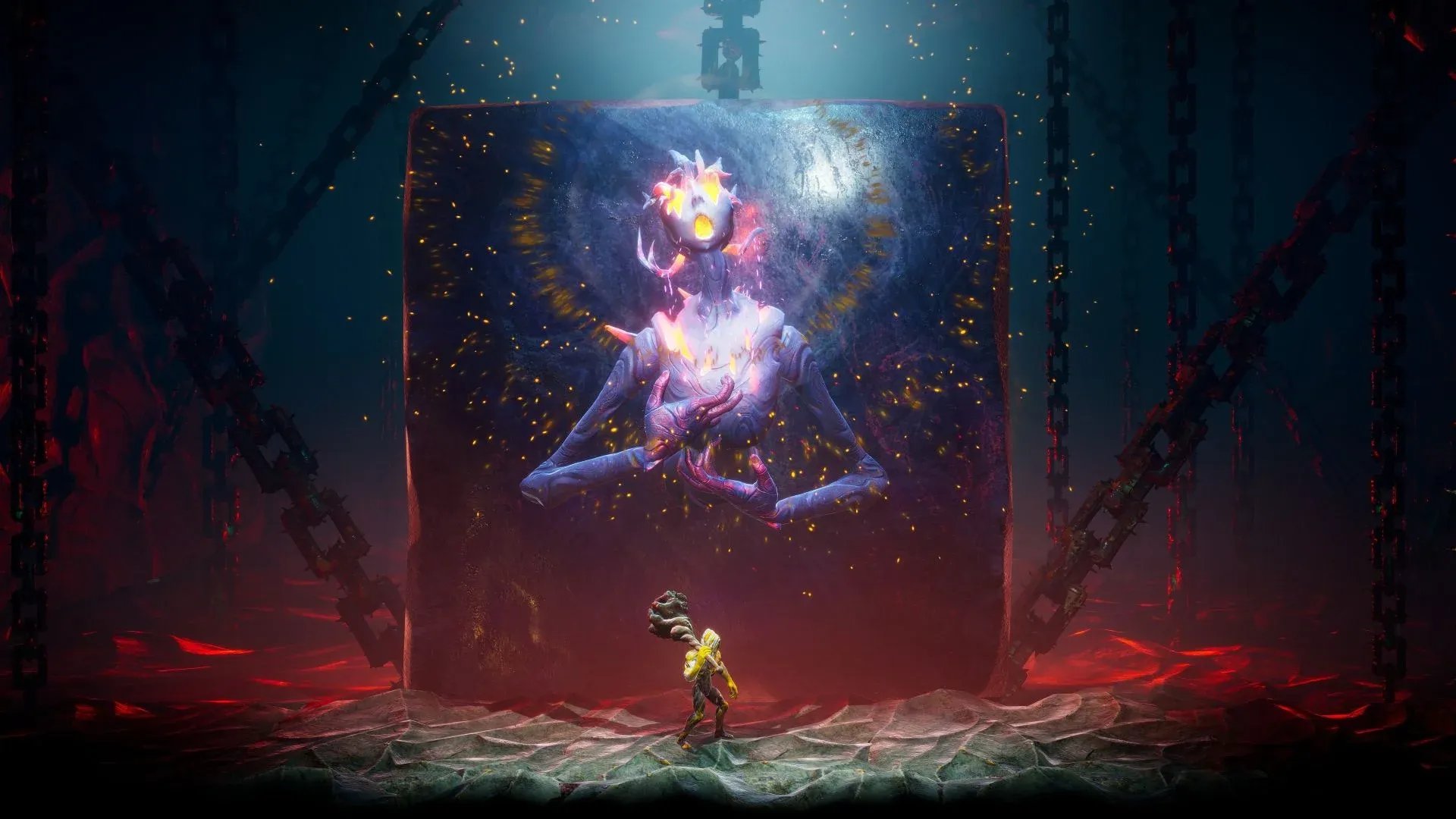


GRIME II, developed by Clover Bite and published by Kwalee, launched on March 31, 2026 for PC, PlayStation 5, and Xbox Series X/S. The sequel to the 2021 original is bigger in every measurable way: more zones, more bosses, more movement abilities, and a painterly art direction that replaces the first game's drab stone aesthetic with deeply saturated color. Early playthroughs suggest this is a 12-to-35-hour game depending entirely on how much you want to see.
How long is GRIME II?
Early player data shows the numbers break down like this:
One early reviewer finished the main story in roughly 30 hours and noted there was still around 10 hours of side content left untouched. That lines up with the completionist ceiling of nearly 35 hours on average, with the slowest recorded run hitting 48 hours on PC.
For context, the original GRIME was a 15-hour experience. GRIME II more than doubles that for players who explore thoroughly.
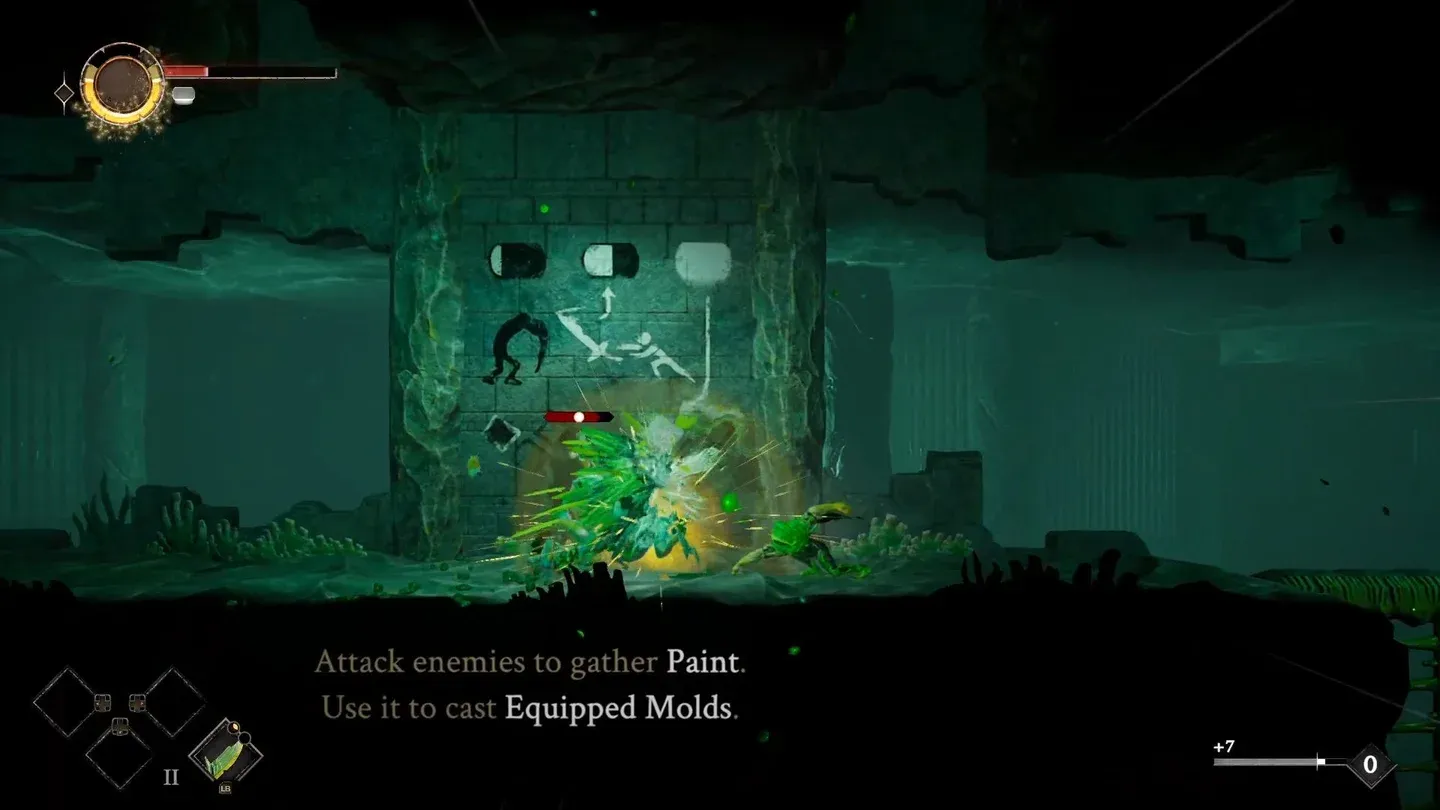
Zone map and checkpoint layout
What is GRIME II actually about?
Your character has no name. They are a cosmic-level force unto themselves, hatched by a malevolent entity and sent to consume. The universe of GRIME runs on a life force called breath, and the world of GRIME II is populated by smiths who weave breath into living creations, built many cycles before the events of the game.
Unlike the first game, which took place inside the corpse of a dead cosmic giant, GRIME II's world is purposefully built and inhabited. The tone shifts from pure desolation to something more political, with dialogue choices that let you pick kindness or cruelty. Choosing empathy gets you psychically scolded by the entity that created you, which tells you a lot about the game's sense of humor.
You are a hatchling growing stronger by consuming paint from enemies. That consumption loop drives everything: combat, progression, and exploration.
How does the combat system work?
GRIME II's combat is Soulslike in structure but distinct in execution. Enemies respawn when you use a checkpoint (the hand-shaped save points scattered through each zone), but unlike most Soulslikes, you do not lose your accumulated paint on death. A bar in the bottom right corner fills as you collect enough paint for a level, so dying sets back your progress less harshly than in FromSoftware titles.
The core inputs work like this:
- X: main attack
- Y: special move tied to your current weapon
- B: dodge, which also doubles as the fragment-steal button when a green circle appears over an enemy
- Right stick: the "grasp" ability, used for countering and collecting environmental items
Stealing enemy moves is the heart of the system. Dodging into a green circle above an enemy gives you one stack of their move. It takes between 4 and 9 stacks to permanently learn that move. Once learned, those moves feed into the mold system: fill a paint bar by hitting enemies hard, then spend it to either transform into a prey form (higher damage, higher risk) or cast a version of that enemy as an attack.
Stats you level up include HP, Strength, Dexterity, and two types of magic-adjacent attributes. By the end of a full playthrough, early players were around level 60 with two fully upgraded weapon and armor sets.
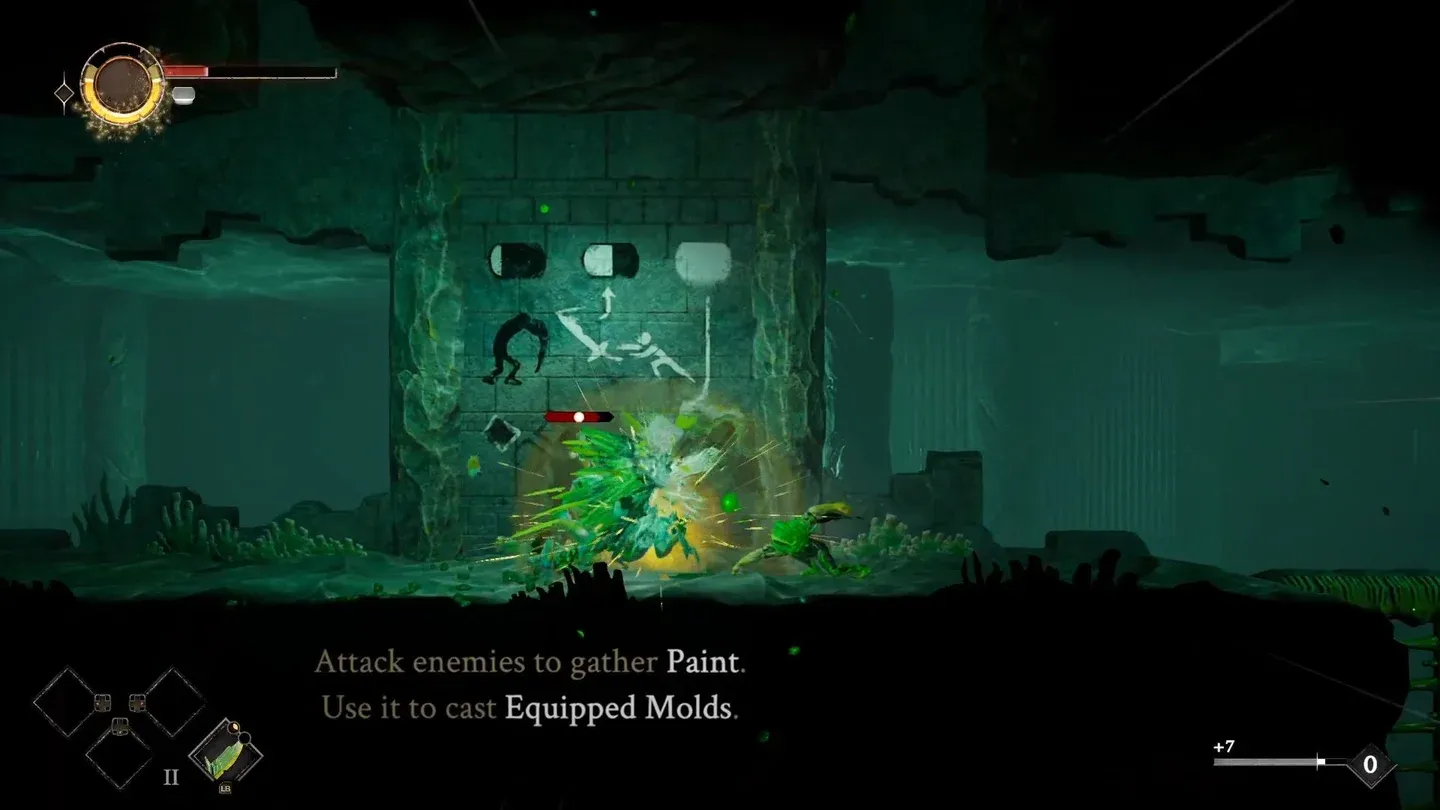
Boss encounter and mold UI
How does exploration and progression work?
Each zone contains hand-shaped checkpoints and two map markers. Finding the first map marker reveals your full explored map for that zone. Finding the second unlocks fast travel between checkpoints. The checkpoints also point you toward the nearest two map markers, so navigation has a built-in compass.
A hub area with vendors unlocks early and serves as your upgrade center. Weapon and armor upgrades require materials found in the environment, many of which are hidden behind parallax scrolling layers. You need to find the right angle to spot them, then use the right-stick grasp to pull them in.
Major enemies drop pigment, which powers additional character customization. Unlocking more pigments requires more molds, which requires assimilating more enemy forms. The systems loop into each other tightly.
The map is dense. It can feel potentially overwhelming until you separate the critical path from optional content, which is not clearly telegraphed early on. When you need three things, go for the middle one first, then the right one, then the left. That routing saves meaningful time.
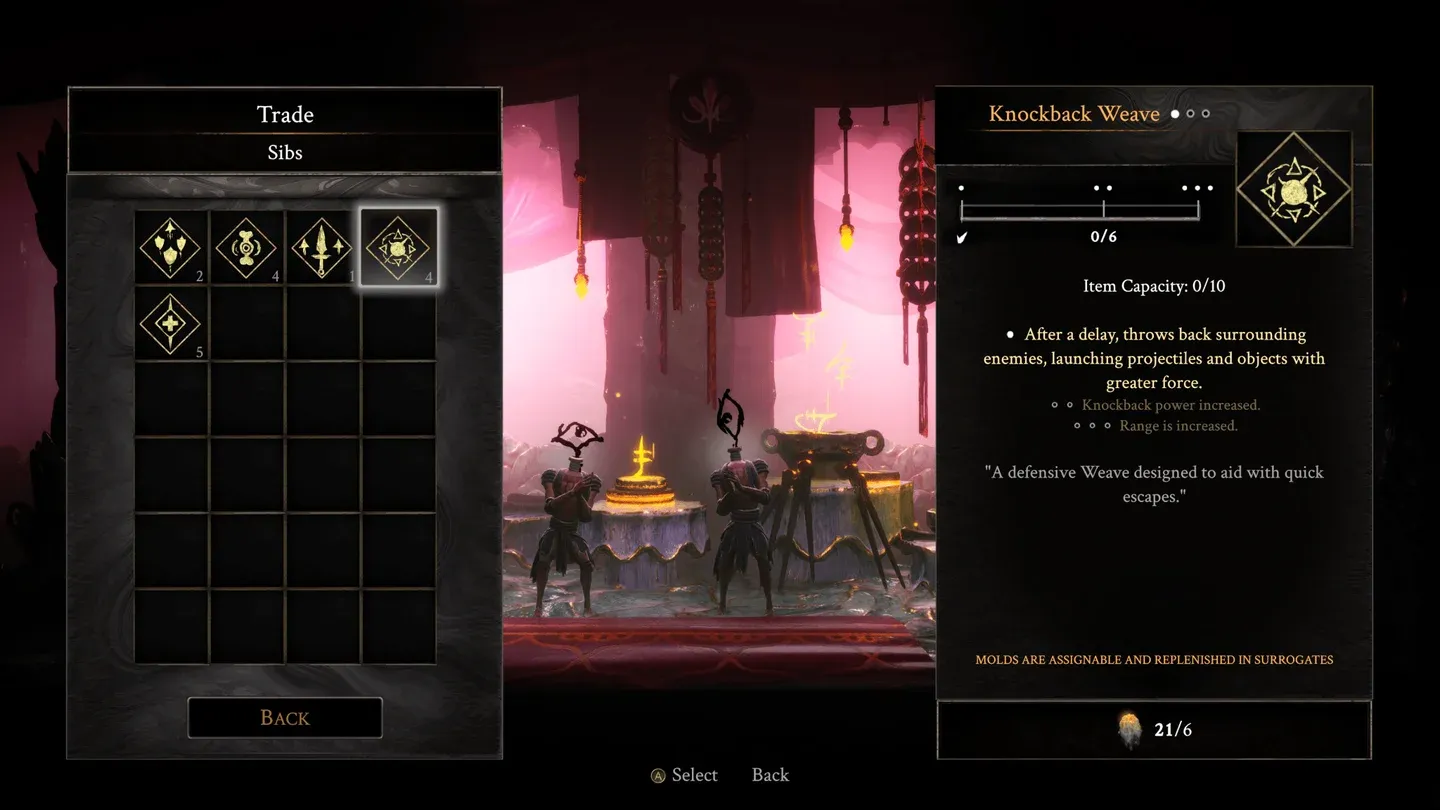
Vendor upgrade and pigment shop
Is GRIME II worth playing?
Early critical reception has been strong, with one reviewer scoring it 9.5 out of 10 and calling it the best metroidvania since Prince of Persia: The Lost Crown. Community ratings sit at 88% with a very low 1.7% retirement rate, meaning almost no one who starts it quits before finishing.
The strengths cited across early impressions:
- Combat that feels rewarding from the first hour to the last, with bosses that require genuine mastery
- Platforming that starts deliberate and escalates into something that makes you feel like the world's greatest magical gymnast
- An art direction built around saturated paint colors, with zones devoted to themes like fingernails, paint waterfalls, and a purple poison swamp
- A soundtrack mixing piano and violin in ways that hold attention even during repeated boss attempts
The only notable downside mentioned is occasional hitbox inconsistency on environmental hazards during platforming. One geometry exploit in the top-left corner of the map let early players clip outside the level, though the game handled it by exploding the character and respawning them on solid ground.
Quick tips before you start
- Do not skip the side content early. The map rewards thorough exploration with movement abilities that make later areas significantly easier to navigate.
- Use the grasp constantly. The right-stick ability is not just a combat tool. Environmental items hidden in parallax layers require it, and missing them means missing upgrade materials.
- Prioritize mold collection. More molds unlock more pigments, which are your primary character customization layer beyond raw stat levels.
- When you need three objectives, go middle, right, then left. This routing tip saves time, though the exact context is left vague to avoid spoilers.
- The assist modes are there for a reason. Raising your damage output does not lock you out of most content. The normal difficulty achievement is the only thing gated behind keeping both sliders at 100%.
For more metroidvania recommendations and action-RPG coverage, browse more guides on GAMES.GG.