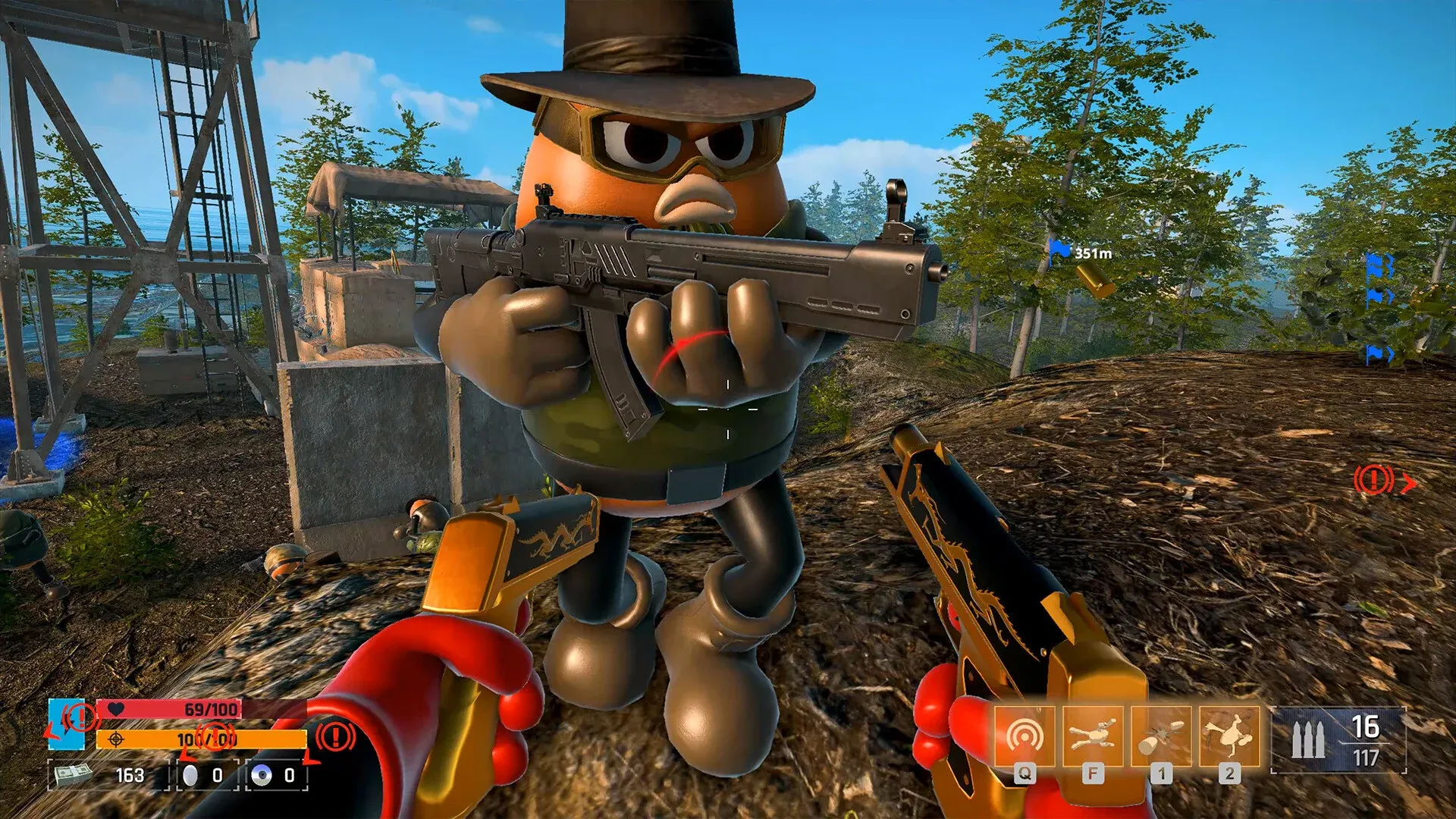


Killer Bean launched on Steam in Early Access on June 8, 2026, as a free-to-play FPS roguelite, and the first few hours have a real habit of punishing players who skip the tutorial hints. Two separate energy bars, four skill trees that pull in completely different directions, a slow-motion dive that rewrites how boss fights work, and a Conquest mode that most players ignore until they've already cleared the campaign. None of it gets explained upfront. This guide covers what the game expects you to figure out on your own, so you don't have to.
What should you prioritize first in Killer Bean?
The answer is the Guns Blazing skill tree, and it isn't particularly close. Most of the game's combat happens at range, the dual pistols have infinite ammo, and stacking two or three Guns Blazing upgrades before Mission 4 noticeably smooths out the damage curve. Everything else branches out from that foundation.
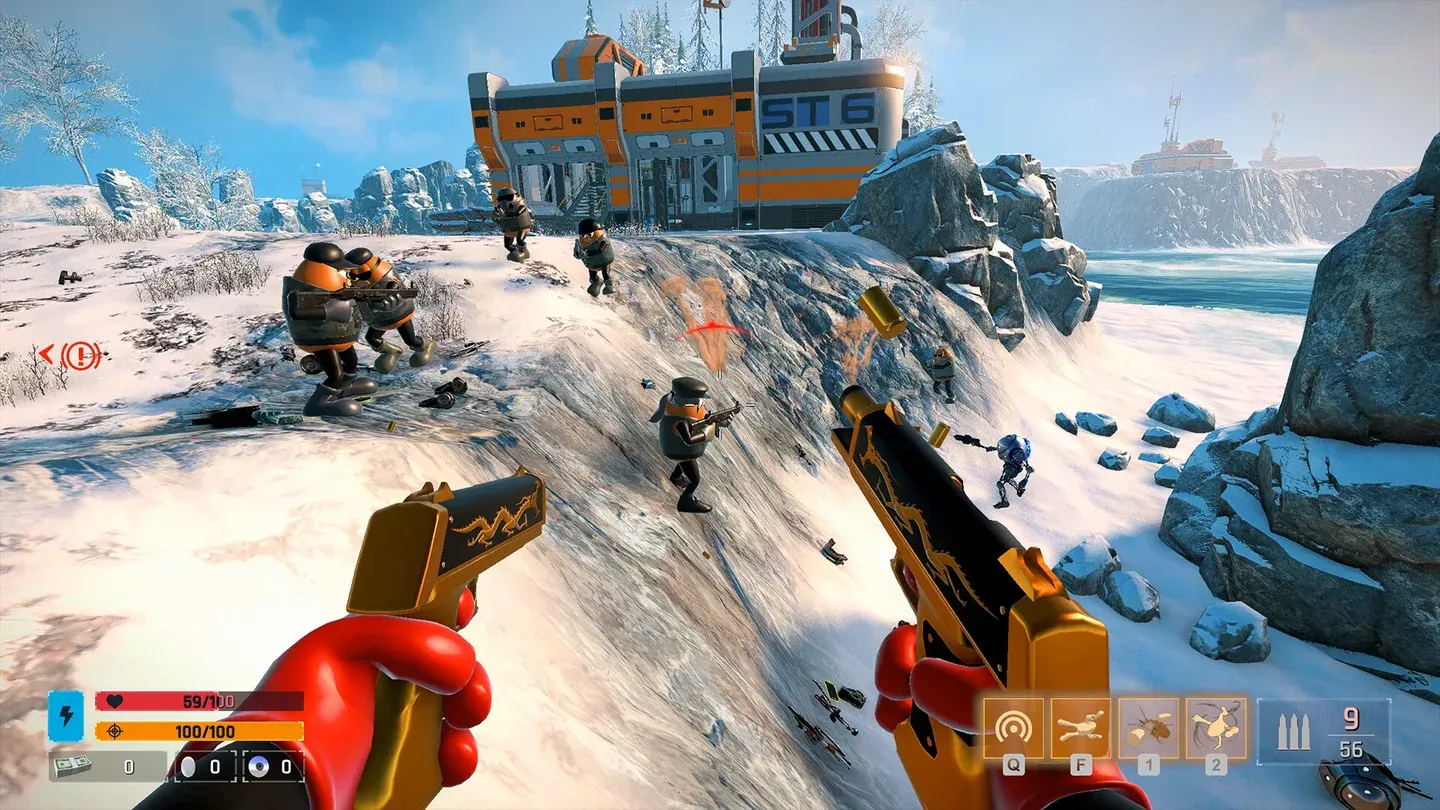
Dual pistols carry the campaign
The dual pistols are not a starter weapon
Killer Bean opens with dual pistols and they feel like a tutorial loadout. They aren't. Players have confirmed they're powerful enough to carry through the full campaign without swapping out. Competitive damage per shot, zero reload pressure during extended fights, and no ammo management stress.
When you find weapons like the shotgun, grenade launcher, KRG-25 Assault Rifle, or rocket launcher on later missions, treat them as situational tools rather than replacements. The rocket launcher is genuinely excellent in enclosed spaces (Mission 2 interiors especially), but the dual pistols handle most open-island encounters without burning your limited supply of heavier rounds.
How do the two energy bars work?
This catches players mid-fight more than almost anything else. Killer Bean runs two completely separate energy systems, and watching only one of them will get you killed.
The regular energy bar powers movement including the double jump. Each double jump costs 5 energy. In a long repositioning fight where you're constantly moving vertically, that drains faster than it looks.
The special move energy bar powers Breakdance (area-of-effect attack), Bullet Time, and Sonar. It doesn't regenerate in combat the same way as the regular bar.
Running out of double jumps mid-firefight because you burned the wrong bar is a different problem from running out of Bullet Time against a boss. Both matter.
Why is the dive ability so important?
The dive triggers slow-motion during a free-fall. Time slows while you aim and fire, giving you clean windows to place multiple shots on a target before the effect ends. Structure boss encounters around dive windows and they become significantly more manageable.
Three bosses where this goes from optional to necessary:
- Warlord (Mission 3): The first boss where dive becomes the reliable approach. Dive in, slow time, fire your clip, reposition. Without it, Warlord is a war of attrition you'll frequently lose.
- Bullet Eyes (Mission 7): Same approach on different terrain. Diving during the platform ascent gives stable firing windows on a target that's genuinely hard to track in normal movement.
- Monitor (Mission 9, three phases): Phase 2 adds shoulder grenade launchers, Phase 3 shifts to a flying form with tentacles (one mace head, one laser pyramid). Dive gives you the reaction time to place shots during phase transitions. Phase 3 without it is significantly harder.
Practice the timing on standard Bad Beans before relying on it for bosses. The timing feels different from regular movement and learning it mid-boss fight is not the place.
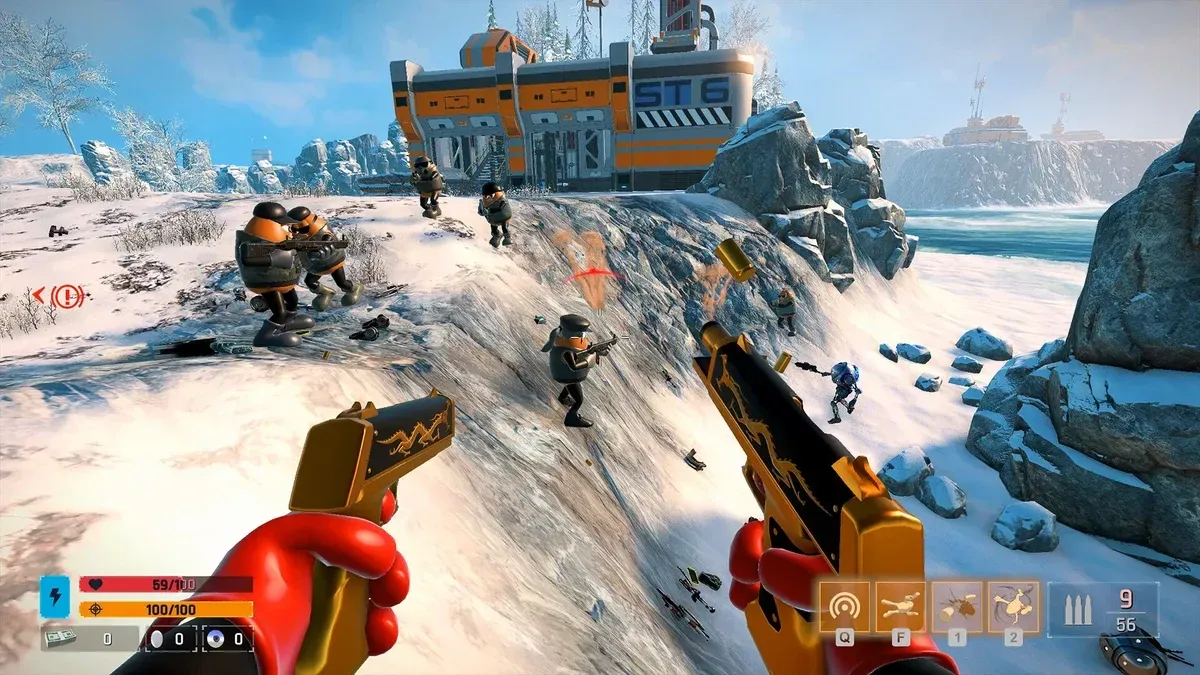
Dive ability slows time on bosses
How should you build your skill trees?
Killer Bean has four skill trees: Guns Blazing (ranged), Melee (close combat), Parkour (movement), and Stealth (concealment). For a first campaign run, the priority order is Guns Blazing first, Parkour second, and Stealth only if you're specifically targeting Conquest mode.
Melee is worth noting: the developer has publicly acknowledged animation issues and confirmed plans to redesign the system from hitbox to raycast for better hit registration. It's not in a reliable state right now, so spending skill points there early is a gamble on future patches.
Parkour gets more valuable in the second half of the campaign when biome traversal gets complicated. Add it after Guns Blazing is anchored.
Conquest mode rewards a completely different build
Conquest mode puts you on a procedurally generated island where you join one of four factions: Bad Beans, Mercenaries, Pirate Commandos, or Shadow Troops. Your faction determines allies and targets, and the objectives are structurally different from campaign missions.
Stealth pays off in Conquest in a way it simply doesn't in Campaign. Faction-controlled islands reward entering enemy zones undetected before clearing them, which is exactly the scenario Stealth is designed for. A Stealth-heavy build that struggles through linear Campaign fights is actually well-suited to Conquest's infiltration structure.
If you're running both modes simultaneously, keep separate skill priorities rather than treating the system as one unified build.
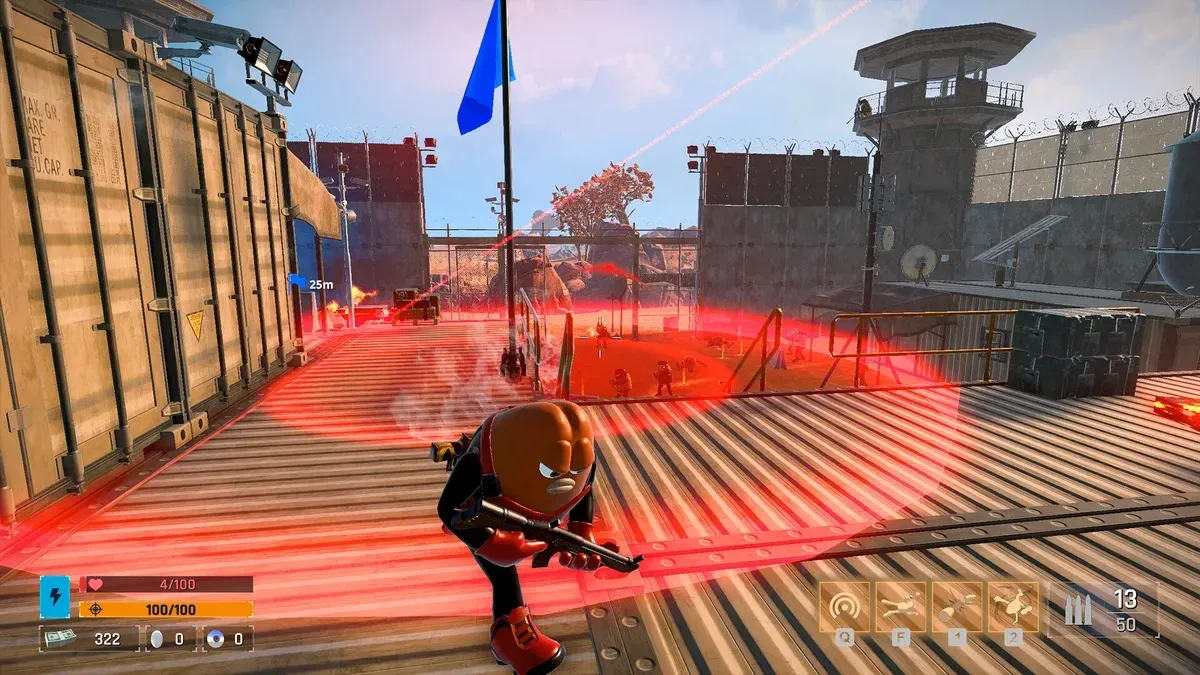
Guns Blazing skill tree priority
Mission-specific tips you need to know
Don't forget ammo crates before activating objectives
Completing a mission objective in Killer Bean doesn't end the mission. Mission 1 makes this explicit: you recover the car, and then the helicopter boss spawns. The mission only resolves after you beat it. That two-part structure runs through the entire campaign, with each mission containing a retrievable objective (hard drive, override key, target computer) and a combat gate that triggers once you secure it.
Ammo crates sit in safezones and refill between phases. They're among the most useful items in the campaign and the easiest to walk past when the objective marker is right there ahead of you. Check your ammo before activating the final objective each mission.
How do you beat the Overseer in Mission 5?
The Overseer has surge armor that can't be damaged directly. To strip the protection, lure the Overseer to one of the power generators on the map and shoot the generator to overload the armor. Once the surge protection is down, standard weapons work normally.
Mission 5 is the first mission that requires environmental problem-solving rather than straight combat pressure. There's also a laser-dodge section on the control panel walkway during the disarming phase. Plan your movement through the generator room before engaging.
RPGs and helicopters: get closer, not further
Enemy helicopters appear from Mission 2 onward and feel threatening from range. The actual approach: stop trying to hit them from a distance and move closer before firing RPGs or explosive weapons. At close range, splash damage and direct hits are reliable. From long range, projectile drop plus the helicopter's movement makes consistent contact genuinely difficult.
Mission 4 flips this logic. Toy Maker sends explosive vehicles toward you rather than helicopters. Don't get close to those. Shoot them before they close the distance.
Don't shoot inside the shop
Between missions, Killer Bean visits a shop to buy weapons and upgrades using money or eggs. Firing a weapon inside triggers the security system and locks you out of purchases for that visit. The shoot button is the primary interaction throughout the game, and new players have fired into the shop by muscle memory more times than you'd expect. Notice you're in the shop before combat instincts take over.
Resource management and daily progression
One of the most common early mistakes is spending resources immediately after earning them. Before committing to an upgrade, consider whether it improves progression toward the current mission, whether a more useful upgrade becomes available soon, and whether the immediate need is genuine.
Daily activities and achievement rewards compound over time. They don't feel significant individually, but consistent collection across multiple sessions adds up to meaningful progression. The players who advance fastest are usually the ones doing short, consistent sessions rather than marathon single-session runs.
For players who enjoy games that reward careful observation and environmental problem-solving (like the generator mechanic in Mission 5), puzzle games offer a similar satisfaction loop in a different format.
Killer Bean is free to play on Steam, with a paid tier that launched at a 20% introductory discount from $14.99. All four game modes (Campaign, The Party, Battle Arena, and Conquest) are available in the current Early Access build.
For more guides on Killer Bean and related strategy content, the full Paradise Killer game page is worth bookmarking if you're into games with deep environmental storytelling alongside their action. Check the Paradise Killer guides collection for strategy resources on that title. For everything Killer Bean-specific, the strategy guides collection above is your best starting point.