Overview
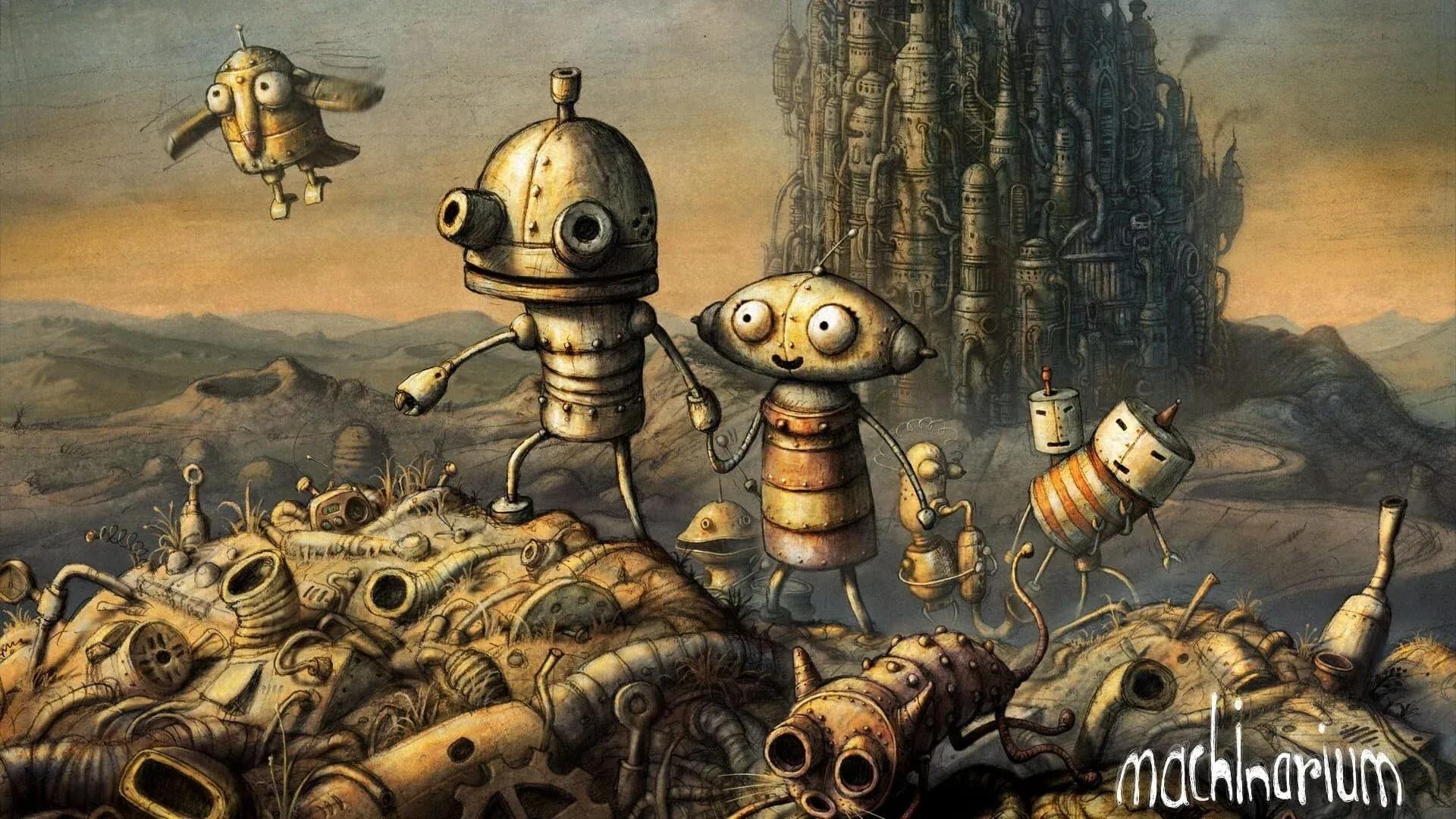
Machinarium puts players in control of Josef, a small robot dumped on a scrapheap outside a city populated entirely by machines. After reassembling himself piece by piece, Josef makes his way back into the city to dismantle a plot by the Black Cap Brotherhood, a gang of thuggish robots planning to blow up the city's central tower, and to rescue his girlfriend Berta along the way. The story unfolds without a single word of written dialogue, relying entirely on animated thought-bubble sequences and environmental storytelling to communicate.
The premise sounds simple, but the execution is anything but. Amanita Design, the Czech studio also behind Samorost and Botanicula, built Machinarium as a fully hand-drawn world where every screen feels like a painting you can interact with. Released in October 2009, the game earned widespread recognition as one of the defining indie adventures of its era, and it remains available across PC, Mac, iOS, Android, PlayStation, Xbox, and Nintendo Switch.
Gameplay and mechanics
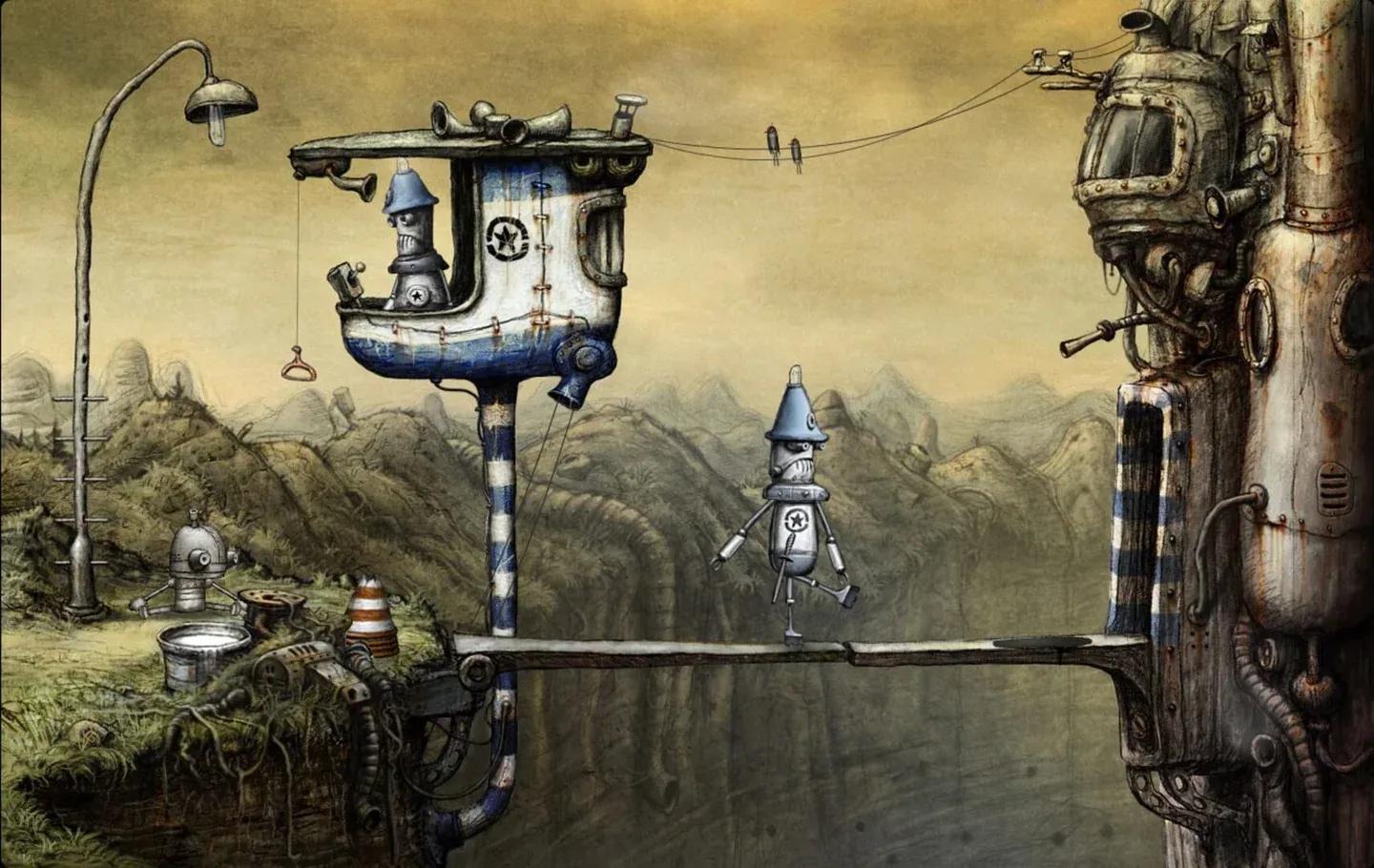
Machinarium's core puzzle design follows a strict spatial rule: Josef can only interact with objects within his physical reach. To compensate, he can extend or compress his body into three distinct height positions, which opens up interactions with objects at different levels on each screen. This mechanic sounds minor but fundamentally changes how you approach each puzzle, since the solution often hinges on figuring out which height gets Josef close enough to the relevant object.
Key mechanics at a glance:
- Height-shifting to reach different objects
- Inventory-based item combination puzzles
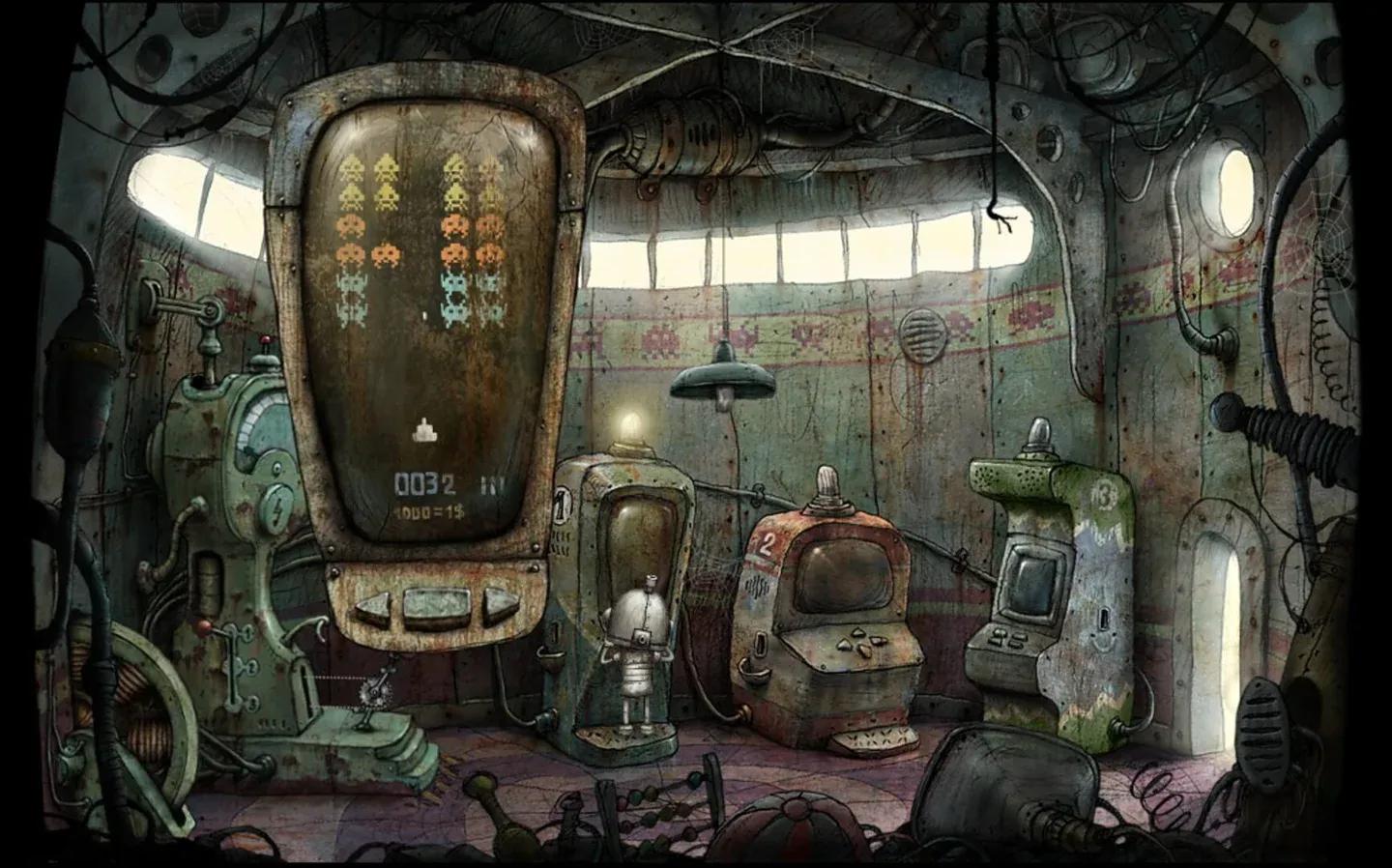
- Mini-games embedded within the world
- Thought-bubble hints that show Josef's intentions
- A built-in hint system that requires solving a mini-game to unlock
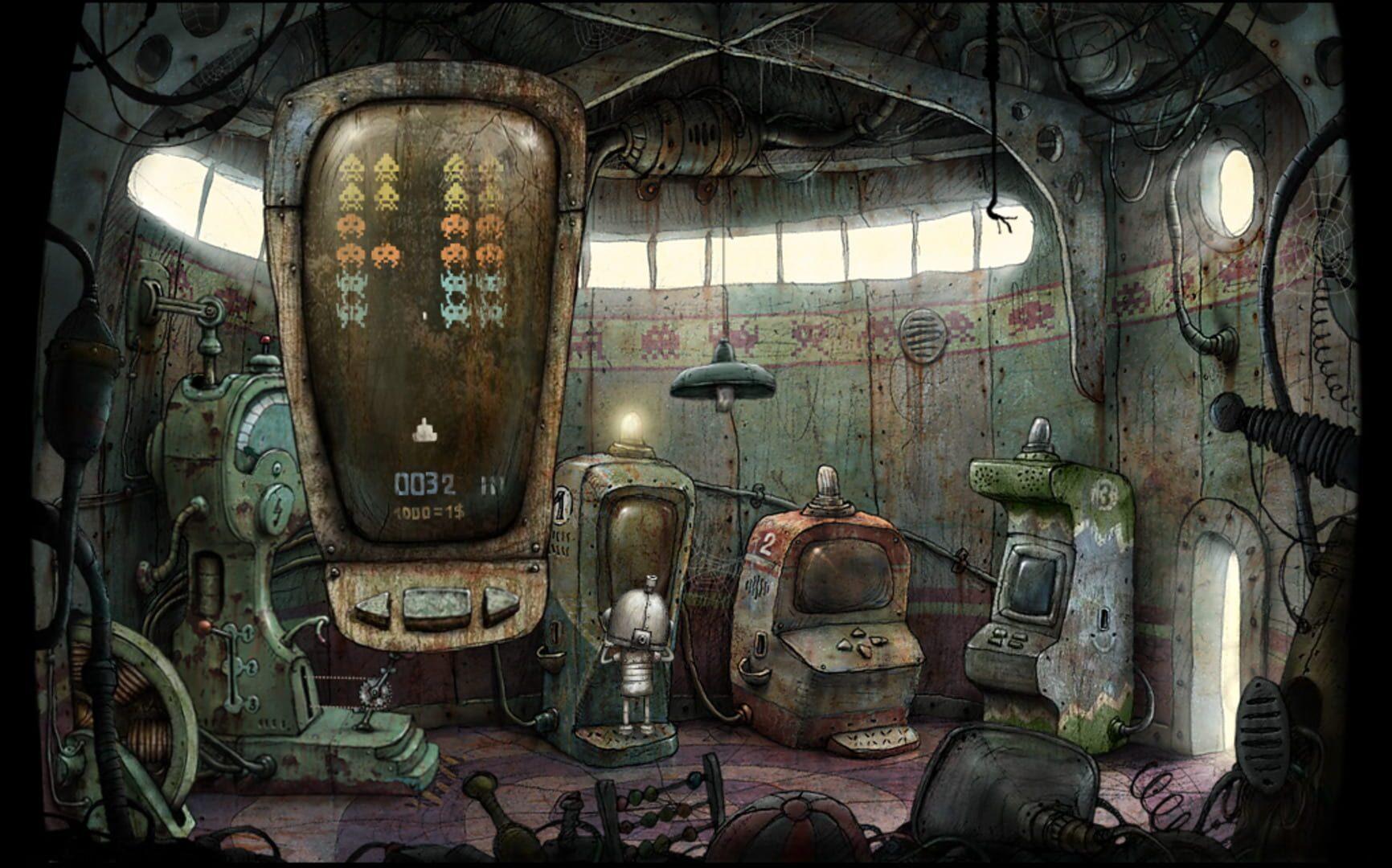
The hint system deserves particular mention. Players who get stuck can access a full walkthrough page, but only after completing a brief mini-game to earn it. It's a clever piece of design that keeps the hint system from being a trivial crutch while still making it available when genuinely needed.
World and setting
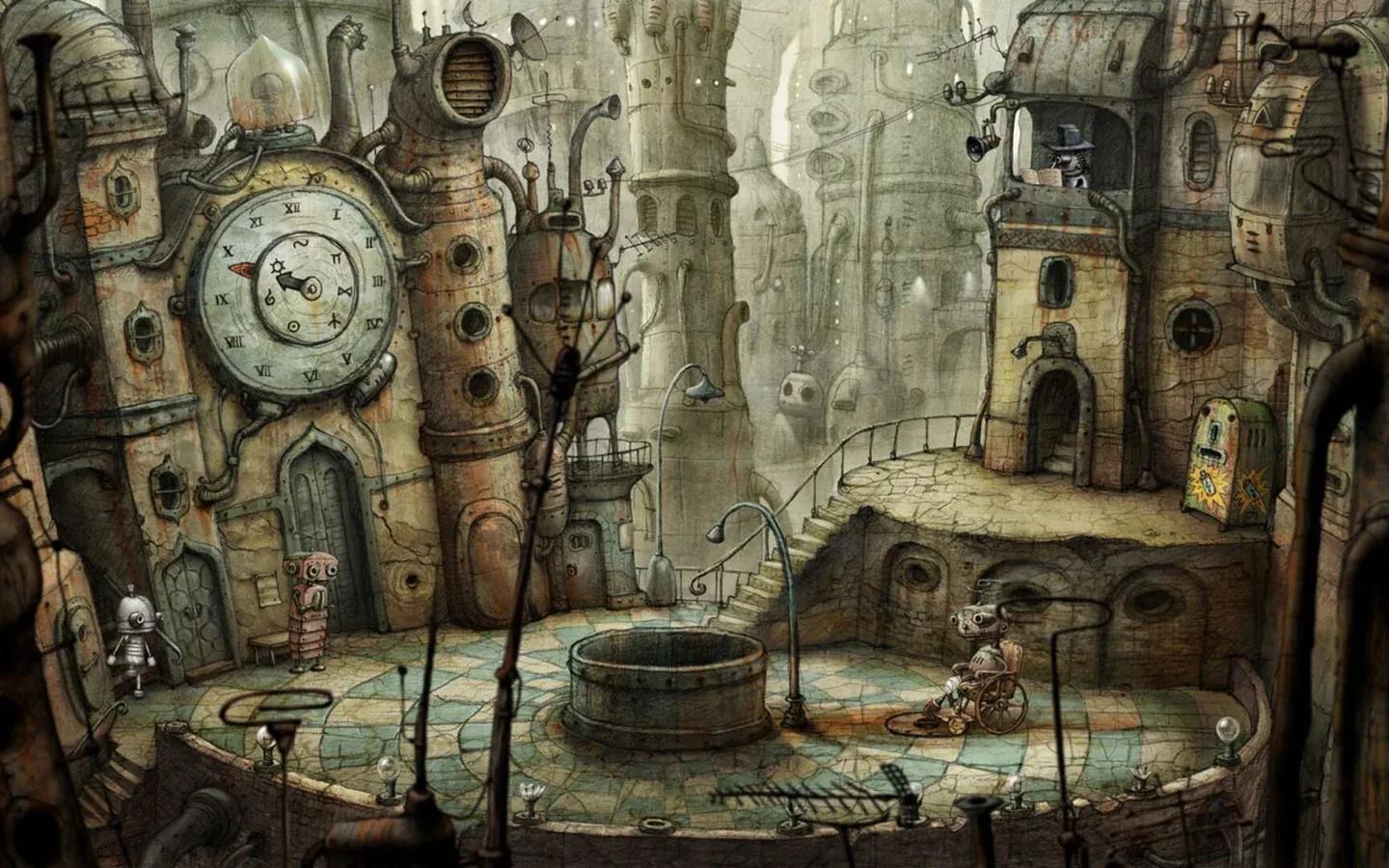
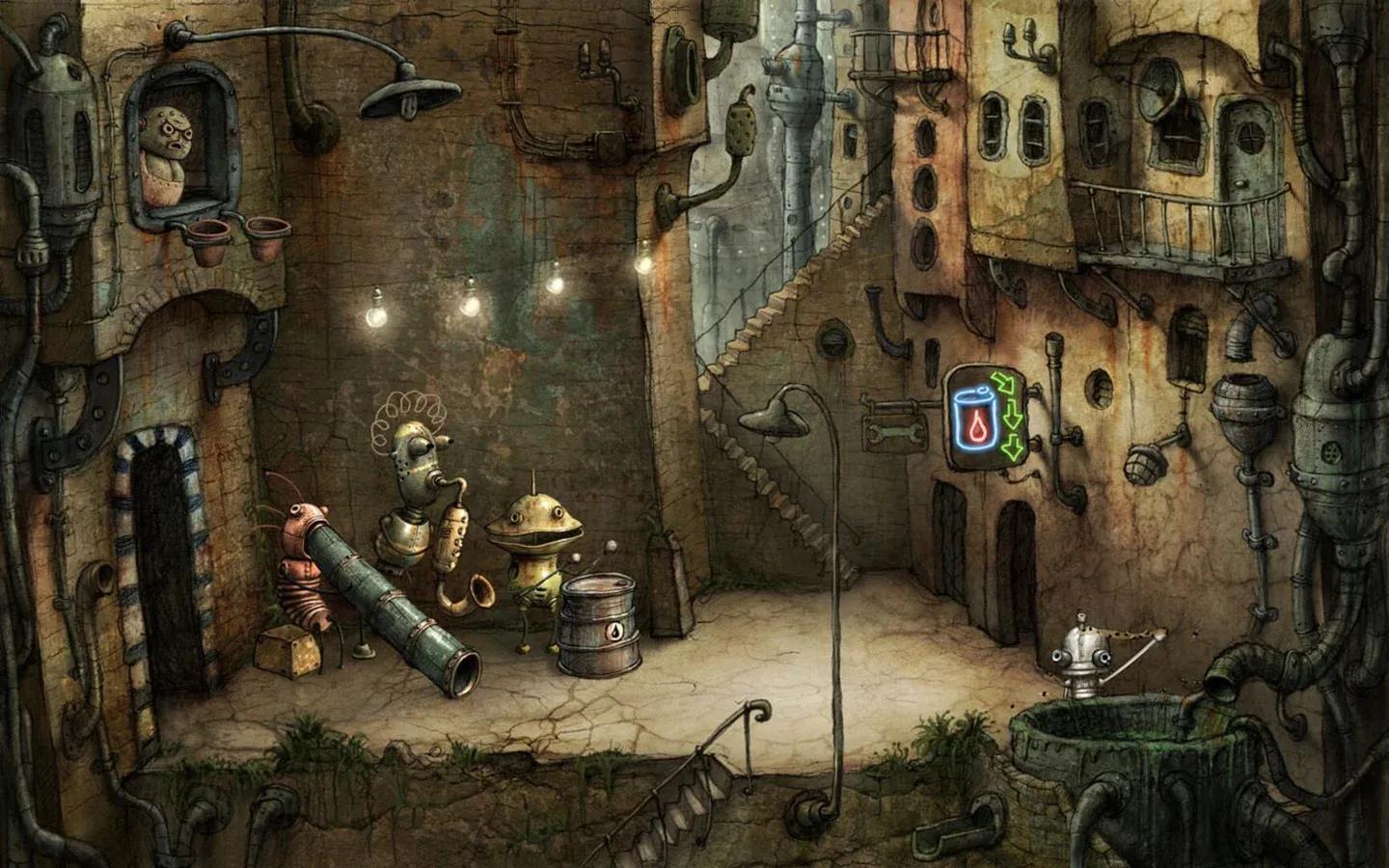
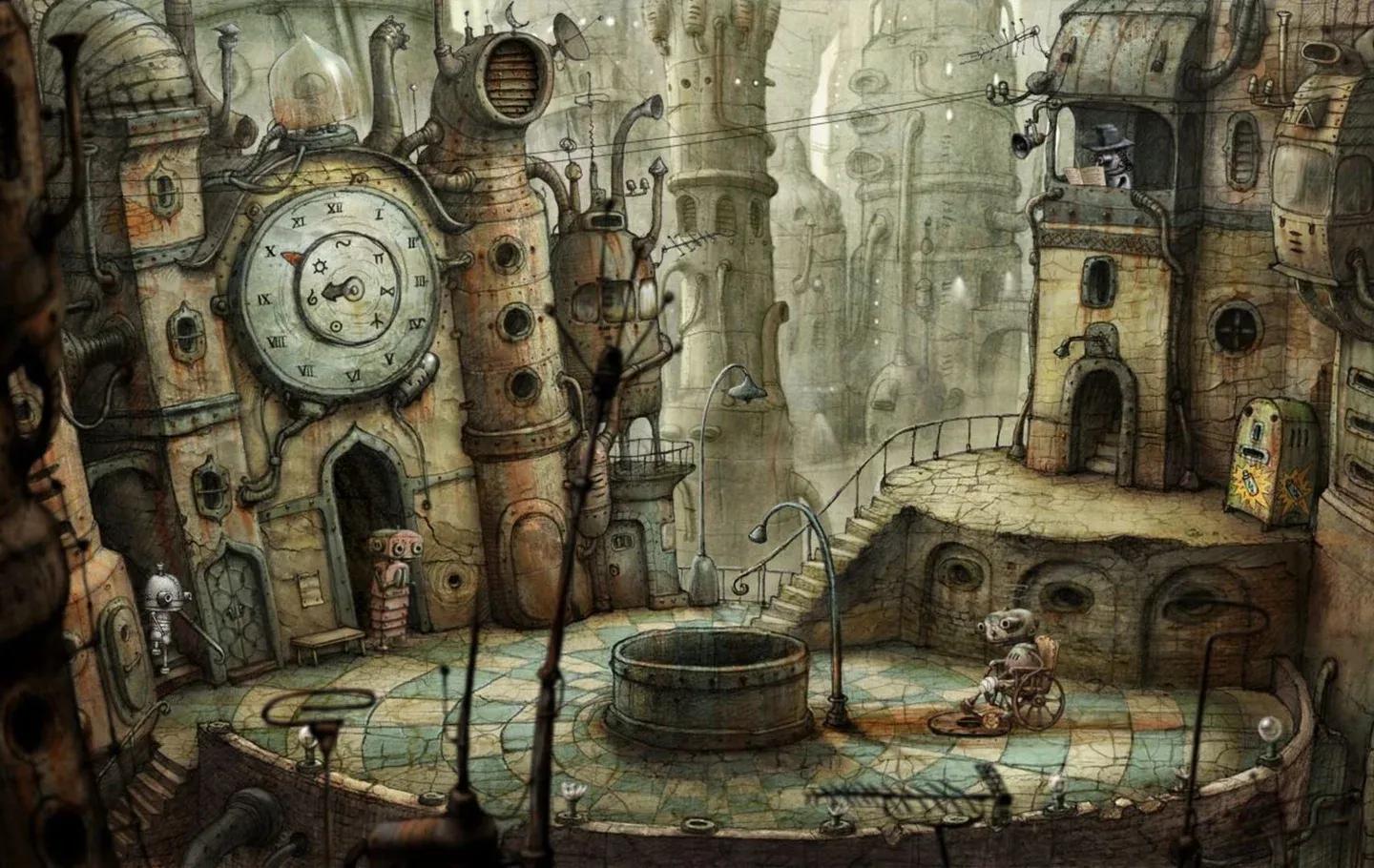
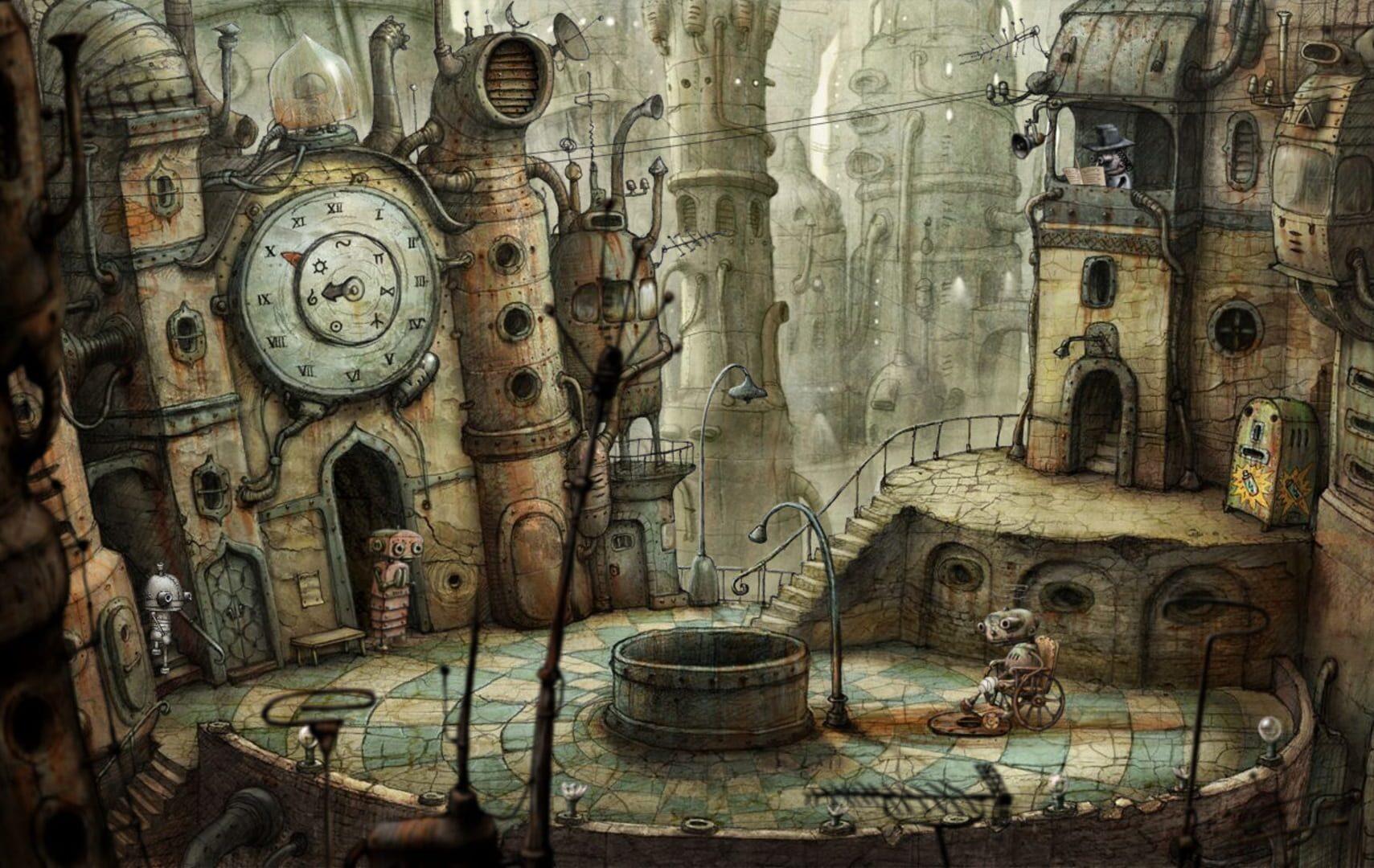
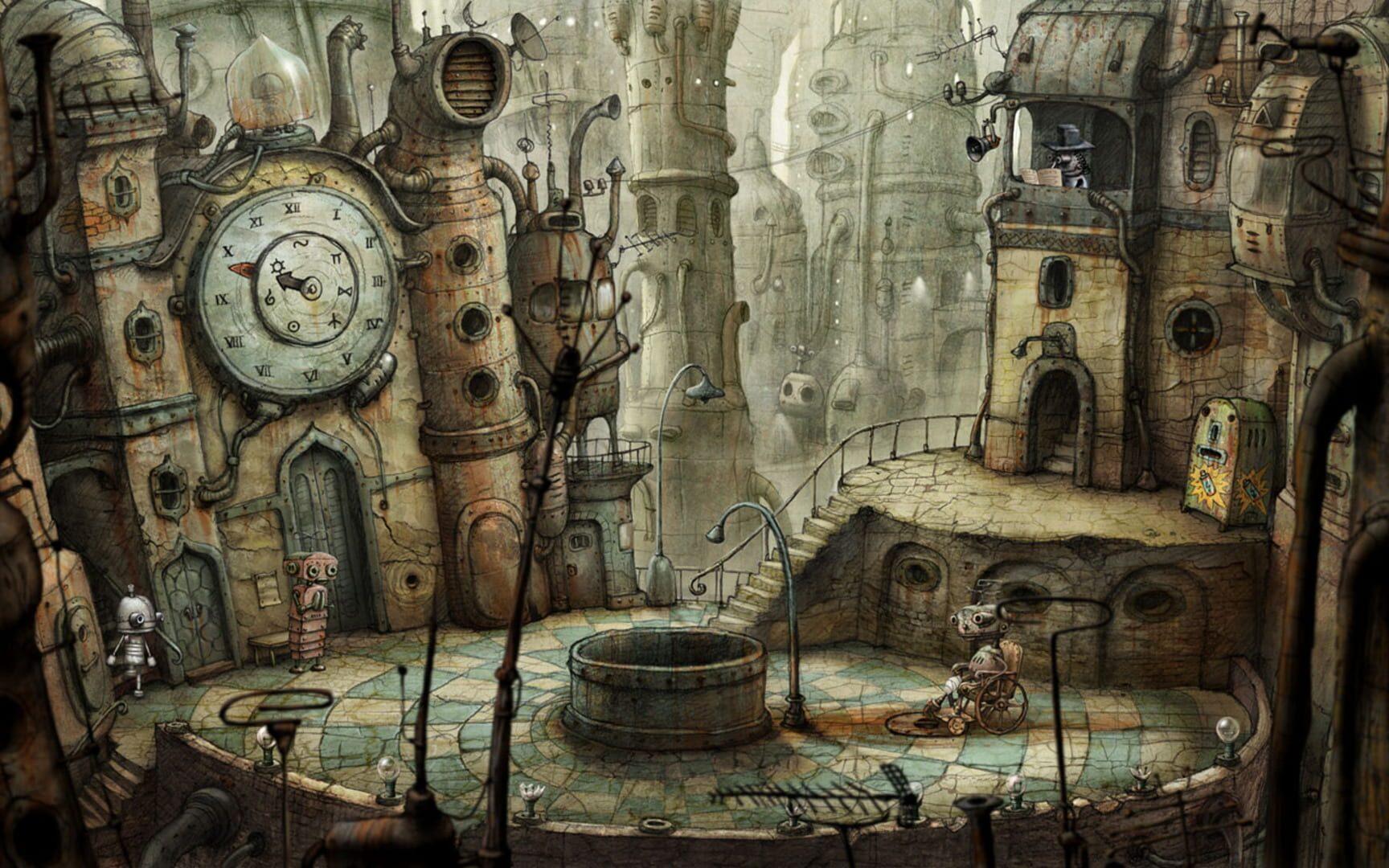
The city of Machinarium is a dense, layered dieselpunk environment where robots go about their daily lives in cramped apartments, smoky bars, and industrial towers. There are no humans anywhere. Every character, every piece of furniture, every ambient detail is mechanical, and Amanita Design uses that constraint to build a world with a distinct internal logic.
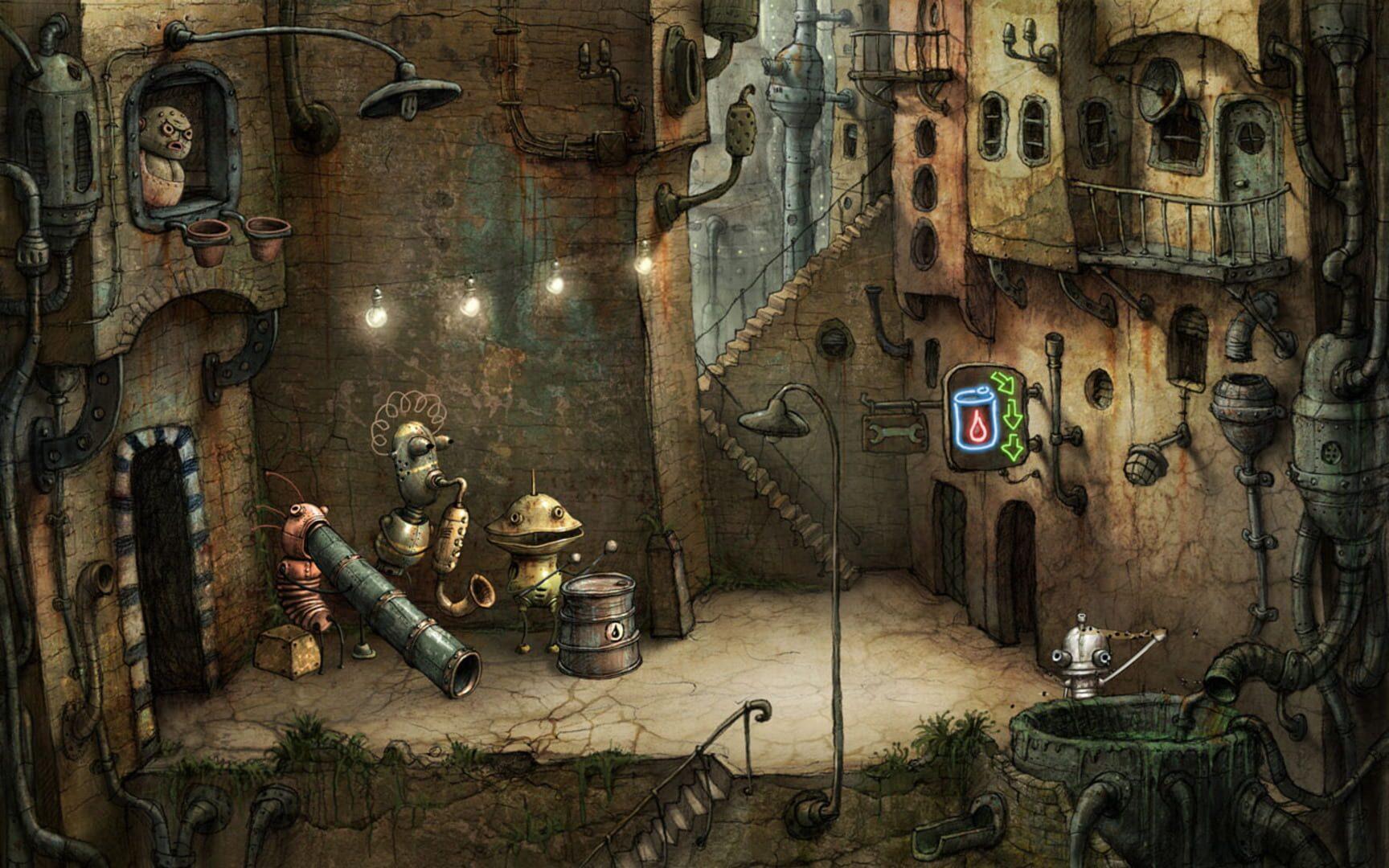
Because there's no spoken language or text dialogue, the entire narrative burden falls on the animation and art direction. Flashback sequences play out in thought bubbles above Josef's head, showing his history with Berta and his run-ins with the Brotherhood. It's an approach that makes the game feel more like an interactive animated film than a traditional adventure game.
Visual and audio design
Every background in Machinarium is hand-drawn, giving the game a texture that pre-rendered 3D environments from the same period simply couldn't match. The color palette shifts as Josef moves through different districts, from rusted industrial zones to more ornate mechanical interiors, and each area has a visual identity that makes navigation feel natural even without a map.
The soundtrack, composed by Floex (Tomas Dvoracek), is a key part of why the game still resonates. The music blends acoustic instruments with electronic elements in a way that matches the world's mechanical-organic character. Amanita Design has since released the soundtrack on vinyl, which tells you something about how seriously players take it.
Impact and legacy
Machinarium holds a 4.62 out of 5 rating from over 2,100 PlayStation Store reviews, a number that reflects sustained appreciation rather than launch-window enthusiasm. The game's influence on the indie point-and-click genre is visible in dozens of subsequent titles that adopted its wordless storytelling approach and hand-crafted visual style.
For players coming to it fresh, Machinarium offers a self-contained, wordless puzzle adventure that runs at its own pace and asks for patience rather than reflexes. The puzzles are fair, the world is genuinely worth exploring, and the story lands its emotional beats without ever spelling them out.