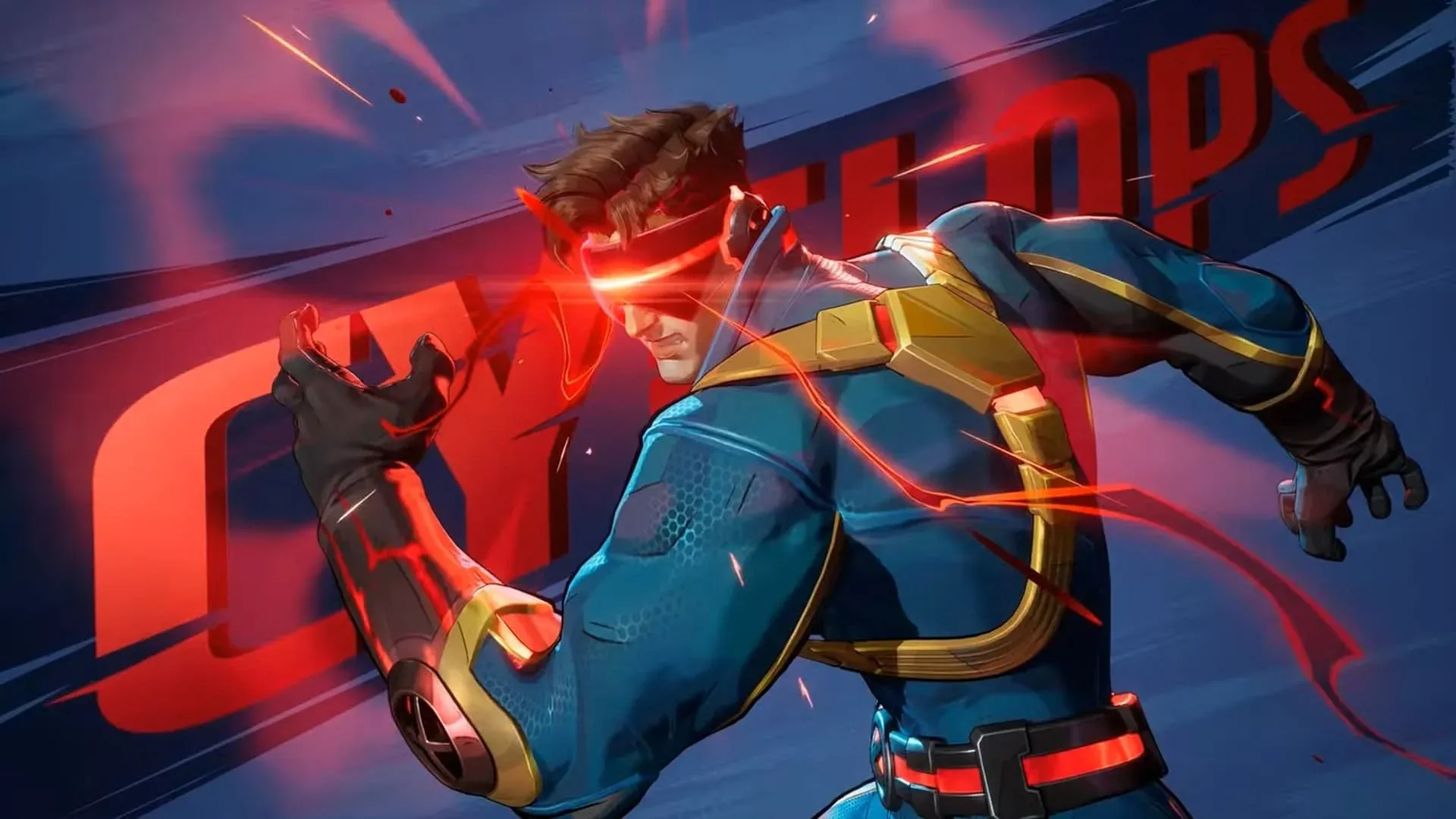


Cyclops arrived in Marvel Rivals as the 51st hero on June 12, 2026, and he hit the ground running. As a hitscan Duelist with 275 HP, Scott Summers plays like a midrange sniper who can two-tap 300 HP heroes with headshots at over 30 meters. His kit rewards mechanical precision, smart movement, and patient ultimate timing. Get those three things right and he becomes one of the most punishing Duelists in the game.
Cyclops Abilities
Before getting into positioning and combos, you need to understand what each ability actually does and when to use it. Cyclops has a tighter ability loop than most Duelists, and every cooldown matters.
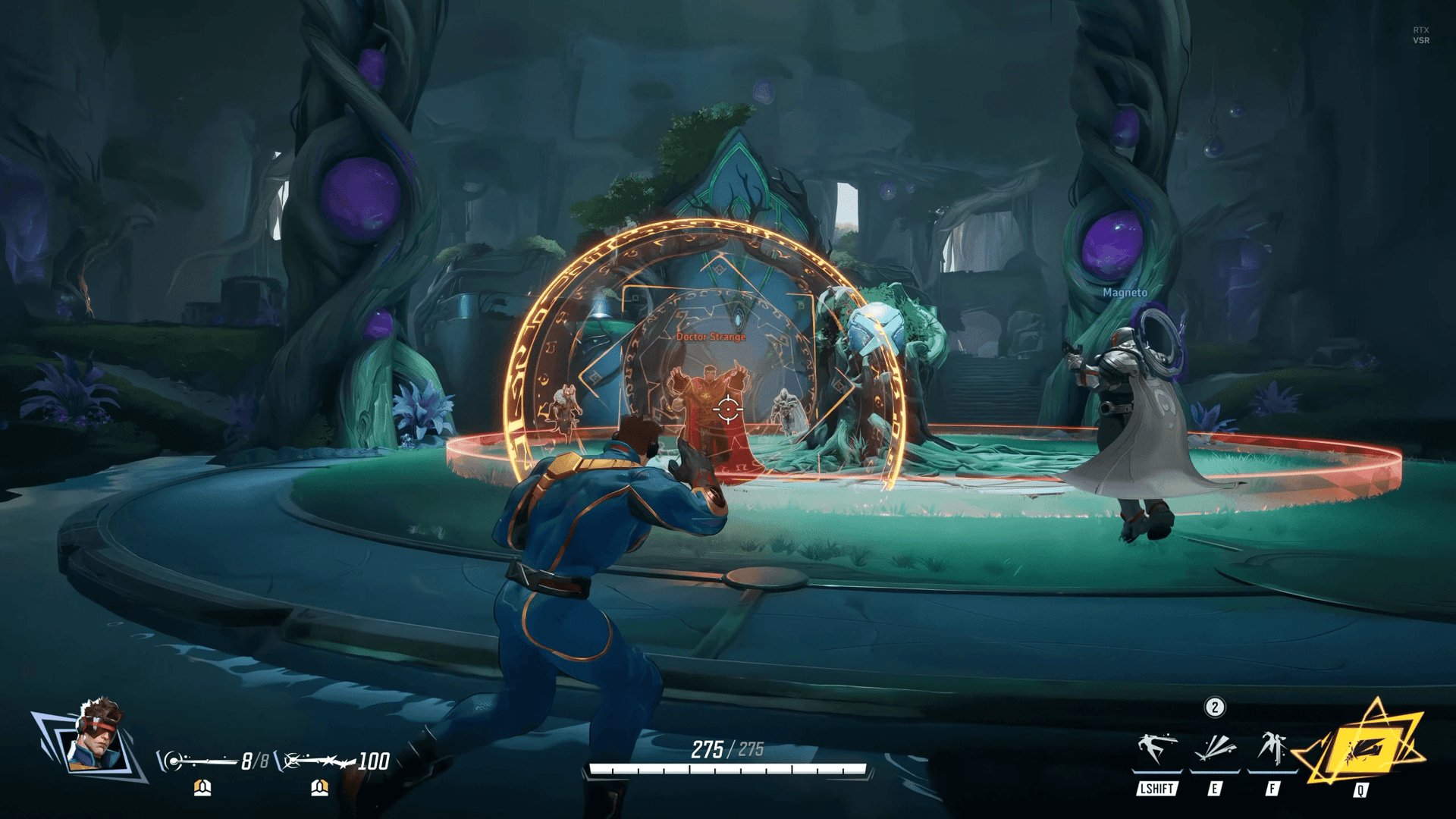
Primary fire: Optic Blast
Optic Blast (Left-Click) fires quick bursts of kinetic force with a tick rate of 0.03 seconds and 25 damage per tick. At midrange, it outpaces Hela and Phoenix in time-to-kill because two headshots are enough to drop a 300 HP hero at over 30 meters. Against isolated targets, this is always your go-to. The single-target damage is significantly higher than any of his area abilities, so save the beam for grouped fights and keep Optic Blast locked on solo targets.
Secondary fire: Concussive Beam
Concussive Beam (Right-Click) fires a continuous beam that refracts between enemies and the environment. The base range is just over 22 meters, but each ricochet gets its own 22-meter range extension. That means you can effectively extend your reach by bouncing the beam off a wall or a closer target first, though damage falloff does kick in on each refraction. One important note: save your beam resource until after you've activated Ricochet Force, since the cooldown refresh rate increases while the beam is active.
Shift: Propulsion Burst
Propulsion Burst (Shift, 12-second cooldown) fires a propulsion beam that pushes both Cyclops and the target backward, applying a Slow to the enemy. Treat this primarily as an escape tool. After using it, you have a full 12 seconds of vulnerability to dives, so always reposition near allies immediately. Holding the ability button extends the duration of the propulsion without changing the cooldown. You can also control your trajectory precisely by combining your aim direction with left and right movement input.
E: Ricochet Force
Ricochet Force (E) fires a beam that diffracts off terrain and tracks nearby enemies. Direct hits deal 100% of the 80 base damage, and each environment ricochet applies a 65% damage falloff. On activation, Cyclops also gains bonus health. This ability shines at choke points and on the objective where enemies are grouped. It also works as a reliable finisher since the tracking component will hit low-HP enemies trying to escape behind cover as long as you can bounce it off a nearby surface.
F: Optic Ascent
Optic Ascent (F, 12-second cooldown) fires a propulsion beam downward, launching Cyclops upward and applying a Slow to any enemy hit below. Use this as your first repositioning tool so Propulsion Burst stays available for mid-fight emergencies. Against melee heroes chasing you down, the upward launch plus the Slow debuff buys significant space. Just avoid trying to land the Slow deliberately unless the enemy is already right under you, since that usually means your positioning was already compromised.
Passive: Kinetic Hover
Kinetic Hover activates automatically when Cyclops fires Concussive Beam while airborne, entering a slow-fall state. The most useful application is gaining line-of-sight over walls and barriers to finish off retreating enemies. It also opens up map traversal routes when combined with Optic Ascent.
Ultimate: Ruby Rage
Ruby Rage (Q, 3700 energy cost) removes Cyclops' visor and fires a sweeping beam forward, destroying barriers in its path. The blast also leaves volatile energy behind that erupts for a secondary explosion. The combined damage of both hit zones equals 150 base damage plus 60% of the target's maximum HP. That formula means every Duelist and Strategist in the game dies to a clean hit, but Vanguards survive and need at least one additional bodyshot to finish off.
How do you play Cyclops effectively?
Cyclops is a midrange poke hero. The closer he gets to the frontline, the faster he dies. The sweet spot is far enough back to avoid brawl tanks, but close enough to land consistent headshots and keep both movement cooldowns available for emergencies.
His core gameplay loop runs like this:
- Poke with Optic Blast against isolated targets
- Switch to Concussive Beam when multiple enemies cluster together
- Activate Ricochet Force to finish low-HP enemies or gain bonus health in sustained fights
- Use Optic Ascent first to reach high ground, saving Propulsion Burst for escapes
- Hold Ruby Rage until a teammate can lock enemies in place
The biggest mistake new Cyclops players make is burning Propulsion Burst for aggressive repositioning rather than saving it as an escape. With a 12-second cooldown, you will absolutely get caught mid-fight with nothing to work with.
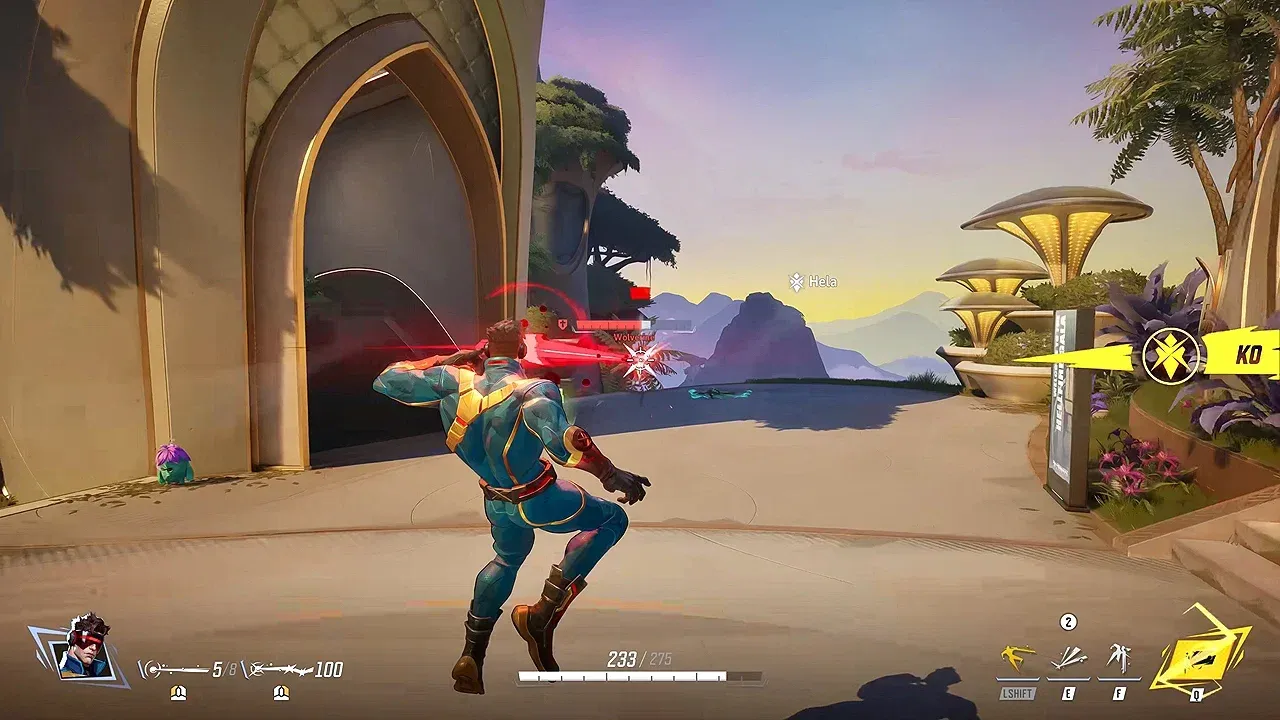
Ruby Rage ultimate in action
What are the best team comps for Cyclops?
Cyclops does not need complex mechanical combos with teammates to deal damage, but he does need coordination to get the most out of Ruby Rage. His three strongest team compositions each solve a different problem.
X-Men composition: Doctor Strange, Emma Frost, Cyclops, Wolverine, Gambit, Invisible Woman. This setup gives Cyclops barrier destruction from Ruby Rage, a frontline with Strange's shields, and Wolverine as the Red Adamantium beneficiary. Gambit provides flexible support, and Invisible Woman keeps the backline alive.
Jean and Scott composition: Angela, Magneto, Cyclops, Phoenix, Cloak and Dagger, Adam Warlock. This is the poke-heavy variant. Phoenix and Cyclops both operate at midrange, Magneto anchors the frontline, and the double Strategist setup with Cloak and Dagger plus Adam Warlock keeps both Duelists alive long enough to charge ultimates.
Dive composition: Devil Dinosaur, The Thing, Cyclops, Wolverine, Luna Snow, Ultron. The Thing and Devil Dinosaur create frontline chaos that forces enemies to cluster, which is exactly what Cyclops wants for Concussive Beam ricochets and Ruby Rage setups.
Red Adamantium team-up with Wolverine
The Red Adamantium team-up gives Cyclops a 5% damage boost and supercharges Wolverine's claws, extending his attack range. Wolverine's Vicious Rampage gets replaced with Kinetic Claws, a forward lunge that unleashes a flurry of slashes. The supercharged version of Wolverine is strong enough right now that even in solo queue, it is worth requesting a Wolverine pick when you are playing Cyclops.
For a deeper look at how to play around Vanguard pairings, the Magneto Marvel Rivals guide covers bubble economy and team positioning that translates directly to protecting a midrange Duelist like Cyclops.
How to counter Cyclops
If you are on the receiving end, the key is positioning relative to his beam ricochets. Keep walls and distance between yourself and your teammates to minimize linked hits from Concussive Beam. His burst damage is high enough to kill from full health quickly, so track his position constantly and watch for flanking angles.
Ruby Rage has a roughly 1-minute charge window at sustained output. If you have not seen it recently, assume it is ready and save a mobility or invulnerability ability to escape the secondary explosion. For a full counter breakdown, the Marvel Rivals guide on how to counter Cyclops covers which heroes shut him down most efficiently.
Cyclops arrived as part of a significant content drop. The Marvel Rivals Season 8.5 overview covers everything else that launched alongside him, including the new 18v18 mode and summer event skins. For everything else on the roster, the full Marvel Rivals guides collection has hero breakdowns, team comp analysis, and ranked strategy across all roles.