Search games, articles, guides...CtrlK
Sign InGet Started
Season 9 overhauls every Team-Up in Marvel Rivals. Here are all 26 Vanguard abilities, how they work, and the best combos to run.

Written by Larc
Content Writer
See more GAMES.GG guides on Google
Add us as a preferred source and our guides show up first in your results.
Marvel Rivals Season 10.5 Buffs and Nerfs: Every Hero Changes
Every buff and nerf hitting Marvel Rivals Season 10.5, from Iron Man's new auto-tracking missiles to Gorr and Scarlet Witch nerfs.

Marvel Rivals Season 10 Meta: Best Heroes to Pick
Wolverine, Emma Frost, Spider-Man, and more: the 10 best Marvel Rivals Season 10 heroes after the latest balance changes.

Marvel Rivals Ultimate Gorr Guide: Best Tips & Combos
Master Gorr the God Butcher in Marvel Rivals with ability breakdowns, combo setups, and summon management tips.
Season 9 is the biggest structural shift Marvel Rivals has seen since launch. The entire Team-Up system has been rebuilt from scratch, and every hero in the game now has two active Team-Up abilities to choose from. For Vanguards specifically, that means 26 new abilities across 13 tanks, most of which didn't exist before this season. Some of these change how individual heroes play entirely.
The old system is gone. Before Season 9, Team-Up abilities rotated in and out and required your partner hero to be active on the same team. That's no longer the case.
Every hero now has exactly two Team-Up abilities, and you pick one to equip before or during a match. You can swap between them freely in the spawn room, so there's no permanent commitment. The bigger change is that these abilities work even when your partner hero isn't on your team. If they are present, your equipped ability gets an enhanced effect, but you're never locked out of using it.
Team-Ups will no longer rotate on a seasonal schedule. Instead, NetEase will balance them individually based on performance data after launch. That means the meta around these abilities will shift through patches rather than through the calendar.
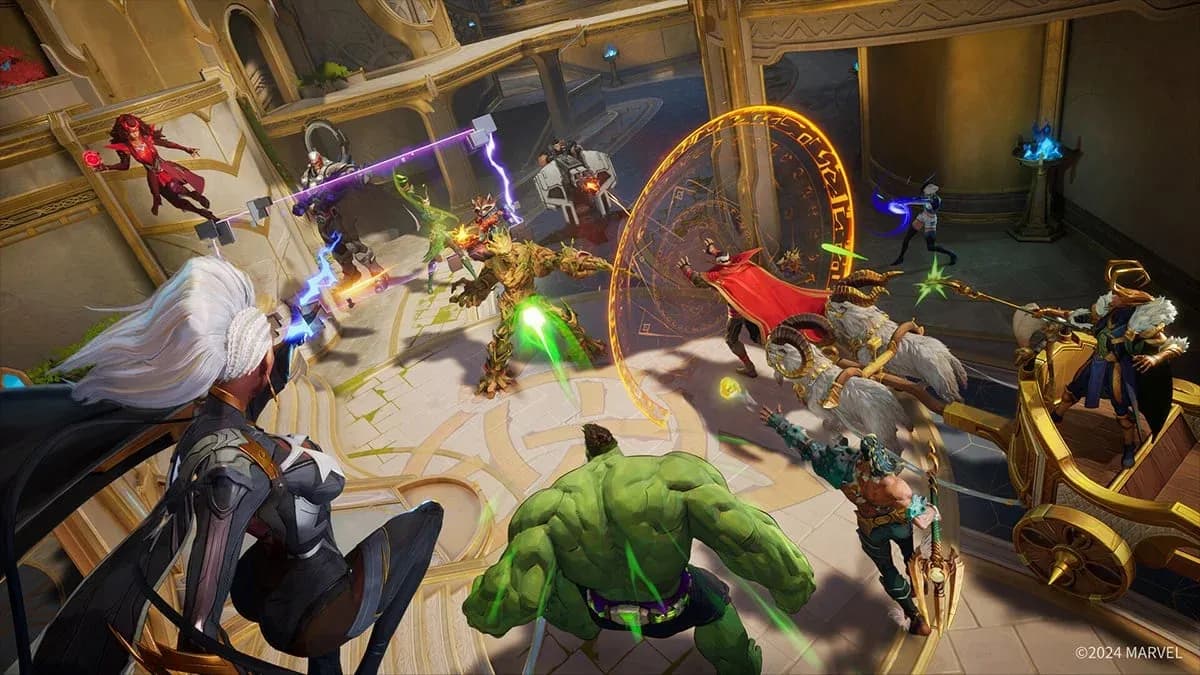
Swap Team-Ups at spawn
With 13 Vanguards in the roster, there are 26 abilities to learn. Official patch note descriptions weren't available at the time of the Season 9 reveal, so the table below uses descriptions based on the livestream demonstration. Expect these to be refined when full patch notes drop.
| Vanguard | Partner | Ability Name | What It Does |
|---|---|---|---|
| Hulk | Captain America | Savage Slam | Hulk leaps into the air and slams down, dealing AoE damage to nearby enemies |
| Hulk | Wolverine | Gamma Fastball | Hulk gains Crowd Control Immunity |
| Doctor Strange | Hulk | Gamma Maelstrom | Strange's Maelstrom ability becomes Gamma-infused |
| Doctor Strange | Invisible Woman | Psionic Vortex | Strange's Maelstrom now pulls enemies toward him |
| Captain America | Winter Soldier | Stars Aligned | Cap gains a dash toward enemies |
| Captain America | Thor | Voltaic Union | Cap's shield can be thrown repeatedly and gains lightning infusion |
| Groot | Mantis | Wild Wall | Groot's walls now heal allies |
| Groot | Jeff the Land Shark | Bubble Buddies | Groot enters a large floating bubble that shields and heals him |
| Venom | Blade | Blood Leech | Venom's tether drains enemy health and heals Venom |
| Venom | Phoenix | Abyssal Flames | Venom gains a new sweeping attack |
| Magneto | Emma Frost | Magnetic Resonance | Magneto creates a copy of himself that mirrors his actions |
| Magneto | Scarlet Witch | Metallic Chaos | Magneto forms a metallic sword that fires sweeping projectiles |
| Thor | Hela | Ragnarok Rebirth | Thor doesn't die on death; instead returns with overhealth |
| Thor | Angela | Divine Armory | Thor throws a spear and can dash to its impact point |
| Peni Parker | Black Panther | Vibranium Mech | Peni deploys a shield that blocks damage and increases her fire rate |
| Peni Parker | Rocket Raccoon | Rocket Network | Peni's nests shoot out shield pickups similar to Rocket's revive station |
| The Thing | Human Torch | Two-In-One | The Thing's punches gain flame infusion and deal sweeping damage |
| The Thing | Invisible Woman | Unbreakable Forces | The Thing gains overhealth that regenerates when he takes damage |
| Emma Frost | Luna Snow | Iced Out Diamond | Emma summons an icy wall that damages enemies as it rises |
| Emma Frost | Mantis | Spirit Breaker | Emma heals herself when she fires at crystals pulled from enemies |
| Angela | Star-Lord | Asgardians of the Galaxy | Angela activates a tech buff that enhances her dive |
| Angela | Loki | Odin's Unacknowledged | Angela sends out a clone that mirrors her charging attack |
| Rogue | Magneto | Explosive Entanglement | Rogue's shield receives a buff |
| Rogue | Gambit | Mr. & Mrs. X | Rogue's attacks heal her surrounding allies |
| Devil Dinosaur | Punisher | Primal Punishment | Devil Dinosaur spawns two floating gun turrets that fire explosive rounds rapidly |
| Devil Dinosaur | Jeff the Land Shark | Surf & Turf | Devil Dinosaur's beam now heals allies |
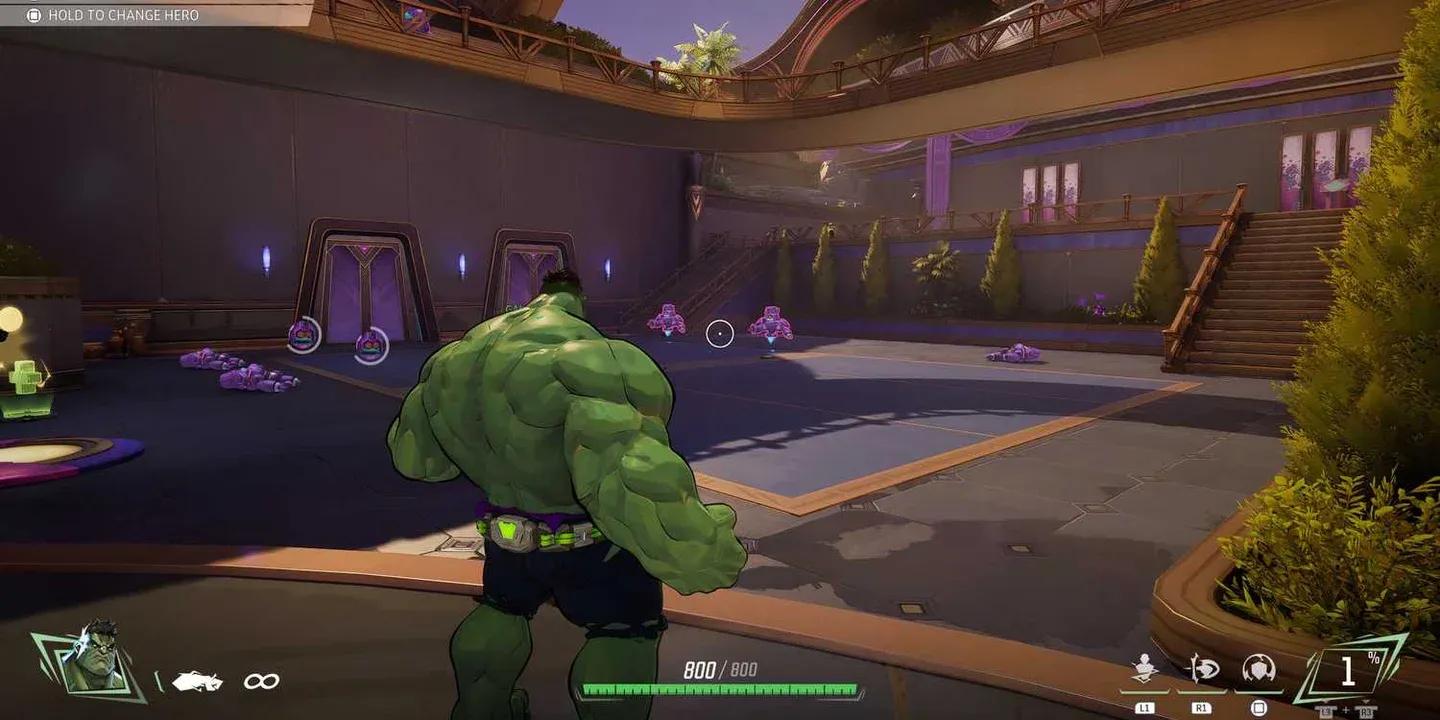
Hulk's Savage Slam in action
After watching the full reveal, a few abilities look like they'll reshape how certain tanks get played.
Thor's Ragnarok Rebirth is the most immediately powerful on paper. A Vanguard that doesn't die on death and comes back with overhealth is an enormous disruption to any push. Combined with Divine Armory, which gives Thor a repositioning tool via spear dash, he now has two Team-Ups with completely different use cases: one for survivability, one for mobility.
Magneto's Magnetic Resonance creates a copy that mirrors his actions. The implications for zone control are significant, especially on maps where Magneto already excels at holding choke points. The Metallic Chaos option trades that for raw offensive pressure with sweeping projectiles.
The Thing's Unbreakable Forces is worth highlighting for dive-heavy metas. Overhealth that regenerates under fire turns The Thing into a genuinely annoying target to focus down. His Two-In-One option with Human Torch is the more aggressive pick, adding flame-infused sweeping damage to his punches.
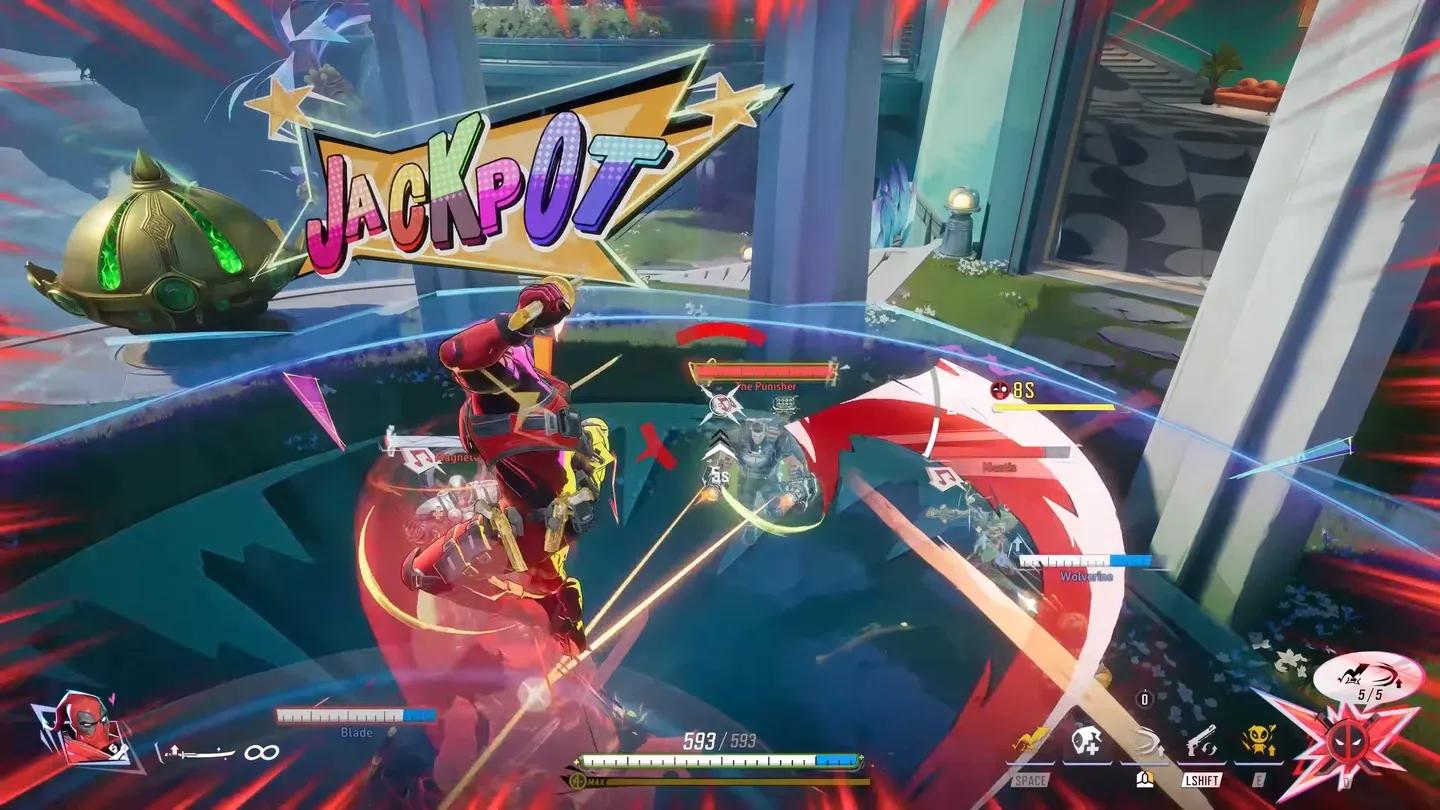
Magneto's clone mirrors every move
The choice between your two abilities usually comes down to one question: are you playing into your team's composition or playing independently?
Abilities like Groot's Wild Wall (healing walls) and Rogue's Mr. & Mrs. X (ally healing on attacks) are support-adjacent picks that reward coordinated teams. They're weaker in solo queue where you can't guarantee your team will be near you to benefit.
Abilities like Hulk's Gamma Fastball (Crowd Control Immunity) and Venom's Blood Leech (self-sustain through enemy health drain) are more self-sufficient. They don't depend on teammates positioning correctly to deliver value.
For Peni Parker specifically, the choice between Vibranium Mech and Rocket Network is a trade-off between personal defense and team utility. Vibranium Mech is the better pick when you're getting targeted. Rocket Network is stronger when your team is winning fights but bleeding health between engagements.
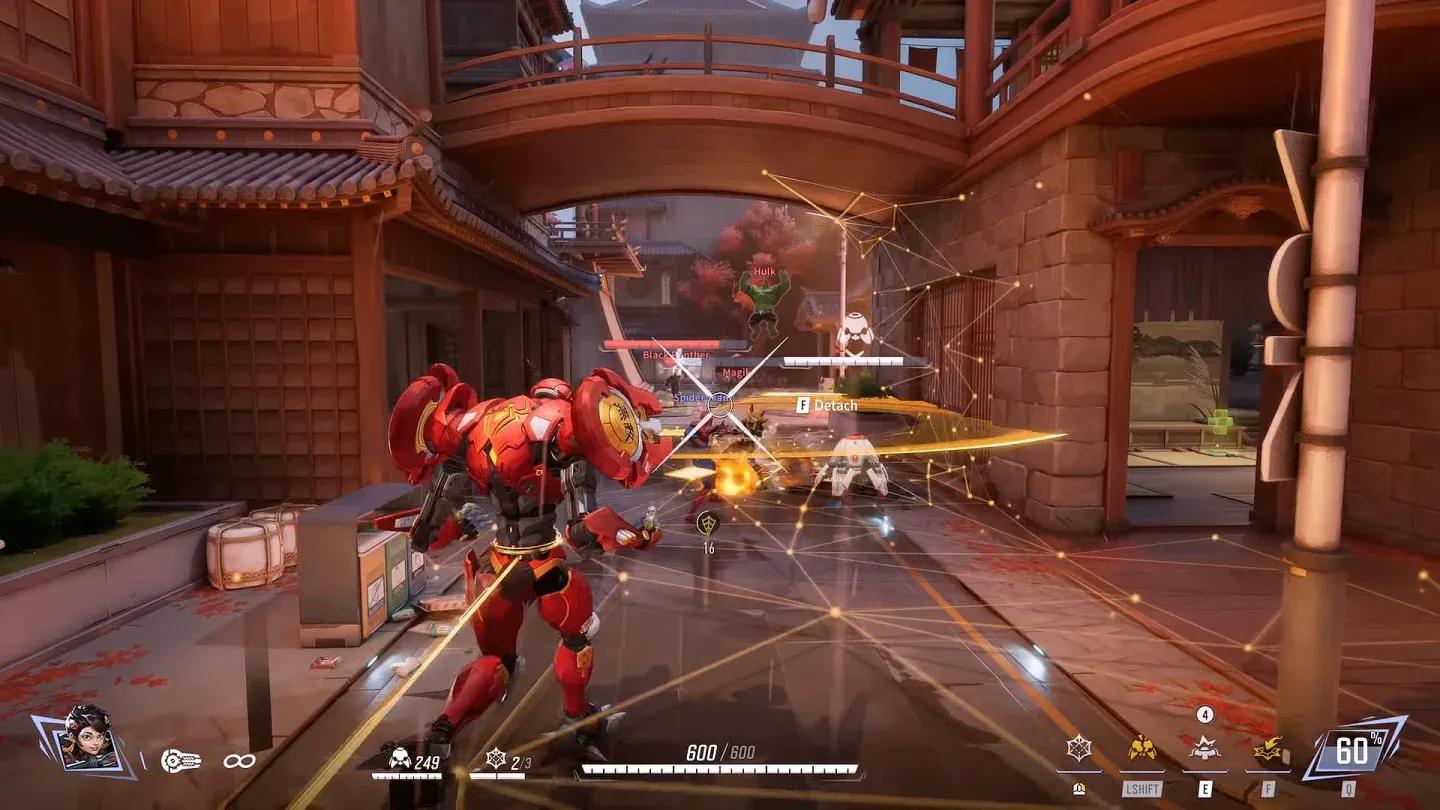
Peni's nests drop shield pickups
The Team-Up overhaul doesn't exist in isolation. Season 9 also brings a full round of hero balance changes that will interact directly with how effective these new abilities are. A Vanguard that receives a buff in the patch notes will naturally get more mileage out of aggressive Team-Up picks, while nerfed heroes might lean harder on survivability options.
For a full breakdown of what's changing hero by hero, the Marvel Rivals Season 9 release date and new heroes guide covers the confirmed launch timing and everything arriving with the update.
If you want context on where the meta stood before these changes, the Season 8 buffs and nerfs breakdown is worth reviewing to understand which heroes are coming into Season 9 with momentum and which are starting from a weaker baseline.
Vanguards broadly split into two categories: frontline anchors who hold space and dive tanks who create pressure. The Team-Up picks that make sense for each type are different.
Frontline anchors (Groot, Doctor Strange, Magneto, The Thing) generally benefit more from abilities that add sustained value or zone control. Groot's healing walls, Strange's enemy-pulling Maelstrom, and Magneto's clone all fit this pattern. They're not flashy, but they compound over the course of a fight.
Dive and pressure tanks (Thor, Venom, Captain America, Angela) get more out of abilities that extend their threat window or add burst. Thor's spear dash, Cap's lightning-infused shield throws, and Venom's health-draining tether all extend how long these heroes can stay aggressive before needing to retreat.
Hulk sits in both categories depending on build. Gamma Fastball (CC Immunity) is the anchor pick. Savage Slam is the dive pick. The fact that both are available without needing a specific teammate makes Hulk one of the more flexible Vanguards to pilot in Season 9.
For more guides covering every aspect of the game, the full Marvel Rivals guide collection has you covered as the Season 9 meta develops.