


Overview
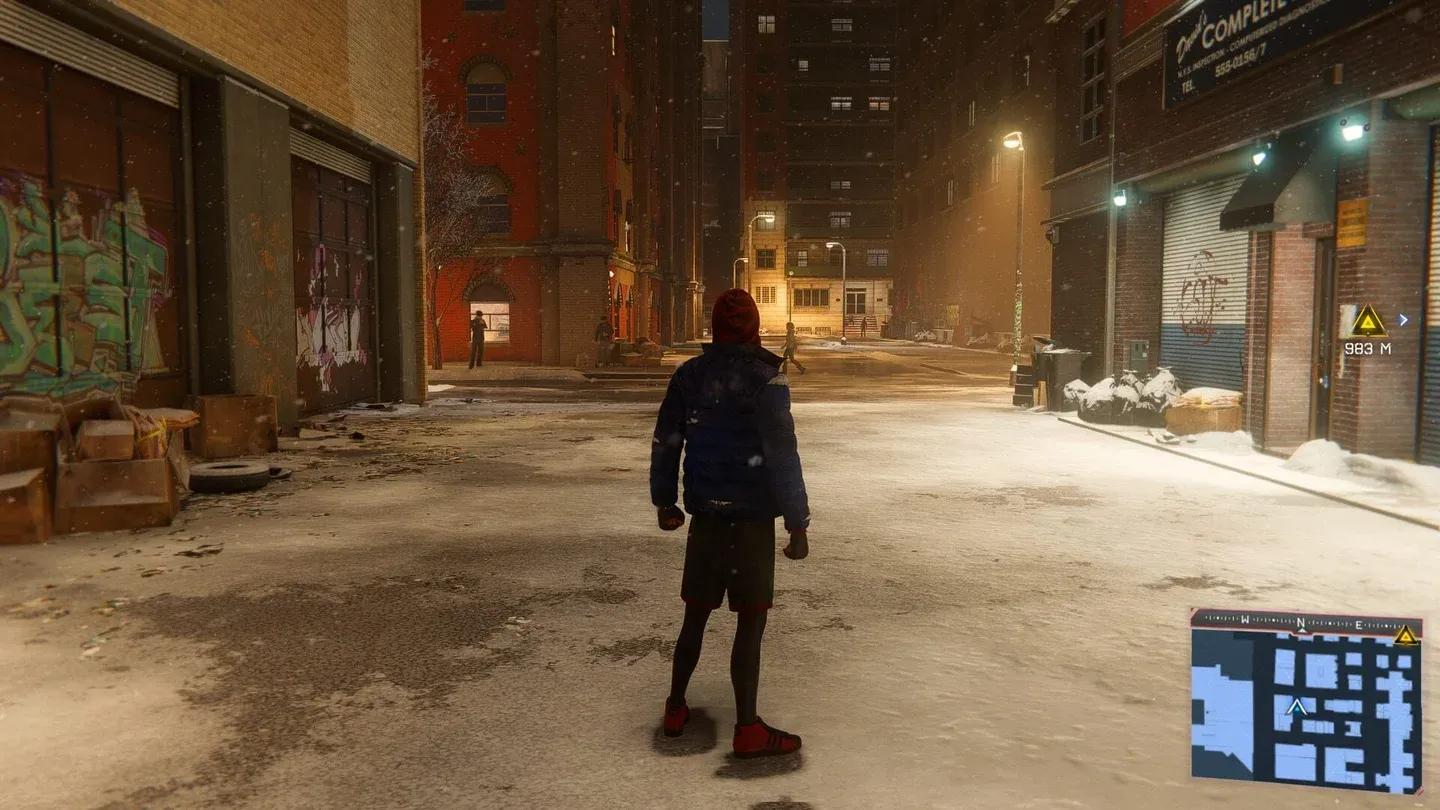
Marvel's Spider-Man: Miles Morales drops players into a Harlem winter, following teenager Miles Morales as he navigates the gap between ordinary life and the enormous responsibility of being New York's Spider-Man. With Peter Parker away, Miles is the only one standing between his neighborhood and a destructive war between the energy corporation Roxxon and the underground army known as the Underground. The story keeps its scope personal, grounding the superhero spectacle in Miles's relationships with his mother, his best friend Ganke, and the community he's fighting to protect.
Insomniac builds on the foundation of the 2018 Marvel's Spider-Man while giving Miles a combat identity that feels genuinely distinct. His bio-electric Venom powers let him blast, stun, and launch enemies with crackling energy attacks, while his camouflage ability opens up stealth approaches that Peter simply didn't have. The result is a combat system where choosing between aggression and invisibility becomes a real tactical decision rather than a cosmetic one.
Gameplay and mechanics
The core loop of swinging, fighting, and exploring New York remains as satisfying as ever, but Miles's unique abilities reshape how encounters play out. Key mechanics include:
- Venom Blast: bio-electric melee and ranged attacks
- Camouflage: short-duration invisibility for stealth takedowns
- Venom Jump: an area-of-effect launch move
- Finishers: powered-up finishing moves tied to the Venom meter
- Gadgets: a loadout of web-based tools inherited and upgraded over time

Progression runs through both suit upgrades and ability mods, letting players tune Miles toward aggressive Venom-heavy builds or stealth-focused approaches. The game sits comfortably in the 8 to 10 hour range for the main story, with side missions and collectibles pushing that figure higher for players who want to see everything Harlem has to offer.
What makes Miles's power set different from Peter Parker's?
The short answer: Venom powers and camouflage fundamentally change the combat rhythm. Where Peter's toolkit leaned on gadgets and web-based crowd control, Miles generates bio-electric energy through combat that charges a dedicated Venom meter. Landing hits builds the meter; spending it unleashes explosive attacks that can clear groups of enemies or break through armor. Camouflage adds a stealth dimension that wasn't available before, letting Miles vanish mid-fight to reposition or set up a takedown on a heavily armored target.

This creates a combat flow that rewards patience alongside aggression. Players who charge in with Venom Blasts will clear rooms quickly; players who mix in camouflage will find more creative routes through harder encounters. Both approaches are valid, and the game's upgrade tree supports either direction.
Visual and audio design
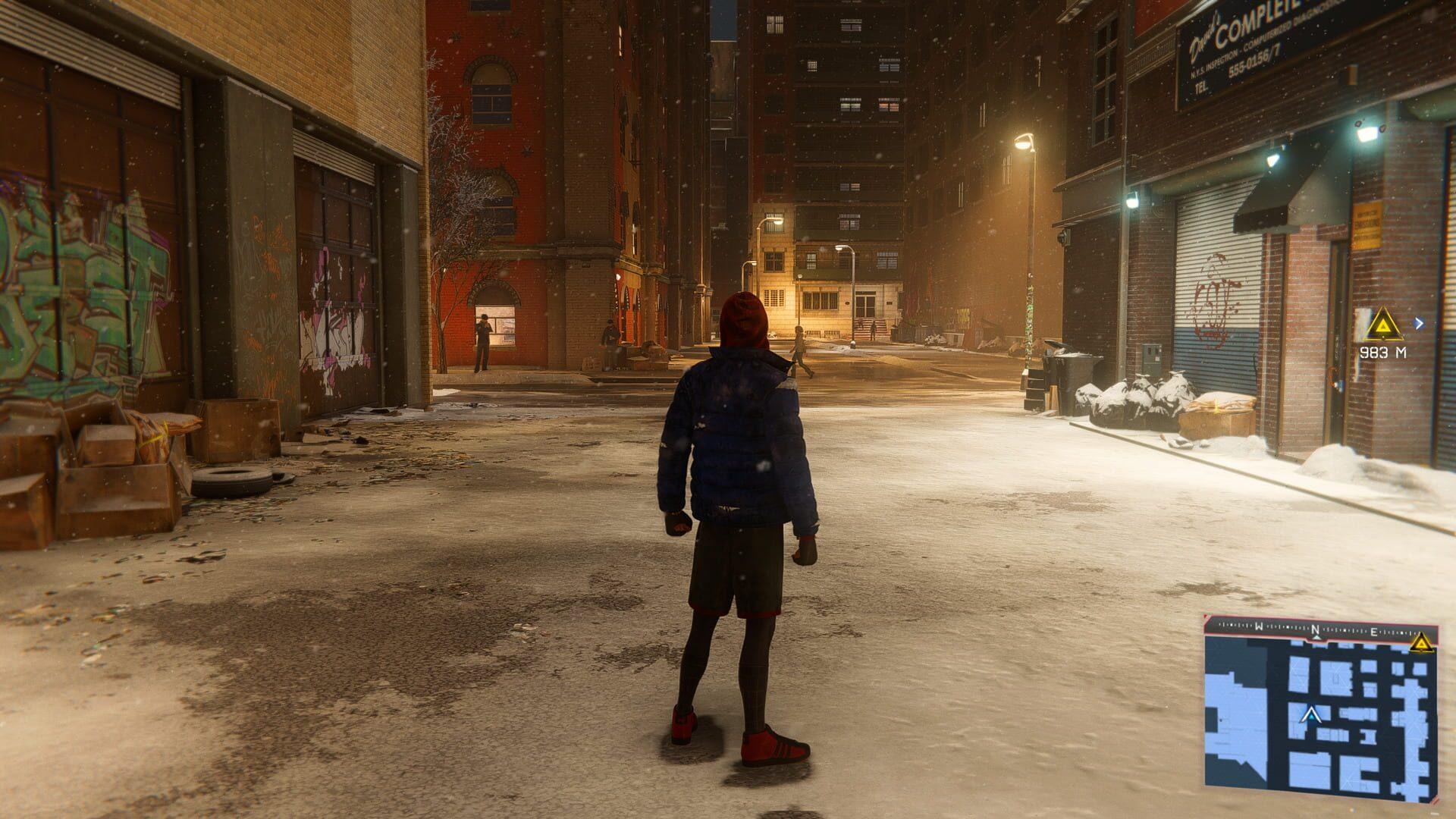
Set during a Harlem Christmas, the game's visual tone leans into warm lighting, snow-dusted rooftops, and the cultural texture of the neighborhood. The PS5 version runs at up to 60fps with ray-traced reflections, and the PC port supports high frame rates and ultrawide resolutions. Miles's suit designs range from the classic red-and-black to the Into the Spider-Verse-inspired animated suit, which applies a comic-book frame-rate effect to Miles's movement.
The soundtrack pulls from hip-hop and R&B in a way that feels specific to Miles rather than generic superhero fare. Swinging through Harlem with the score building underneath lands differently than it would with a generic orchestral track, and that specificity is part of what makes the game's identity stick.
Impact and legacy
Marvel's Spider-Man: Miles Morales holds a Metacritic score of 85 on PS5 and has sold millions of copies across PlayStation and PC. It functions as both a standalone experience and a bridge to Marvel's Spider-Man 2, establishing Miles as a fully realized protagonist rather than a supporting character. The PS5 Pro version adds enhanced visual fidelity, and the game's 24 accessibility options make it one of the more accommodating action-adventure titles available. For players who want open-world superhero combat with a story that actually earns its emotional moments, Miles Morales remains one of the strongest arguments for what the genre can do.