
What is Masters of Albion and why should you care?
Peter Molyneux's history with god games is complicated. The creator of Black & White and the Fable franchise built a reputation on grand ideas that rarely shipped complete, and his 2014 Kickstarter title Godus made that reputation worse. Masters of Albion is his stated final game, developed by studio 22Cans, and it enters Early Access carrying all of that baggage. After 20 hours with it, the verdict is genuinely surprising: there's something here worth playing, even if it's unfinished. The game blends city-building with god game mechanics in a way that feels distinct, and the god hand system at its core is more engaging than anything Molyneux has shipped in years.
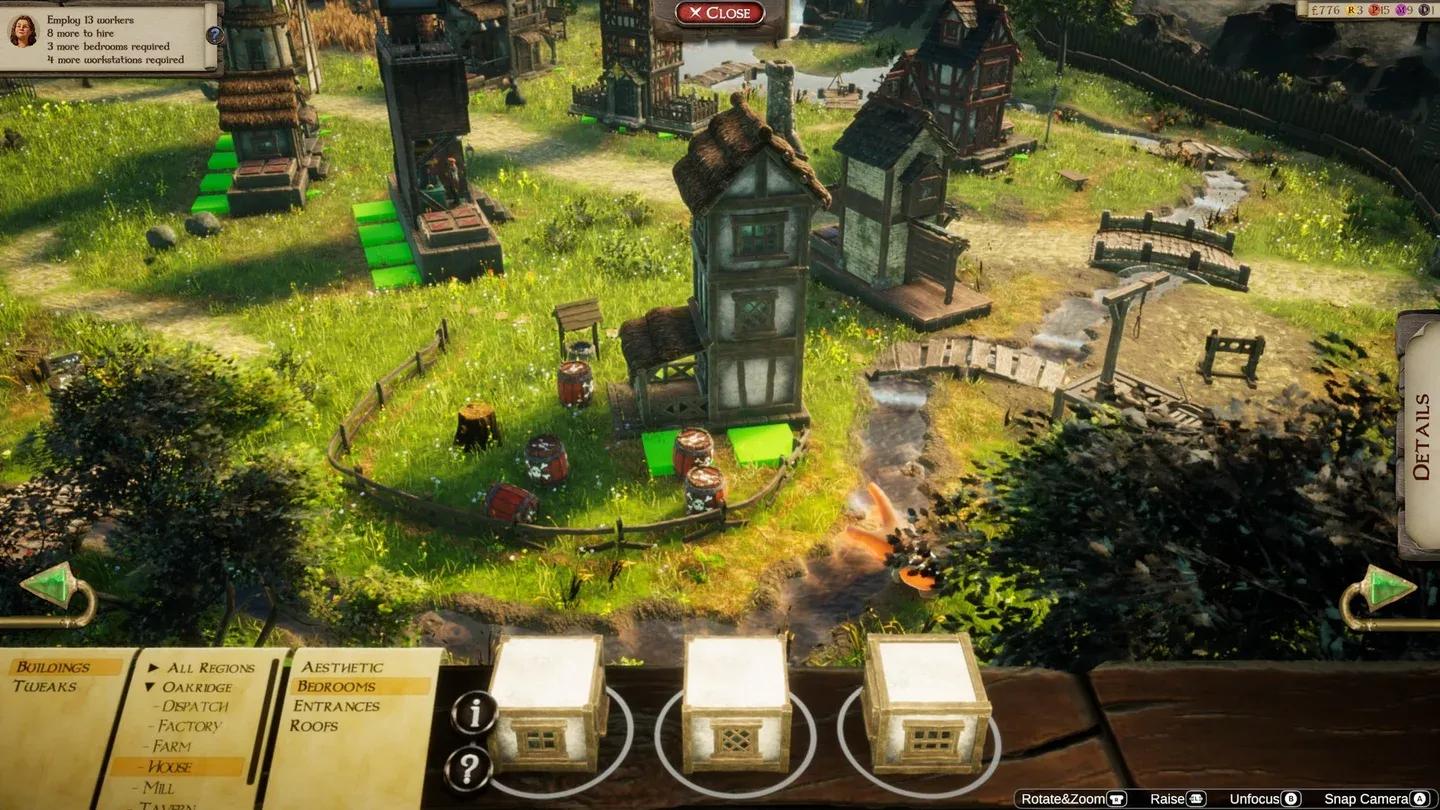
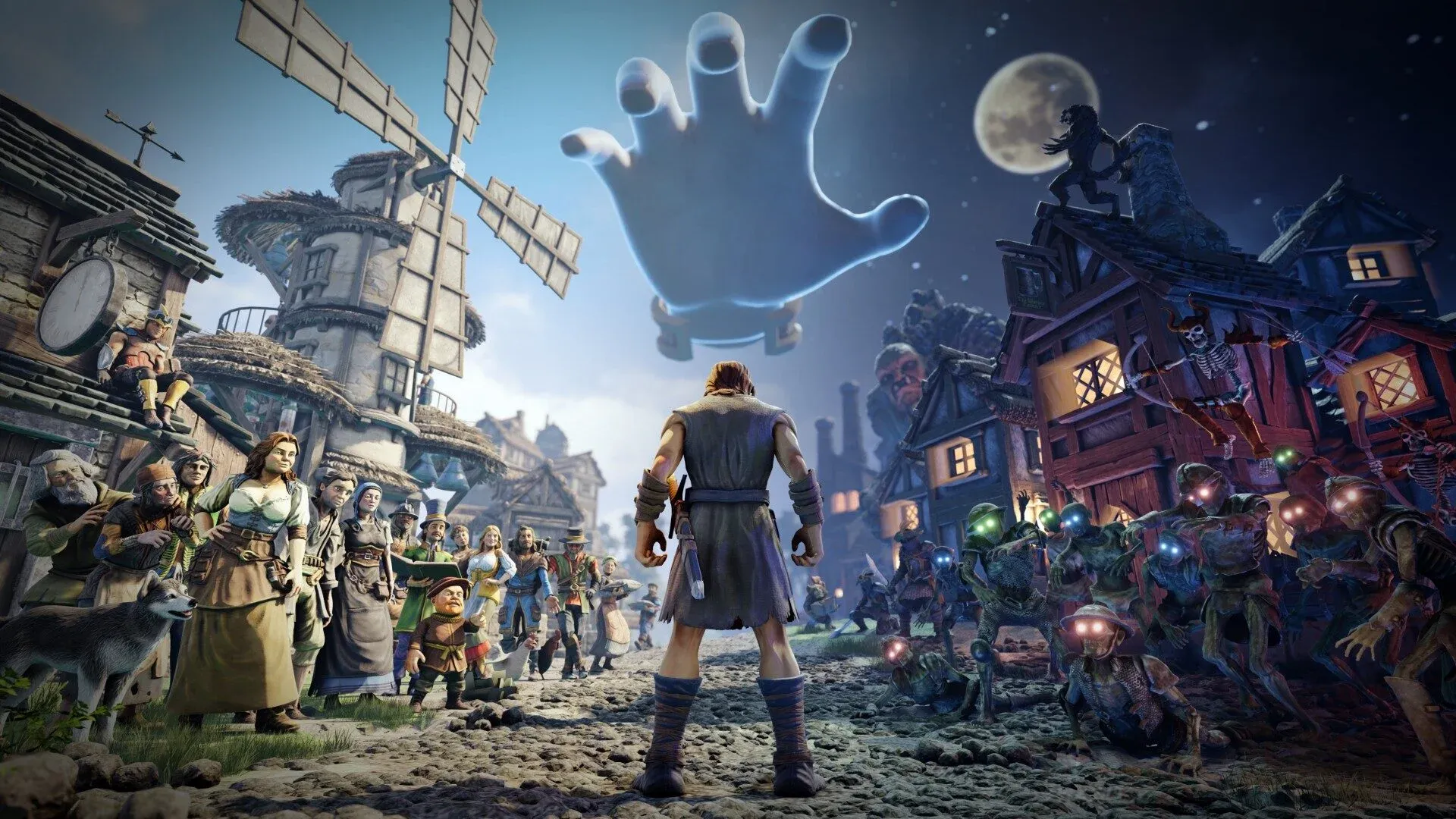
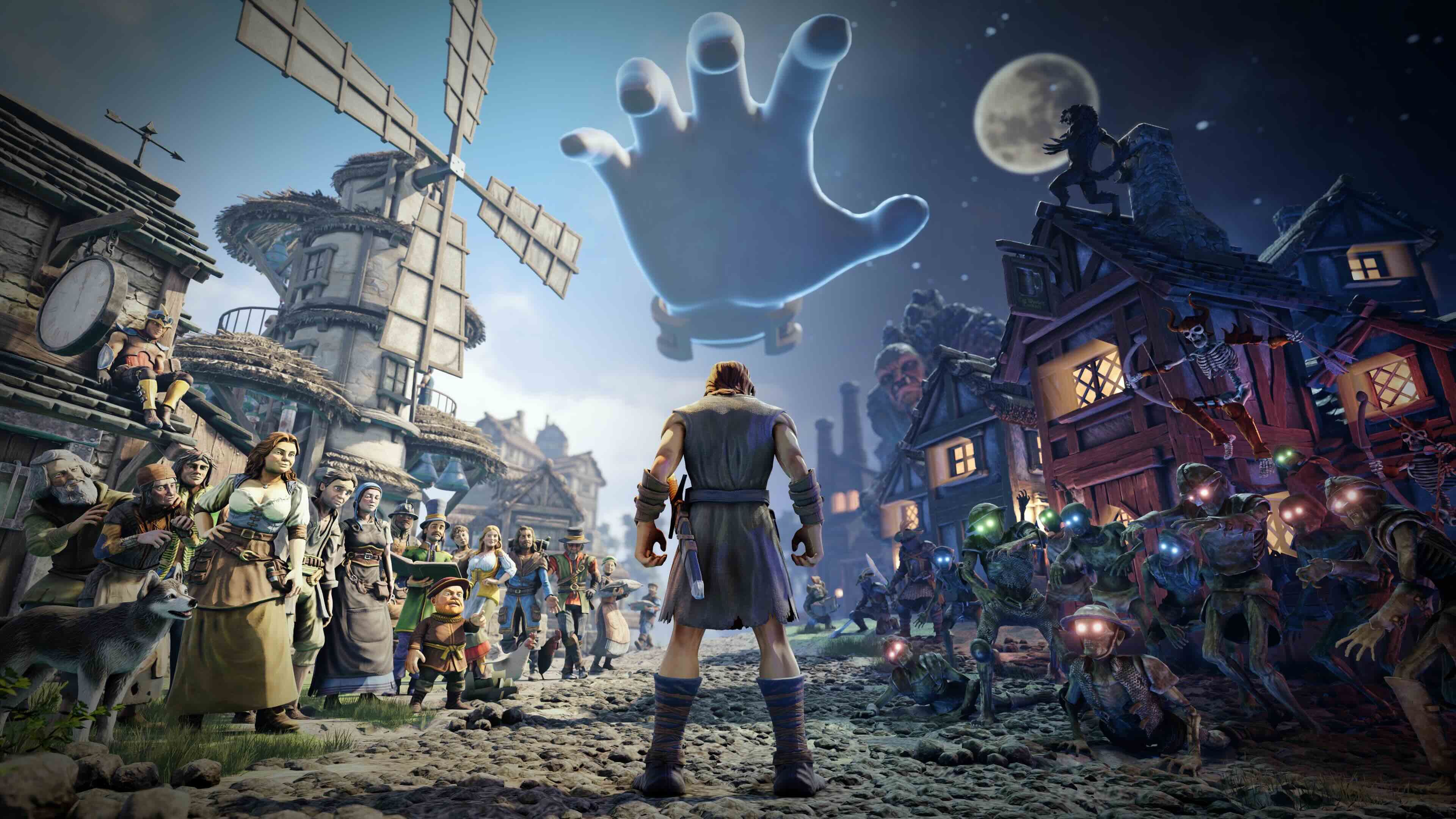
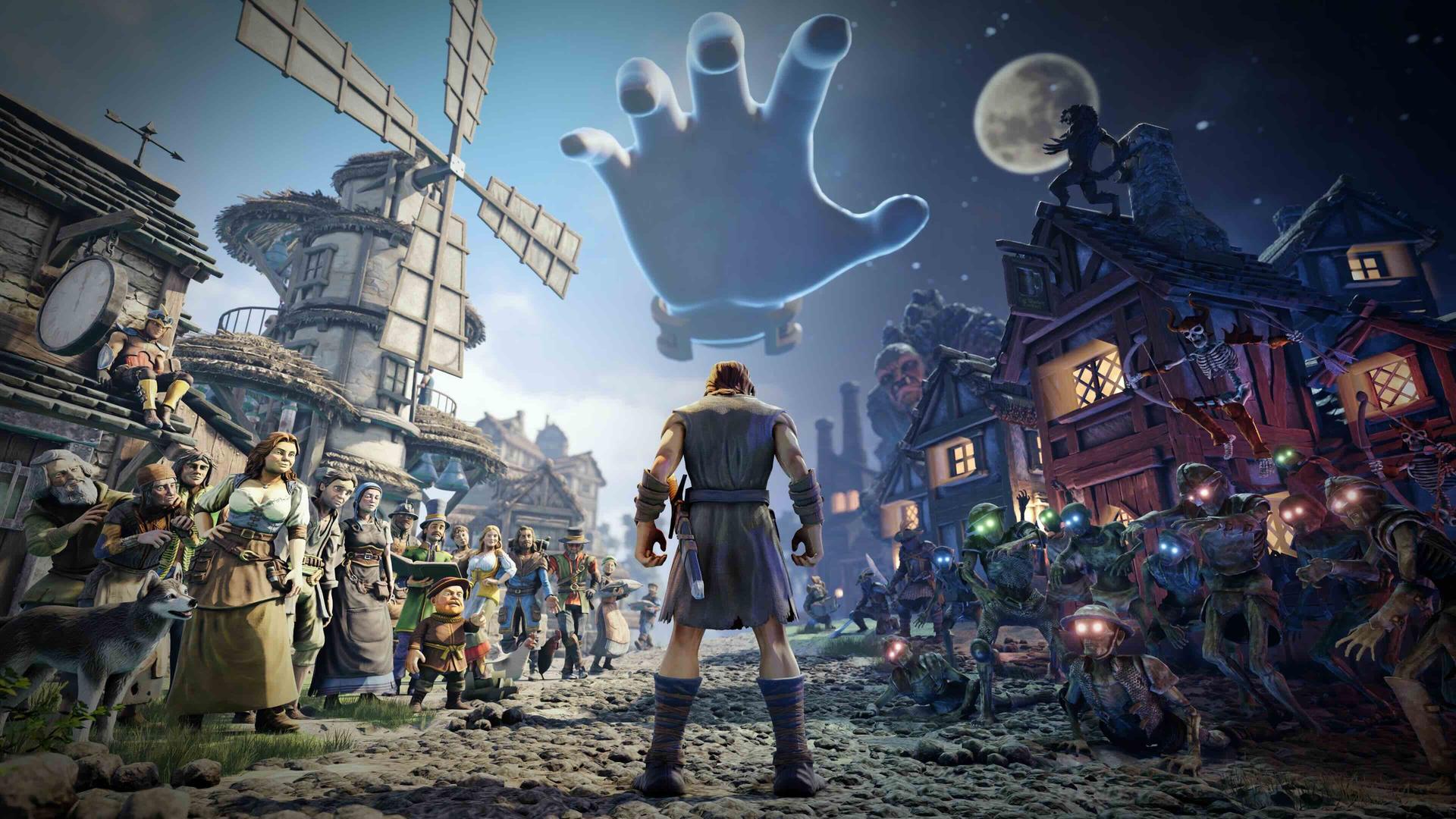
God hand over Oakridge village

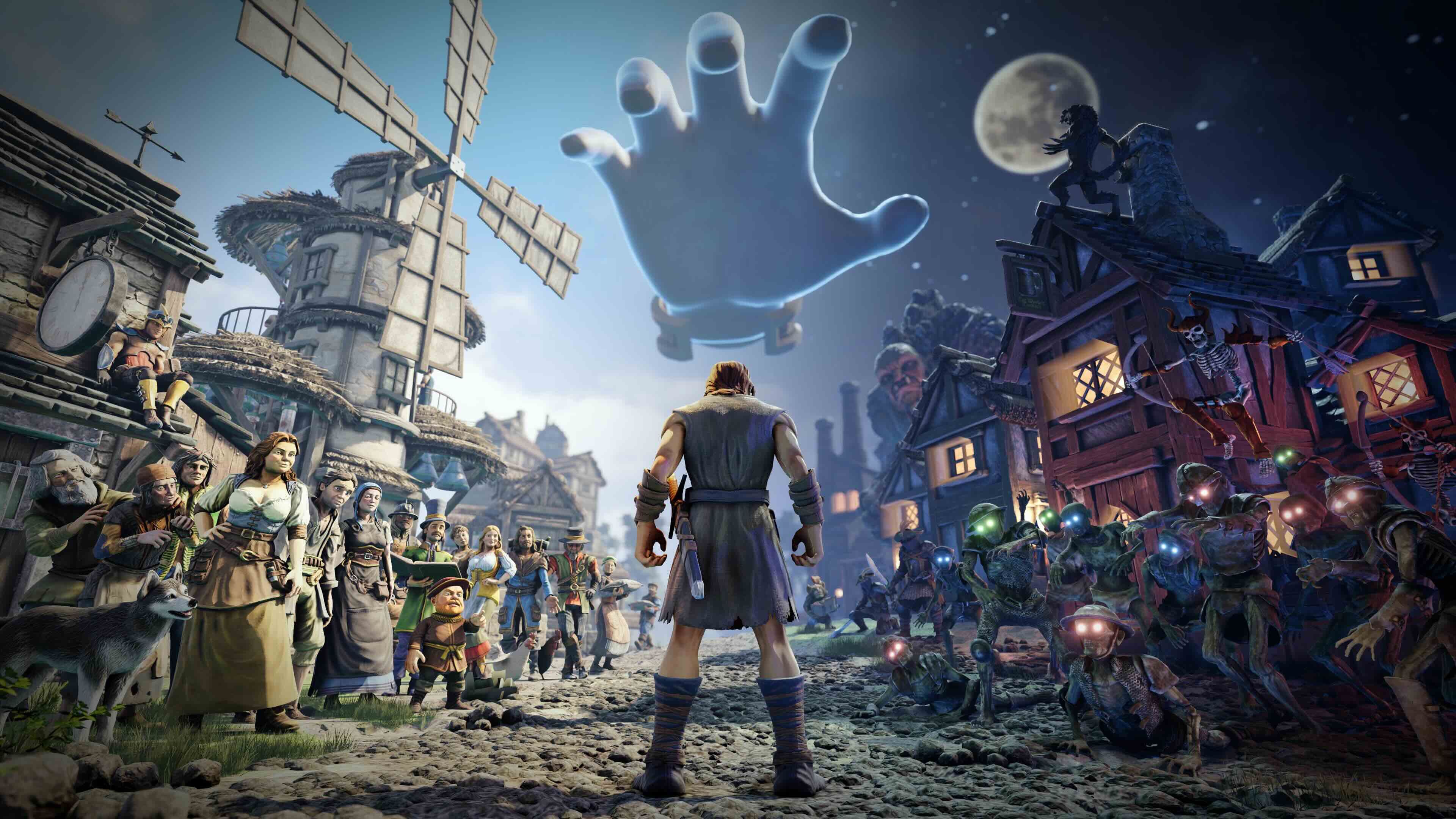
How does the god hand system actually work?
The setup is stranger than most city builders. Your character sits in a mysterious crypt chair, gets a helmet grafted onto their head, and becomes a disembodied divine hand responsible for guiding the people of Oakridge toward prosperity. That hand is your primary tool for everything: moving resources, throwing rocks at enemies, picking up and repositioning objects, and casting abilities like dropping fireballs on zombie hordes at night.
You spend the daylight hours building out your settlement, gathering resources, transporting them to factories, and crafting products to sell to Albion's aristocracy. That money and a separate currency of tokens feeds directly into upgrading your god hand powers, purchasing new building types, and unlocking product lines. The loop is tighter than it sounds on paper.
The day/night split
Masters of Albion structures its pacing around a hard day/night divide. During the day, you're a city planner. At night, you're a defender. When darkness falls, zombies and other creatures besiege your settlements, and your full attention needs to shift to keeping your villagers alive. This means combining heroes with physical defences and using your god hand to literally hurl rocks and other objects at incoming enemies.
At specific critical moments, the game also asks you to use hand gestures to decide the fate of criminals in your civilization. These aren't purely cosmetic choices, so pay attention to the context the game gives you before committing.
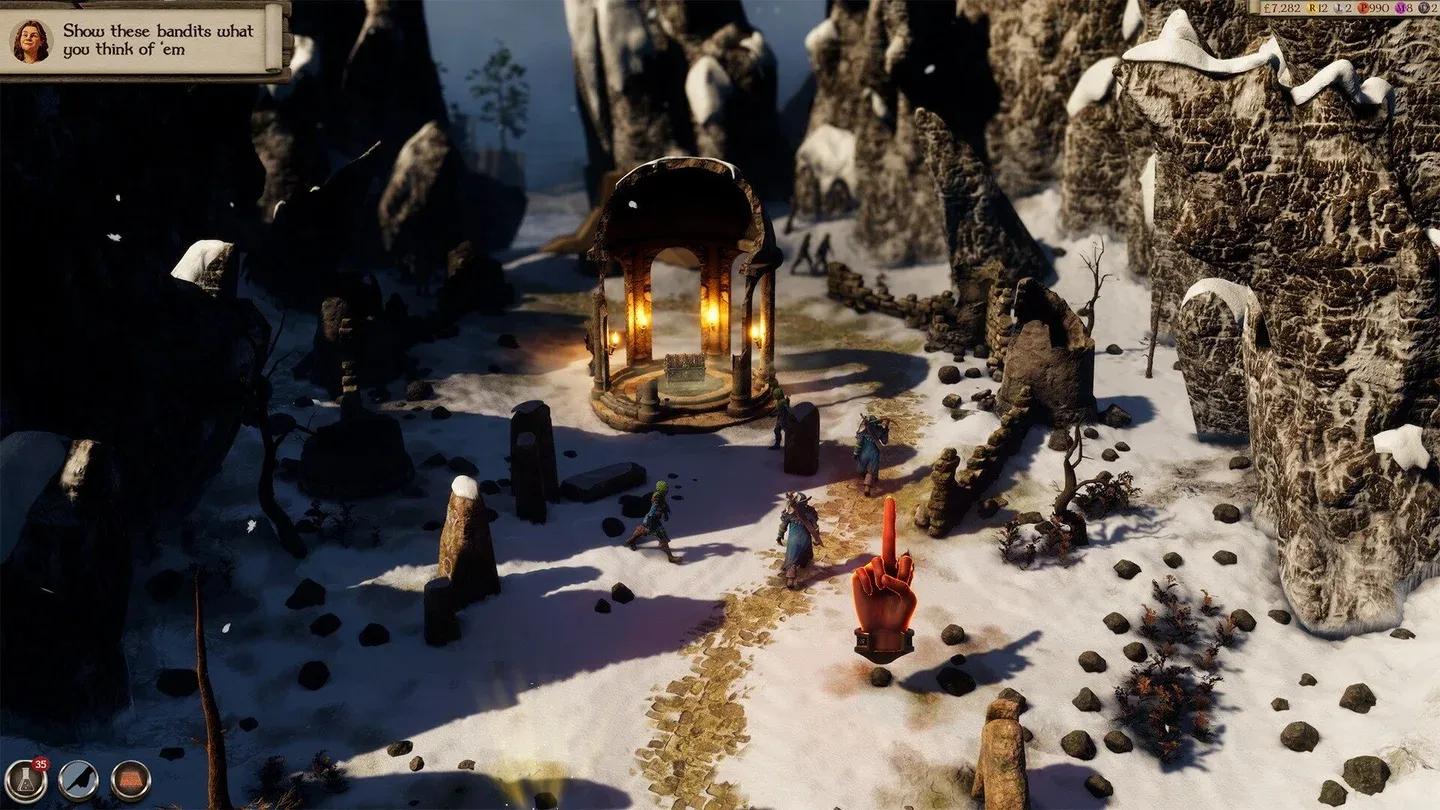
Night siege defence with god hand
What is the possession mechanic and why does it matter?
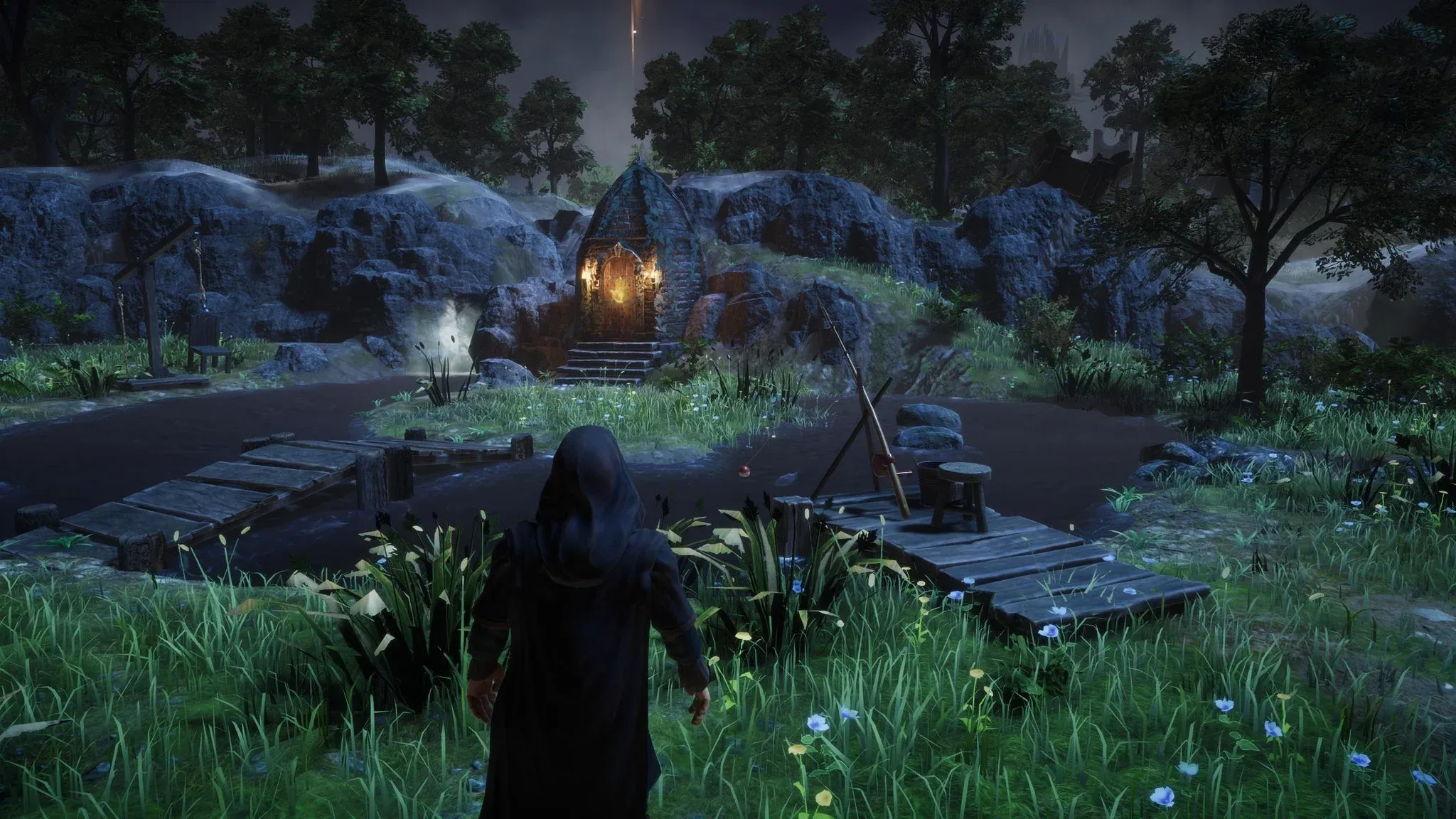
The most interesting system in Masters of Albion is possession. Certain regions of the world are covered in grey fog that blocks your god hand powers entirely and prevents villagers from entering. To clear this fog, you need to possess one of your heroes directly and adventure into the unknown as them, searching for towers that restore the land.
Possession isn't limited to heroes, either. Later in the game, you can possess ballista towers and even a dog for a specific quest. Each possessed entity gives you a completely different perspective on the world you've been building from above, and that shift in viewpoint opens up new options: caves to explore, secrets to find, and sassy gargoyle statues that will hurl insults at you until you smash them.
The world structure
The entire continent of Albion is one seamless world accessible all at once from the start. There's no loading between zones. The fog system acts as the gating mechanism rather than hard level boundaries, which makes exploration feel more organic than in most city builders.
How does the city-building side compare to other games?
Masters of Albion sits at an unusual point in the genre. It's not as deep as a dedicated city builder, but the industrial chain it asks you to manage is more involved than most god games. The basic loop runs from resource gathering buildings through transport to factories, then to finished goods sold upward to the aristocracy.
| System | Function | Upgrade Currency |
|---|---|---|
| Resource buildings | Gather raw materials | Tokens |
| Factories | Convert materials to products | Money + Tokens |
| God hand powers | Defence and world interaction | Tokens |
| Heroes | Fog clearing and quests | Story progression |
| Lord/Lady outfits | Unlock additional upgrades | Money |
Designing new outfits for your lord and lady is one of the stranger upgrade paths in any city builder, but it genuinely unlocks progression, so don't skip it.
The narrative structure also sets Masters of Albion apart. The first 20 hours follow a more guided path than most city builders, with clear objectives keeping you on track while still allowing room for freeform experimentation. The tutorial phase doesn't overstay its welcome, and the transition into open-ended play happens naturally rather than feeling like a sudden drop into the deep end.
What are the standout characters and quests?
Masters of Albion has a distinctly British sense of humour running through its quest design. Two examples from the preview stand out. First, there's Jon Bovi, an over-the-top chill shaman who requires you to solve puzzles using musical stones. Second, there's a group of pirates who sold their nails to bandits, leaving them unable to rebuild their ship until you retrieve more nails for them. These aren't deep RPG quests, but they give the world personality that most city builders completely lack.
The game's setting leans heavily into familiar territory: Masters of Albion takes place in a world called Albion, uses an art style reminiscent of Fable, shares its sense of humour, and features comparable hero mechanics. This reads less like an entirely original world and more like a legally distinct spiritual successor to Molyneux's most beloved franchise.
What are the current technical issues to know about?
Masters of Albion is running a complex simulation across a large seamless world, and the technical strain shows. Performance hiccups appear periodically, and character animations are noticeably blocky. The scope of the game likely contributes to these issues, but that doesn't make them less noticeable during play.
These are the kinds of problems that Early Access is supposed to address over time, and 22Cans has the feedback loop to work on them. They're worth knowing about before you buy in, not dealbreakers.
Is Masters of Albion worth playing in Early Access?
The honest answer is yes, with conditions. The god hand system is genuinely fun, the possession mechanic adds a perspective shift that most god games never attempt, and the city-building loop has enough texture to stay interesting across 20 hours. The British humour and Fable-adjacent setting give it personality that compensates for some of its rougher edges.
The conditions: the tech tree is incomplete, performance needs work, and Molyneux's track record means the question of whether Early Access leads to a finished product is legitimate. 22Cans has more to prove than most studios, and the Early Access format is both an opportunity and a risk given that history.
For players who want to track how the game develops and find more guides covering what's new in each update, browse more guides at GAMES.GG to stay current as Masters of Albion grows toward its full release.