
What is Masters of Albion and why does it feel different from other god games?
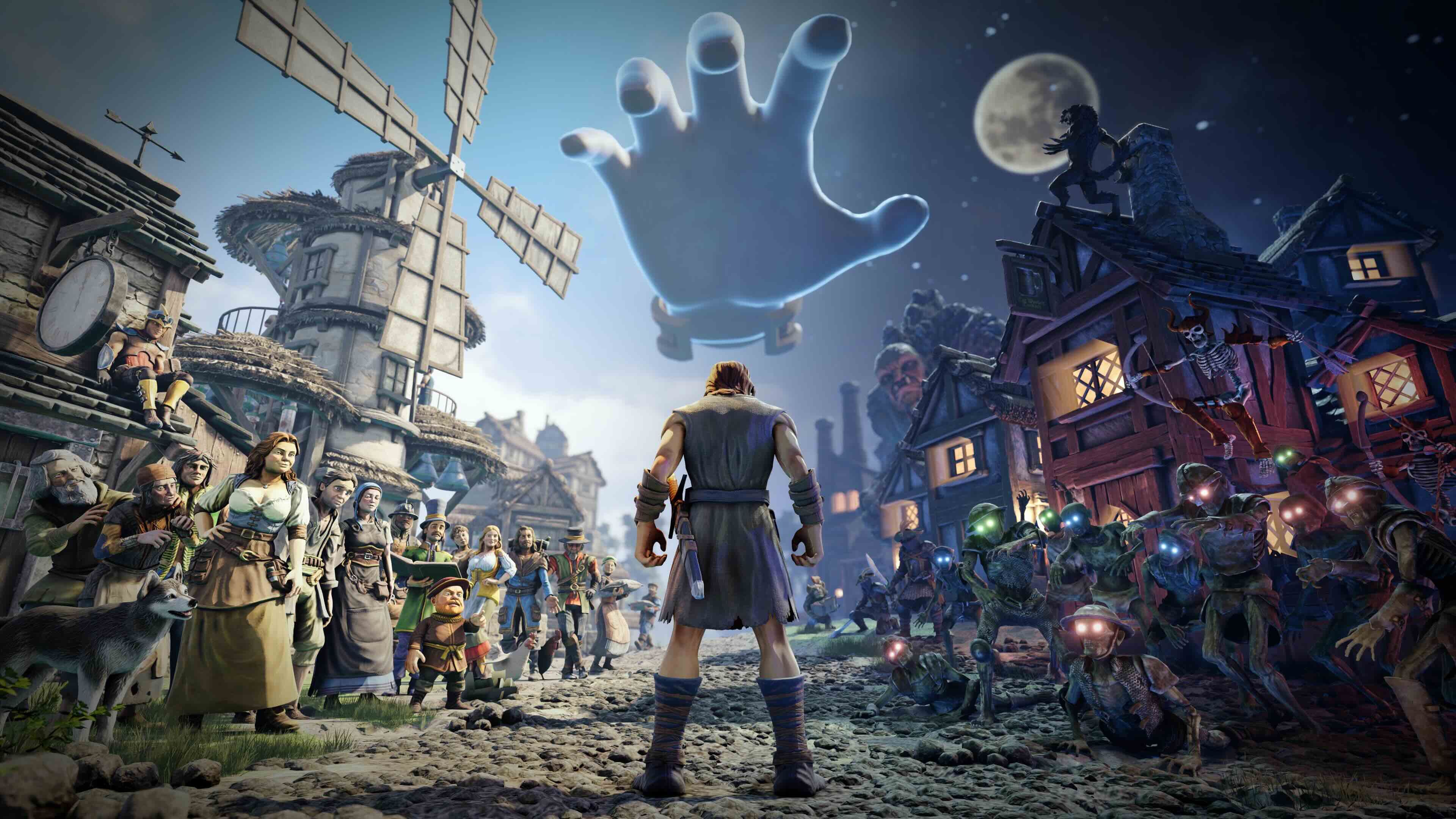
Masters of Albion is the new game from Peter Molyneux's studio 22cans, available on PC, PS5, and Xbox Series X/S. It pulls from Molyneux's earlier work in ways you'll recognize immediately: part Fable, part Black & White, with a structure that splits your time between rebuilding villages, producing food and weapons in workshops, and defending settlements from waves of undead. What separates it from other strategy games isn't the genre mix. It's the hands. Specifically, your giant disembodied god-hand, which sits at the center of almost every interaction. Once you understand what that hand actually does, the whole experience makes sense.
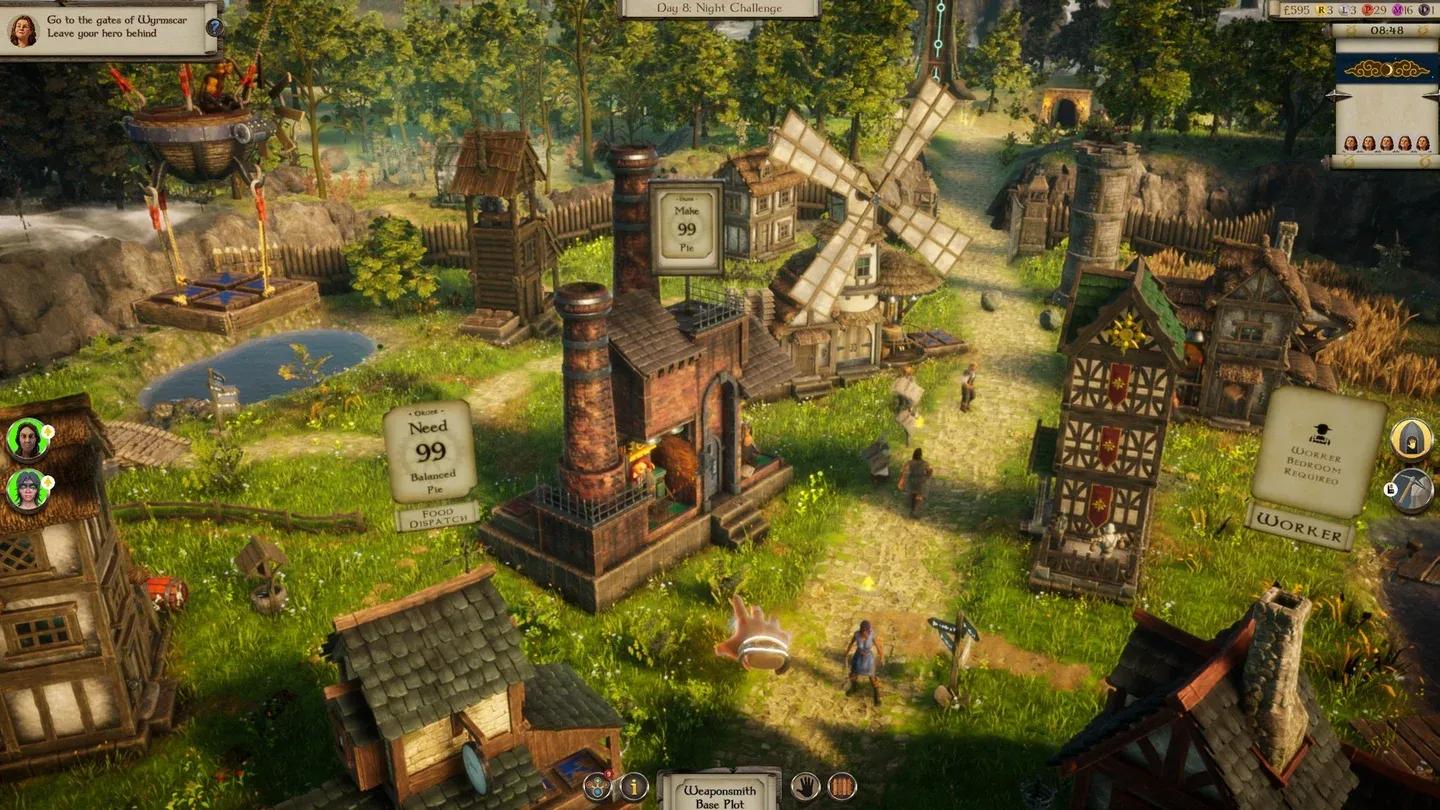
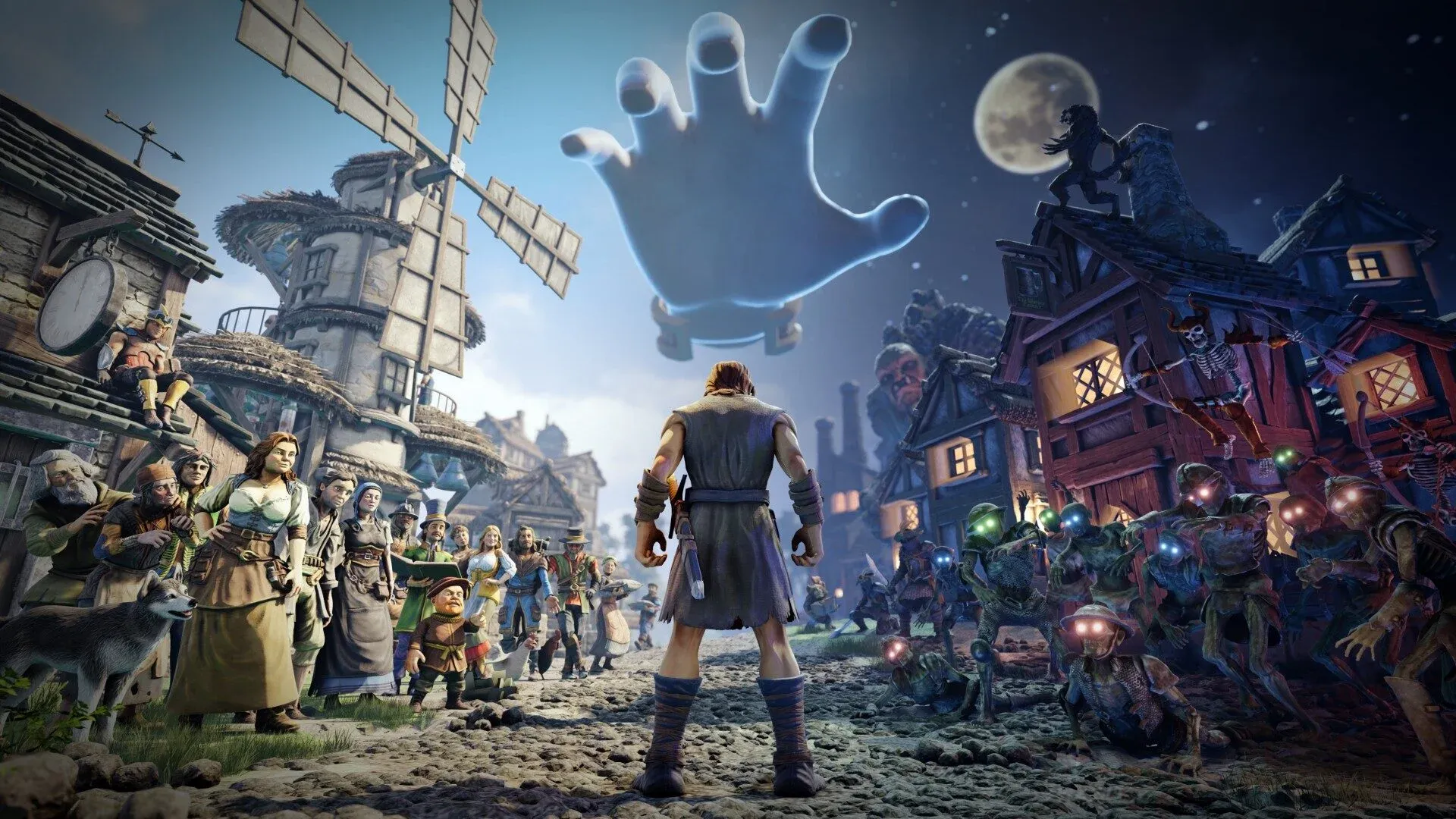
The god-hand in action

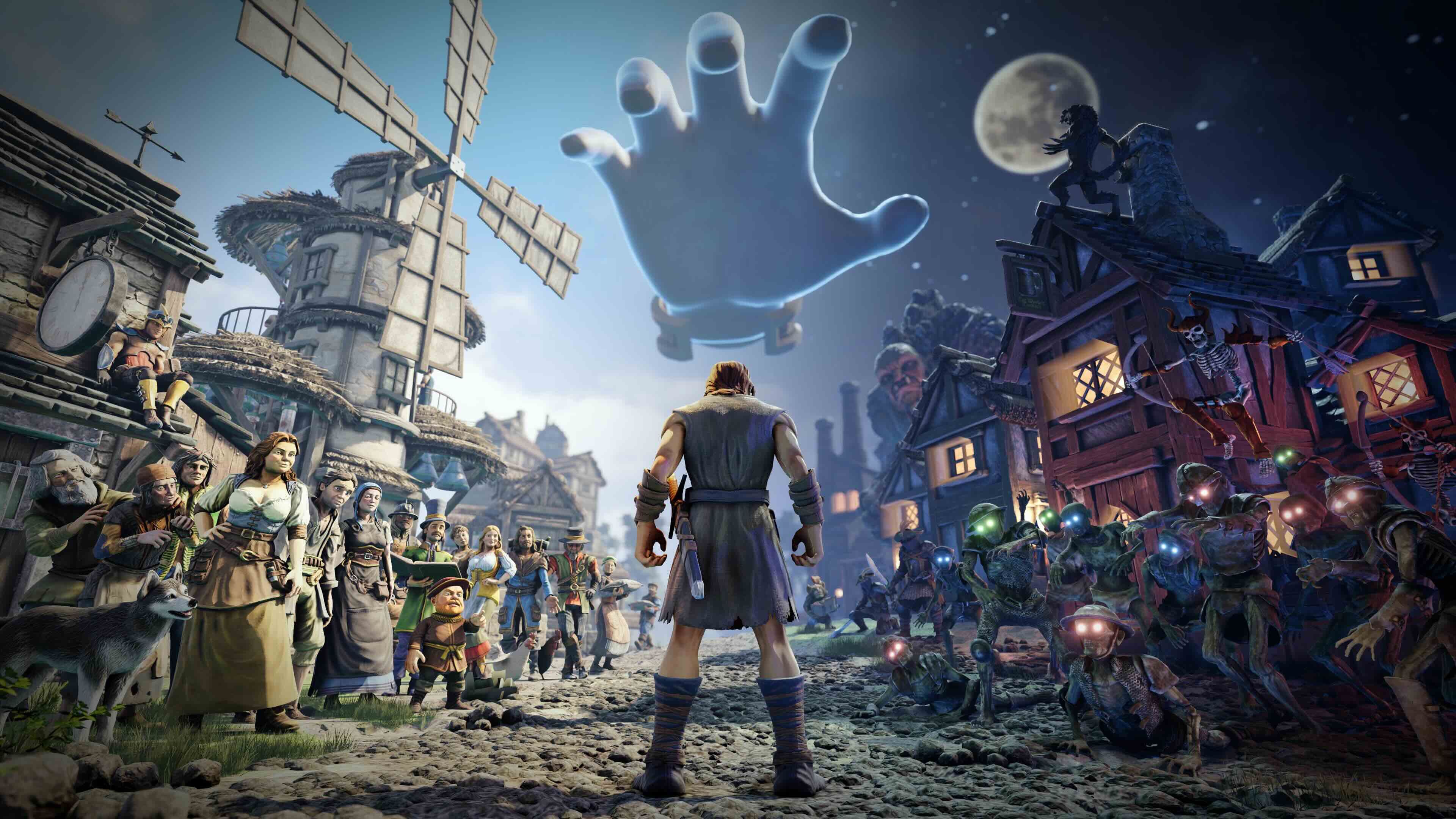
How does the god-hand system work?
The god-hand is your primary tool for interacting with the world. Nearly every action in Masters of Albion runs through this mechanic. Here's what you can physically do with it:
- Pick up rocks and throw them at enemies
- Pluck villagers from the ground and relocate them anywhere on the map
- Click and hold on buildings to speed up their residents, with your index finger rotating in slow circles like a clock hand
- Lift towers and reposition them closer to incoming threats
- Grab explosive barrels and hurl them at undead attackers
- Move heroes from one fight to another mid-battle
The physicality here is the point. Dragging, flicking, and holding aren't just control abstractions. They give you a tangible sense of presence over the world below. This gestural quality immediately changes your relationship with the game world in a way that pure point-and-click strategy games don't replicate.
How do the three gameplay pillars fit together?
Masters of Albion asks you to manage three distinct activities simultaneously, and understanding how they connect prevents you from getting overwhelmed early on.
| Pillar | What you're doing | How the god-hand helps |
|---|---|---|
| Village rebuilding | Constructing and managing settlements | Speeding up buildings by holding and rotating |
| Workshop production | Creating food and weapons | Directing villagers to the right locations |
| Undead defense | Surviving nighttime attacks | Throwing rocks, barrels, repositioning towers |
The defense layer is where the god-hand becomes most active. Ballista towers and patrolling heroes handle routine threats, but when things escalate, direct intervention with your god-hand shifts the whole encounter. Picking up a hero from a losing fight and dropping them into a better position, or grabbing a barrel and landing it precisely on a ghoul cluster, gives you agency that passive defenses can't.
What's the hero possession mechanic?
Beyond the god-hand, Masters of Albion lets you possess a hero directly to fight monsters one-on-one. This is a distinct mode from the overhead god-hand view. You switch into this perspective to handle specific threats at ground level, then return to the god-view to manage the wider battlefield.
The two modes complement each other. Possession gives you precision for single encounters. The god-hand gives you scale for managing everything else. Knowing when to drop into hero possession and when to stay overhead is one of the more interesting decisions the game asks you to make.
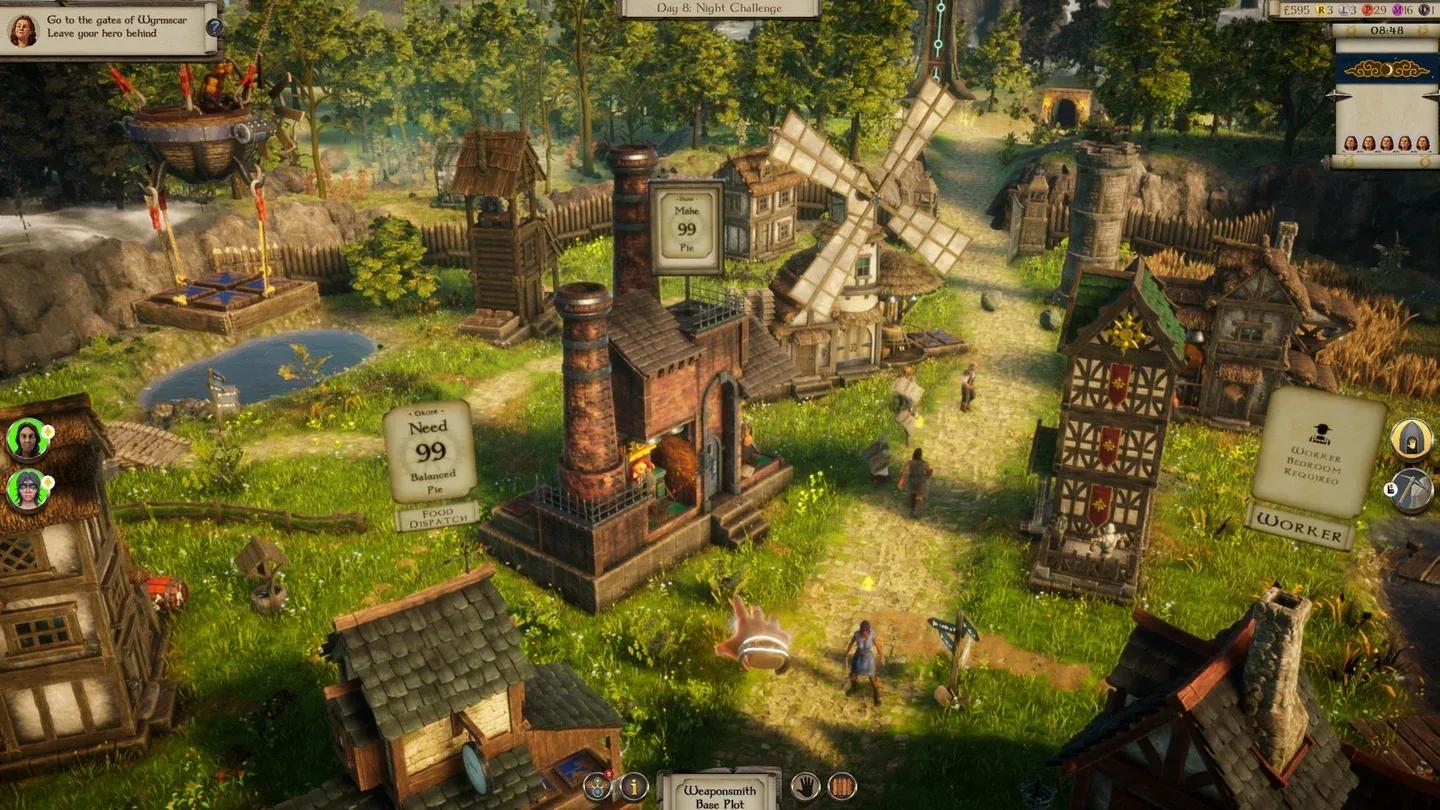
Hero possession combat mode
How does Masters of Albion compare to Sintopia?
Sintopia (published by Team17, developed by Piraknights Games) launched around the same time and draws from the same Lionhead Studios and Bullfrog Productions lineage. Both games put gesture-based interaction at their center, but they execute it differently.
Sintopia uses a cursor rather than a visible hand. When you cast spells like lightning strikes, fireballs, or windstorms, you drag the cursor across the world in sweeping gestures. The physicality lands almost identically to Masters of Albion's hand system, even without the visual of a giant appendage. After switching between both games, the gestural quality of Sintopia's spellcasting feels just as embodied as Masters of Albion's literal god-hand.
The structural difference is more significant. Sintopia splits between a surface-level civilization sim (where your Humus society lives, sins, and dies largely autonomously) and an underworld production-line game where you process souls for currency called Purgadollars. You influence the surface through spells earned in the underworld, not through direct manipulation. Masters of Albion keeps you in constant direct contact with your world.
| Feature | Masters of Albion | Sintopia |
|---|---|---|
| Developer | 22cans | Piraknights Games |
| Publisher | 22cans | Team17 |
| Platforms | PC, PS5, Xbox Series X/S | PC |
| Primary interaction | Giant god-hand | Cursor with gestural spells |
| Civilization control | Direct (pick up, move, throw) | Indirect (spells only) |
| Secondary mode | Hero possession | Underworld production line |
| Spell types | Lightning, thrown objects | Lightning, fireballs, windstorms, healing |
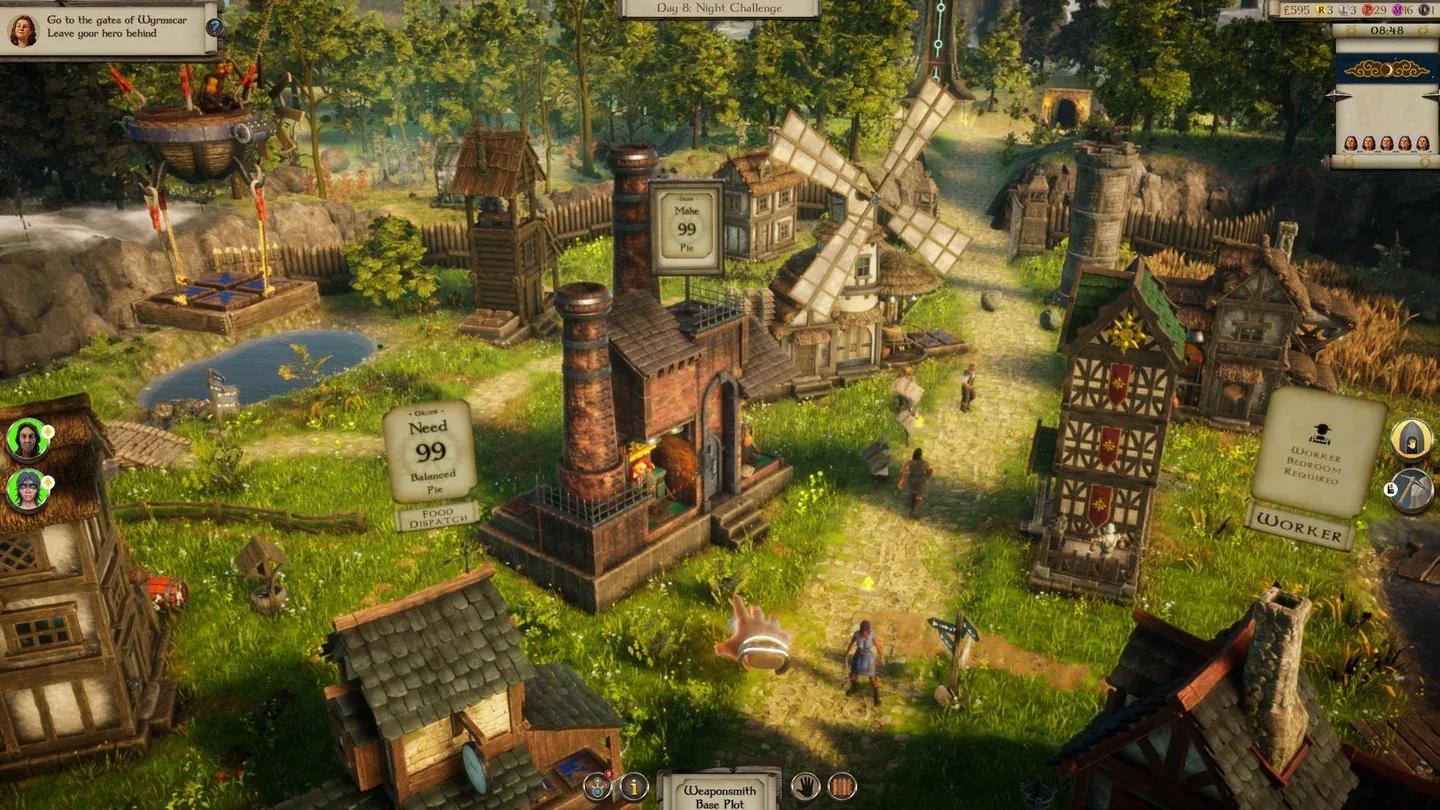
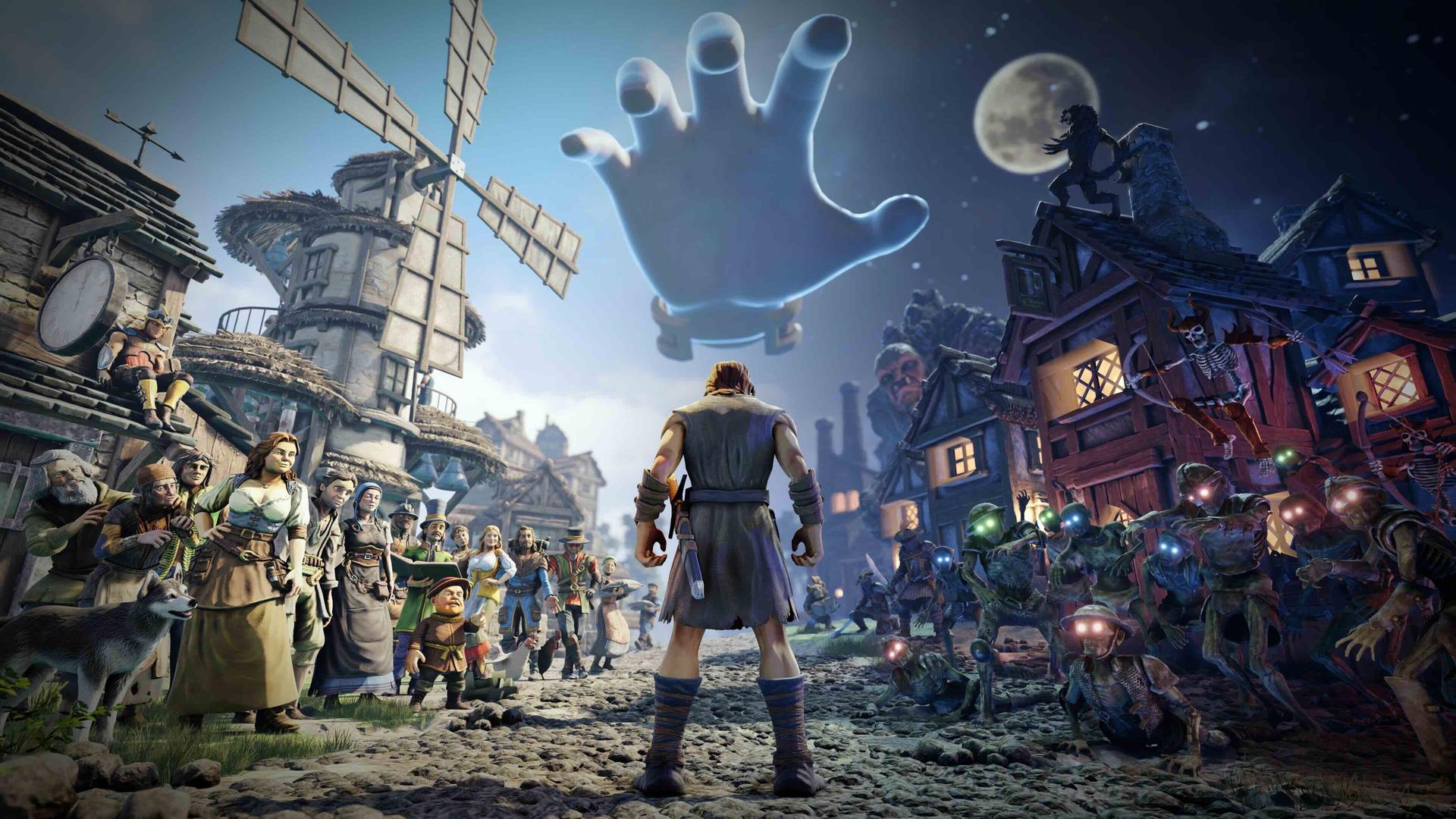
Nighttime undead defense
What should you prioritize in your first few sessions?
Based on how the mechanics work in the April 2026 early access build, here's where to focus when starting out:
- Get comfortable with the god-hand before the first undead attack. Practice picking up villagers and relocating them. The controls have a learning curve, and discovering that during a wave is bad timing.
- Set up your workshops early. Food and weapon production feeds both your village economy and your defensive capability. Neglecting either creates problems that compound quickly.
- Position ballista towers proactively. You can move them with the god-hand during combat, but repositioning under pressure is harder than placing them well beforehand.
- Learn when to possess a hero. Hero possession handles specific threats better than the god-hand. Switching between modes fluidly separates players who struggle from those who don't.
- Accept the early access roughness. The interface has friction. Some of that is bugs, some is design still being worked out. Working with it rather than against it makes the experience better.
For more strategy game coverage and guides across every genre, browse the latest guides at GAMES.GG.
Why does the gesture mechanic matter so much?
The honest answer is that plenty of strategy games let you direct units and manage resources without any of this. Timberborn and Whiskerwood give you indirect control over populations without gesture mechanics, and they work well on their own terms.
What the god-hand and gestural spellcasting do is change your emotional relationship with the world. Dragging a fireball across a town or flinging a rock at a ghoul cluster makes you feel like you are in the world, not administering it from outside. That's a specific feeling that Masters of Albion and Sintopia are both chasing, and hands-on time with both shows they largely deliver it. The bugs and interface roughness in Masters of Albion's early access build chip away at that feeling, but the core mechanic survives them.
Molyneux has described Masters of Albion as the culmination of his career's work. Whether the final product earns that description is a question the full release will answer. For now, the god-hand alone gives it something worth paying attention to.