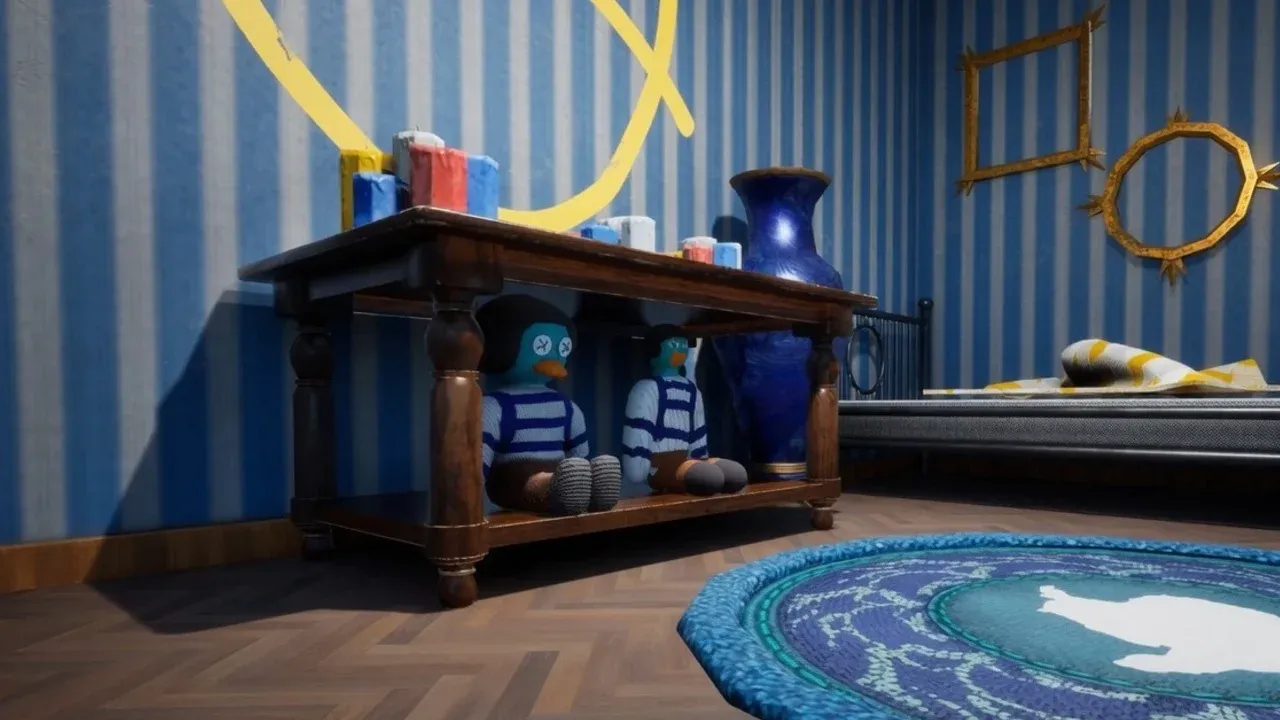


Penguin Hotel is one of the most chaotic maps in MECCHA CHAMELEON, and that chaos is exactly what makes it so good for hiders. Added in v1.2.0, the map throws ducks, balloons, penguin statues, bathtubs, and bedroom clutter at seekers all at once. The visual noise is relentless, and if you know how to work with it, you can survive entire rounds without anyone getting close.
What makes Penguin Hotel different from other maps?
Most maps in Meccha Chameleon have a dominant texture or color palette that hiders need to master. The Sewer wants dark metallic tones. The Backrooms wants yellow wallpaper. Penguin Hotel throws all of that out and floods every room with props, decorations, and competing color schemes. There are glossy bathroom tiles next to fluffy pillows next to ceramic penguin statues, all within a few steps of each other.
That variety cuts both ways. Seekers have too much to scan, which works in your favor. But it also means sloppy camouflage stands out harder here than on simpler maps, because the environment is already visually loud. A slightly wrong shade of blue against a bathroom tile will catch the eye faster than you expect.
The map also has unusually high ceilings and a lot of vertical space. Most seekers scan at eye level by default, which opens up a whole category of spots that barely get checked.
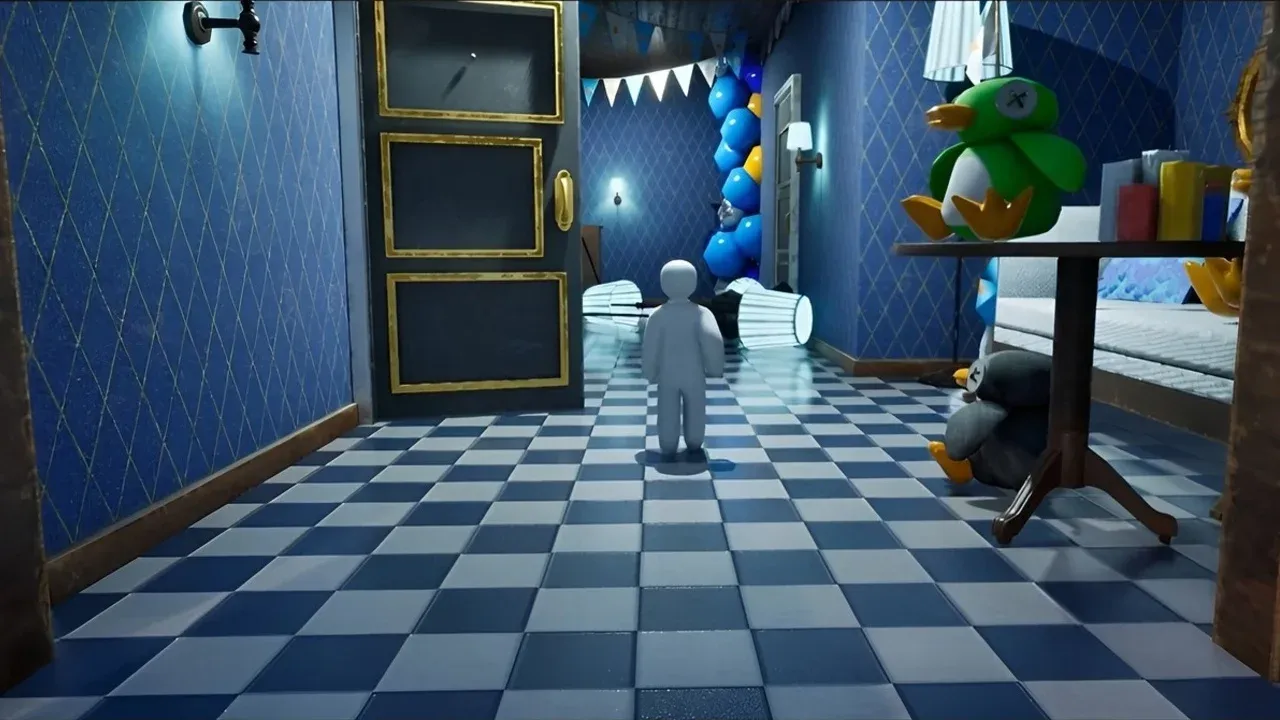
Penguin Hotel lobby layout
Top 5 hiding spots in Penguin Hotel
After testing these spots across multiple rounds, these five consistently give hiders the best survival rate. Each one works for a specific reason, and understanding that reason is what separates a lucky hide from a reliable one.
Duck in the first bedroom
The bedroom duck is one of the strongest beginner spots on the entire map. Seekers treat small decorative objects as background noise during fast sweeps, and a duck sitting on a surface is about as unremarkable as it gets in a hotel full of penguin decor. The key is sampling the duck's colors from multiple angles, including the back and underside, not just the front face. A hider who only matches the front will get caught the moment a seeker circles around.
Penguin statues
The map has clusters of penguin statues throughout, and tucking into or beside one of these clusters is more reliable than it sounds. The statues have unusual silhouettes, which actually helps you here. Because their shapes are already irregular, your outline blends into the group rather than standing out against it. Match the statue color and texture, then adopt a standing or waddling pose. The environment does a lot of the work.
Floating balloons
Balloons are everywhere in Penguin Hotel, and positioning yourself near a cluster while adopting a rounded, upward-floating pose is surprisingly effective. Colorful, busy rooms make seekers scan quickly rather than carefully, and a balloon-shaped object near actual balloons rarely triggers a second look. This spot rewards players who can commit to a convincing rounded pose without fidgeting.
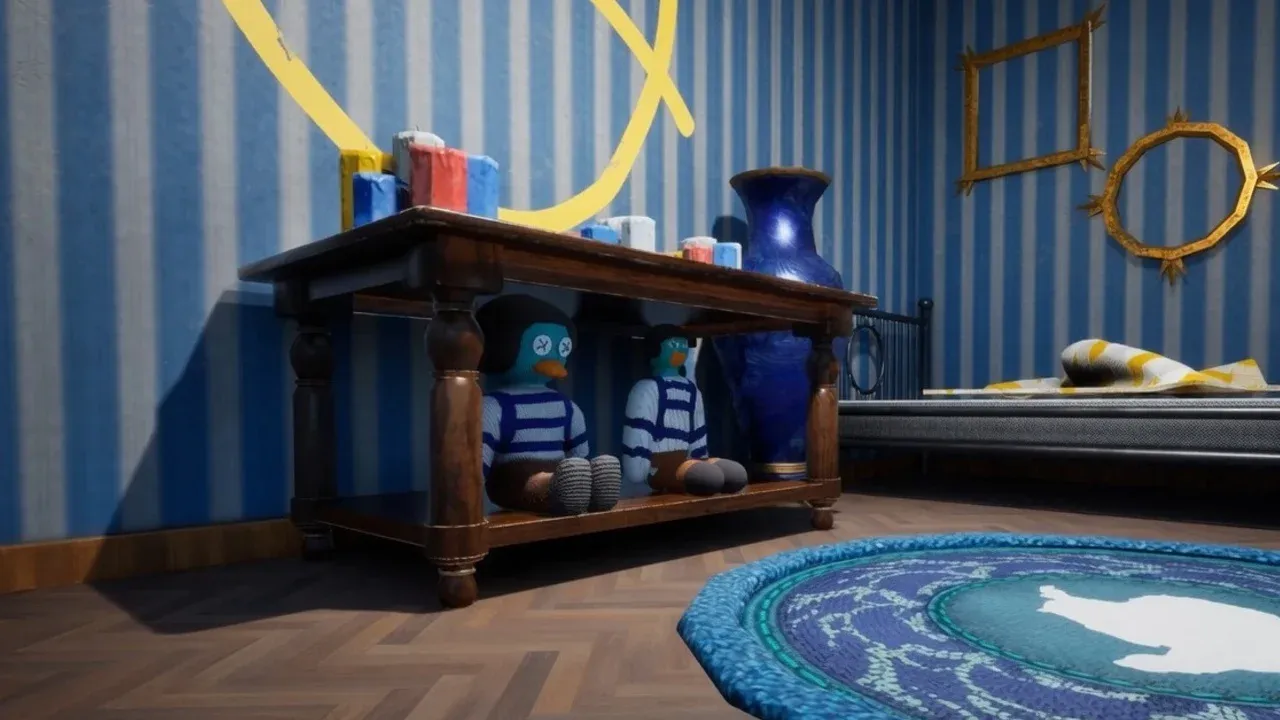
Bathroom bathtub hiding spot
Bathroom props and bathtubs
Bathrooms in Penguin Hotel are dense with objects and covered in glossy, reflective tiles. That combination creates natural visual confusion. Crouching beside a tub and matching the tile color makes you look like another fixture. Going a step further and lying flat inside the tub, painted as a bath toy, adds the element of water reflection to obscure your outline. Seekers rarely spend time in bathrooms because the clutter makes thorough checking feel like a lot of effort for uncertain reward.
What about the ceiling and vertical spots?
Penguin Hotel's high ceilings are genuinely underused. Most seekers develop a habit of scanning at eye level and only look up when they run out of obvious options. These vertical spots take more setup but pay off consistently against experienced seekers who already know the ground-level meta.
Upper fixtures and ceiling attachment
Attaching to the ceiling and matching its color is an advanced move that punishes seekers who never look up. The technique requires a flat or rotated pose to avoid casting an obvious shadow downward. This spot is high-reward but demands precise painting since the ceiling is usually a uniform color with very little texture to hide imperfections.
Bedroom clutter and under-bed edges
Early rooms in Penguin Hotel are consistently under-checked. Seekers who clear the main lobby areas often rush through bedrooms, and the space beside or beneath bed edges, covered by pillows and blankets, is easy to overlook in a fast sweep. Match the fabric texture of the bedding rather than the floor, since that is what a seeker scanning at mid-height will actually see.
Doorway sides and plain sight clusters
Seekers rush through doorways without pausing to check the frame edges. Hugging a doorway side in a low or sideways pose, painted as part of the wall or frame, exploits that habit directly. Plain sight clusters work on a different principle: Penguin Hotel's theme is already absurd enough that an odd-shaped object standing in the open raises fewer alarms than it would on a more grounded map. Both spots require precise painting to pull off reliably.
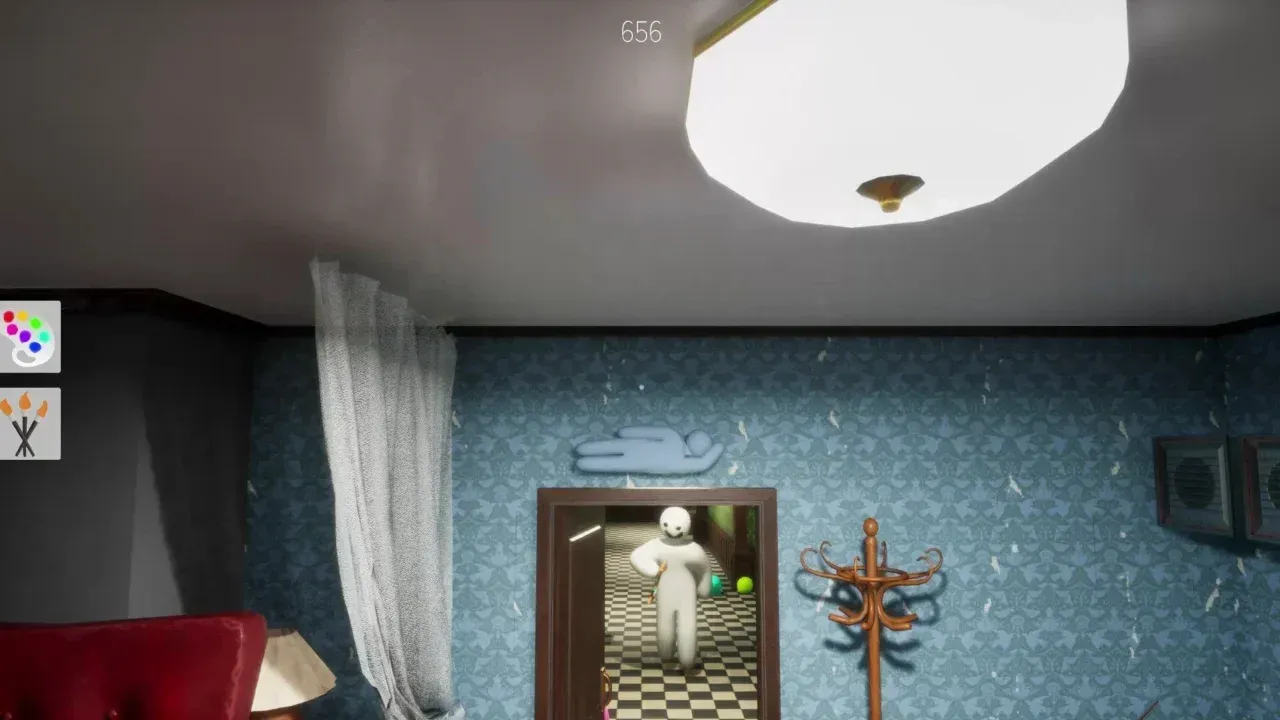
Doorway side pose technique
How do you match colors effectively on this map?
Color matching on Penguin Hotel is trickier than it looks because the map mixes warm and cool tones across short distances. A bathroom might have cool blue-grey tiles right next to warm cream walls. Picking the wrong base color even by a small margin will make you visible under the map's varied lighting.
The approach that works best is to choose your spot before you start painting, not the other way around. Walk to the exact pixel on the object you want to mimic, sample from there, and build outward. Start with the dominant base color, then add edge shadows and highlights as a second pass. Objects in Penguin Hotel are rarely flat-lit, so a paint job without depth will look like a sticker on the environment rather than part of it.
For our full breakdown of painting technique across every map, the best hiding patterns and pose techniques guide covers color sampling, shadow layering, and pose selection in detail.
Common mistakes hiders make on Penguin Hotel
The most frequent error is matching color while ignoring shape. A perfectly blue hider pressed against a blue wall still gets caught if their body outline is clearly visible. Seekers are trained to look for shapes that do not belong, not just colors that do not match. Always prioritize breaking your silhouette first, then refine the color.
The second most common mistake is hiding in spots that got popular from online guides. Experienced seekers check those locations first. Penguin Hotel has enough props and rooms that you never need to rely on a spot that everyone already knows. Explore the less obvious areas, especially the vertical spaces and the bathroom sections that most guides skip over.
For a broader look at surviving as a hider across all maps, the how to win as hider guide covers positioning strategy, paint timing, and how to read seeker behavior.
Ready to explore every map?
Penguin Hotel rewards hiders who take the time to understand its specific logic: dense props, high ceilings, and rooms that seekers treat as secondary. The spots listed here are reliable starting points, but the map has more options than any single guide can cover. Test the vertical positions, experiment with the bathroom clutter, and pay attention to which rooms seekers skip during their first sweep.
For strategies across every map in the game, the full MECCHA CHAMELEON strategy guides collection has everything from beginner fundamentals to advanced seeker counters.