
The Chaos Cubed update added a lot to Minecraft, but the Sulfur Caves biome is the one that genuinely changes how underground exploration feels. Bright yellow sulfur pillars, deep red cinnabar formations, toxic gas pools that disorient you on contact, and a shape-shifting mob that absorbs whatever block it touches. This guide covers every block, every mechanic, and the fastest ways to actually find the biome.
What are Sulfur Caves?
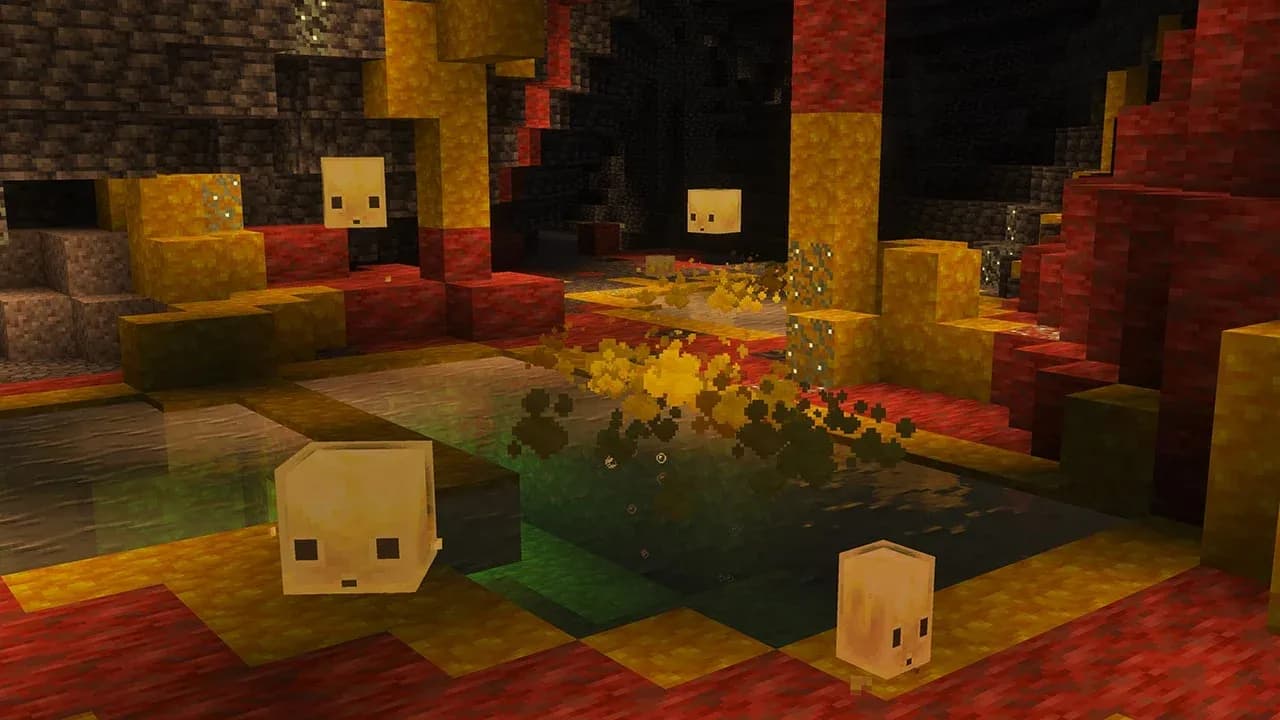
Sulfur Caves are a new underground biome introduced in the Chaos Cubed update. The clearest sign you've found one is the color: yellow sulfur and deep red cinnabar replace the usual stone and gravel that make up most cave walls. The design draws from real-world geothermal sulfur springs, where toxic gases rise through mineral-rich water. Mojang translated that concept directly into the biome.
The most immediate hazard is the sulfur pools scattered throughout the cave. These pools emit a gas cloud that spreads across nearby water. Step into that water and you immediately receive the Nausea effect, which warps your vision and makes navigating the cave genuinely difficult. The gas originates from Potent Sulfur blocks sitting beneath the pools, so the effect is tied to specific locations rather than the entire biome.
Towering pillars of sulfur and cinnabar blocks can stretch from floor to ceiling, giving the biome a dramatic vertical structure that sets it apart from flatter cave types like Dripstone Caves.
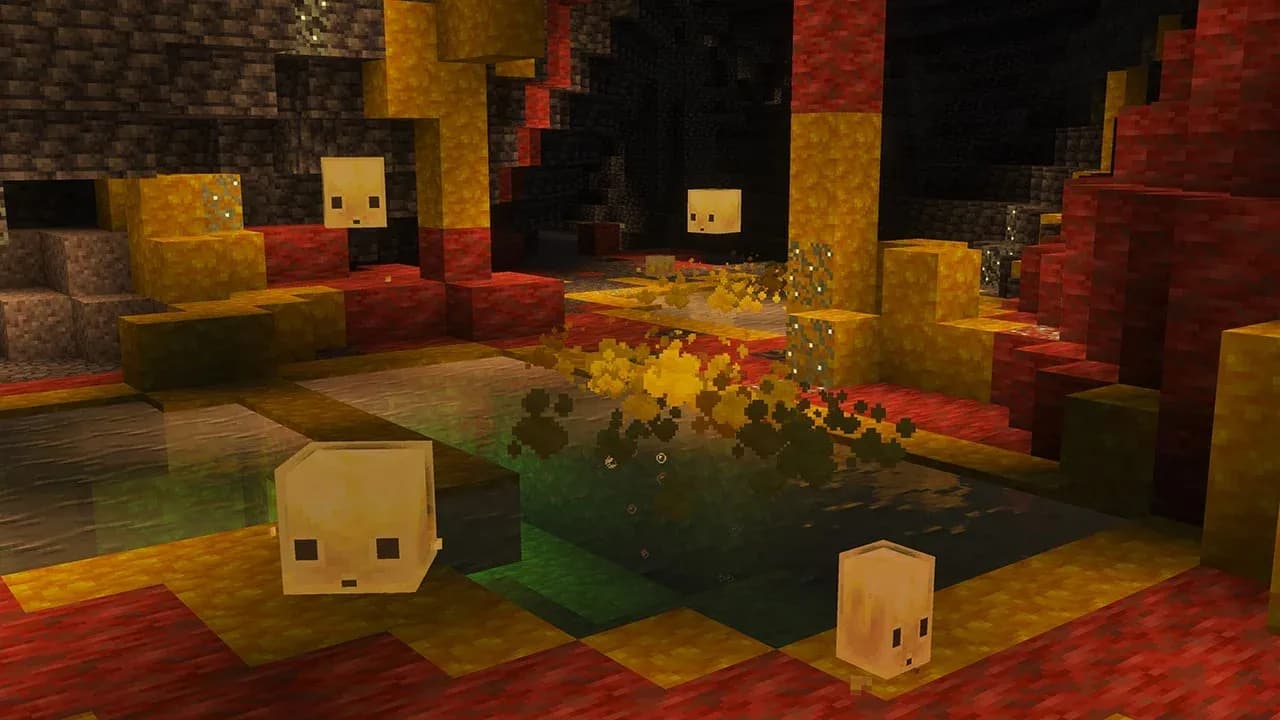
Sulfur pillar formations underground


How to find Sulfur Caves in Minecraft
There are three reliable methods, and one of them is significantly faster than the others.
Look for Sulfur Springs on the surface
This is the quickest approach. Sulfur Springs appear on the Overworld surface as small to extra-large pools of yellowish blocks with bubbling water. They come in four sizes, so even a small one is worth investigating. Once you spot a spring, dig directly underneath it. The Sulfur Cave biome generates below these surface features, making them the most reliable landmark available.
Explore caves naturally
Sulfur Caves generate similarly to Lush Caves and Dripstone Caves, meaning they appear as distinct pockets within the broader underground. Head into any regular cave system and keep mining outward. The visual shift from grey stone to yellow sulfur and red cinnabar is unmistakable once you breach the biome boundary. This method is slower, but you will collect iron, gold, and diamonds along the way.
Use the locate command
If exploration is not the priority, use this command directly in chat:
/locate biome minecraft:sulfur_caves
This returns the exact coordinates of the nearest Sulfur Cave. From there, walk to the location or use /tp to teleport. Note that cheats must be enabled for this to work.
What blocks generate in Sulfur Caves?
The biome introduces two primary block families plus one special variant. Each has a full set of building options, which gives builders a lot to work with.
Sulfur blocks
Sulfur blocks are bright yellow and stand out sharply against dark cave walls. The full block set includes stairs, slabs, walls, Polished Sulfur, Chiseled Sulfur, and Sulfur Bricks. Polished Sulfur and Sulfur Bricks each have their own subset of stairs, slabs, and walls, giving you a wide palette for desert-themed builds or anything that benefits from a warm, almost glowing tone.
Potent Sulfur
Potent Sulfur is a distinct variant that only generates beneath sulfur springs and pools. Its texture is lighter and cleaner than standard Sulfur, making it easy to tell apart. When Potent Sulfur sits under a water body, it generates a gas cloud that rises to the surface and spreads across the water. Any player or mob that enters that water receives the Nausea effect immediately.
Cinnabar blocks
Cinnabar blocks are the red counterpart to Sulfur. The deep red tone reads like volcanic rock and pairs well with Sulfur for contrast builds. The Cinnabar block set mirrors the Sulfur set exactly: stairs, slabs, walls, Polished Cinnabar, Chiseled Cinnabar, and Cinnabar Bricks, each with their own stairs, slabs, and walls.
| Block Family | Base Colors | Full Set Includes |
|---|---|---|
| Sulfur | Bright yellow | Stairs, slabs, walls, polished, chiseled, bricks |
| Potent Sulfur | Light yellow | Generates only under springs/pools |
| Cinnabar | Deep red | Stairs, slabs, walls, polished, chiseled, bricks |
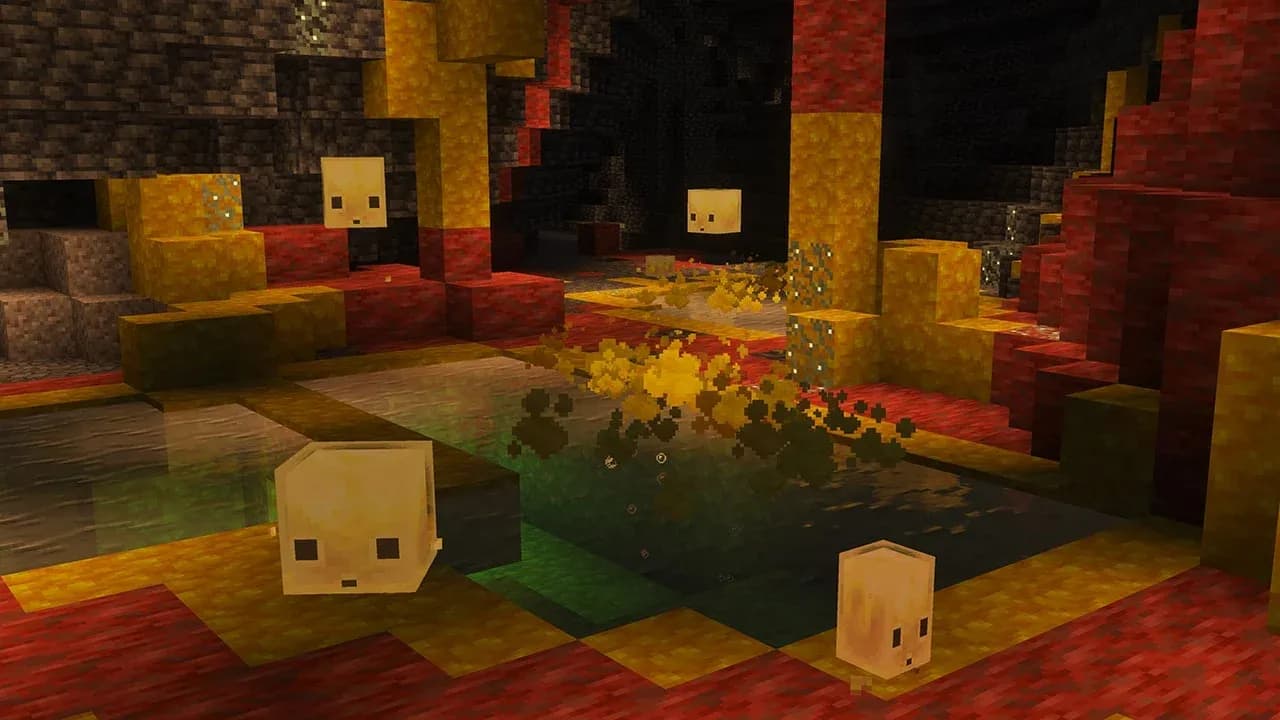
Cinnabar block set variants
What is the Sulfur Cube mob?
The Sulfur Cube is the only new mob in the Sulfur Caves biome. Visually, it shares the square silhouette and eye design of Slimes and Magma Cubes, but in yellow. The resemblance is surface-level only. What makes Sulfur Cubes genuinely interesting is their block absorption mechanic.
How does Sulfur Cube block absorption work?
Sulfur Cubes can absorb blocks they encounter, and absorbing different block types changes their four core attributes: speed, bounciness, ground friction, and air drag. These attribute shifts are called archetypes, and the combinations are extensive.
To see the range: a Sulfur Cube that absorbs an iron block becomes slow, bounces minimally, and has medium friction and air drag. The same mob absorbing an ice block becomes fast, does not bounce at all, and has minimal friction and air drag. The behavior change is immediate and significant.
What can you do with Sulfur Cubes?
The four-attribute system opens up real possibilities for player-built contraptions. Minigames that use mob movement as a mechanic, Redstone builds that need variable speed or friction inputs, and creative transportation setups are all viable. After spending time testing different block combinations against Sulfur Cubes, the ice archetype stands out as the most disorienting to fight in the cave itself, given how fast the mob moves with minimal bounce.
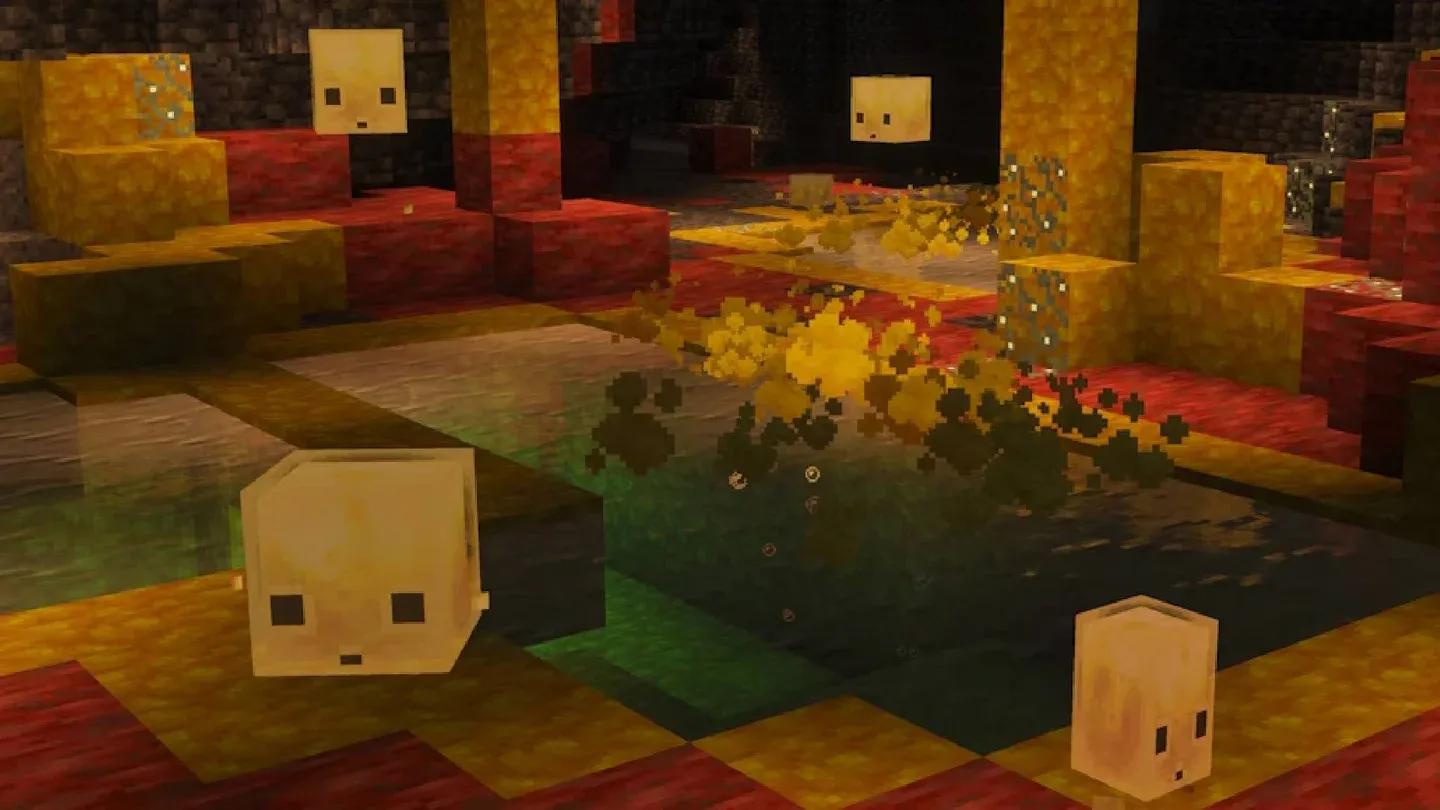
Sulfur Cube absorbing a block
For more on what Minecraft has to offer underground, the Minecraft Shipwreck Loot Guide covers a completely different type of hidden treasure hunting. If you are still getting your footing in Survival, the first night survival guide handles the basics before you start descending into biomes like this one. For everything else the game has added recently, browse the full Minecraft strategy guides collection.