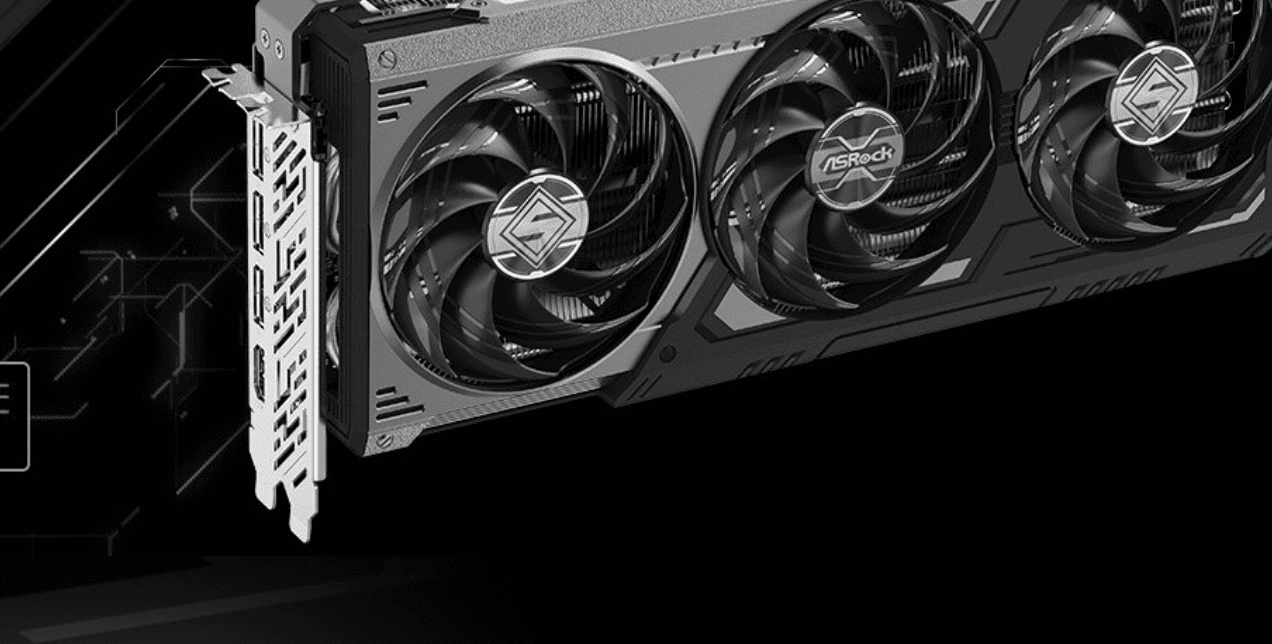


GPU prices have been rough. AI companies have been hoovering up silicon, RAM costs are climbing, and finding a genuinely good deal on a midrange graphics card feels like a side quest with no fast travel. AMD is trying to change that math with the Radeon RX 9070 GRE, a card that originally launched in China and has now gone global with a $549 MSRP.
Here's the thing: that price point matters a lot right now. The standard RX 9070 launched at the same $549 last year but has since crept above $600 at most retailers. The GRE edition, which stands for "Golden Rabbit Edition," slots in below it on paper but performs surprisingly close in real-world gaming tests.

Use code TRYHARD33 at checkout to redeem this offer before code expires again.
Get 33% Off GAMES+ Subscription
What you're actually getting for $549
The RX 9070 GRE trades some hardware muscle to hit that lower price. It carries 12GB of VRAM running at a slower speed than the 16GB found in the standard 9070, and it has eight fewer compute units and ray tracing accelerators. AMD compensates by pushing the boost clock higher, up to 2.79GHz versus the 9070's 2.52GHz, which helps close the gap in older workloads.
The result is a GPU that sits noticeably behind the 9070 in AMD's newer benchmarks but competes closely in older ones. In 3DMark Speedway, the most demanding current test, the GRE scored 4,334 compared to the standard 9070's 5,799. That's a meaningful gap. Flip to the older TimeSpy Extreme test and the difference shrinks to around 200 points (10,718 vs. 10,997). The pattern is consistent: the GRE handles legacy workloads well, but newer rendering pipelines expose the cut-down hardware more clearly.
Real gaming numbers that actually hold up
Benchmark spreadsheets only tell part of the story. In Forza Horizon 6 at 1440p with the RT High preset and FSR4 frame generation active, the 9070 GRE averaged 180 fps. Without frame generation, that dropped to around 90 fps, which is still a comfortable margin above 60. The card even handled 4K reasonably well, averaging 80 fps in the same test, though a low VRAM warning appeared (without causing any actual stuttering or visual issues).
Thermals are genuinely impressive for a midrange card. Under full load, core temperature peaked at just 58C, and the fans were barely audible. After stopping a benchmark or intensive game session, the card cooled back to 30C quickly. For anyone building in a smaller case where heat management gets tricky, that thermal profile is a real advantage.
The Geekbench 6 compute result threw a small curveball: the GRE scored 137,663 against the standard 9070's 113,012. Driver maturity and the higher clock speed likely explain that, but it doesn't change the gaming picture much.
How it stacks up against the competition
The NVIDIA RTX 5070 comparison is interesting. It scores lower than the GRE in TimeSpy Extreme but absolutely runs away with the Cyberpunk ray tracing test thanks to NVIDIA's multi-frame generation. The 9070 GRE's ray tracing score of 13,509 in Port Royal also trails the standard 9070's 15,888, which is worth keeping in mind if ray tracing is a priority for you.
What most players miss is that the GRE's value proposition depends almost entirely on retail pricing holding at $549. If the card drifts toward $600 the way the standard 9070 did, the case for it weakens considerably. Check our latest reviews to see how the broader GPU market is shaping up before committing.
The context that shapes the buying decision
AMD revealed the global availability of the RX 9070 GRE at Computex alongside the return of the Ryzen 7 5800X3D, both positioned as value plays during a period when hardware costs are genuinely painful for most PC builders. That framing is honest. The GRE is not a flagship, and it doesn't need to be.
For 1440p gaming on a budget that stops at $549, it's one of the few cards that delivers a smooth experience with some ray tracing headroom. It won't keep pace with the newest rendering tech as well as the standard 9070, and the VRAM ceiling at 12GB will be felt sooner rather than later in more demanding titles.
If you're deep into researching your next PC build, our gaming guides cover hardware decisions, build considerations, and what to prioritize based on your target resolution. The RX 9070 GRE is a real option for midrange builders right now, but whether it stays that way depends on a retail market that hasn't been particularly cooperative lately.