

Alex Hutchinson, the creative director behind Assassin's Creed 3 and Far Cry 4, has revealed that Assassin's Creed IV: Black Flag reused approximately 80% of Assassin's Creed 3's assets, and he believes the games industry as a whole should lean into this practice much more aggressively.
Hutchinson makes the case for asset reuse
Hutchinson was candid about how the Assassin's Creed franchise operated internally during his time at Ubisoft. Animations moved through multiple iterations, he explained, with Black Flag reusing roughly 80% of what the team had already built for AC3. "So there's always some reuse, at least in the big studios."
This wasn't a confession of laziness. Hutchinson framed it as smart production practice, one he thinks Western developers consistently fail to embrace at scale. "We do a lot of dopey things in the games industry. We redo too much stuff," he said.
Japanese studios already get it
For Hutchinson, the strongest argument in favor of asset reuse comes from looking east. He pointed to the Yakuza (now Like a Dragon) series as a franchise that turned repetition into a creative strength. "The genius of Yakuza was always for me that you're revisiting the same place," he said. "So you kind of want to see the asset reuse in a way."
He compared it to a deliberate design constraint, drawing a parallel to the iconic fog in Silent Hill, where a technical limitation became central to the experience. In his view, Japanese developers have figured out how to make asset reuse feel intentional rather than cost-cutting.
Franchises like Yakuza and Dark Souls have long faced criticism for reusing assets, yet those same games are widely considered among the best in their respective genres. The asset reuse debate has rarely been a quality indicator on its own.
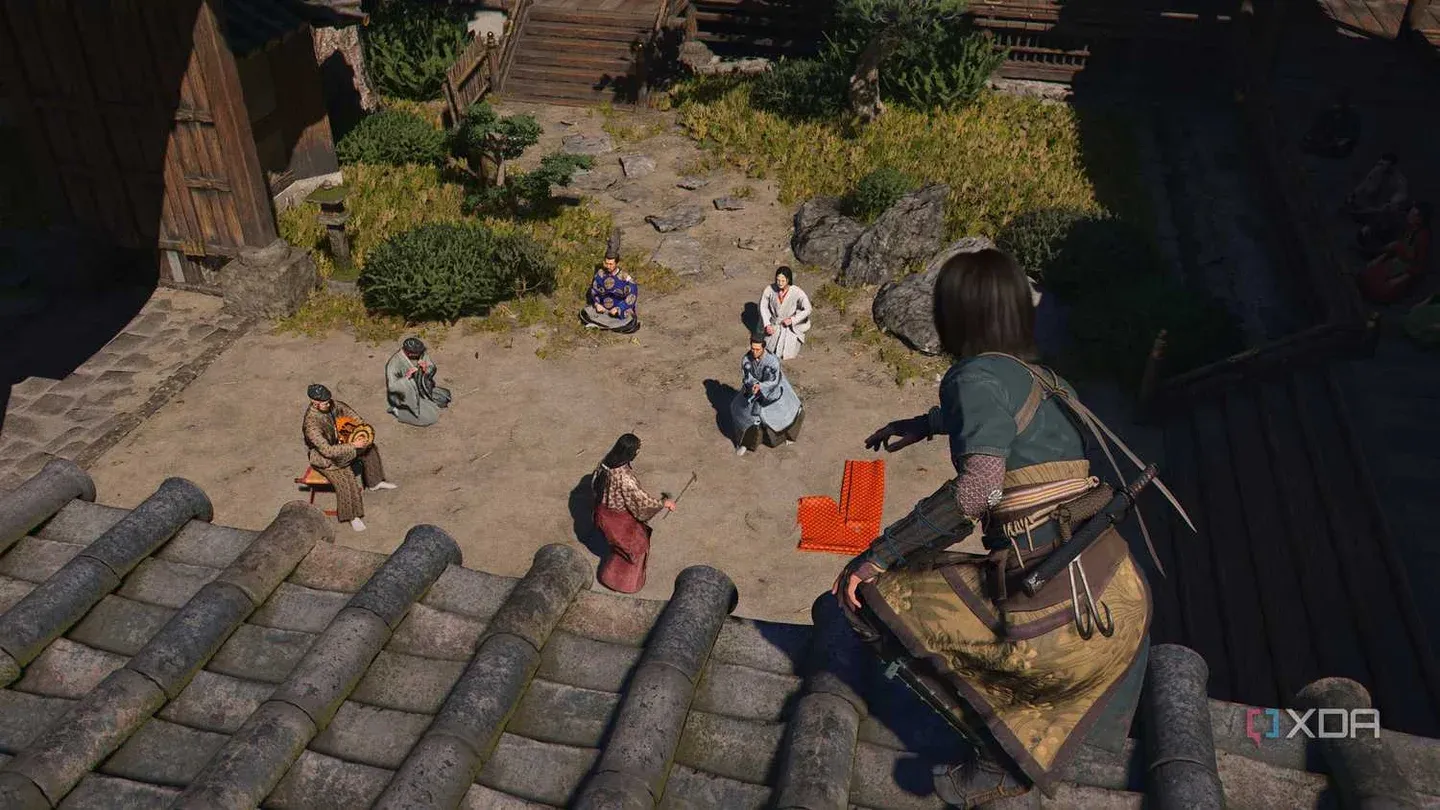
AC3's assets carried forward
The AI wildcard
Hutchinson didn't stop at traditional asset reuse. He gestured toward a more contentious future, suggesting that AI tools could accelerate the prototyping side of development. "Maybe the future is, to use the dirty word, AI vibe-coding for prototypes that you can hand off to engineers to try and save some months," he said.
The key here is that he framed AI vibe-coding specifically as a prototyping shortcut, not a replacement for full production pipelines. Still, the comment is notable given the ongoing and often heated debate across the industry about where AI belongs in game development.
His views align with a broader conversation happening in AAA circles. Xbox's AI lead recently argued that the games industry has been building AI systems for decades, pointing to cheat detection and pathfinding as long-standing examples. Meanwhile, studios like Ubisoft are actively exploring player-facing generative AI, and others remain firmly opposed.
With AAA budgets continuing to balloon and development cycles stretching longer, asset reuse and AI-assisted workflows are likely to become increasingly common talking points at every level of the industry.
Make sure to check out more:
Frequently Asked Questions (FAQs)
Who is Alex Hutchinson?
Alex Hutchinson is a veteran game director best known for serving as creative director on Assassin's Creed 3 and Far Cry 4 at Ubisoft. He currently leads Raccoon Logic, the studio behind Revenge of the Savage Planet.
Did Black Flag actually reuse assets from Assassin's Creed 3?
Yes. Hutchinson states that Assassin's Creed IV: Black Flag reused approximately 80% of the assets built for Assassin's Creed 3, including animations that carried through multiple game iterations within the franchise.
What is AI vibe-coding?
AI vibe-coding is a term used to describe using AI tools to rapidly generate rough prototype code or content, which can then be handed off to engineers or artists for refinement. Hutchinson suggested it could potentially save months during early development stages.