
Twenty-seven years. That's how long Christiane Meister spent at Bethesda Game Studios, contributing to the visual identity of every Elder Scrolls title from Morrowind through to The Elder Scrolls V: Skyrim. This week, she was caught in Xbox's latest round of layoffs at Bethesda, and the news landed hard across the gaming community.
The artist who gave the beast races their faces
Meister served as a senior character artist at Bethesda, and her work was not peripheral. She was responsible for designing, creating, and managing character art assets across the entire Elder Scrolls run, from concept sketches all the way through to final in-game models. She also oversaw outsourced character assets, bridging the gap between external contractors and Bethesda's internal art standards.
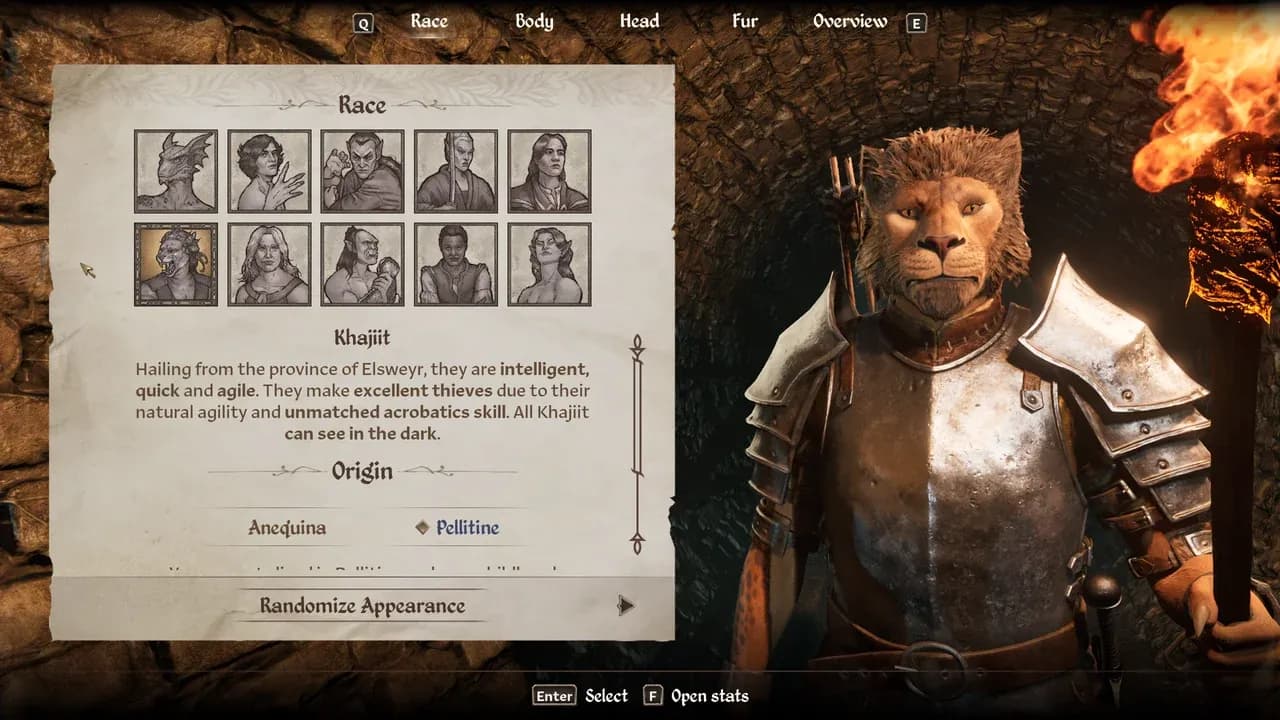
Here's the thing: the khajiit and argonians players know from Skyrim exist specifically because of decisions Meister made. In Oblivion, Bethesda used FaceGen morphing on a shared human base mesh for the beast races, which produced results that were, to put it diplomatically, a look. For Skyrim, Meister scrapped that approach entirely and built the khajiit and argonian faces from scratch, giving each race its own distinct facial structure and a separate set of customizable features. The trade-off was that it required unique helmet geometry to fit their non-human head shapes, but the visual improvement was substantial.
That design philosophy is part of why those two races feel genuinely distinct in Skyrim rather than like humans wearing masks.
What this means for the people behind the games
Meister's LinkedIn profile confirms she is currently looking for work. She described her role as covering the full pipeline: concept art, final execution, and mentoring other artists in the character group. That kind of institutional knowledge, built across 27 years and multiple engine generations, is not something a studio rebuilds quickly.
The broader context makes this harder to swallow. Bethesda Game Studios and ZeniMax have both been hit hard by this wave of Xbox layoffs, with teams across multiple projects affected. Elder Scrolls Online's developer has also seen significant losses, with senior staff gone and development roadmaps in flux. Former ESO designers have spoken publicly about the scale of the cuts, with one describing the situation as having “no one left.”
The numbers that make this harder to justify
Global games revenue surpassed $200 billion in 2025. The industry is not struggling for money at the macro level. What keeps getting cut is the people with the deepest product knowledge, often because longer tenures correlate with higher salaries, and salaries are the fastest lever to pull when a spreadsheet needs to look better before a quarterly report.
That logic might make sense on paper. In practice, it means studios lose the people who remember why certain design decisions were made, who can mentor junior artists, and who carry years of hard-won technical solutions in their heads. Meister's workaround for the beast race helmet problem in Skyrim is a small example of exactly that kind of knowledge. You can't find it in a wiki.
For players who want to revisit what Meister helped build, the Skyrim guide collection covers everything from character builds to exploration tips across the game she spent years shaping.
The Elder Scrolls VI is still in early development at Bethesda. How many more people who built the series from the ground up will still be there when it ships is now a very open question. Keep watching the Xbox situation closely, because the full picture of these cuts is still coming into focus across the broader gaming guides and news space.